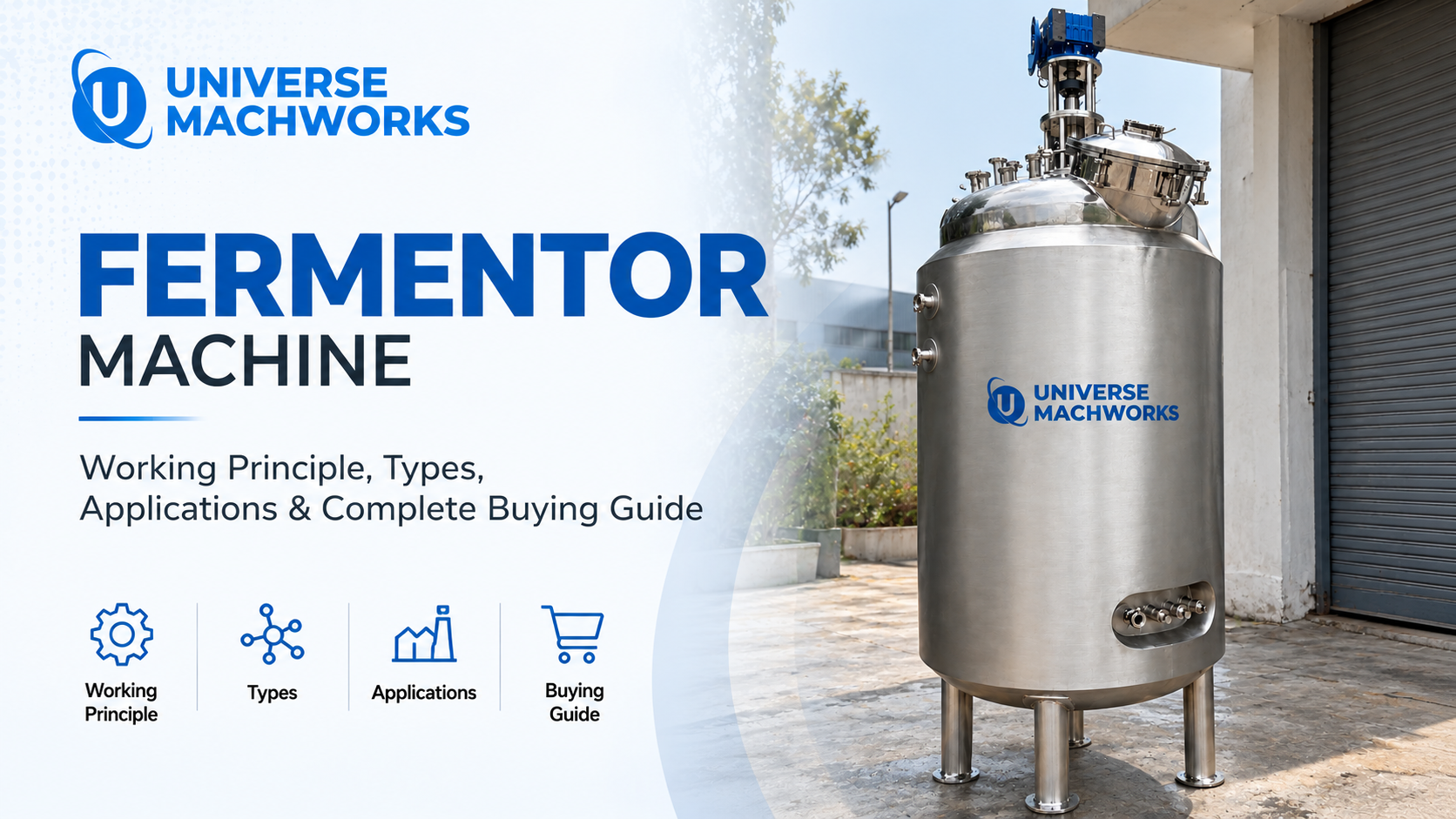
A fermentor is a specialized process vessel used to provide controlled conditions for the growth of microorganisms or cells and the production of desired biological products.
Fermentation processes are used across pharmaceutical, biotechnology, food, nutraceutical, enzyme, chemical, and other industries. Depending on the application, a fermentor may need to control and monitor parameters such as temperature, agitation, aeration, pH, dissolved oxygen, pressure, and foam.
Unlike a conventional mixing tank, a fermentor is designed around the biological process taking place inside the vessel. The vessel, agitator, aeration system, sensors, control system, sterilization arrangements, and other components work together to create an appropriate environment for the process.
For pharmaceutical and biotechnology applications, equipment design also needs to address contamination control, cleaning, sanitization or sterilization, and process monitoring. ICH Q7 states that fermentation equipment should be cleaned and, as appropriate, sanitized or sterilized, while WHO guidance identifies fermentation and cell-culture operations as important parts of biological-product manufacturing.
This guide explains the fermentor working principle, types, major components, applications, material considerations, cleaning requirements, selection factors, and important questions to ask before purchasing a fermentor.
What Is a Fermentor?
A fermentor is a controlled vessel used to carry out fermentation under defined operating conditions. The term is commonly used for equipment in which microorganisms such as bacteria, yeast, or fungi are cultivated to produce a desired product. Similar equipment is also often called a fermenter or, in broader biotechnology contexts, a bioreactor.
- Microbial growth
- Biochemical reactions
- Product formation
- Nutrient utilization
- Controlled aeration
- Temperature control
- Agitation
- pH control
- Process monitoring
The exact configuration depends heavily on the organism, culture, product, and manufacturing process.
Fermentor vs Fermenter
The terms fermentor and fermenter are often used interchangeably in industry. Both can refer to a vessel used for controlled fermentation, although terminology varies between manufacturers, engineers, academic literature, and industries.
Fermentor vs Bioreactor
A fermentor generally refers specifically to equipment used for fermentation processes, particularly those involving microorganisms. Bioreactor is a broader term for a controlled vessel used for biological processes and can include microbial fermentation as well as mammalian or other cell-culture processes.
| Feature | Fermentor | Bioreactor |
|---|---|---|
| Primary association | Microbial fermentation | Broader biological processes |
| Common organisms | Bacteria, yeast, fungi | Microorganisms or cells |
| Agitation | Often used | Often used |
| Aeration | Common in aerobic processes | Process-dependent |
| Temperature control | Common | Common |
| pH monitoring | Common where required | Common where required |
| Dissolved oxygen monitoring | Common in aerobic processes | Common where required |
| Applications | Fermentation and microbial products | Fermentation, cell culture and biotechnology |
How Does a Fermentor Work?
The fermentor working principle is based on providing controlled environmental conditions that allow the desired biological process to take place. A simplified sequence is: Media Preparation → Sterilization → Inoculation → Agitation & Aeration → Controlled Growth/Fermentation → Monitoring → Harvest.
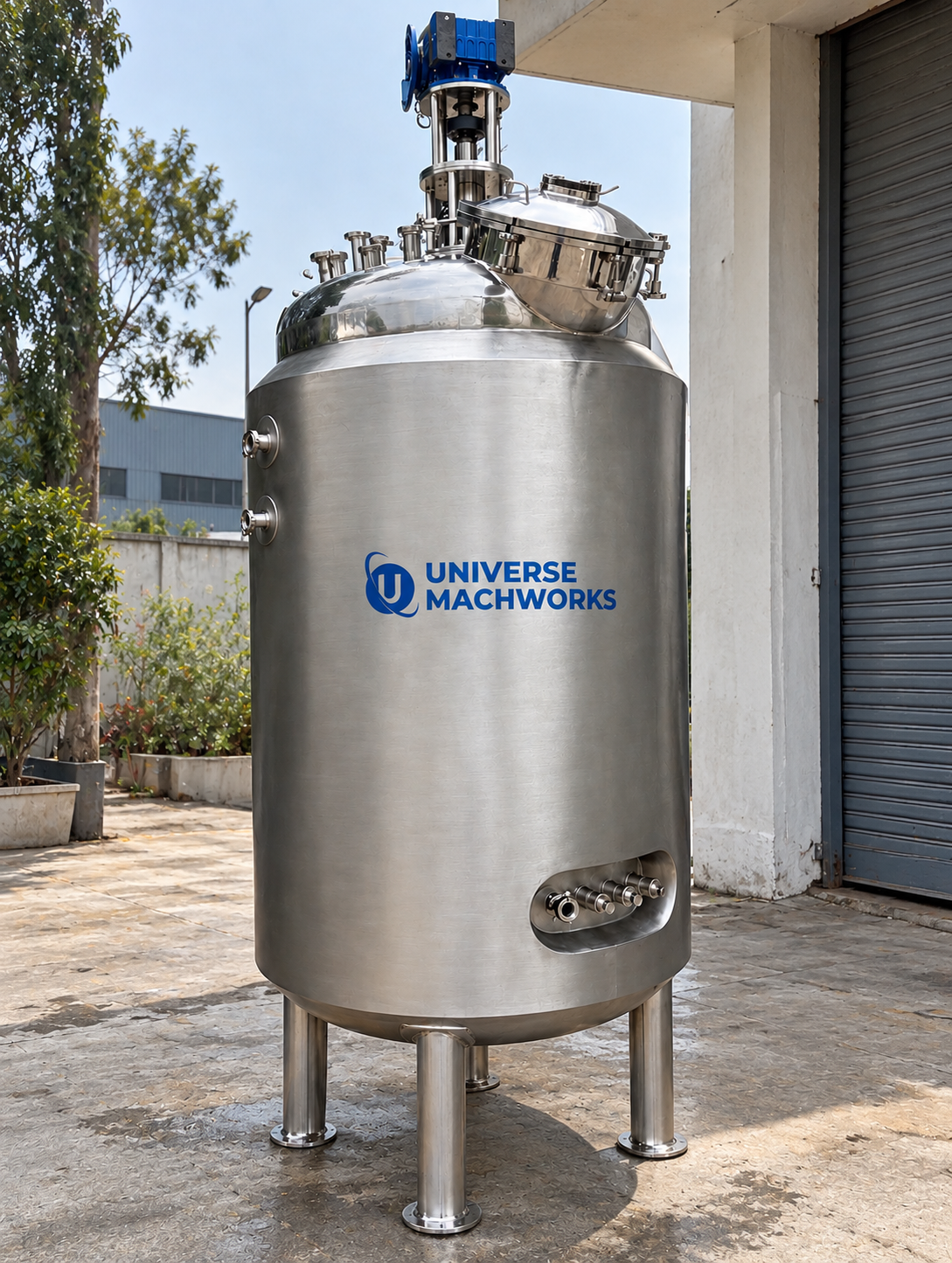
Step 1: Preparation of Culture Medium
The required nutrients and other components are prepared as a suitable culture medium. Depending on the process, the medium may contain carbon, nitrogen, minerals, vitamins, and other nutrients.
Step 2: Sterilization or Sanitization
Where required, the vessel and process materials are sterilized or otherwise controlled to minimize contamination risk. ICH Q7 states that fermentation equipment should be cleaned and, where appropriate, sanitized or sterilized.
Step 3: Inoculation
The selected microorganism or culture is introduced into the prepared medium under controlled handling conditions.
Step 4: Agitation
The agitator mixes the vessel contents to distribute nutrients, maintain suspension, improve gas-liquid contact, support heat transfer, and reduce concentration gradients. The required system depends on the process and fluid characteristics.
Step 5: Aeration
For aerobic fermentation, air or another appropriate gas may be introduced through a sparging system. Requirements depend on the organism, oxygen demand, vessel volume, agitation, medium characteristics, and process stage.
Step 6: Temperature Control
A jacket or another thermal-control system maintains the process within its required temperature range because temperature can strongly influence microbial growth and product formation.
Step 7: pH Control
Where required, pH is monitored and controlled through an appropriate dosing and control strategy.
Step 8: Dissolved Oxygen Monitoring
For aerobic processes, a dissolved oxygen probe can measure oxygen availability. Control may coordinate agitation, aeration, gas flow, and other process parameters.
Step 9: Foam Control
Foam may be managed using mechanical arrangements, antifoam addition, foam sensors, or process-control strategies according to the organism and process.
Step 10: Harvesting
After fermentation, the broth or product-containing material is removed for downstream separation, filtration, centrifugation, extraction, purification, or concentration as required.
Main Components of a Fermentor
A fermentor combines mechanical, process, instrumentation, and control components.
1. Fermentation Vessel
The generally cylindrical vessel provides the controlled process environment and may be designed for atmospheric, pressurized, or vacuum-related operation according to the application.
2. Agitator and Drive
The motor, gearbox or drive, shaft, and impeller provide controlled mixing inside the vessel.
3. Impeller
The impeller transfers mechanical energy into the process fluid. Selection depends on viscosity, gas dispersion, mixing characteristics, shear sensitivity, and vessel geometry.
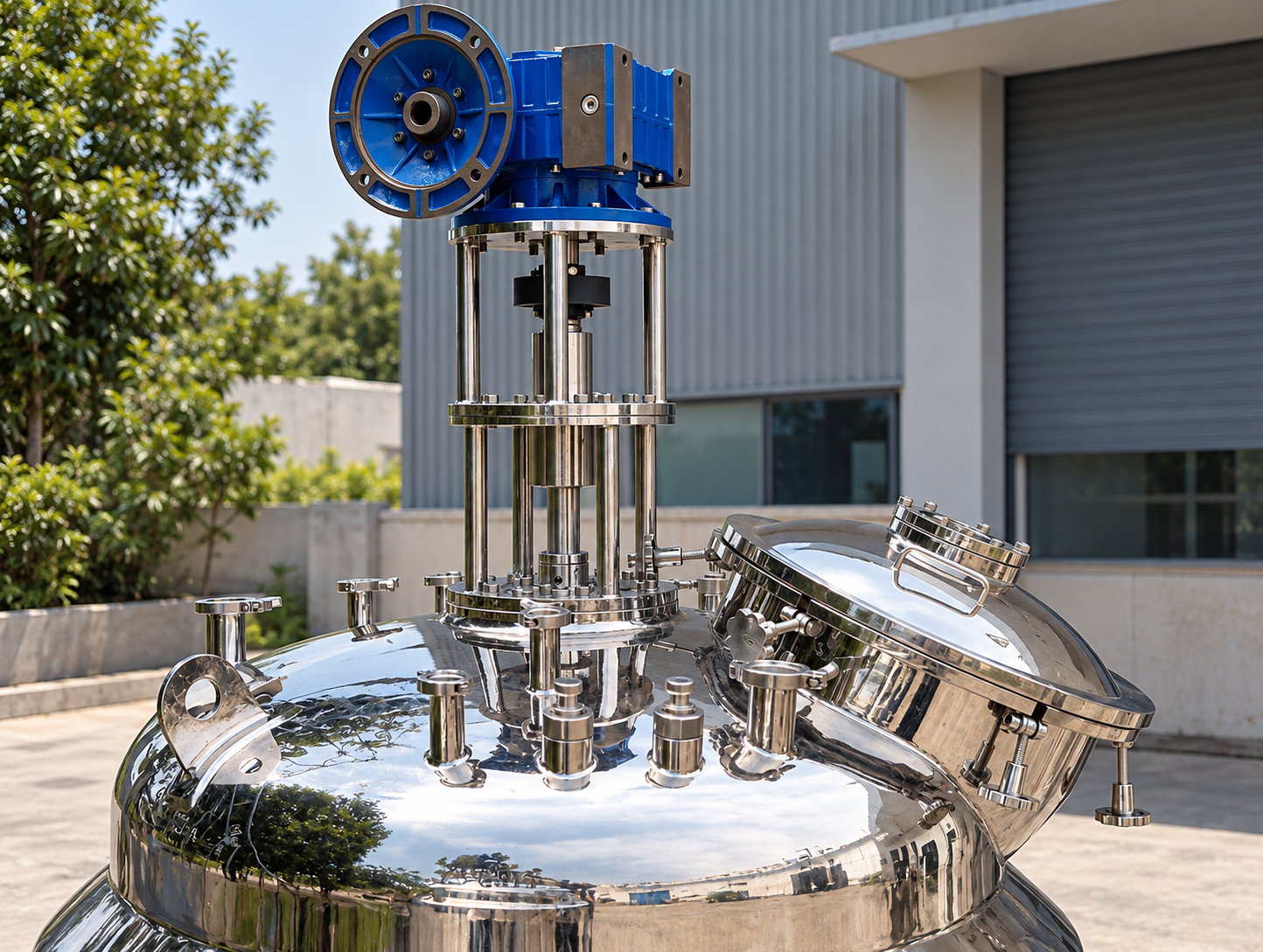
4. Sparger and Baffles
A sparger introduces gas into the medium, while baffles can influence fluid movement and reduce unwanted rotational flow. Their design depends on the process and vessel geometry.
5. Temperature-Control System
A jacket or other thermal arrangement heats or cools the process to maintain the target temperature.
6. Sensors and Probes
- Temperature
- pH
- Dissolved oxygen
- Pressure
- Foam
- Level
7. Sampling and Exhaust Systems
A sampling port supports controlled process sampling, while the exhaust system manages gases generated during fermentation. Filtration and monitoring may be incorporated depending on the process.
8. Control Panel
- PLC and HMI
- Temperature and agitator control
- pH control
- DO monitoring
- Alarm functions
- Process data recording
Types of Fermentors
1. Stirred Tank Fermentor
A common configuration that uses mechanical agitation for controlled microbial fermentation and other biological processes.
2. Batch Fermentor
The medium and inoculum are charged and operated for a defined period before the contents are harvested.
3. Fed-Batch Fermentor
Additional nutrients or process materials are added during fermentation to control availability over time.
4. Continuous Fermentor
Fresh medium is continuously introduced while culture broth is removed under controlled conditions.
5. Laboratory Fermentor
- Research
- Process development
- Strain studies
- Formulation and process trials
- Optimization
6. Pilot-Scale Fermentor
Pilot equipment bridges laboratory development and manufacturing by supporting studies of scale-up, mixing, aeration, temperature control, and production characteristics.
7. Industrial Fermentor
Industrial systems address larger production requirements and are configured around working volume, utilities, automation, sterility requirements, and production cycle.
Pharmaceutical Applications of Fermentors
- Enzymes
- Microbial products
- Certain pharmaceutical intermediates
- Biological products
- Recombinant products
- Vaccines or vaccine-related processes
- Other biotechnology-derived products
WHO guidance on biological products covers manufacturing processes involving the growth of microorganisms and eukaryotic cells, including fermentation and cell-culture operations. Exact equipment configuration depends on the biological system and product.
Fermentor Applications Beyond Pharmaceuticals
- Biotechnology and cell-based process development
- Food and ingredient fermentation
- Nutraceutical ingredients
- Microbial enzyme production
- Industrial biotechnology and bio-based products
- Research and development
Important Factors When Choosing a Fermentor
1. Working Volume
Define total volume, required working volume, and minimum and maximum operating volumes. Working volume should not simply be equated with total vessel capacity.
2. Microorganism or Cell Type
- Oxygen requirements
- Growth rates
- Temperature requirements
- pH requirements
- Shear sensitivity
- Foam behavior
3. Aeration and Agitation
For aerobic processes, define gas flow, oxygen-transfer needs, sparger design, exhaust, and gas filtration. Agitator selection should consider mixing, impeller type, speed range, motor and gearbox, and shear sensitivity—not motor size alone.
4. Temperature, pH, and DO Control
Define operating temperature, heating and cooling duty, jacket arrangement, pH probe and dosing, dissolved oxygen monitoring, and the required control logic.
5. Pressure Requirements
Operating pressure and vacuum requirements must be established before fabrication because they affect vessel construction, seals, safety, connections, and instrumentation.
6. Material of Construction
Material selection should consider product chemistry, corrosion, cleaning chemicals, temperature, sterilization conditions, and product-contact requirements. FDA guidance emphasizes suitable product-contact surfaces that do not adversely alter product quality.
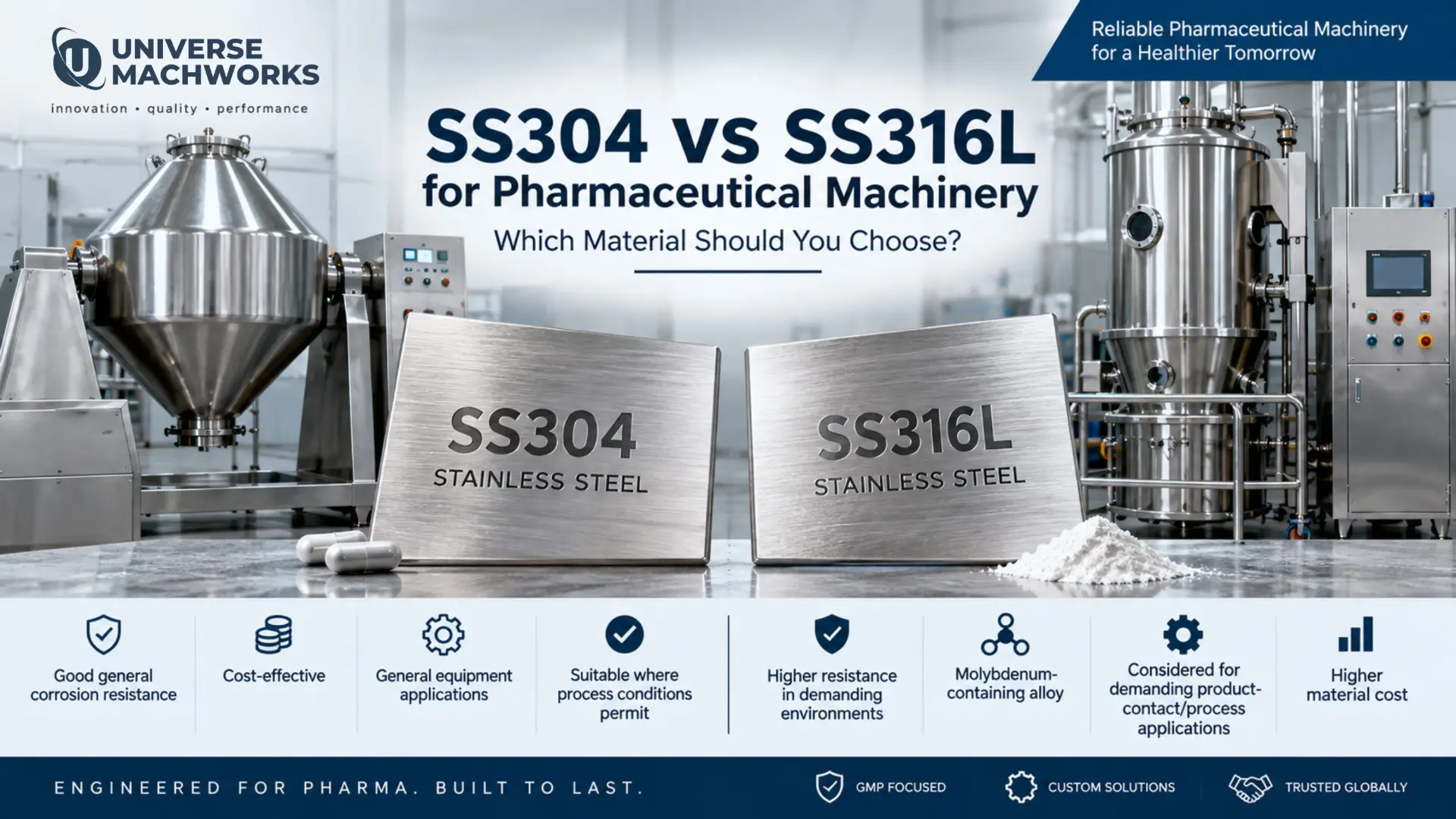
SS304 vs SS316L for Fermentors
SS304
SS304 provides good general corrosion resistance and may suit applications where the process environment is compatible with the material.
SS316L
SS316L contains molybdenum and generally offers improved resistance to certain corrosive environments. It may be selected for demanding product-contact or process applications, but is not automatically mandatory for every fermentor.
- Process chemistry
- Cleaning chemicals
- Temperature
- Sterilization requirements
- Product-contact requirements
- Customer specifications
GMP and Fermentor Design
For pharmaceutical and biological applications, GMP considerations include equipment design, cleaning, sanitization, sterilization, contamination control, process monitoring, documentation, maintenance, and validation where applicable.
FDA emphasizes equipment appropriate for its intended use, while ICH Q7 specifically addresses cleaning and, where appropriate, sanitization or sterilization of fermentation equipment. WHO GMP guidance similarly emphasizes defined, validated, monitored, and documented processes.
Cleaning and Sterilization of Fermentation Equipment
Cleaning depends on the product, organism, vessel design, internal surfaces, process residues, cleaning chemicals, and sterilization needs. Suitable equipment may incorporate CIP and SIP, although not every fermentor has the same configuration.
Cleaning procedures should be developed and demonstrated for the specific equipment and process. Effectiveness depends on material, exact design, operating conditions, and potential contaminants.
Fermentor Automation and Control
Depending on the application, an automated fermentor may monitor temperature, pH, dissolved oxygen, agitation, airflow, pressure, foam, and level through a centralized PLC/HMI interface.
- Consistent process control
- Parameter monitoring
- Alarm management
- Data recording
- Reduced manual intervention
- Repeatable operating sequences
The level of automation should match actual process requirements.
Fermentor Maintenance
Agitator and Mechanical Seal
Inspect the shaft, impeller, bearings, seals, and drive components for wear, leakage, and correct operation.
Sensors, Valves, and Connections
Check calibration and condition of pH, temperature, DO, and pressure sensors, and inspect process valves, gaskets, fittings, and connections.
Vessel and Control System
Inspect vessel surfaces for corrosion, damage, deposits, or weld-area issues. Check the PLC, HMI, electrical connections, alarms, and interlocks according to equipment instructions and site procedures.
Common Mistakes When Buying a Fermentor
1. Choosing Capacity Without Considering Working Volume
Total vessel volume and practical working volume are not necessarily the same.
2. Selecting the Agitator Without Understanding the Process
Match agitation to mixing and oxygen-transfer requirements.
3. Ignoring Aeration
Aerobic processes can have significant gas-transfer requirements.
4. Treating Every Fermentor as the Same
Different biological processes can require very different configurations.
5. Choosing Material Only on Price
Consider chemistry, cleaning, sterilization, and product-contact requirements.
6. Not Considering Cleaning and Sterilization
Contamination control is particularly important in biological processes.
7. Overlooking Instrumentation
A fermentor may require sensors and controls that a conventional mixing tank does not.
8. Not Defining Documentation Requirements
Agree documentation expectations before manufacturing begins.
Fermentor vs Mixing Tank
A fermentor and mixing tank can look similar externally, but their intended functions differ.
| Feature | Fermentor | Mixing Tank |
|---|---|---|
| Primary purpose | Controlled biological process | Mixing, blending, or holding |
| Biological culture | Usually involved | Generally not |
| Aeration | Often required for aerobic processes | Process-dependent |
| pH monitoring | Often relevant | Process-dependent |
| DO monitoring | Often relevant in aerobic processes | Usually process-dependent |
| Sterilization | May be critical | Depends on application |
| Agitation | Process-specific | Mixing-specific |
| Process monitoring | Often extensive | Varies |
| Contamination control | Particularly important | Depends on product and process |
A fermentor should be specified according to the biological process rather than selected simply as a stainless-steel vessel with an agitator.
Compare related process equipment
How to Choose a Fermentor Manufacturer
Manufacturing Capability and Process Understanding
Confirm experience with the required process vessel and understanding of working volume, agitation, aeration, temperature control, monitoring, and cleaning requirements.
Fabrication Quality and Customization
Evaluate stainless-steel construction, welding, surface finish, connections, mechanical components, and whether the equipment can be configured around your process.
Instrumentation, Service, and Documentation
Discuss sensors, controls, PLC/HMI, alarms, data recording, installation, commissioning, training, spare parts, maintenance support, and project documentation.
Fermentor Buying Checklist
Process
- ☐ Product and biological system identified
- ☐ Batch or operation mode defined
- ☐ Working volume defined
- ☐ Temperature and pH ranges defined
- ☐ Aeration and agitation requirements defined
Vessel
- ☐ Total and working volume
- ☐ Operating pressure and vacuum
- ☐ Material and surface finish
- ☐ Connections and nozzles
- ☐ Manway and access arrangement
Instrumentation
- ☐ Temperature monitoring
- ☐ pH monitoring
- ☐ DO monitoring
- ☐ Pressure monitoring
- ☐ Foam and level monitoring if required
Cleaning and Controls
- ☐ Cleaning method
- ☐ CIP and SIP requirements
- ☐ Sanitization requirements
- ☐ Manual or automatic operation
- ☐ PLC/HMI, alarms, and data logging
Project Support
- ☐ Installation
- ☐ Testing
- ☐ Documentation
- ☐ Spare parts
- ☐ After-sales support
Why Choose Universe Mach Works?
Universe Mach Works manufactures and supplies pharmaceutical and process machinery for pharmaceutical and allied industries. Fermentor and stainless-steel process-vessel configurations can be discussed according to the intended application and process requirements.
Customers should define vessel capacity, working volume, construction material, agitator, temperature control, aeration, process connections, instrumentation, automation, and cleaning or sterilization requirements so equipment can be configured appropriately rather than relying on a standard vessel specification.
Discuss your fermentor requirement
Fermentor Technical Specification Template
Use this template when requesting a quotation. Actual values must come from the final machine and process specification; do not publish guessed capacity, pressure, speed, power, instrumentation, or CIP/SIP values.
| Specification | Details to Confirm |
|---|---|
| Machine Type | Fermentor / Fermentation Vessel |
| Application | Fermentation / Biological Processing |
| Total and Working Volume | Confirm for the project |
| Material of Construction | SS304 / SS316L / other as specified |
| Product-Contact Material | Confirm for the process |
| Agitator, Motor, Gearbox, Speed | Confirm from process requirements |
| Heating / Cooling | Confirm required arrangement |
| Operating Temperature and Pressure | Confirm design range |
| pH and DO Monitoring | Confirm required instrumentation |
| Aeration / Sparger | Confirm gas-transfer requirements |
| CIP / SIP | Confirm required configuration |
| Control System | Confirm PLC/HMI and data requirements |
| Surface Finish and Dimensions | Confirm final project specification |
Explore the Product
Fermentor Machine by Universe Mach Works
View technical specifications, applications and request a customized quote.
View Fermentor MachineFrequently Asked Questions
What is a fermentor?+
A fermentor is a controlled process vessel used for cultivating microorganisms or cells and carrying out fermentation under defined operating conditions.
What is the working principle of a fermentor?+
A fermentor provides controlled conditions for a biological process through agitation, temperature control, aeration where required, monitoring, and other process controls.
What is the difference between a fermentor and a fermenter?+
The terms are commonly used interchangeably to describe equipment used for fermentation.
What is a fermentation vessel?+
A fermentation vessel is a controlled vessel designed to provide an environment suitable for carrying out a fermentation process.
Is a fermentor the same as a bioreactor?+
The terms can overlap. Bioreactor is generally broader and can refer to equipment used for biological processes including fermentation and cell culture.
What are the main components of a fermentor?+
Major components can include the vessel, agitator, impeller, sparger, temperature-control system, sensors, sampling system, exhaust system, valves, and control system.
What is the purpose of an agitator in a fermentor?+
The agitator helps mix the culture, distribute nutrients, improve gas-liquid contact, and support controlled process conditions.
Why is aeration used in fermentation?+
Aeration is used where microorganisms require oxygen. The specific requirement depends on the organism and process.
What is a sparger?+
A sparger is a device used to introduce gas into the fermentation medium.
What is the role of pH control?+
pH monitoring and control help maintain conditions required by the biological system.
What is DO in fermentation?+
DO means dissolved oxygen. It represents oxygen available in the liquid phase and can be an important parameter for aerobic fermentation.
Is SS316L required for every fermentor?+
No. Material selection depends on process chemistry, cleaning and sterilization conditions, corrosion requirements, product-contact needs, and project specifications.
Can a fermentor be customized?+
Yes. It can be configured according to working volume, agitation, aeration, temperature control, instrumentation, pressure, automation, and cleaning or sterilization requirements.
What is a fed-batch fermentor?+
A fed-batch fermentor receives additional nutrients or process materials during fermentation instead of charging the entire requirement at the beginning.
What is a batch fermentor?+
A batch fermentor is charged with process materials and operated for a defined period before its contents are harvested.
How is a fermentor cleaned?+
Depending on the equipment and process, manual cleaning, CIP, sanitization, or sterilization systems may be used.
What should I consider before buying a fermentor?+
Consider working volume, biological system, agitation, aeration, temperature, pH, DO, pressure, material, cleaning, sterilization, instrumentation, automation, documentation, and service support.
Conclusion
A fermentor is more than a stainless-steel tank with an agitator. It is a controlled process system designed around the requirements of a biological process.
The correct fermentor depends on the organism or culture, working volume, agitation, aeration, temperature, pH, dissolved oxygen, pressure, contamination-control strategy, material of construction, instrumentation, cleaning, and sterilization requirements.
For pharmaceutical and biotechnology applications, these considerations are particularly important because fermentation can be sensitive to contamination and variations in operating conditions. ICH Q7 and WHO GMP guidance emphasize appropriate cleaning, sanitation or sterilization where applicable, contamination control, process monitoring, and documented manufacturing controls.
A practical selection sequence is: Define the Biological Process → Determine Working Volume → Specify Agitation & Aeration → Define Temperature & pH Control → Select Material → Define Instrumentation → Establish Cleaning/Sterilization → Finalize Automation → Test & Commission.
This process-focused approach helps pharmaceutical, biotechnology, nutraceutical, and other process-industry manufacturers develop a fermentor configuration appropriate for their requirements.