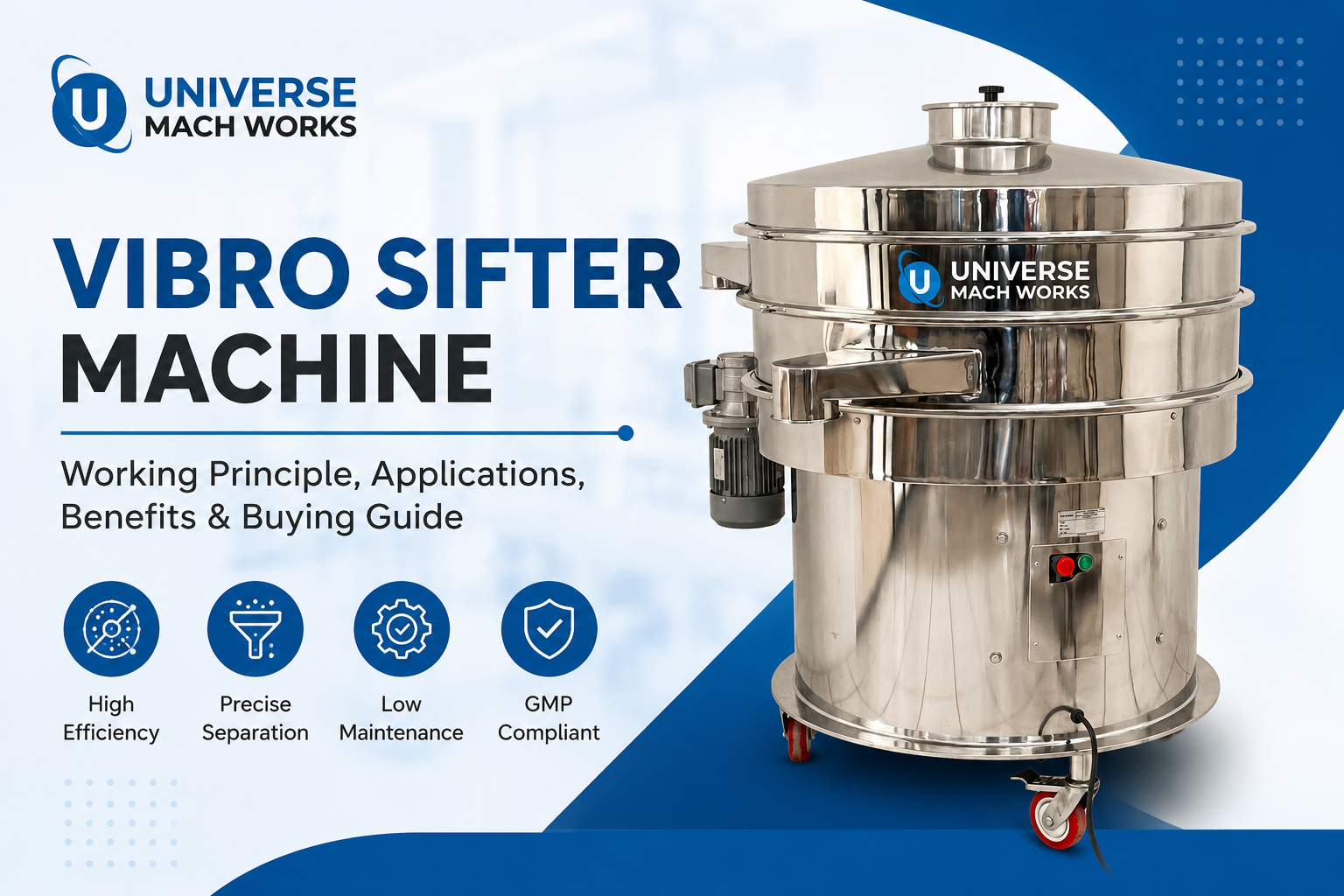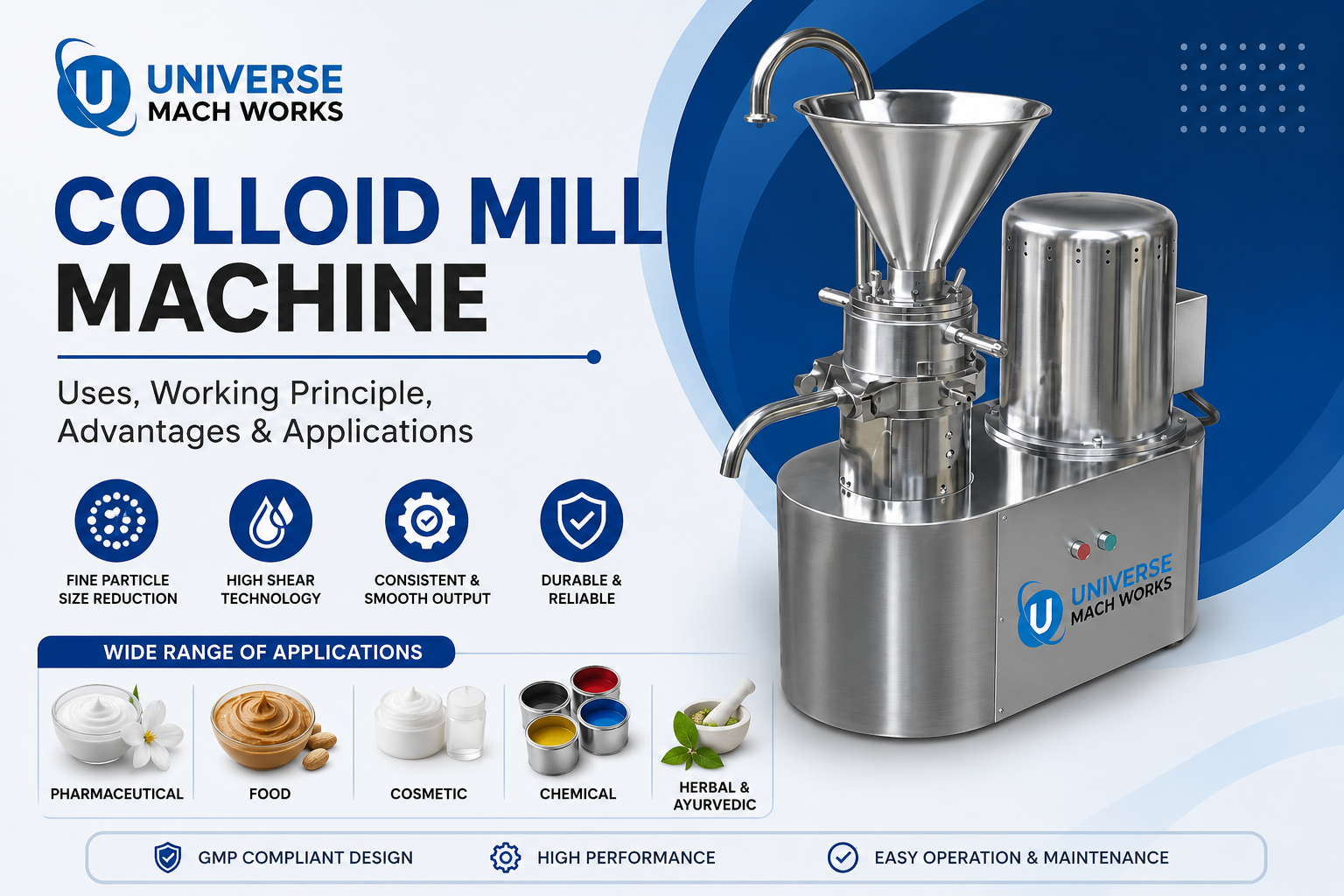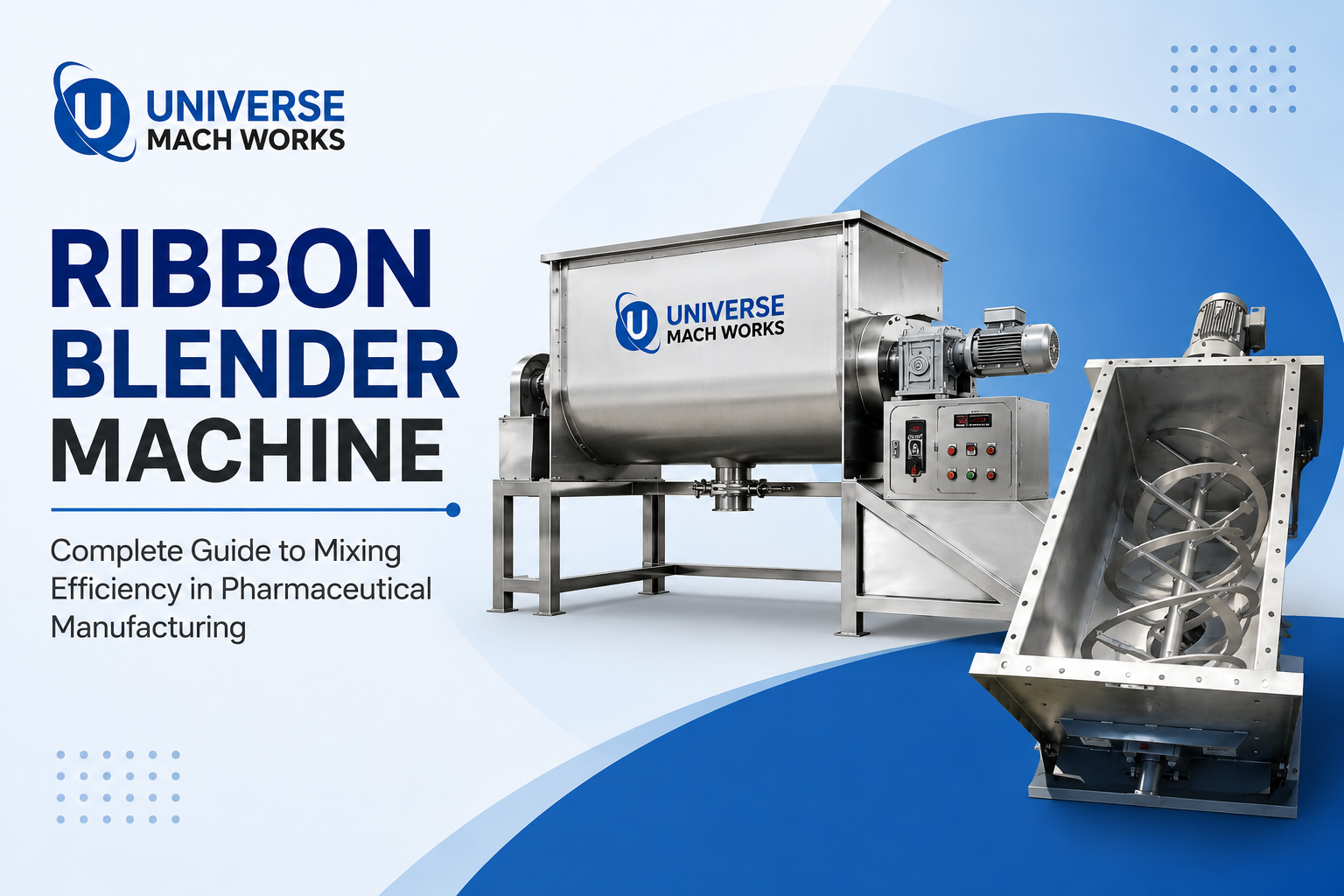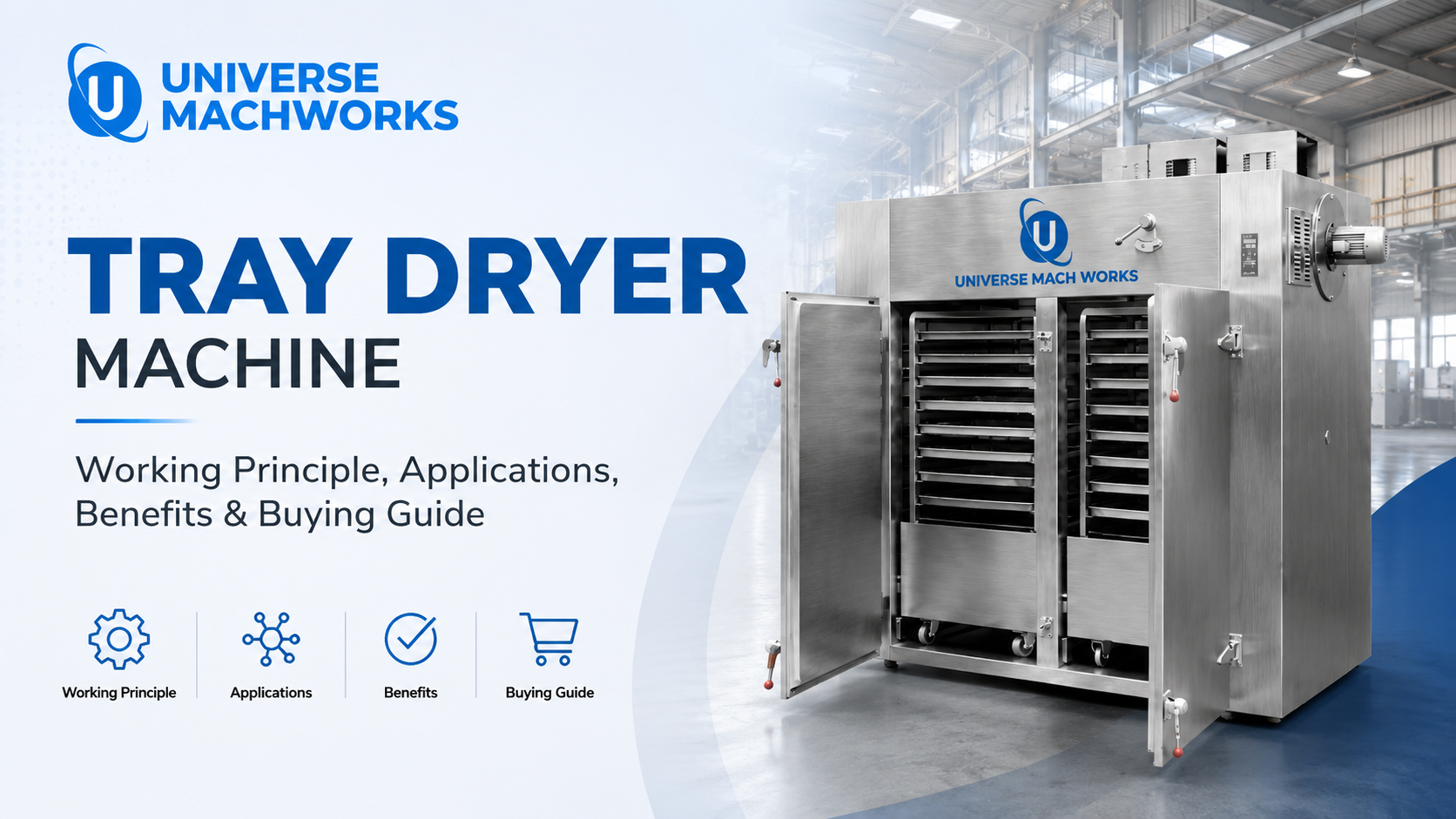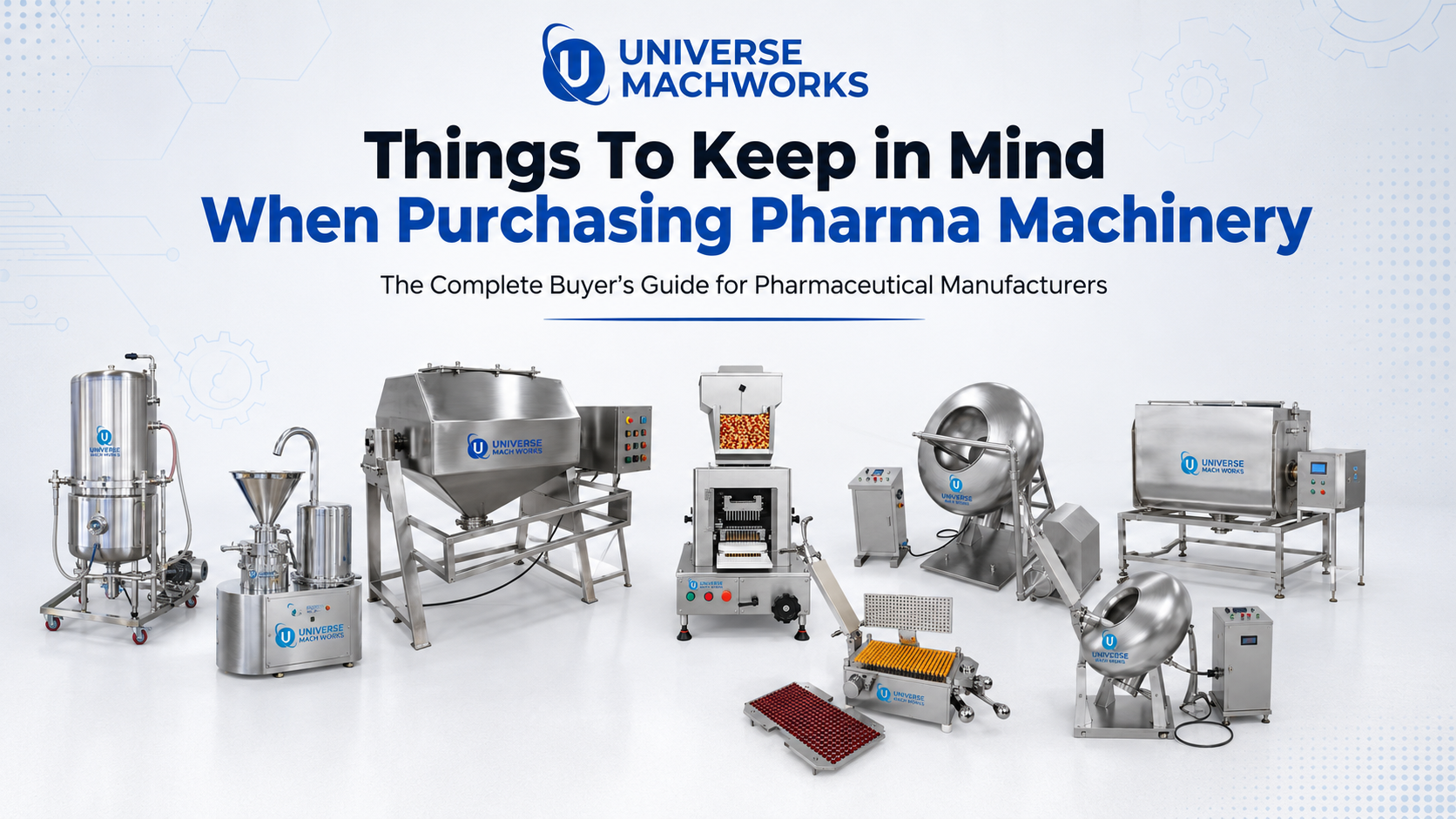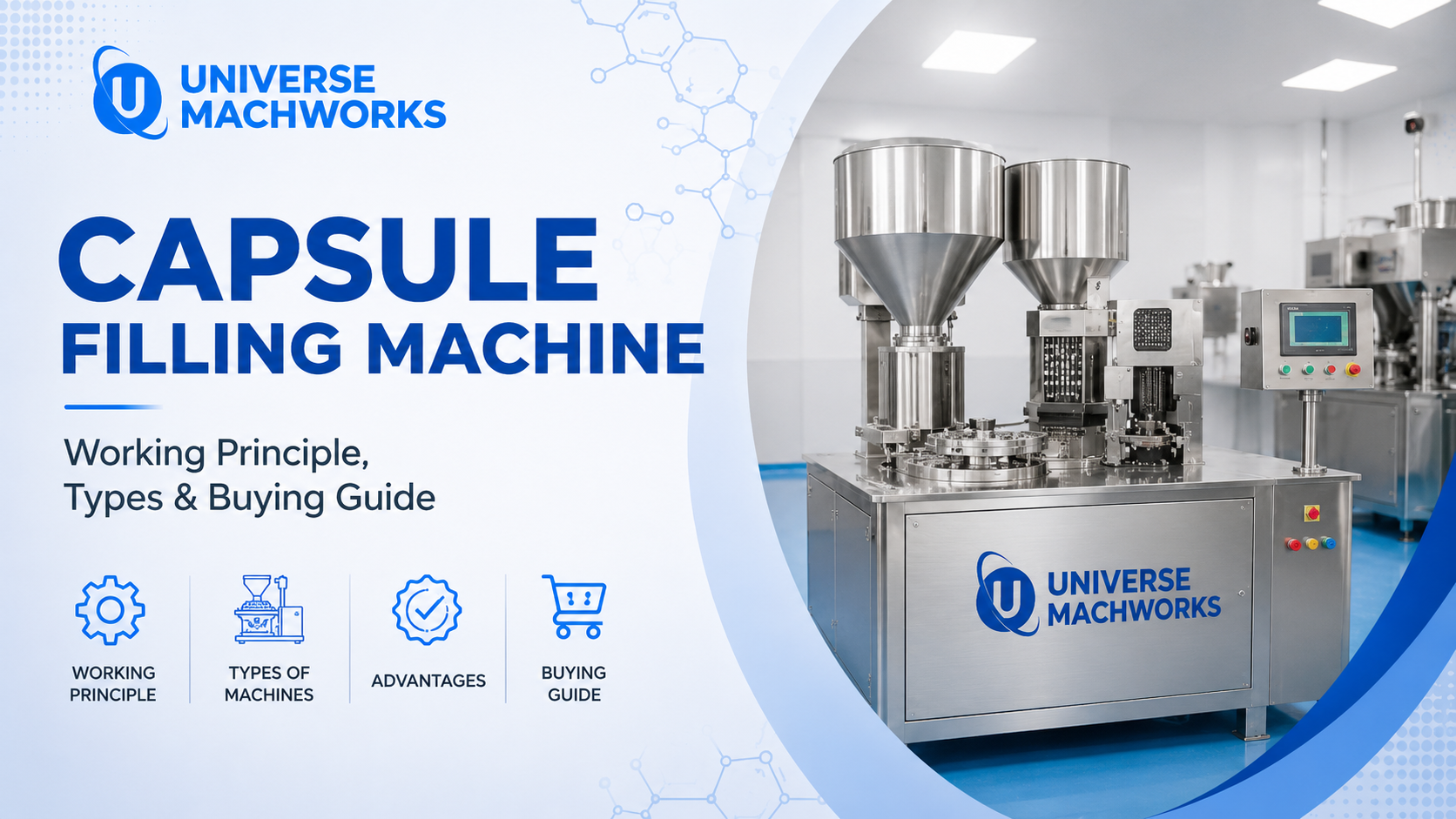
Stainless steel is widely used in pharmaceutical processing equipment because machinery must withstand routine operation, cleaning, and exposure to different materials and process conditions.
When selecting pharmaceutical machinery, one of the most common material-related questions is: should the machine be manufactured using SS304 or SS316L? Both stainless-steel grades can be used in industrial and pharmaceutical equipment, but they have different characteristics. The correct selection depends on the product being processed, corrosion conditions, cleaning chemicals, temperature, product-contact requirements, equipment design, and project specifications.
There is no universal rule that says every pharmaceutical machine must be manufactured entirely from SS316L. The U.S. FDA states that pharmaceutical manufacturers are responsible for selecting equipment appropriate for its intended use and capable of meeting applicable CGMP requirements. Equipment product-contact surfaces must not be reactive, additive, or absorptive in a way that adversely affects the drug product.
This means material selection should be based on process suitability and risk, rather than simply choosing the more expensive stainless-steel grade. This guide compares SS304 vs SS316L for pharmaceutical machinery, explains their differences, discusses common applications, and outlines the factors manufacturers and buyers should consider before selecting a material.
What Is SS304 Stainless Steel?
SS304 is an austenitic stainless steel widely used in industrial equipment, fabrication, food processing, pharmaceutical equipment, and other applications where corrosion resistance and durability are required.
Its widespread use reflects its combination of corrosion resistance, fabrication characteristics, mechanical strength, availability, general-purpose performance, and cost considerations. SS304 can be suitable for many pharmaceutical machinery applications when the product and operating environment are compatible with the material.
- Machine frames
- External structures
- Covers and housings
- Non-product-contact components
- Certain process-contact components, depending on the application
What Is SS316L Stainless Steel?
SS316L is another austenitic stainless-steel grade. It contains molybdenum, which generally provides improved resistance to localized corrosion compared with SS304, particularly in chloride-containing environments. The “L” in 316L refers to its lower carbon content, which is relevant to welding and corrosion performance in welded components.
SS316L is commonly considered for more demanding pharmaceutical and process applications where enhanced corrosion resistance is important.
- Product-contact components
- Process vessels
- Mixing tanks
- Pharmaceutical processing equipment
- Liquid processing systems
- Equipment exposed to more aggressive cleaning or process conditions
Selecting 316L does not automatically make equipment compliant with every pharmaceutical requirement. Equipment design, fabrication, surface condition, cleaning procedures, and the actual process remain important.
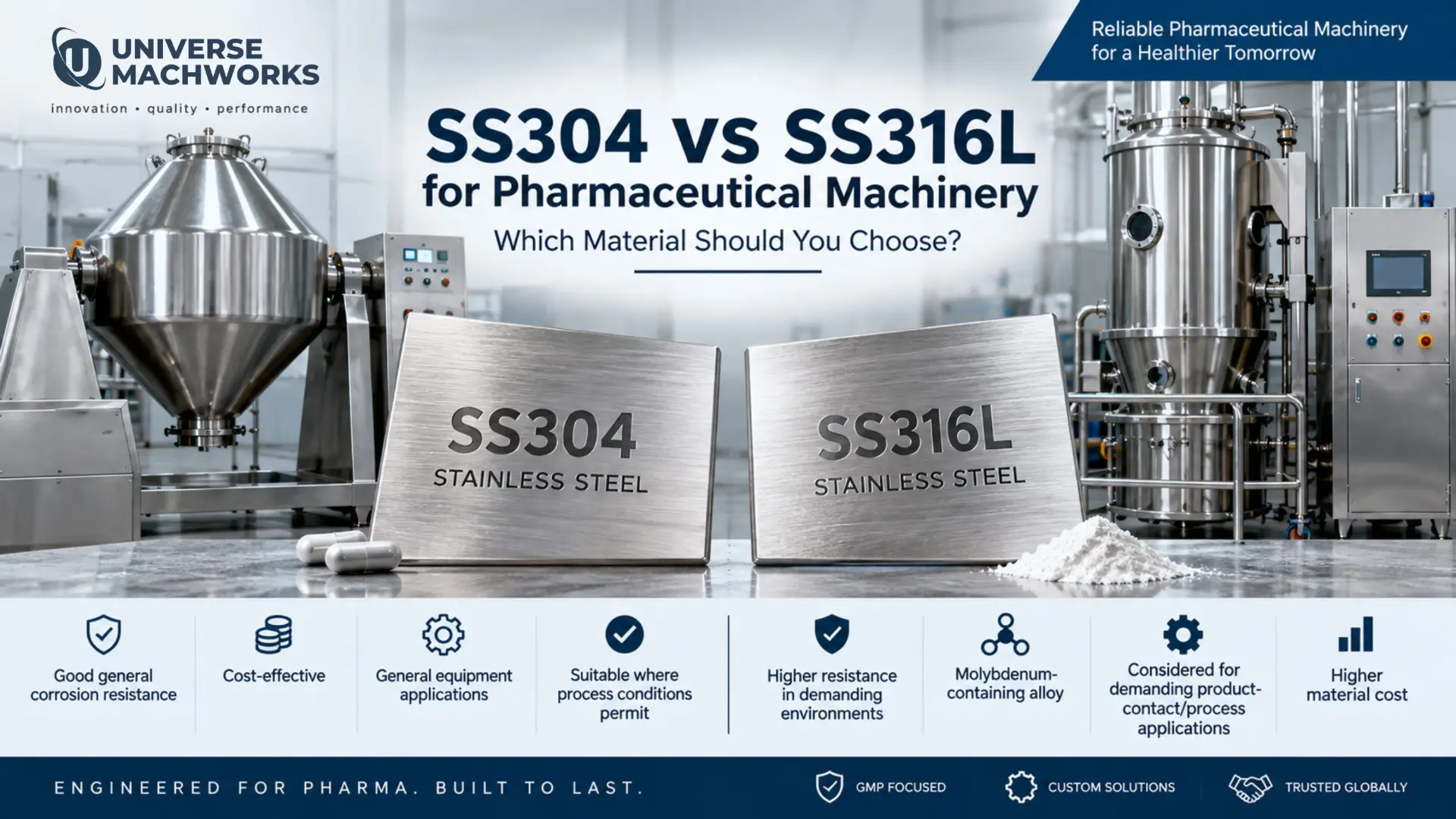
SS304 vs SS316L: Key Differences
| Feature | SS304 | SS316L |
|---|---|---|
| Stainless-steel type | Austenitic | Austenitic |
| General corrosion resistance | Good | Higher in many demanding environments |
| Molybdenum | No | Yes |
| Chloride resistance | Lower than 316L | Generally better |
| Low-carbon grade | No | Yes |
| Fabrication | Good | Good |
| Common industrial applications | Very broad | More demanding applications |
| Pharmaceutical suitability | Application-dependent | Application-dependent |
| Relative material cost | Generally lower | Generally higher |
SS316L is not simply a pharmaceutical version of SS304. Both materials can have appropriate applications, and the choice should be based on the specific operating conditions.
Why Is Material Selection Important in Pharmaceutical Machinery?
Pharmaceutical equipment can contact active pharmaceutical ingredients, excipients, powders, granules, liquids, cleaning agents, sanitizing agents, moisture, and process chemicals. If equipment materials are unsuitable for the process, corrosion, degradation, contamination, or maintenance problems may occur.
FDA CGMP guidance requires equipment to be appropriately designed for its intended use, cleaning, and maintenance. Equipment surfaces contacting components, in-process materials, or drug products should not alter the product's safety, identity, strength, quality, or purity beyond established requirements. Material selection should therefore be considered as part of the overall equipment design.
Corrosion Resistance: SS304 vs SS316L
SS304 provides good general corrosion resistance and is suitable for many industrial environments. However, environments containing chlorides or other aggressive conditions can create greater corrosion challenges.
SS316L contains molybdenum, which improves its resistance to certain forms of localized corrosion compared with SS304. This can make 316L attractive for chloride exposure, more aggressive process environments, certain cleaning conditions, and more demanding liquid-processing applications.
Corrosion performance depends on the actual chemical environment, concentration, temperature, exposure time, surface condition, and other factors. It is not sufficient to select a material simply because a machine will be used in a pharmaceutical facility.
SS304 vs SS316L for Product-Contact Surfaces
Product-contact surfaces are the areas that directly contact raw materials, intermediates, granules, powders, and finished or partially processed products. Manufacturers should assess chemical compatibility, corrosion resistance, cleanability, surface condition, product characteristics, cleaning agents, operating temperature, and process requirements.
FDA guidance notes that cleaning procedures need to consider the material of construction or fabrication, exact equipment design, conditions of use, and substances that could contaminate the equipment. Material selection and cleaning validation therefore cannot be considered completely independently.
Is SS316L Always Required for Pharmaceutical Machinery?
No. There is no blanket rule that every pharmaceutical machine must be manufactured entirely from SS316L. FDA states that it does not maintain a list of approved drug manufacturing equipment and gives manufacturers flexibility to select equipment that satisfies their particular needs and applicable CGMP requirements.
The appropriate question is not whether SS316L is mandatory, but which material is appropriate for the particular machine, product, and process. SS304 may be appropriate for some applications, while SS316L may provide useful additional corrosion resistance for more demanding product-contact or process-contact components.
Where Is SS304 Commonly Used?
Machine Frames and External Covers
Structural frames, support structures, non-product-contact covers, and housings may use SS304 when it meets the equipment design and environmental requirements.
Powder Processing and Blending Equipment
Certain dry powder processing applications and selected blender components may use SS304 when the product, cleaning conditions, and customer specification are compatible with the material.
Explore relevant powder-processing equipment
Where Is SS316L Commonly Considered?
Liquid Processing Equipment and Mixing Tanks
Liquid products can present different corrosion conditions from dry powders, making material compatibility particularly important. SS316L may be specified for product-contact surfaces in certain mixing applications.
Process Vessels and Product-Contact Components
Where the process involves more aggressive materials or cleaning conditions, 316L may be considered for vessels and relevant contact surfaces. Cleaning and sanitization procedures should always be evaluated against the selected material and actual operating conditions.
Explore relevant liquid and vessel equipment
SS304 vs SS316L: Cost Considerations
SS316L generally costs more than SS304 because of its alloy composition and higher molybdenum content. Comparing only the initial material price, however, can be misleading.
A better approach is: Initial Cost + Maintenance + Cleaning Requirements + Corrosion Risk + Service Life + Process Suitability.
For a simple application where SS304 provides adequate performance, specifying 316L throughout the machine may increase cost without a corresponding process benefit. Selecting SS304 where 316L is needed could create maintenance or equipment-life issues. The objective should be appropriate material selection, not simply choosing the cheapest or most expensive grade.
Surface Finish and Cleanability
Material grade is only one part of pharmaceutical equipment design. Smoothness, weld quality, surface defects, scratches, crevices, product-retention areas, cleaning access, and equipment geometry also matter.
A high-grade stainless steel does not compensate for poor equipment design. Poorly finished welds, unnecessary crevices, damaged surfaces, or difficult-to-clean areas can create cleaning challenges regardless of whether the underlying material is SS304 or SS316L.
Welding Considerations for SS304 and SS316L
Improper welding can affect surface quality, corrosion resistance, cleanability, equipment durability, and product-contact surfaces. SS316L's low carbon content is one reason it is commonly considered advantageous for welded corrosion-resistant equipment.
- Proper welding procedure
- Weld quality
- Surface finishing
- Inspection
- Removal of contamination
- Appropriate post-weld finishing where required
The exact fabrication requirements depend on the machine, application, customer specification, and applicable standards.
SS304 vs SS316L for Different Pharma Machines
| Pharmaceutical Machine | Material Selection Consideration |
|---|---|
| Vibro Sifter | Product characteristics, contact surfaces, cleaning conditions |
| Rapid Mixer Granulator | Product contact, moisture, cleaning, process chemistry |
| Fluid Bed Dryer | Product contact, air/product environment, cleaning |
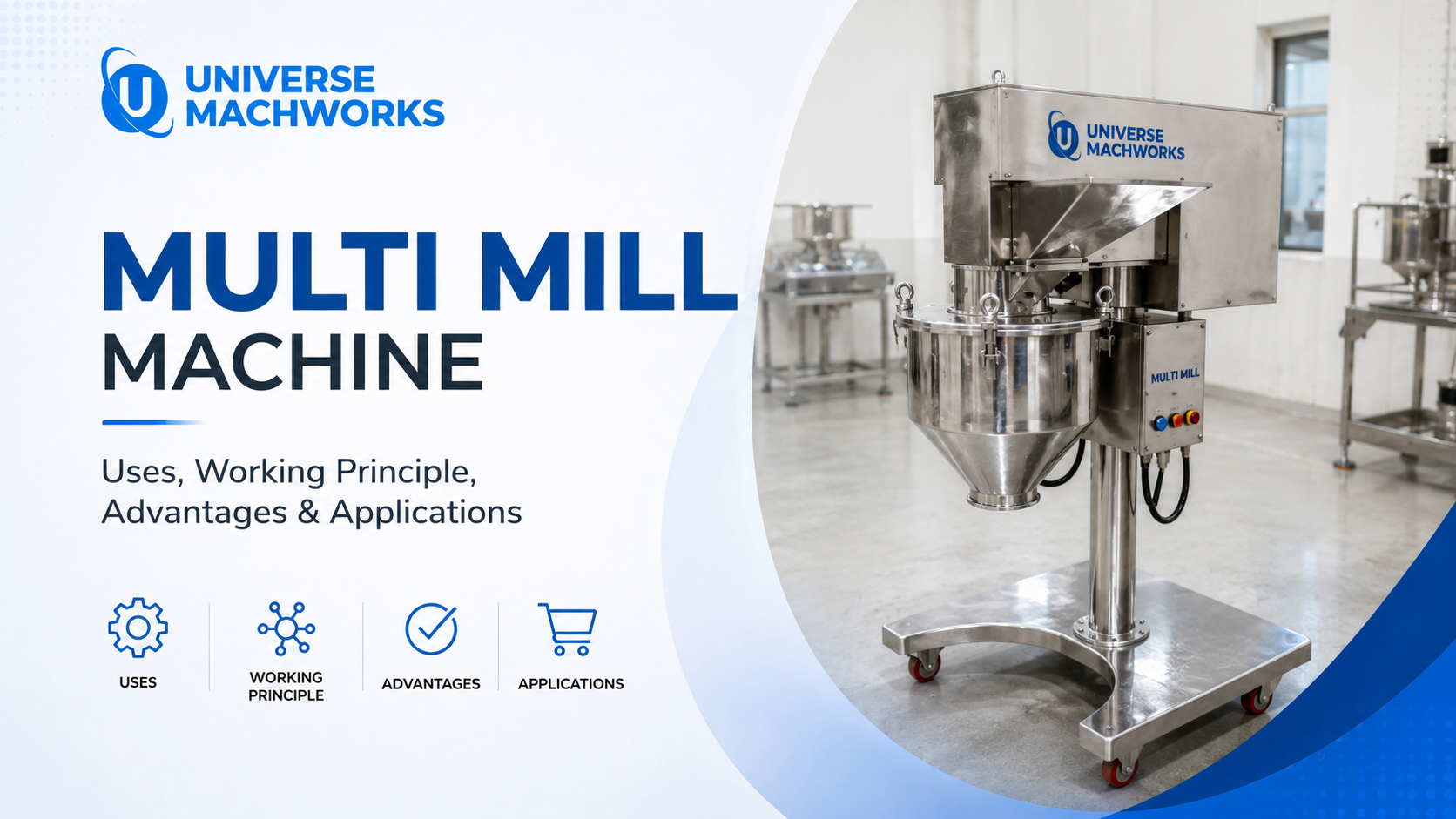
| Multi Mill | Product contact, abrasion, cleaning, process material |
| Ribbon Blender | Product characteristics and contact surfaces |
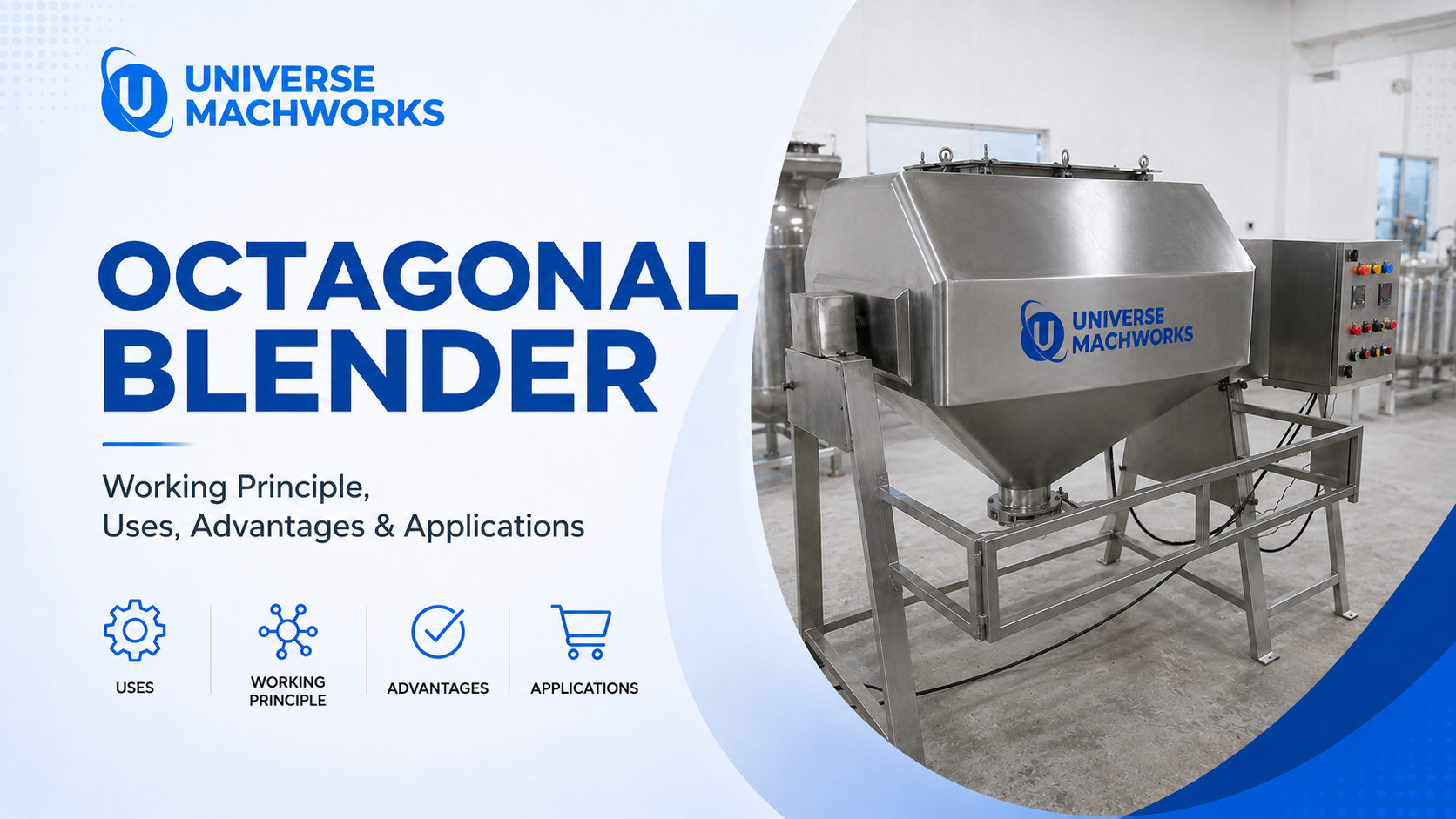
| Octagonal Blender | Product characteristics, cleaning, contact requirements |
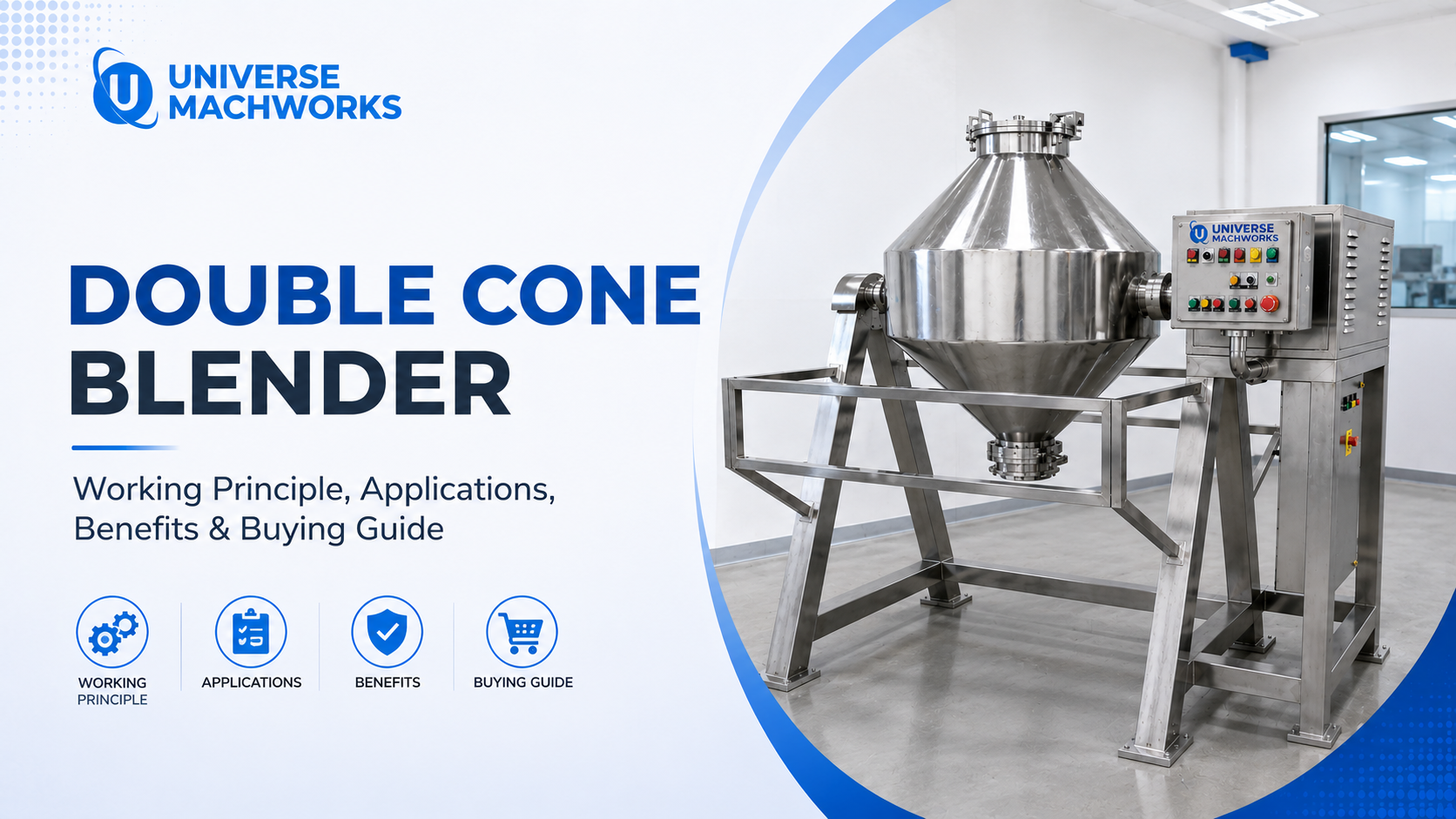
| Double Cone Blender | Product-contact requirements and cleaning |
| Mass Mixer | Product characteristics and process conditions |
| Mixing Tank | Liquid chemistry and corrosion conditions |
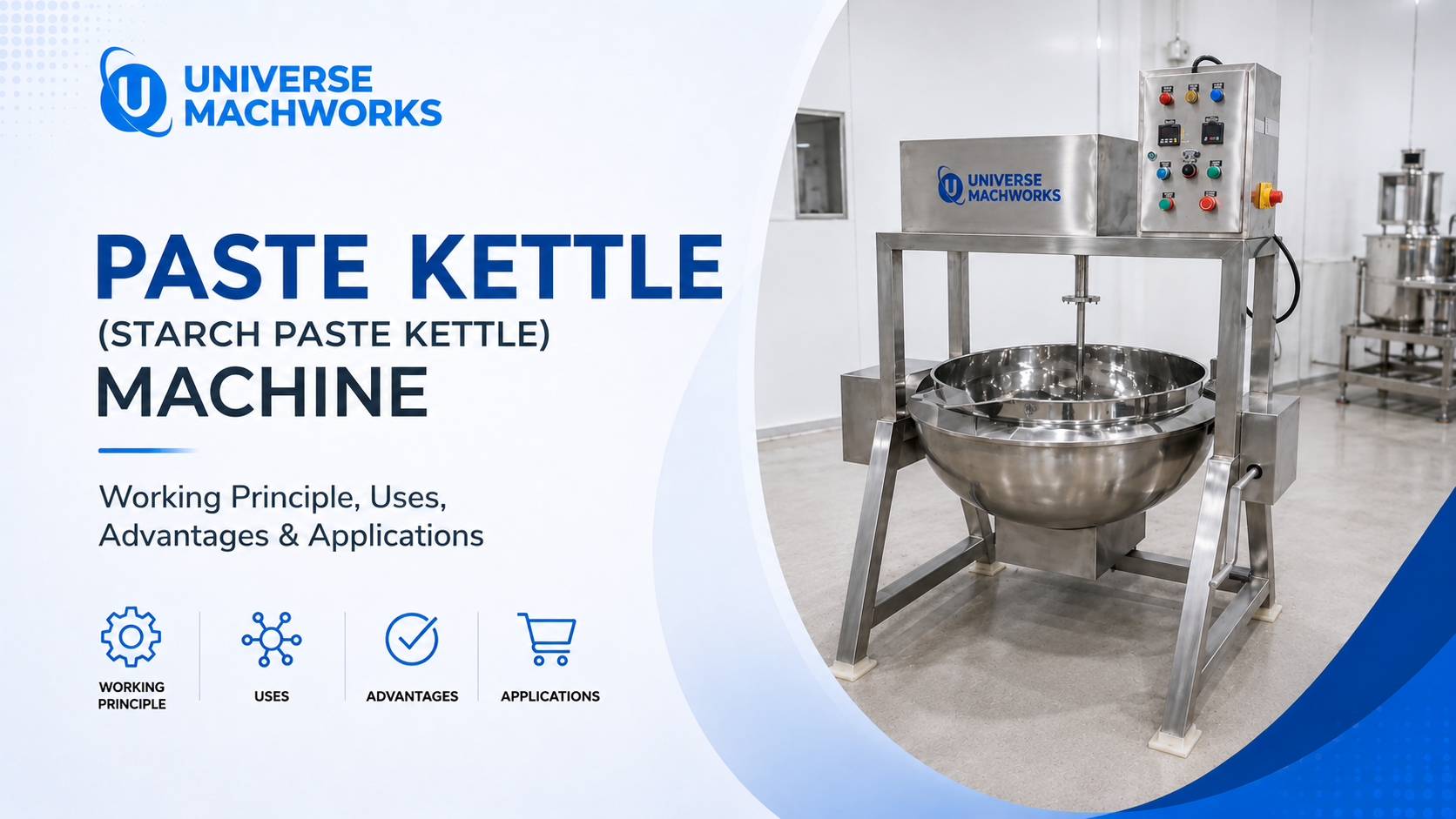
| Paste Kettle | Product chemistry, heating, and cleaning conditions |
| Filter Press | Process liquid, filter materials, and corrosion conditions |
| Pressure Nutsche Filter | Process chemistry and product-contact requirements |
This table is a selection framework rather than a fixed material specification. The final material should be determined from the actual process.
View the equipment discussed
Factors to Consider Before Choosing SS304 or SS316L
1. Product Chemistry
Understand what materials will contact the equipment.
2. Chloride Exposure
Determine whether the process or cleaning environment contains chlorides or other conditions that may increase corrosion risk.
3. Cleaning Chemicals
Cleaning agents and their concentrations can influence material compatibility.
4. Temperature
Higher temperatures can affect corrosion behavior and material compatibility.
5. Product-Contact Requirements
Identify which components actually contact the product.
6. Surface Finish
Specify the required surface condition according to the intended application.
7. Equipment Design
Consider welds, joints, crevices, seals, gaskets, and accessibility.
8. Maintenance
Consider expected maintenance throughout the equipment's operating life.
9. Customer Specifications
Some projects have specific material requirements defined by the customer or their quality and engineering teams.
10. Total Cost of Ownership
Evaluate the complete lifecycle cost rather than simply comparing the initial purchase price.
Common Mistakes When Selecting Stainless Steel
- Assuming 316L is always mandatory instead of evaluating the application.
- Choosing only on price without considering total lifecycle cost.
- Ignoring product chemistry and the cleaning environment.
- Focusing only on material grade while overlooking design, fabrication, welding, surface condition, and cleanability.
- Not defining which components are product-contact parts.
- Assuming pharmaceutical use automatically means 316L everywhere.
How a Pharma Machinery Manufacturer Helps With Material Selection
An experienced pharma machinery manufacturer should discuss material selection as part of the equipment specification: Product → Process → Cleaning → Contact Surface → Material → Fabrication → Testing.
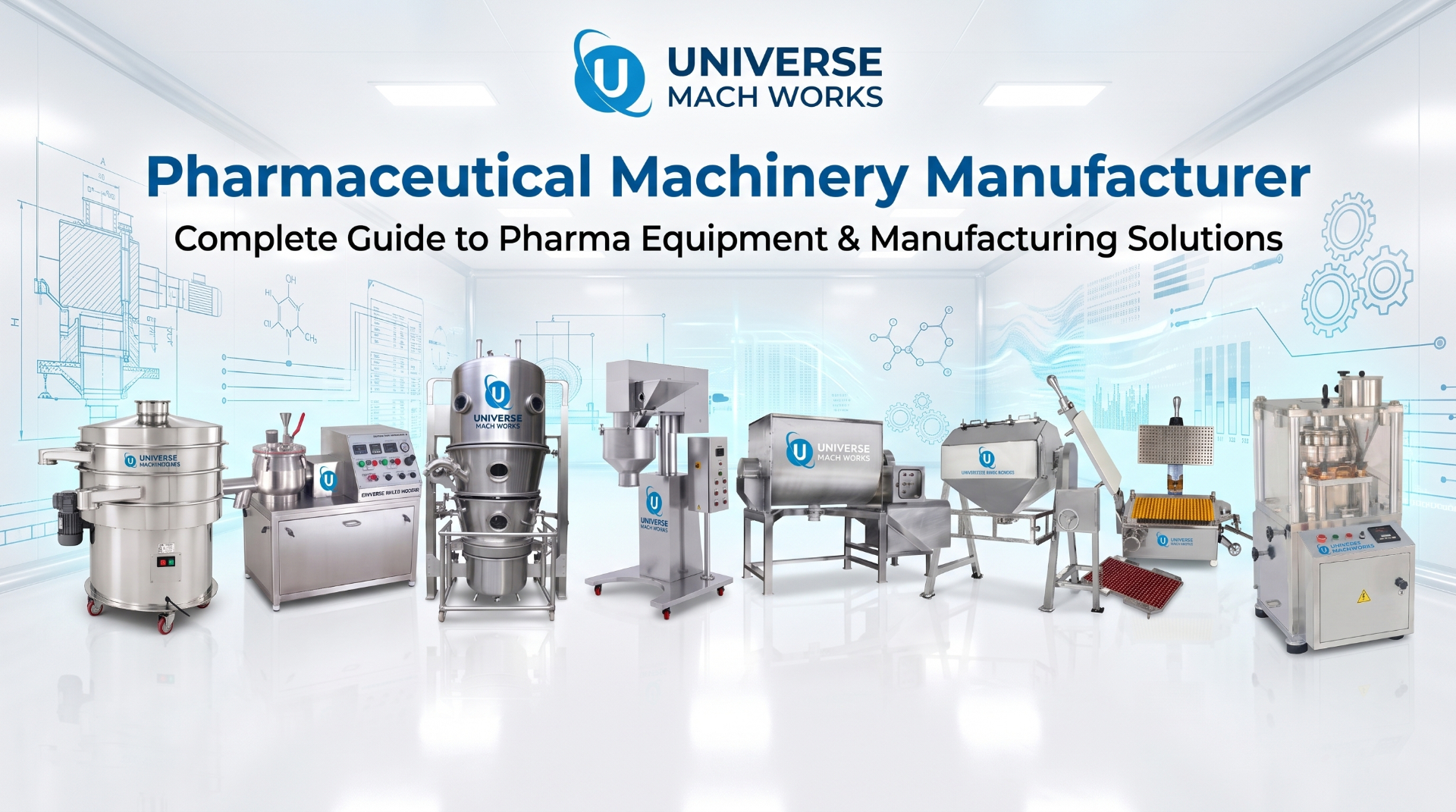
For a mixing tank, the manufacturer may need the product being mixed, pH, temperature, mixing time, agitation requirements, cleaning method, product-contact requirements, and tank capacity. The same principle applies to Vibro Sifters, RMGs, Fluid Bed Dryers, Multi Mills, Blenders, Paste Kettles, and pharmaceutical tanks.
SS304 vs SS316L: Quick Decision Guide
SS304 may be considered when:
- General corrosion resistance is sufficient
- The product chemistry is compatible
- The cleaning environment is compatible
- The equipment specification permits it
- Cost optimization is important
SS316L may be considered when:
- Greater corrosion resistance is required
- Chloride exposure is a concern
- The process environment is more aggressive
- Specific product-contact requirements call for it
- Customer specifications require it
The final selection should be based on documented process requirements and material compatibility.
Explore the Product
Pharmaceutical Processing Equipment by Universe Mach Works
View technical specifications, applications and request a customized quote.
View Pharmaceutical Processing EquipmentFrequently Asked Questions
Is SS316L better than SS304 for pharmaceutical machinery?+
SS316L offers higher corrosion resistance than SS304 in many demanding environments, particularly those involving chlorides. However, better depends on the intended application. SS304 may be suitable where its performance meets the process requirements.
Is SS304 suitable for pharmaceutical equipment?+
SS304 can be suitable for certain pharmaceutical equipment and components when its corrosion resistance, surface condition, and overall construction are appropriate for the intended application.
Is SS316L mandatory for pharma machines?+
No universal rule requires every pharmaceutical machine to be made entirely from SS316L. Equipment must be appropriate for its intended use and applicable requirements.
Why is SS316L used in pharmaceutical equipment?+
SS316L can provide improved resistance to certain corrosive environments compared with SS304, which can be advantageous for demanding process and product-contact applications.
What is the main difference between SS304 and SS316L?+
SS316L contains molybdenum and has lower carbon content. The molybdenum contributes to improved resistance to certain localized corrosion conditions.
Which stainless steel is more expensive?+
SS316L is generally more expensive than SS304 because of its alloy composition.
Does SS316L automatically make a machine GMP compliant?+
No. Material grade is only one part of equipment suitability. Equipment design, cleanability, maintenance, fabrication, documentation, and the manufacturing process also matter.
Which is better for product-contact surfaces?+
There is no universal answer. The appropriate grade depends on the product, process chemistry, cleaning conditions, temperature, and equipment specification.
Can SS304 and SS316L be used in the same pharmaceutical machine?+
Yes. Different components can have different material requirements depending on the equipment design and application. The specification should clearly identify product-contact and non-product-contact components.
How should I choose between SS304 and SS316L?+
Start with product chemistry, process conditions, cleaning requirements, corrosion risks, product-contact requirements, customer specifications, and total cost of ownership.
Conclusion
The choice between SS304 and SS316L for pharmaceutical machinery should be based on engineering requirements rather than a simple assumption that one grade is suitable for every application.
SS304 offers good general corrosion resistance and can be appropriate for many applications. SS316L provides enhanced resistance to certain corrosive environments and can be considered where more demanding process or product-contact conditions exist.
For pharmaceutical equipment, material selection should be considered alongside equipment design, product-contact surfaces, surface finish, welding and fabrication, cleaning requirements, process chemistry, temperature, maintenance, and customer specifications.
FDA guidance makes clear that pharmaceutical manufacturers are responsible for selecting equipment appropriate to its intended use, while product-contact surfaces must be suitable so they do not adversely affect product quality. The right question is therefore not simply SS304 or SS316L, but which material provides the appropriate performance for this specific pharmaceutical process.
A qualified pharma machinery manufacturer can help evaluate the application and develop a material specification around the actual equipment and process requirements. Contact Universe Mach Works to discuss your pharmaceutical processing equipment and material-selection needs.