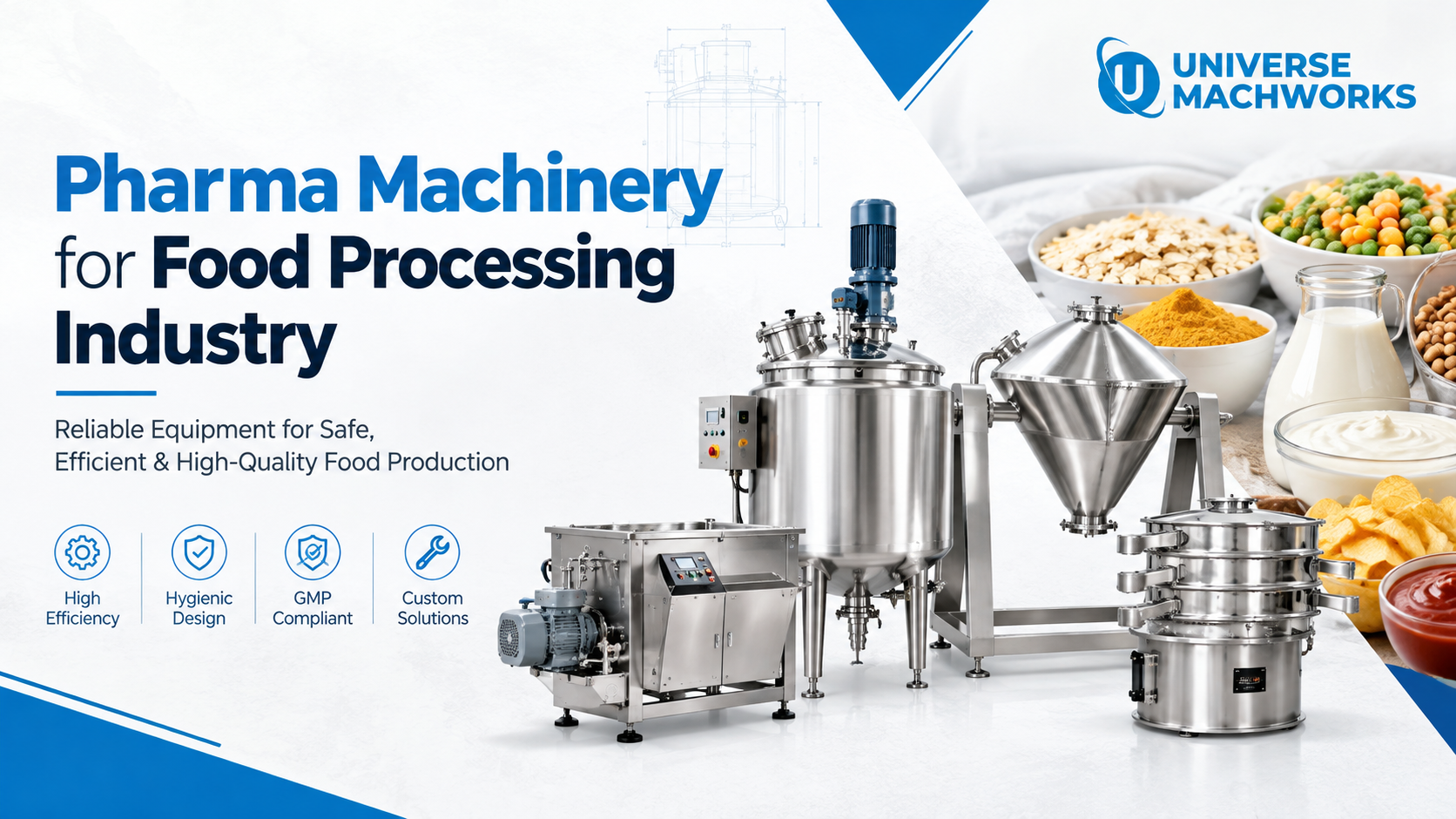

A modern pharmaceutical manufacturing plant depends on much more than high-quality raw materials and skilled personnel. The right pharmaceutical machinery is essential for achieving consistent product quality, efficient production, GMP compliance, process control, and reliable batch-to-batch performance.
From raw material handling and powder blending to granulation, drying, milling, tablet compression, capsule filling, coating, and final packaging, every stage of pharmaceutical production requires specialized equipment.
Choosing the right equipment is particularly important for pharmaceutical manufacturers because machinery must handle sensitive formulations while maintaining cleanliness, accuracy, repeatability, and controlled processing conditions.
Whether you are establishing a new pharmaceutical manufacturing facility, expanding an existing production line, replacing outdated equipment, or improving production capacity, understanding the major types of pharma machinery can help you make better purchasing decisions.
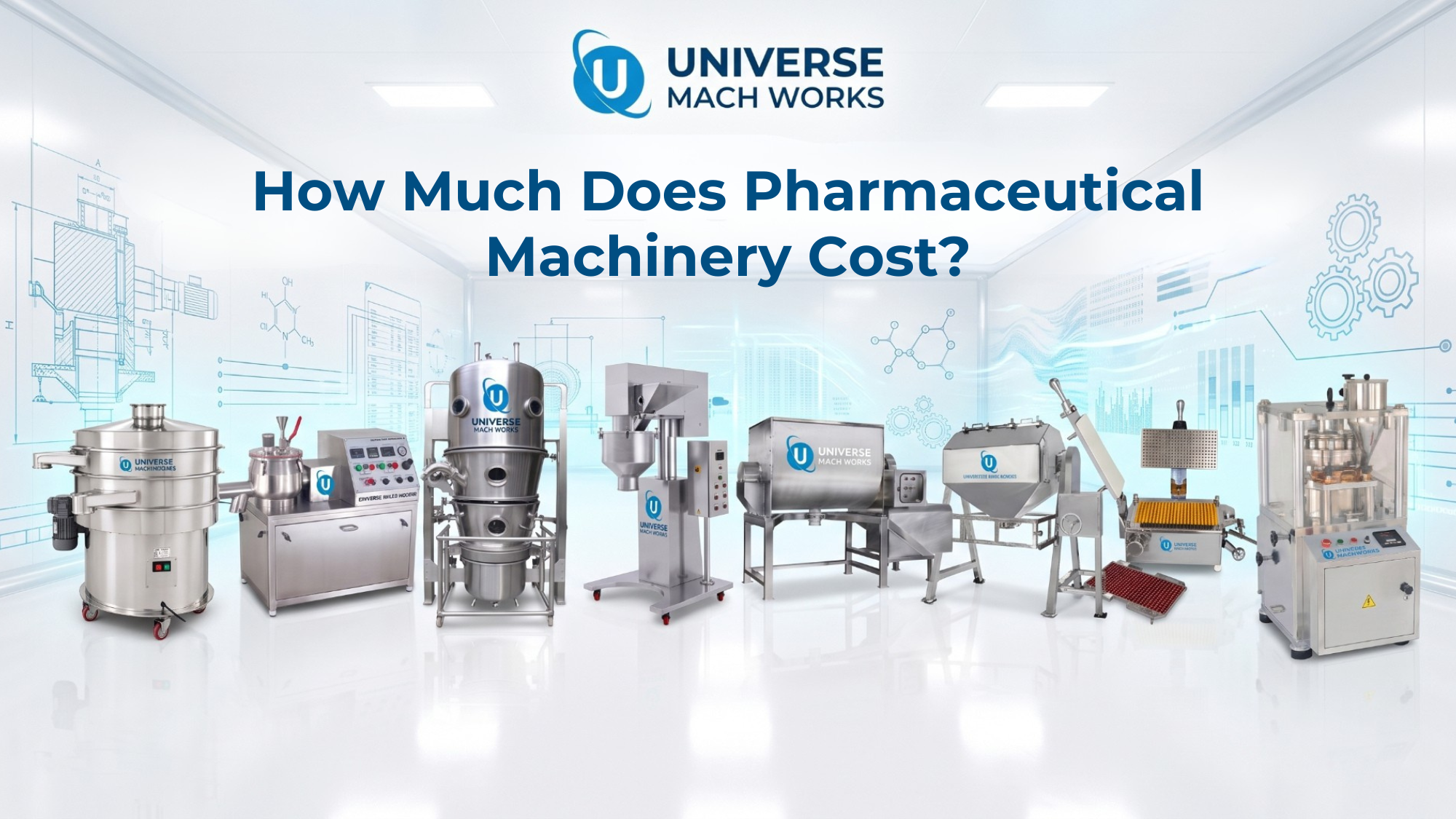
In this guide, we explore the top 15 pharmaceutical machines every manufacturing plant needs, their applications, working roles, key features, and the stages of pharmaceutical production where they are commonly used.
Why Is Pharmaceutical Machinery Important?
Pharmaceutical machinery directly influences production efficiency, product quality, safety, and compliance. A properly designed machine can help manufacturers:
- Maintain consistent product quality
- Improve production capacity
- Reduce material wastage
- Minimize manual handling
- Improve process repeatability
- Maintain hygienic manufacturing conditions
- Support GMP requirements
- Reduce cross-contamination risks
- Improve operator safety
- Reduce production downtime
- Achieve better process control
The equipment required depends on the dosage form and manufacturing process. A tablet manufacturing plant, for example, will require a different combination of equipment than a liquid manufacturing facility or capsule production unit.
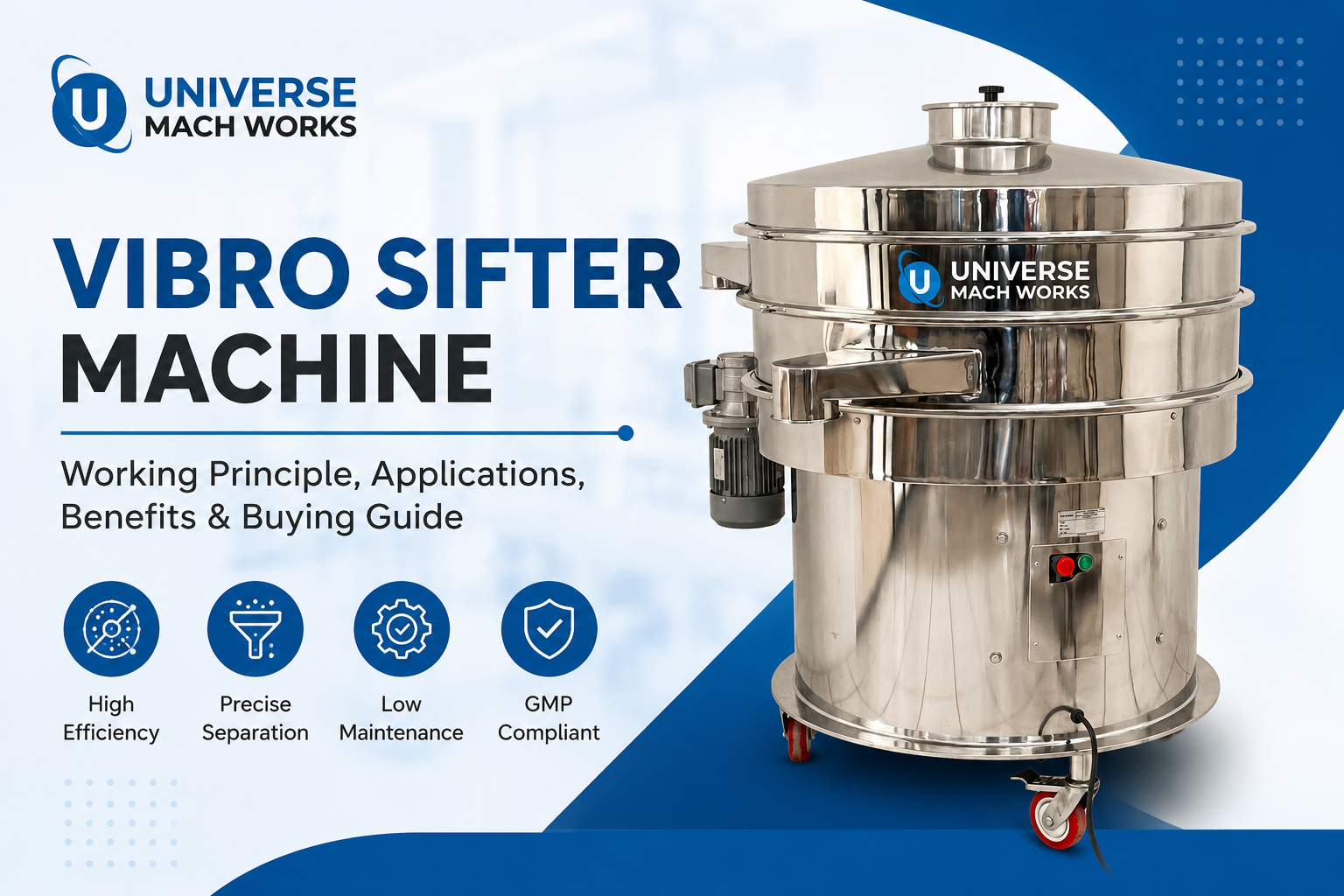
1. Vibro Sifter
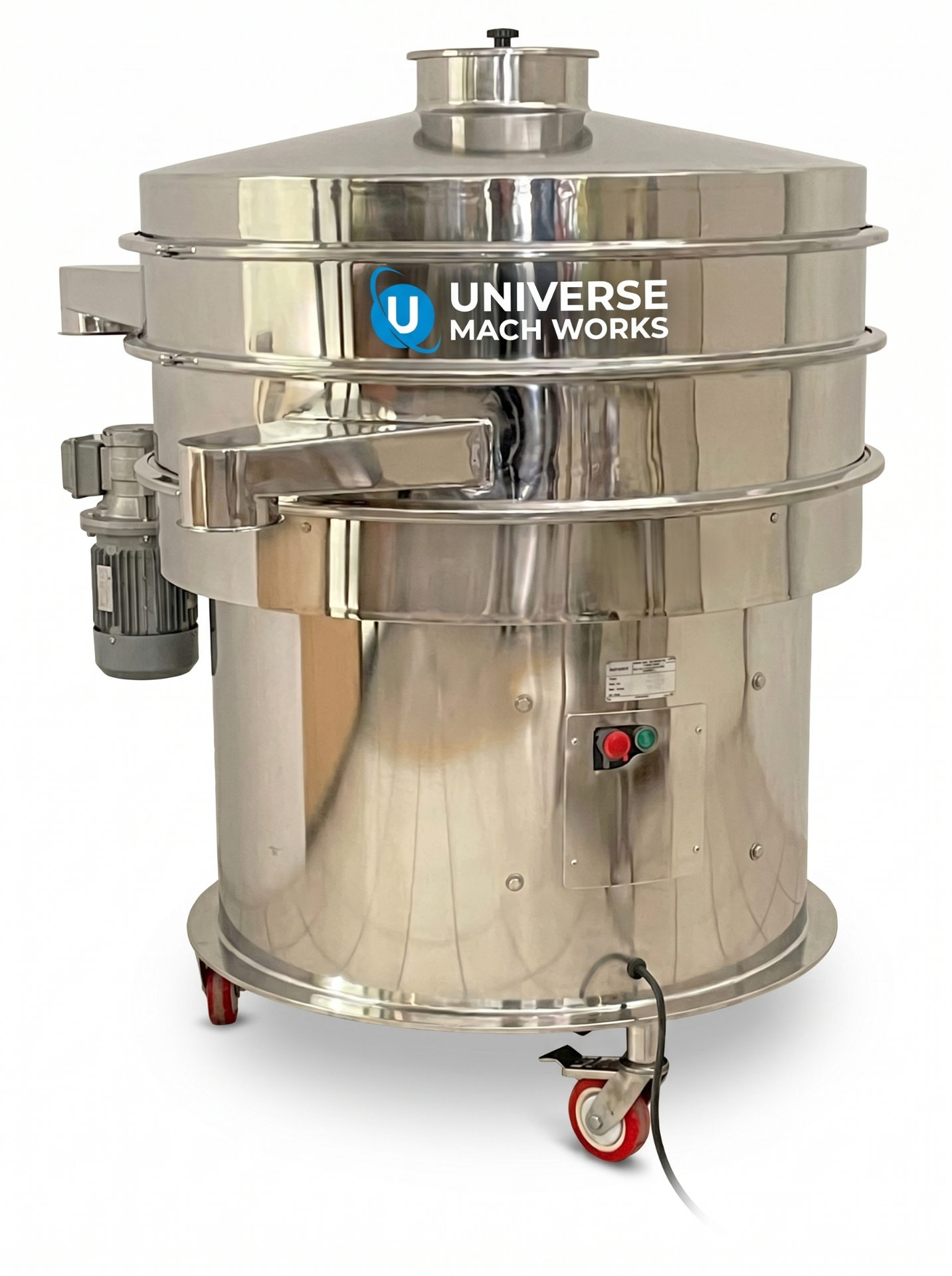
A Vibro Sifter is one of the most commonly used machines in pharmaceutical manufacturing. It is primarily used for particle size separation, screening, and removal of foreign particles or oversized material from powders and granules.
The machine uses controlled vibration to move material across a perforated screen or sieve. Particles that meet the required size pass through the mesh, while oversized particles are retained.
Applications of Vibro Sifter
- Screening pharmaceutical powders
- Separating granules
- Removing lumps
- Sizing raw materials
- Pre-processing powders before blending
- Post-milling screening
- Improving powder uniformity
Why It Is Important
Consistent particle size is critical because differences in particle size can affect powder flow, mixing performance, compression behavior, and ultimately the quality of the finished dosage form. A properly selected vibro sifter can therefore contribute significantly to process consistency.
Key Features to Consider
- Contact-part material
- Screen diameter
- Number of decks
- Mesh size
- Vibration mechanism
- Capacity
- Dust-tight construction
- Ease of cleaning
- GMP-oriented design
2. Rapid Mixer Granulator (RMG)
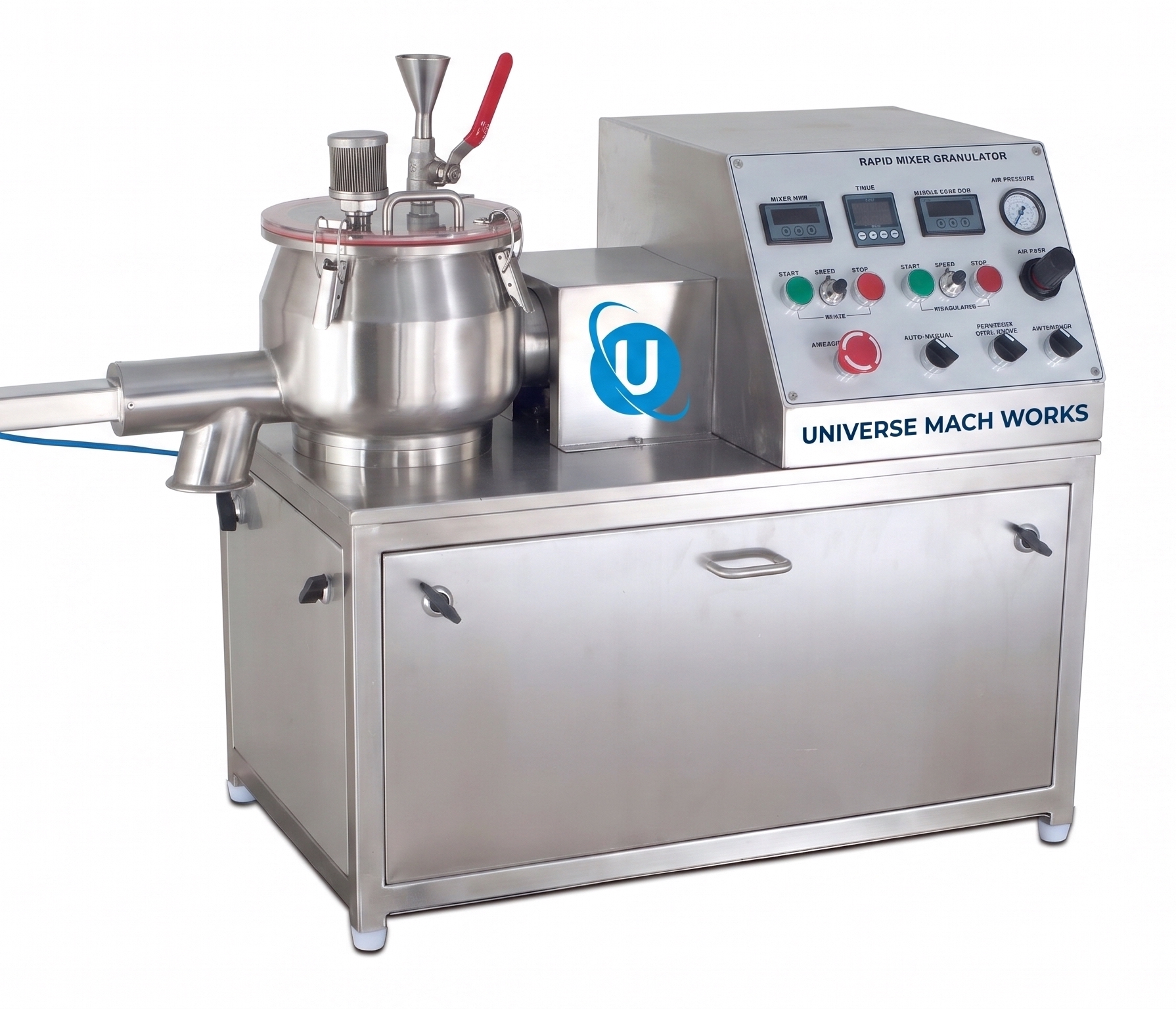
A Rapid Mixer Granulator, commonly known as an RMG, is an important machine used in the wet granulation process for tablet manufacturing. It combines powders with a binder solution to produce a uniform wet mass or granules suitable for subsequent drying and sizing.
The RMG generally consists of a mixing bowl, impeller, and chopper. The impeller provides primary mixing, while the chopper helps break down lumps and control the granule structure.
Working Role of an RMG
- Loading the required powders
- Dry mixing
- Addition of binder solution
- Wet mixing
- Granule formation
- Chopping or sizing of the wet mass
- Discharge for drying
Applications
- Tablet manufacturing
- Pharmaceutical formulations
- Nutraceutical production
- Certain food-processing applications
- Chemical processing
Important Selection Factors
- Working capacity
- Bowl volume
- Impeller design
- Chopper configuration
- Drive system
- Material of construction
- Sealing arrangement
- Cleaning requirements
- Automation level
- PLC/HMI integration
The correct RMG capacity should be selected according to the actual batch size rather than simply choosing the largest available machine.
3. Fluid Bed Dryer (FBD)
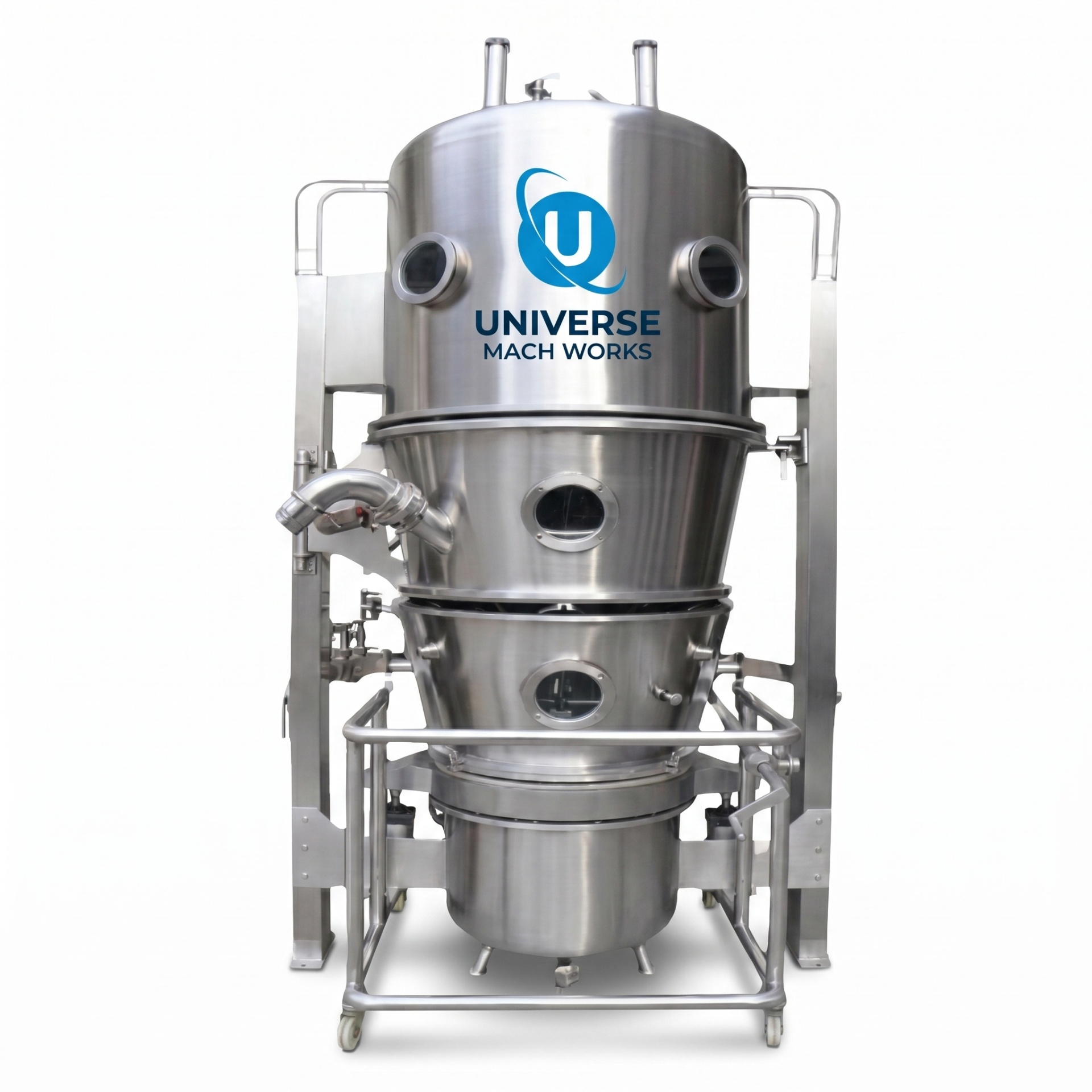
A Fluid Bed Dryer is widely used in pharmaceutical manufacturing for drying wet granules after the granulation stage. The basic principle involves passing heated and filtered air through a bed of wet material. The air causes the particles to become suspended or fluidized while transferring heat and removing moisture.
Where Is an FBD Used?
- Drying pharmaceutical granules
- Removing moisture after wet granulation
- Nutraceutical processing
- Food ingredient processing
- Chemical powders
- Other heat-sensitive particulate materials
Benefits of Fluid Bed Drying
- Efficient moisture removal
- Relatively uniform drying
- Controlled temperature
- Reduced drying time
- Improved process consistency
- Better control of final moisture content
Features to Look For
- Product bowl capacity
- Air handling capacity
- Heating arrangement
- Filter system
- Temperature control
- Airflow control
- PLC/HMI automation
- Product-contact material
- CIP/WIP requirements where applicable
- Safety features
For pharmaceutical applications, the air-handling and filtration system deserves particular attention because the quality of process air directly affects the manufacturing environment.
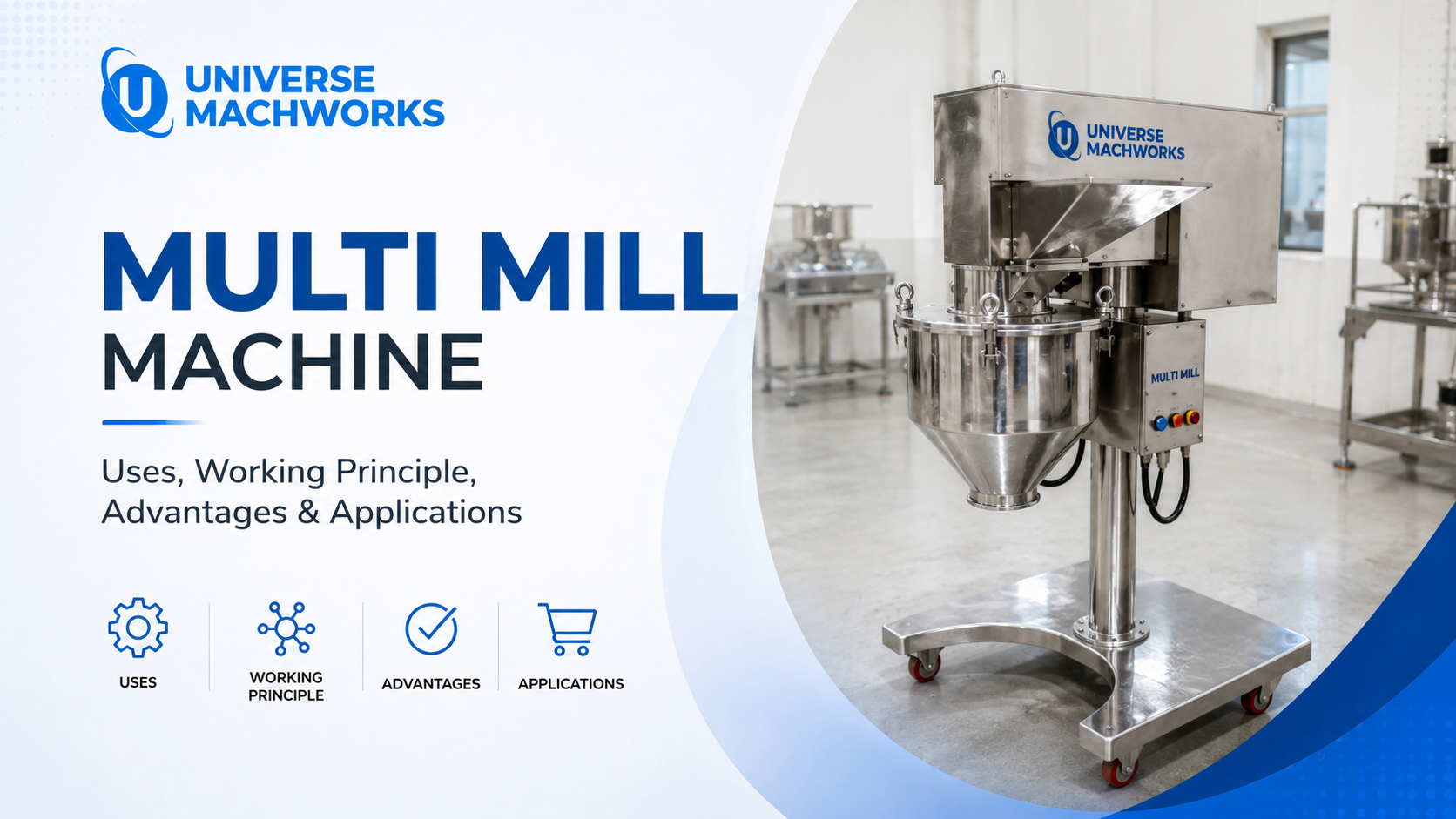
4. Multi Mill
A Multi Mill is used for size reduction and particle-size control in pharmaceutical manufacturing. It is commonly positioned after drying or during other stages where material needs to be reduced to a controlled particle size. The machine uses a rotating impeller or rotor against a suitable screen to break down and process material.
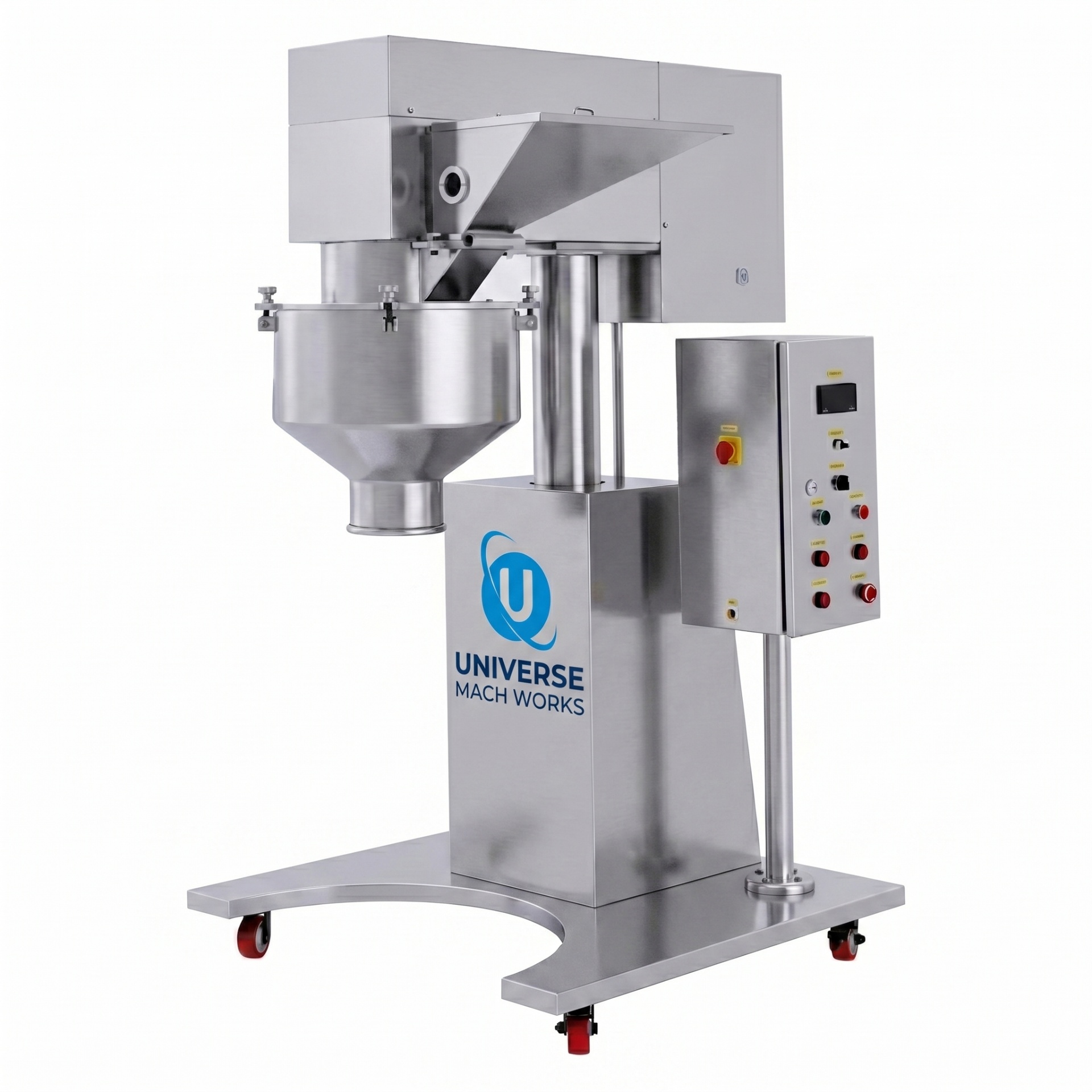
Applications of Multi Mill
- Milling dried granules
- Breaking lumps
- Particle-size reduction
- Granule sizing
- Powder processing
- Improving material uniformity
Why Is Milling Important?
After drying, granules may not have the ideal size distribution required for compression or further processing. Controlled milling helps produce a more consistent granule size, which can improve flow properties, compression behavior, weight consistency, blend uniformity, and downstream processing.
Important Buying Considerations
- Milling capacity
- Rotor configuration
- Screen size
- Contact-part material
- Speed control
- Discharge arrangement
- Cleaning accessibility
- GMP-oriented construction
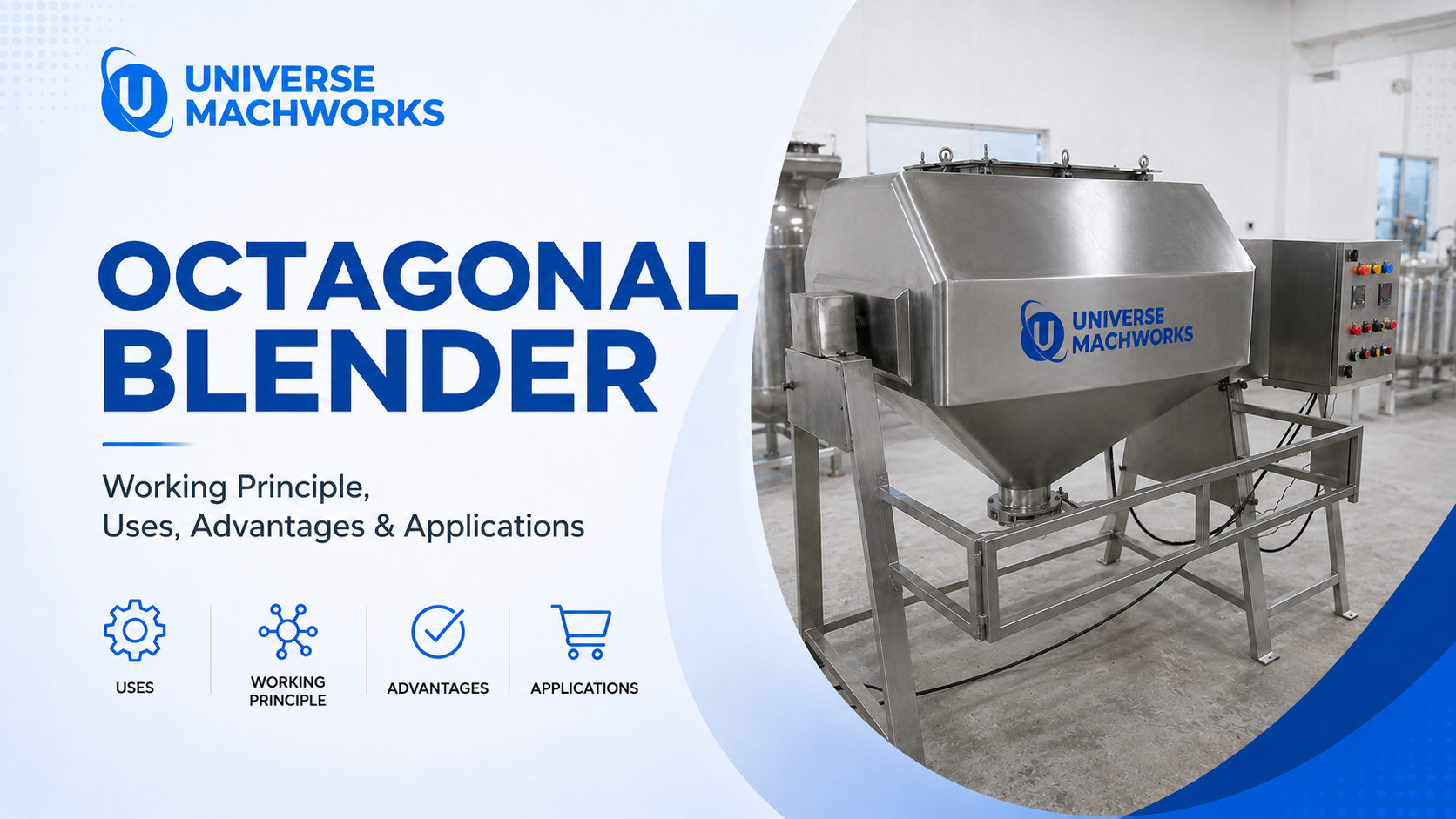
5. Octagonal Blender
An Octagonal Blender is a bulk powder and granule blending machine designed to achieve uniform mixing of different ingredients. Its multi-sided container geometry promotes movement and tumbling of the material as the blender rotates. It is particularly useful when manufacturers require efficient blending of dry powders and granules.
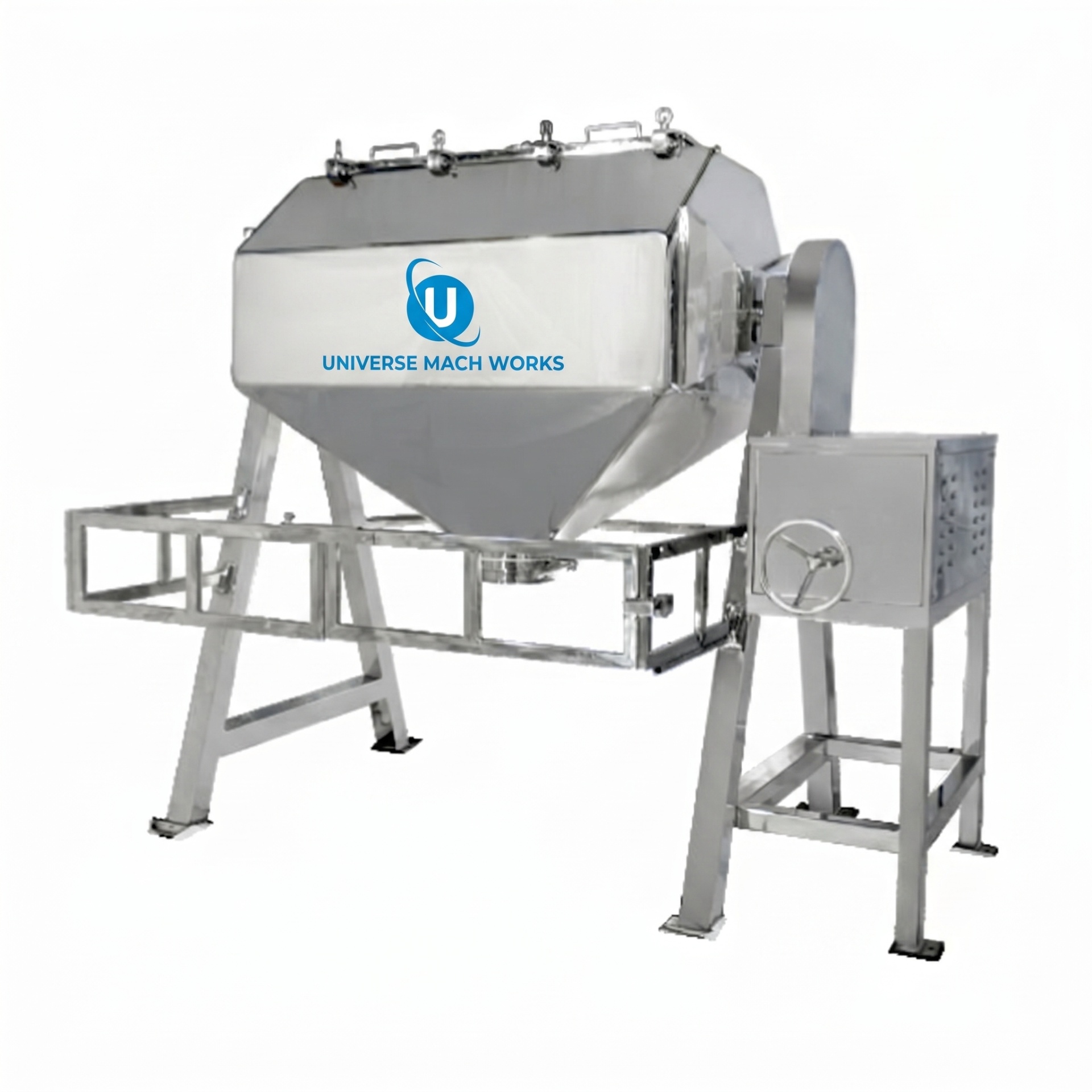
Applications
- Pharmaceutical powders
- Granules
- Nutraceutical formulations
- Food ingredients
- Chemical powders
- Dry premixes
Advantages
- Gentle blending
- Efficient powder movement
- Suitable for larger batch sizes
- Relatively simple operation
- Reduced mechanical complexity
- Easy product discharge when properly configured
What Should Buyers Check?
- Blender capacity
- Working volume
- Maximum load
- Material of construction
- Internal finish
- Baffle arrangement
- Drive system
- Discharge valve
- Safety interlocks
- Cleaning accessibility
The blender should be selected based on the characteristics of the material being processed, not simply its nominal volume.
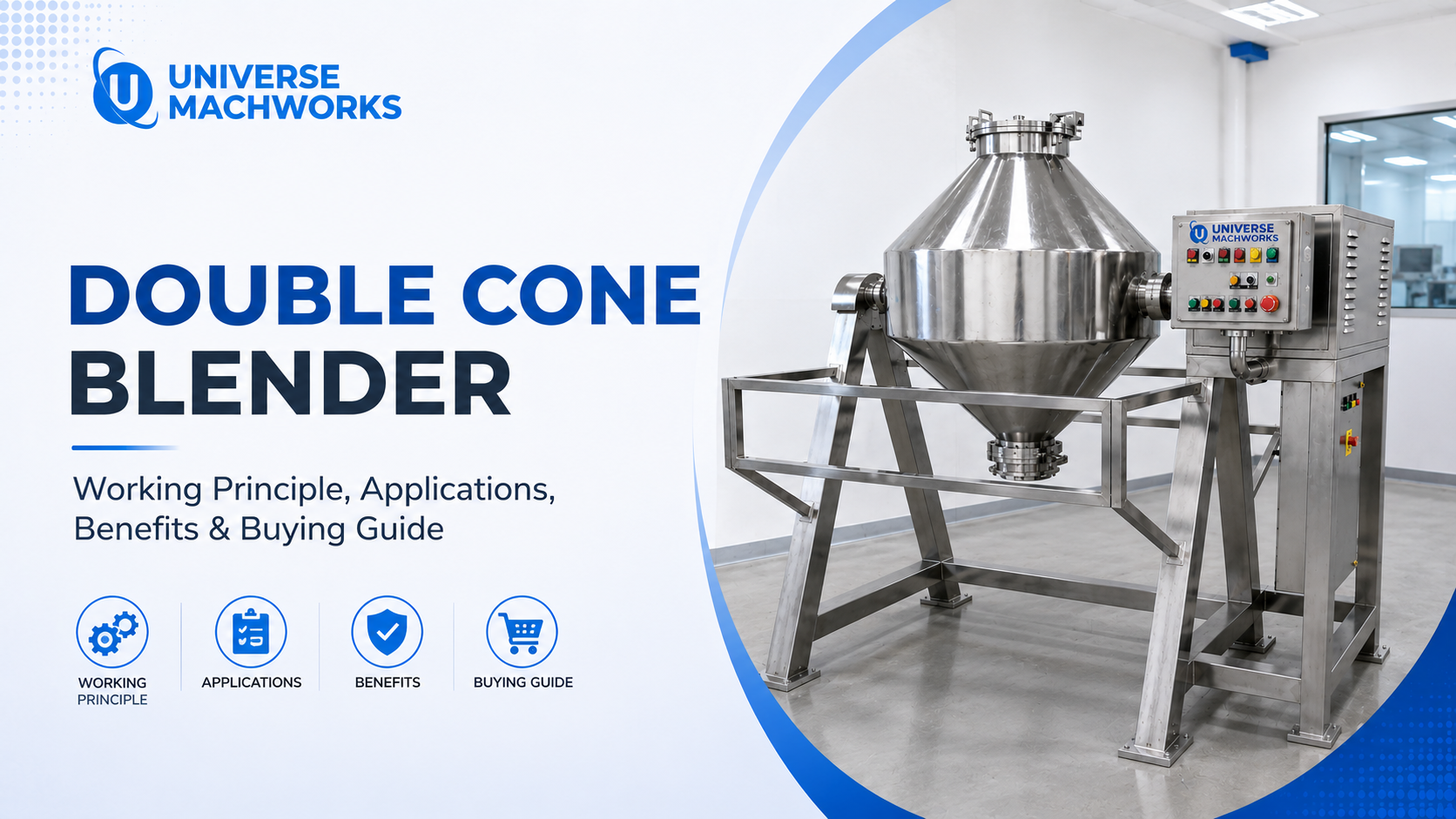
6. Double Cone Blender
A Double Cone Blender consists of two conical sections joined at their bases and is designed primarily for homogeneous blending of dry powders and granules. During rotation, the material repeatedly moves between different sections of the vessel. This creates a tumbling action that helps distribute the ingredients throughout the batch.
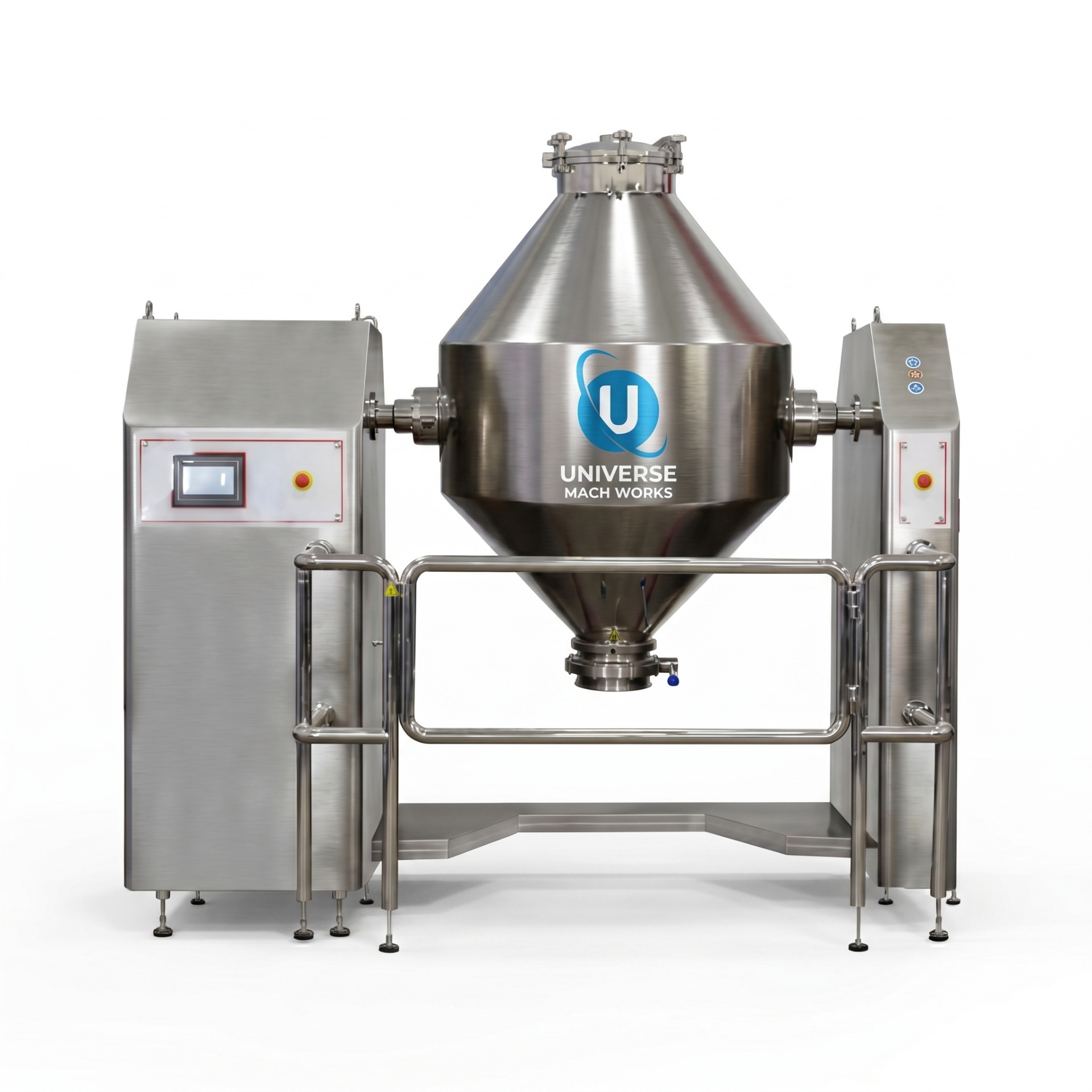
Applications
- Pharmaceutical powders
- Granules
- Nutraceutical products
- Food ingredients
- Chemical powders
- Dry formulations
Benefits
- Gentle mixing
- Suitable for free-flowing powders
- Relatively simple construction
- Easy material discharge
- Reduced product degradation
- Multiple capacity configurations
Double Cone Blender vs Octagonal Blender
Both machines can be used for dry powder and granule blending, but the appropriate choice depends on the formulation, batch size, required mixing characteristics, available space, and production requirements. For materials that require gentle tumbling, a Double Cone Blender can be an effective option. For larger production requirements or specific blending characteristics, an Octagonal Blender may be preferred.
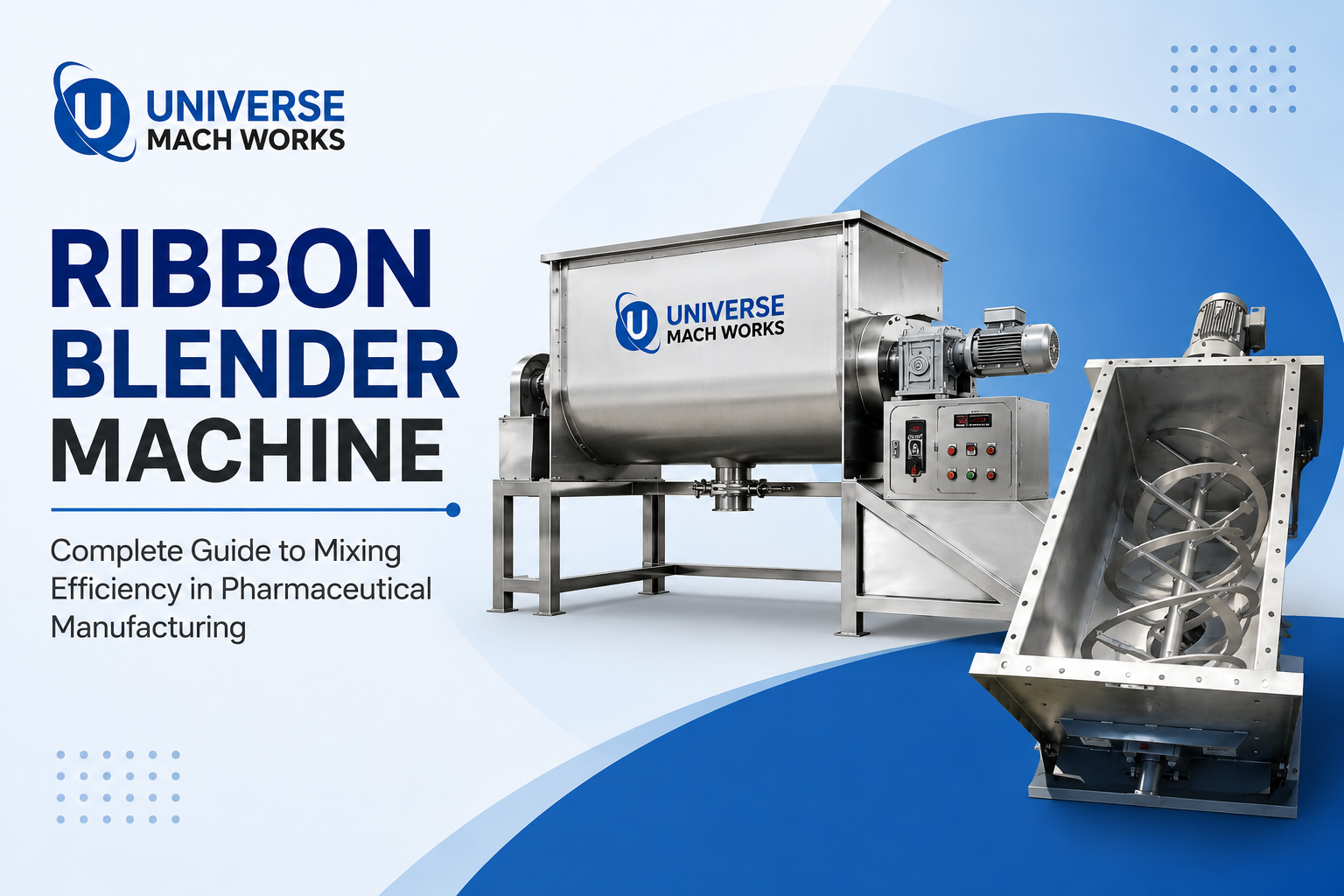
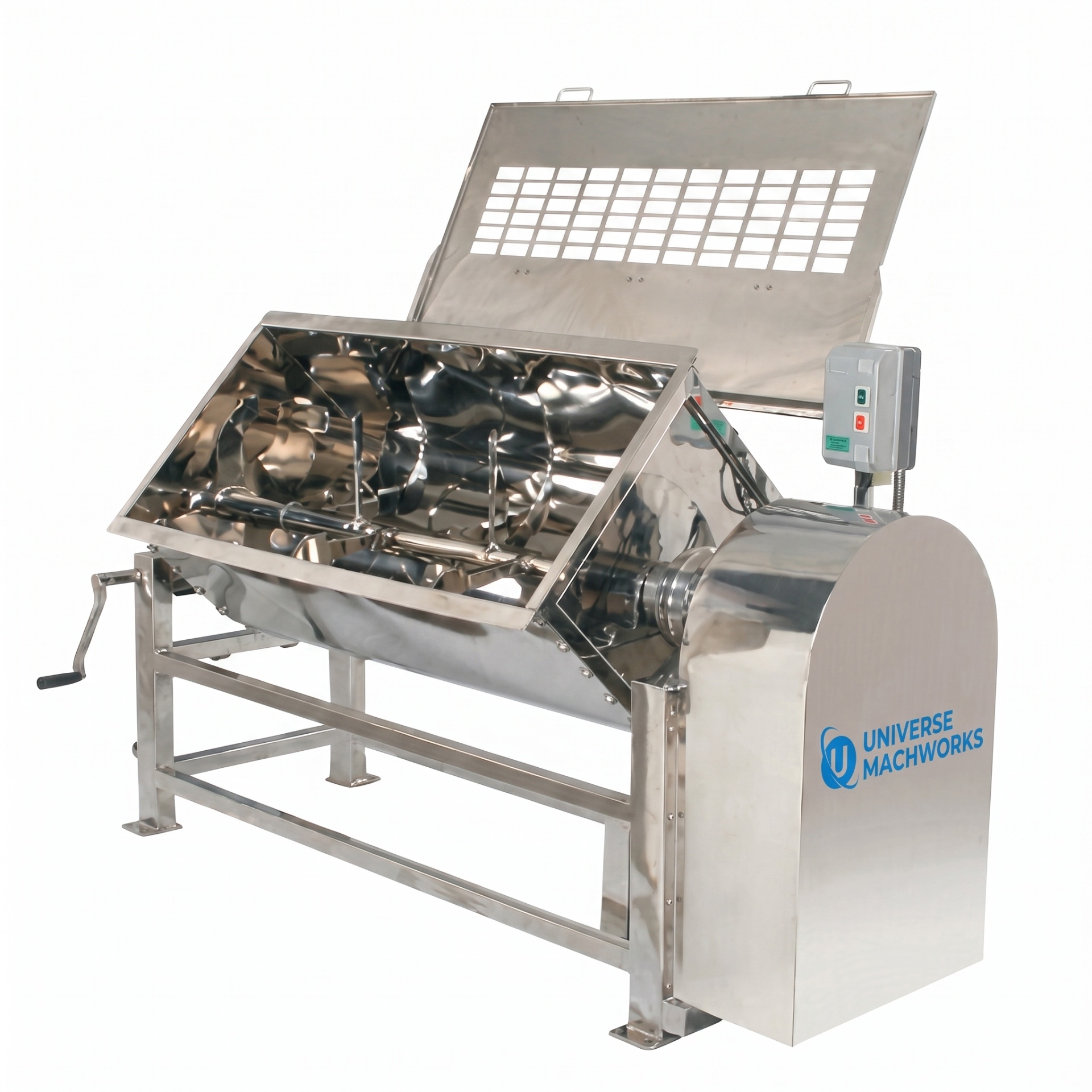
7. Ribbon Blender
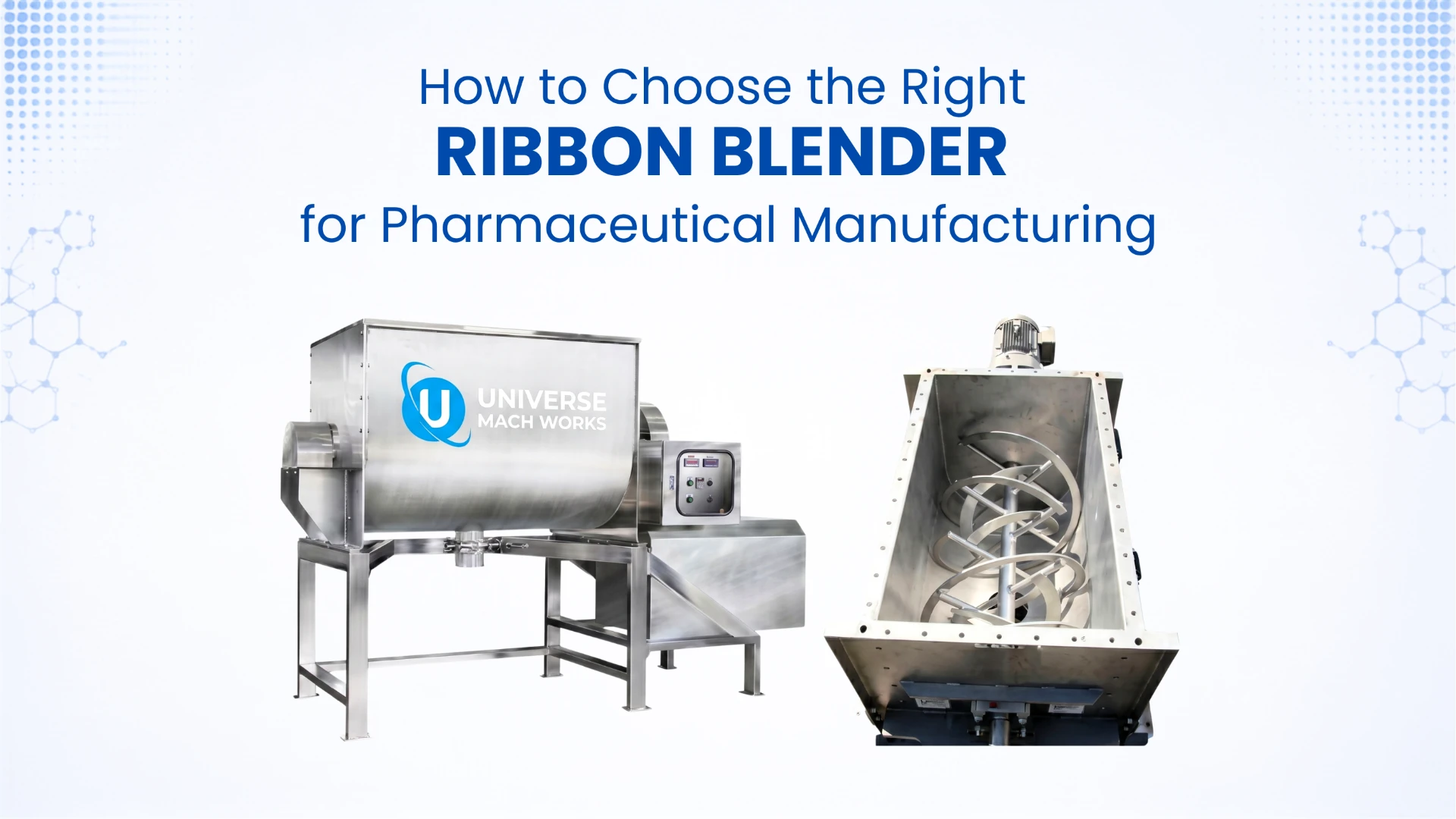
A Ribbon Blender is a horizontal mixing machine commonly used for blending powders, granules, and other dry materials. Inside the mixing trough, specially designed ribbon elements rotate around a horizontal shaft. The ribbons move material in different directions, creating a continuous mixing action.
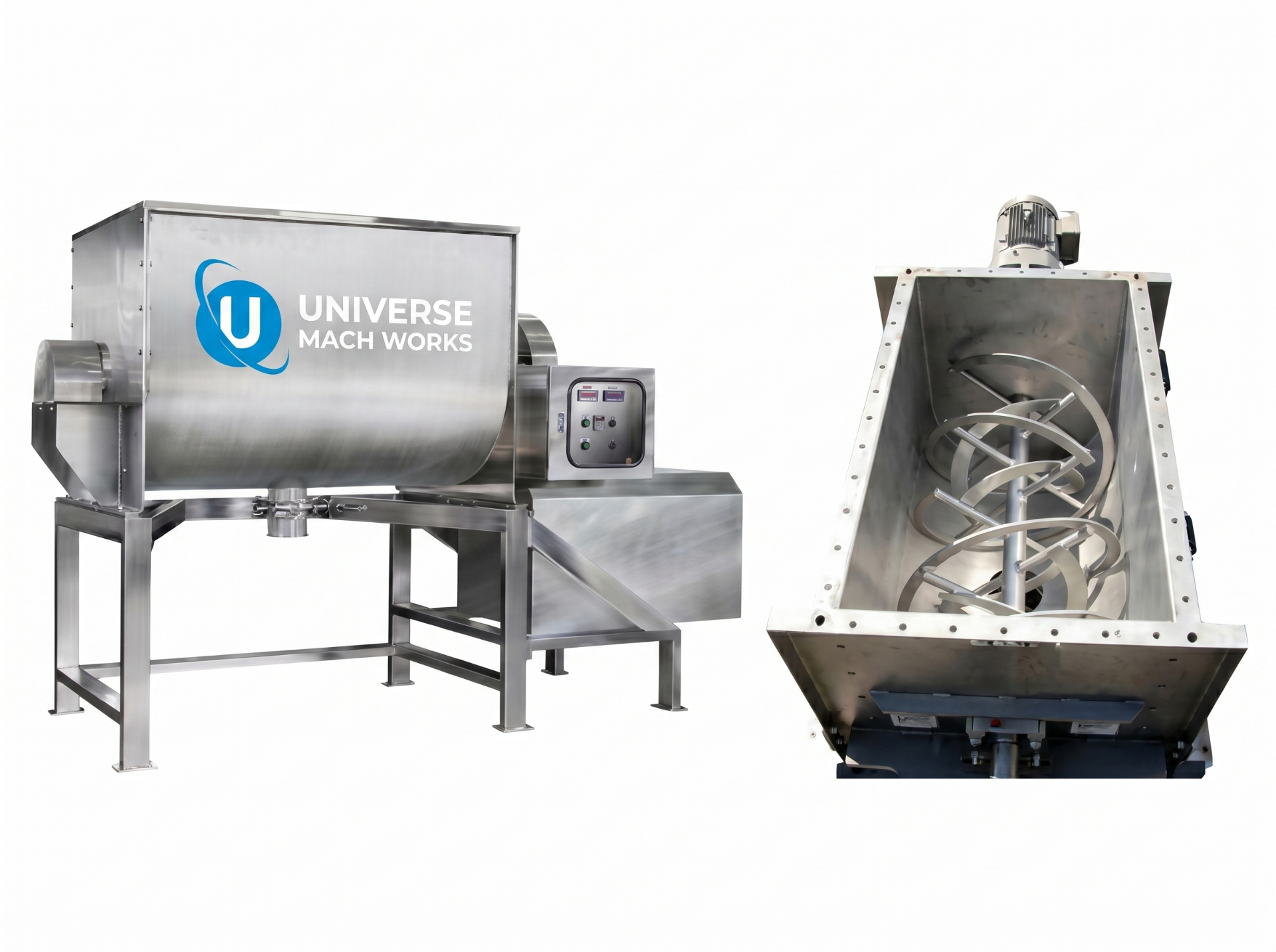
Applications
- Pharmaceutical manufacturing
- Nutraceutical production
- Food processing
- Chemical industries
- Cosmetic manufacturing
- Industrial powder processing
Key Advantages
- Efficient dry powder mixing
- Suitable for larger batches
- Robust construction
- Flexible capacity options
- Can be configured for different materials
- Suitable for pharmaceutical and industrial applications
What Affects Ribbon Blender Selection?
- Batch size
- Working volume
- Powder characteristics
- Bulk density
- Mixing time
- Material of construction
- Internal surface finish
- Discharge arrangement
- Drive power
- Cleaning requirements
The Importance of Choosing the Right Blender
Powder blending may appear straightforward, but it can have a major effect on final product quality. The wrong blender can lead to poor content uniformity, segregation, extended processing time, material losses, difficult discharge, and cleaning problems.
Therefore, manufacturers should evaluate the actual formulation characteristics before deciding between a Ribbon Blender, Double Cone Blender, or Octagonal Blender. Factors such as particle size, density, flowability, moisture, batch size, and formulation sensitivity should all be considered.
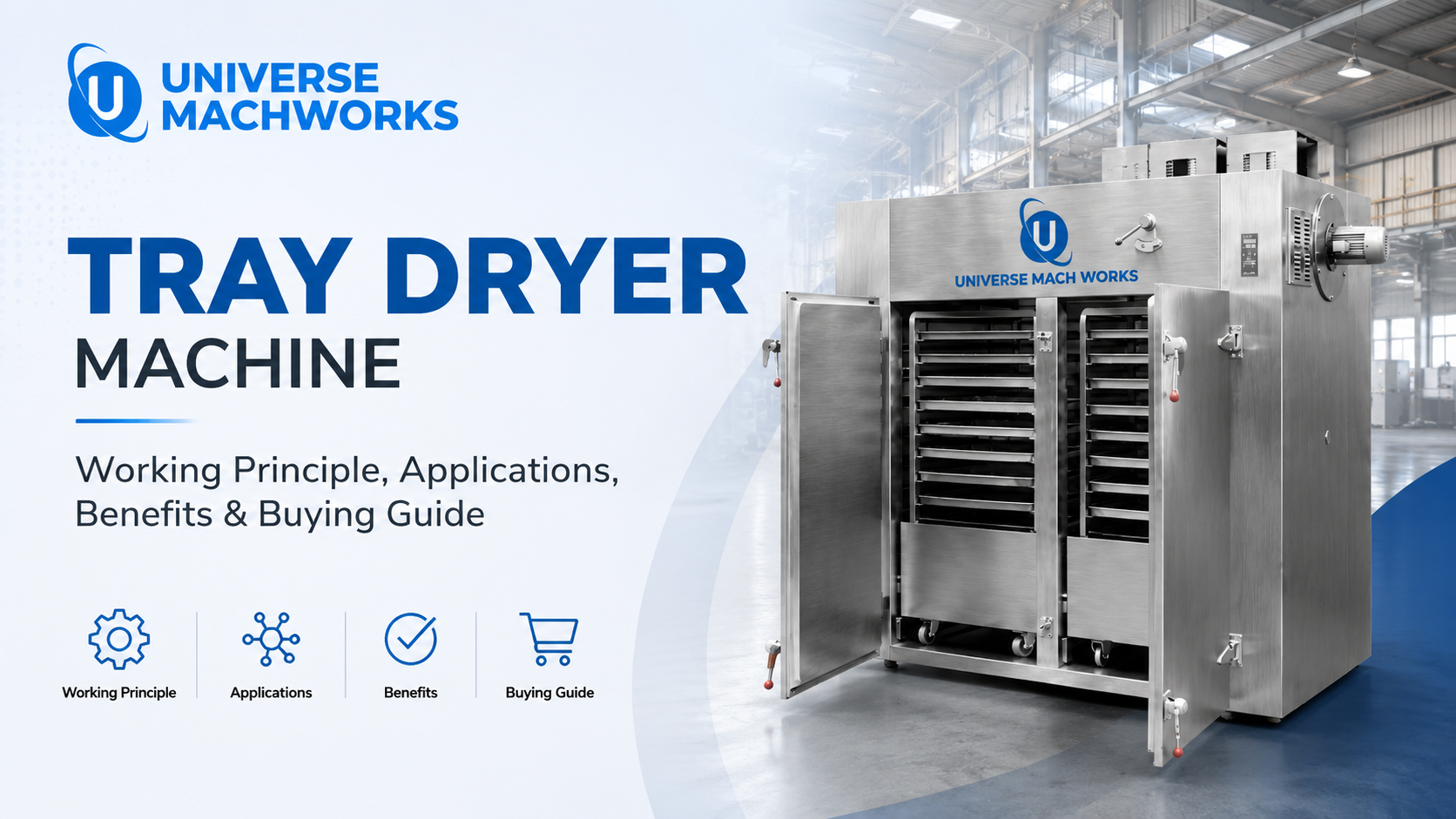
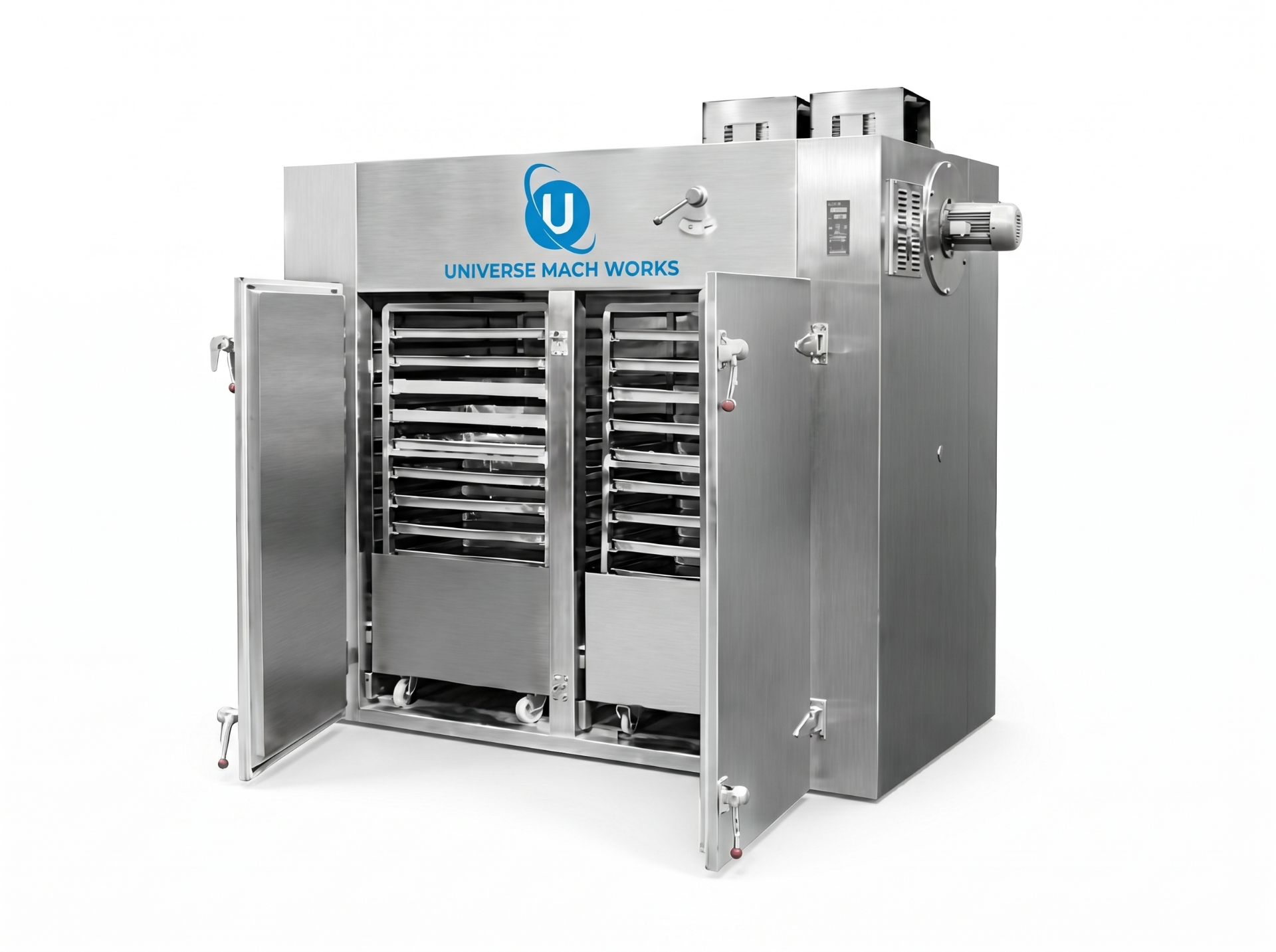
8. Tray Dryer
A Tray Dryer is a batch drying machine used to remove moisture from pharmaceutical powders, granules, herbs, chemicals, and other materials. It is a well-established drying solution where controlled temperature and airflow are required. Material is distributed across trays, and heated air is circulated through the drying chamber.
Applications
- Pharmaceutical granules
- Powders
- Herbal materials
- Nutraceutical ingredients
- Food products
- Chemical materials
Key Benefits
- Simple and reliable operation
- Suitable for batch processing
- Flexible drying temperatures
- Multiple tray configurations
- Relatively straightforward maintenance
- Suitable for different product types
Important Selection Factors
- Number and size of trays
- Working capacity
- Heating method
- Air circulation system
- Temperature control
- Insulation
- Material of construction
- Internal surface finish
- Energy consumption
- Loading and unloading arrangement
For pharmaceutical applications, uniform airflow and accurate temperature control are important for achieving consistent drying results.
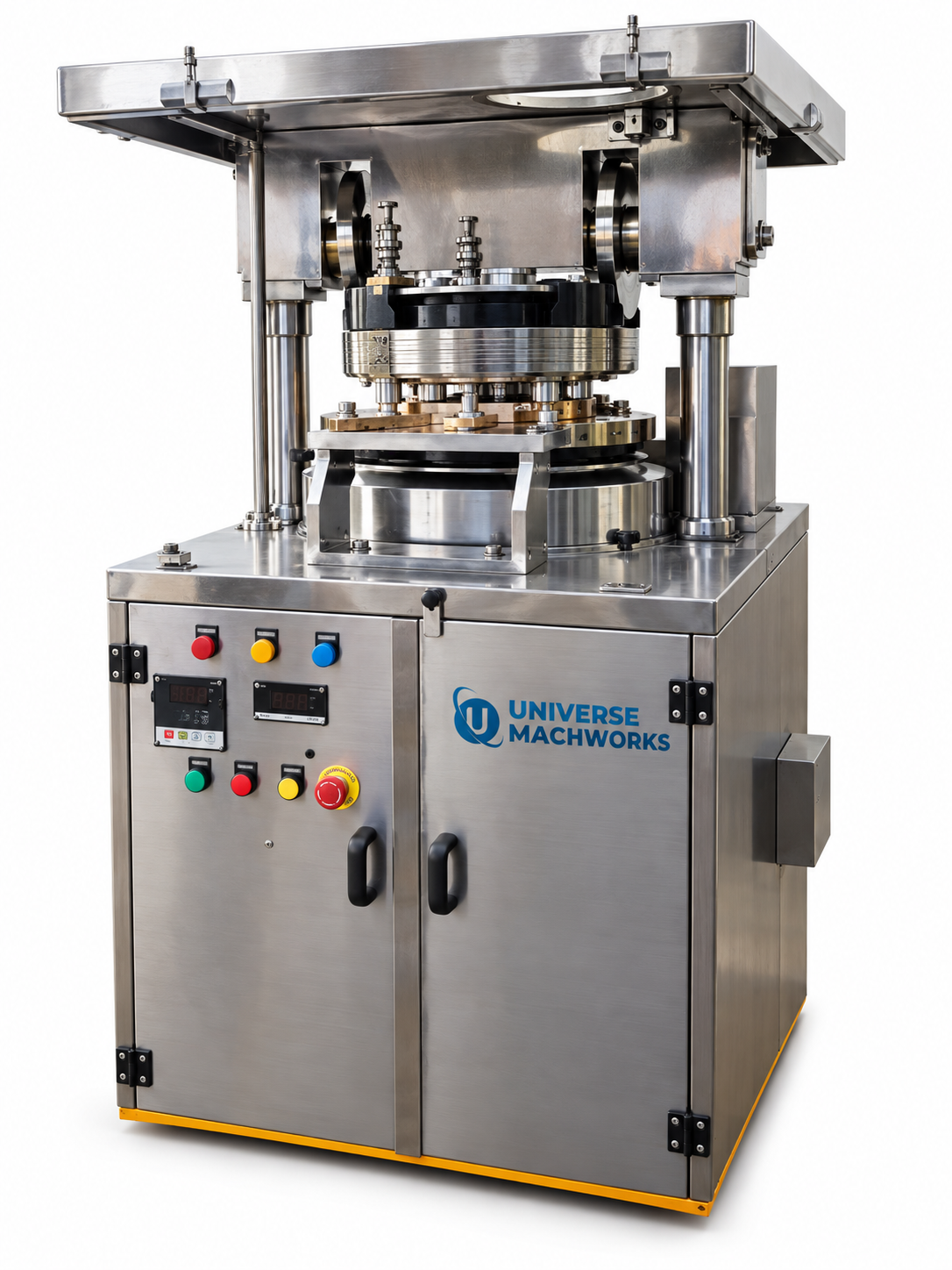
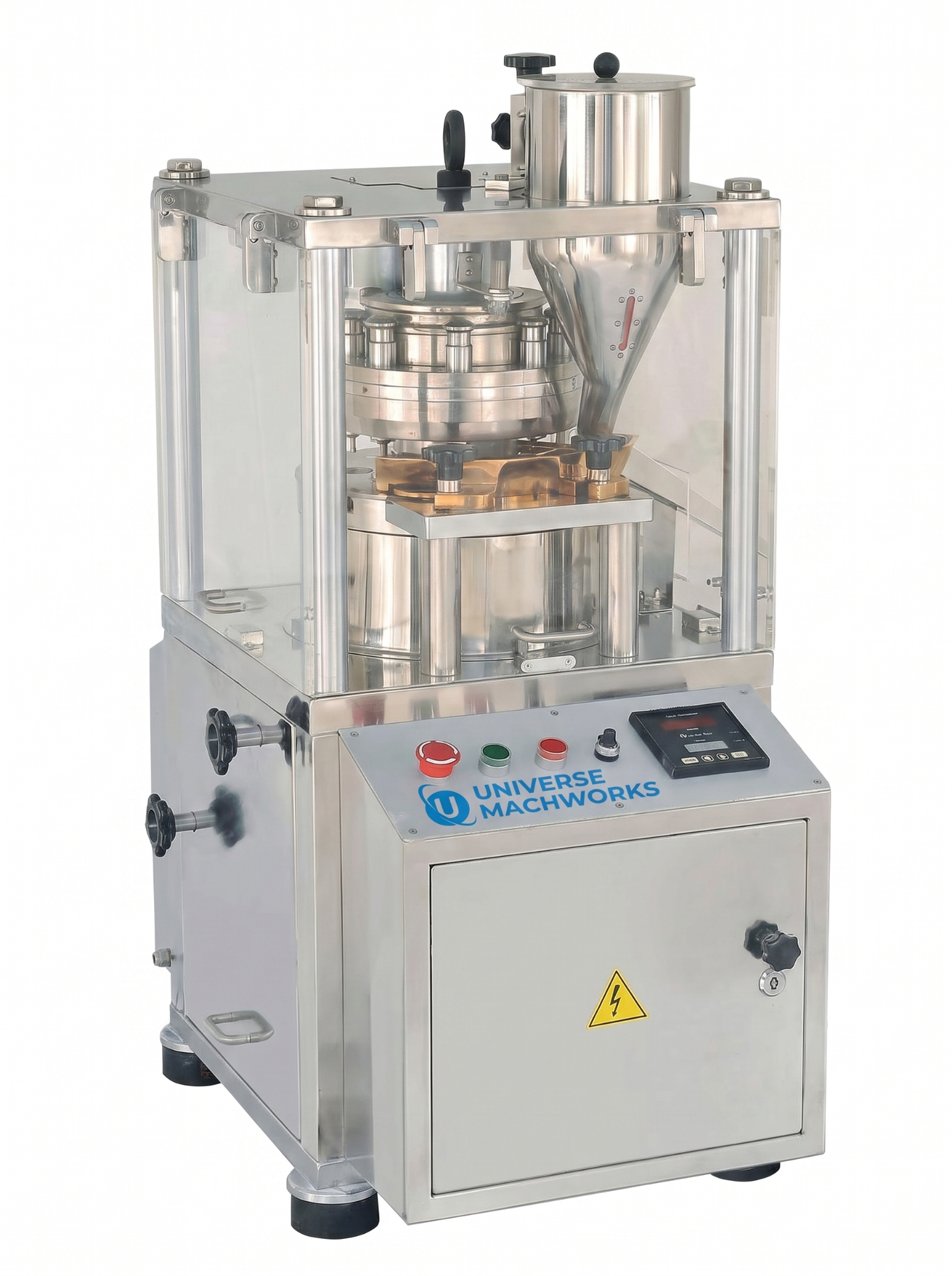
9. Tablet Compression Machine
A Tablet Compression Machine converts pharmaceutical granules or powder blends into tablets of controlled shape, size, and weight. In a rotary tablet press, material is fed into dies and compressed between punches to form tablets. Modern machines can operate at high production rates while providing controlled compression parameters.
Applications
- Pharmaceutical tablets
- Nutraceutical tablets
- Herbal tablets
- Dietary supplement tablets
- Certain confectionery products
Important Features
- Multiple compression stations
- Adjustable compression force
- Pre-compression
- Main compression
- Turret speed control
- Automatic weight control
- Force monitoring
- PLC/HMI controls
- Safety interlocks
- Dust extraction arrangements
Why Tablet Compression Matters
Consistent tablet weight, hardness, thickness, and appearance are important quality attributes. The performance of the compression machine therefore has a direct relationship with production consistency. When selecting a tablet press, manufacturers should consider the formulation, tooling requirements, target tablet dimensions, production output, compression force, and desired level of automation.
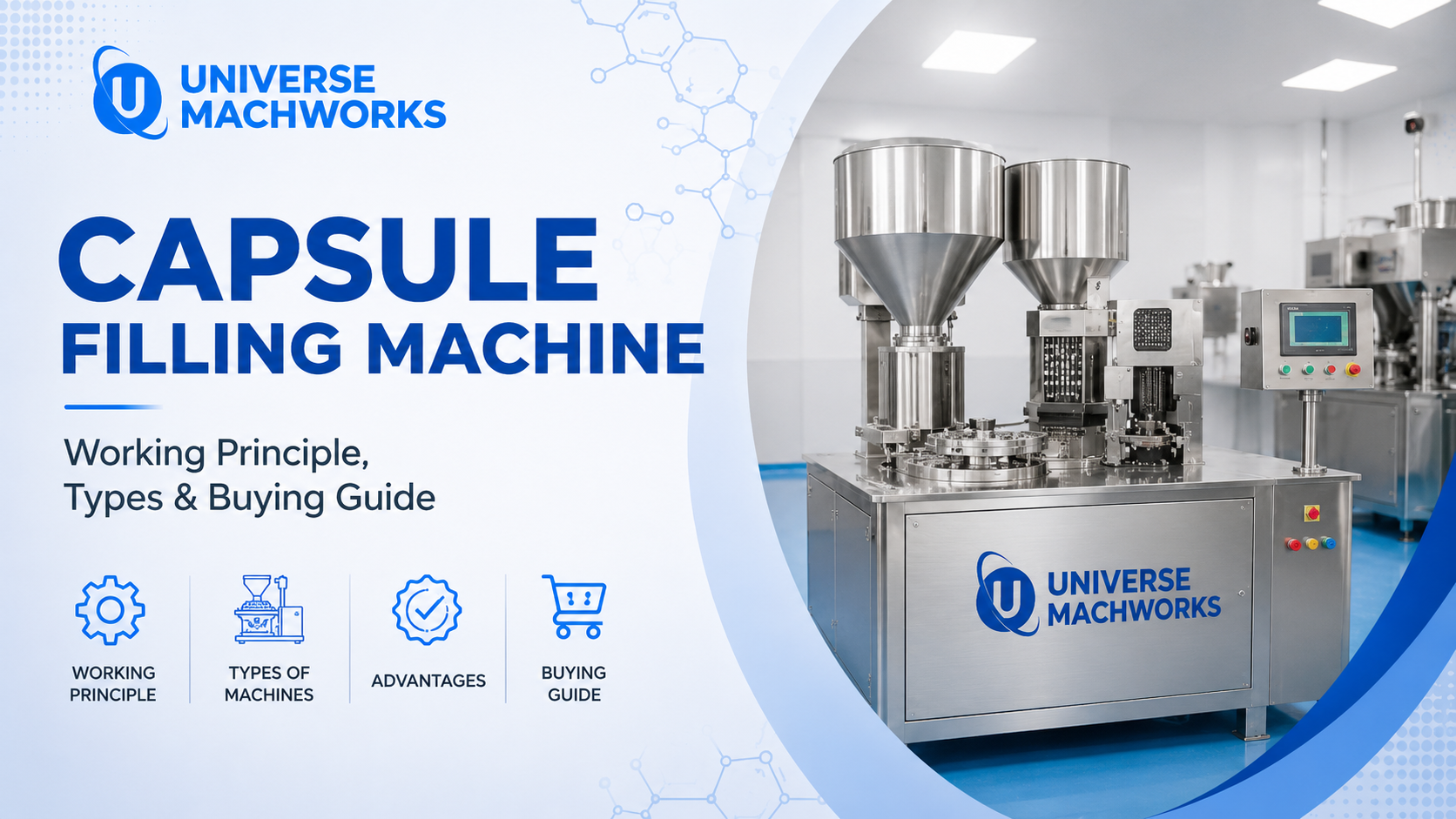
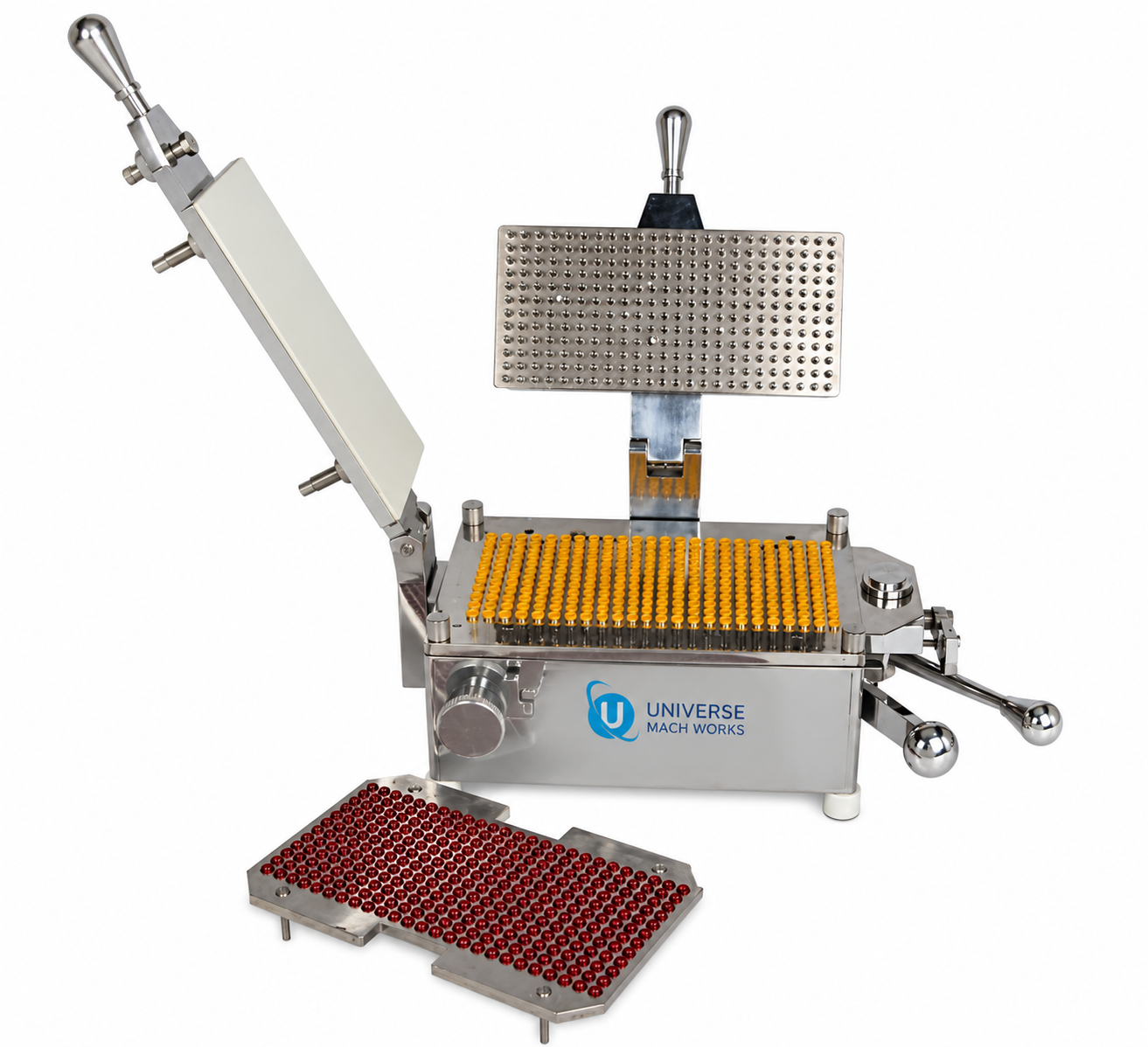
10. Capsule Filling Machine
A Capsule Filling Machine is designed to fill empty hard capsules with pharmaceutical powders, granules, pellets, or other suitable formulations. Depending on the equipment type, capsule filling can be performed manually, semi-automatically, or automatically.
Applications
- Pharmaceutical manufacturing
- Nutraceutical production
- Herbal products
- Dietary supplements
- Veterinary formulations
Main Process
- Capsule feeding
- Capsule separation
- Body positioning
- Powder or granule dosing
- Filling
- Capsule joining
- Ejection
- Inspection or downstream processing
Features to Consider
- Production speed
- Capsule size compatibility
- Dosing system
- Filling accuracy
- Automation level
- PLC/HMI
- Capsule rejection system
- Powder containment
- Cleaning accessibility
- Changeover time
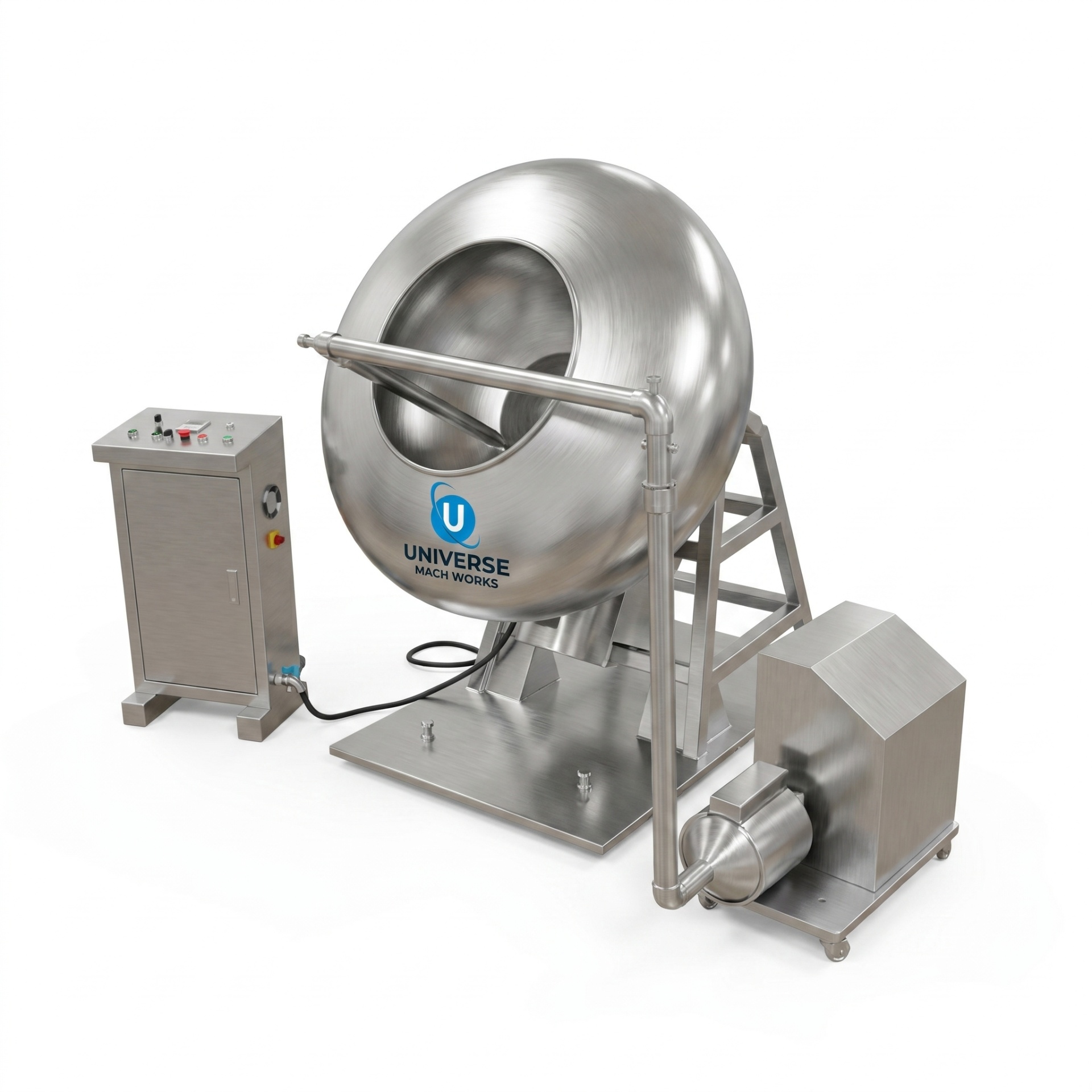
11. Coating Pan
A Tablet Coating Pan is used to apply a coating layer to tablets. Coating may be performed for functional, protective, identification, or aesthetic purposes depending on the formulation and process. During operation, tablets rotate inside the pan while coating solution is introduced and controlled air is used to assist drying.
Applications
- Film coating
- Protective coating
- Taste masking
- Appearance improvement
- Functional coating applications
Key Factors Affecting Selection
- Pan capacity
- Batch size
- Spray system
- Atomization arrangement
- Air handling
- Exhaust system
- Temperature control
- Pan speed
- Automation
- Cleaning requirements
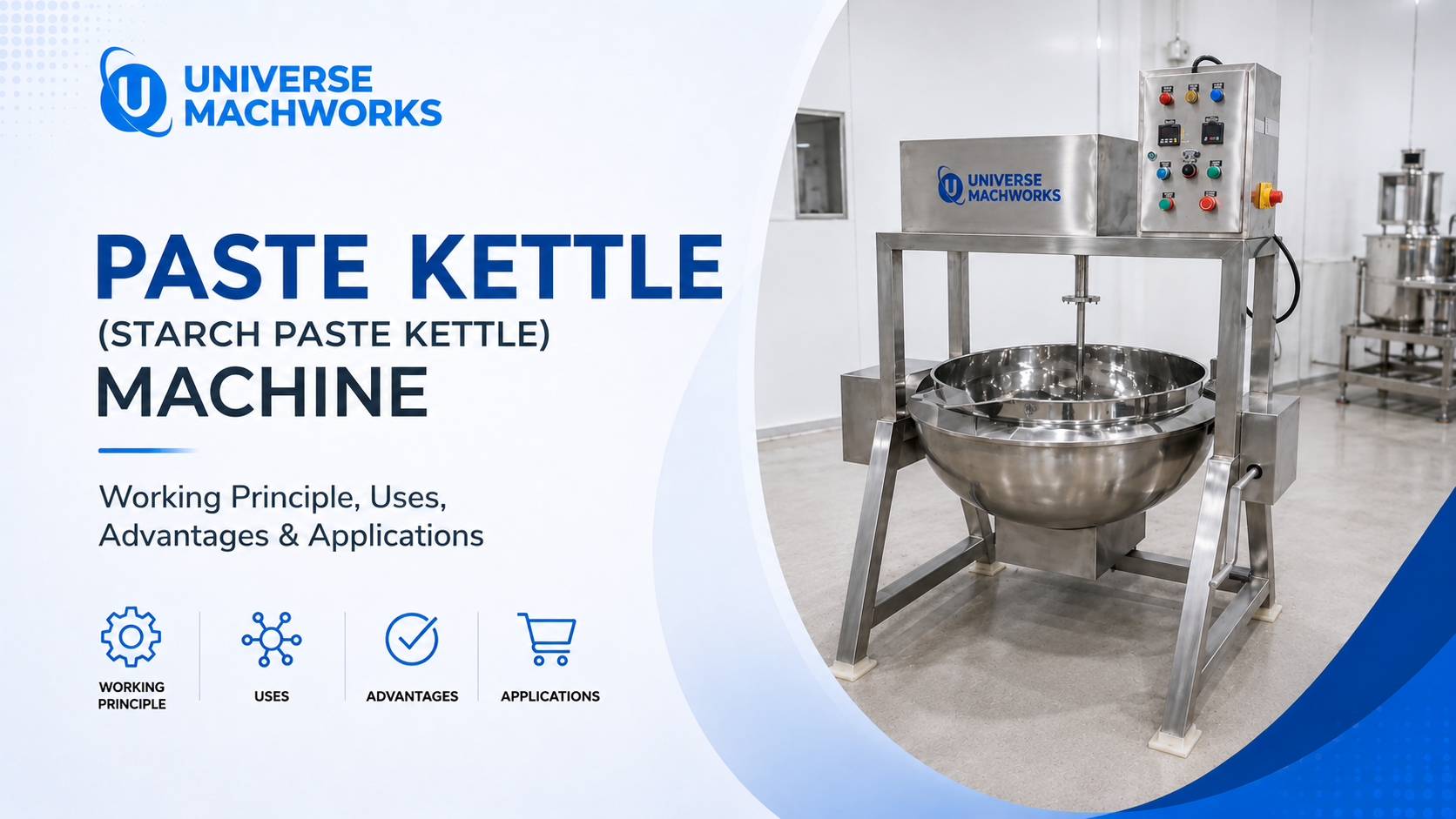
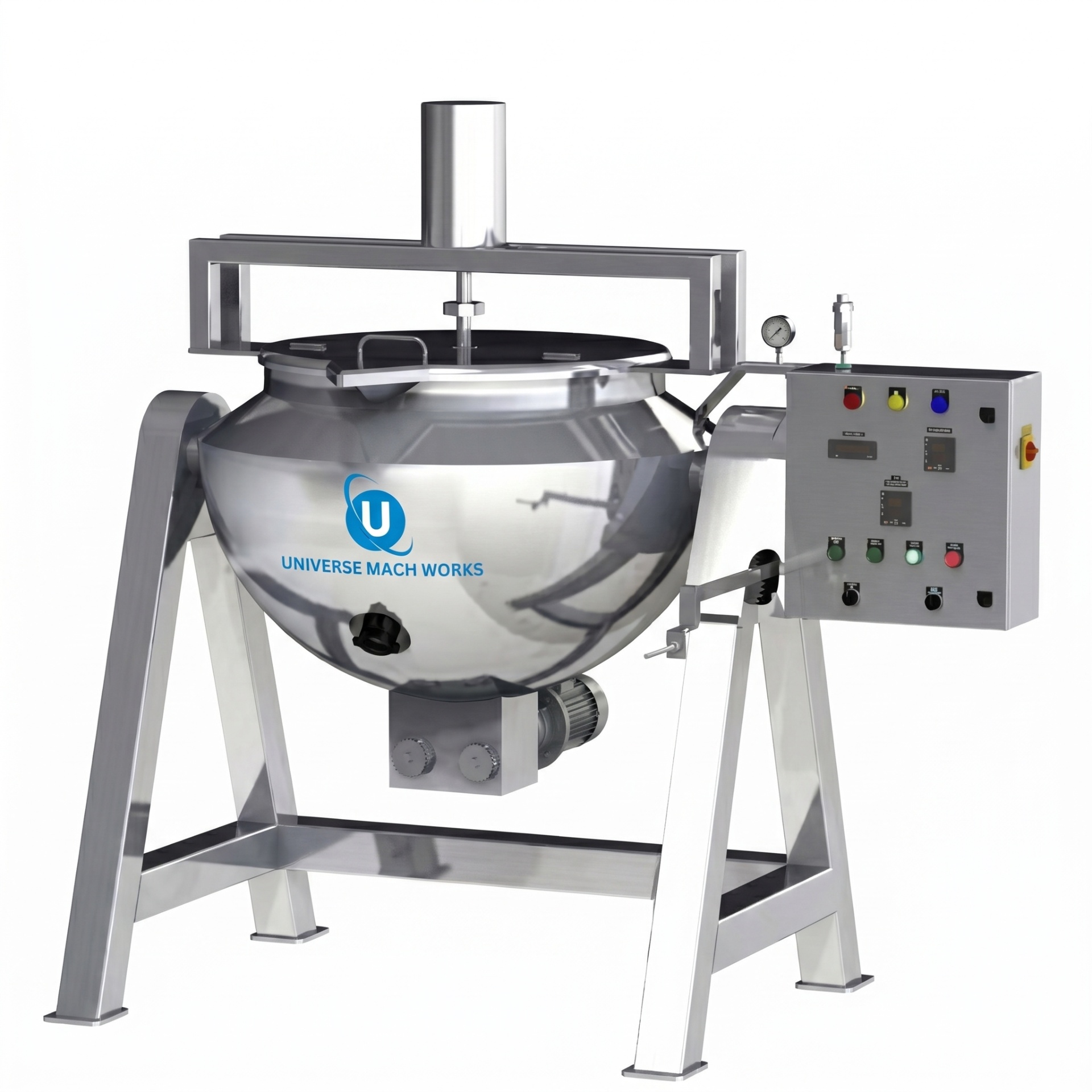
12. Paste Kettle
A Paste Kettle is a jacketed processing vessel used for heating, mixing, and preparing pastes, viscous liquids, creams, and other formulations. Depending on the process, the vessel can incorporate an agitator or scraper system to maintain product movement during heating and mixing.
Applications
- Pharmaceutical manufacturing
- Cosmetic manufacturing
- Food processing
- Chemical processing
- Ointment and cream production
- Gel and paste preparation
Key Features
- Heating jacket
- Anchor agitator
- Scraper arrangement
- Temperature control
- Insulated vessel
- Bottom or side discharge
- Variable-speed agitation
- PLC/HMI controls
What Should Buyers Consider?
- Product viscosity
- Batch volume
- Heating requirements
- Agitation requirements
- Material of construction
- Discharge method
- Cleaning procedure
- Required automation
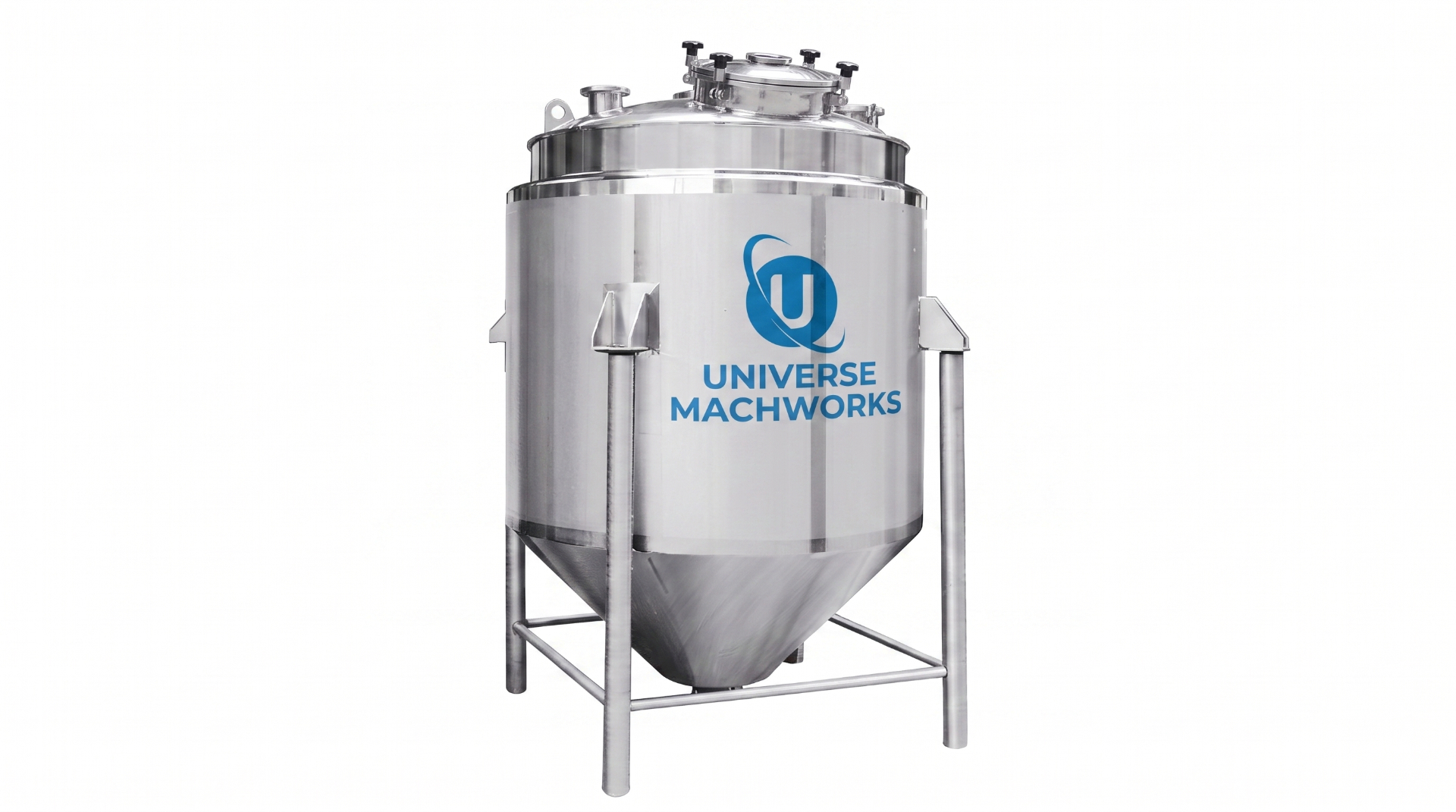
13. Mixing Tank
A Mixing Tank is one of the most versatile pieces of equipment used for liquid and semi-liquid processing. It combines a vessel with an agitation system designed to keep ingredients mixed or dispersed according to the process requirements.
Applications
- Pharmaceutical liquids
- Syrups
- Solutions
- Suspensions
- Cosmetic formulations
- Food products
- Chemical formulations
Common Configurations
- Top-mounted agitator
- Anchor agitator
- Propeller
- Paddle
- High-shear mixer
- Heating/cooling jacket
- Insulation
- Load cells
- Temperature sensors
Selection Factors
- Product viscosity
- Batch size
- Mixing characteristics
- Heating/cooling requirements
- Agitator type
- Material of construction
- Cleaning requirements
- Discharge arrangement
Choosing the wrong agitator for a particular formulation can lead to poor mixing or excessive energy consumption, so process requirements should be evaluated before equipment selection.
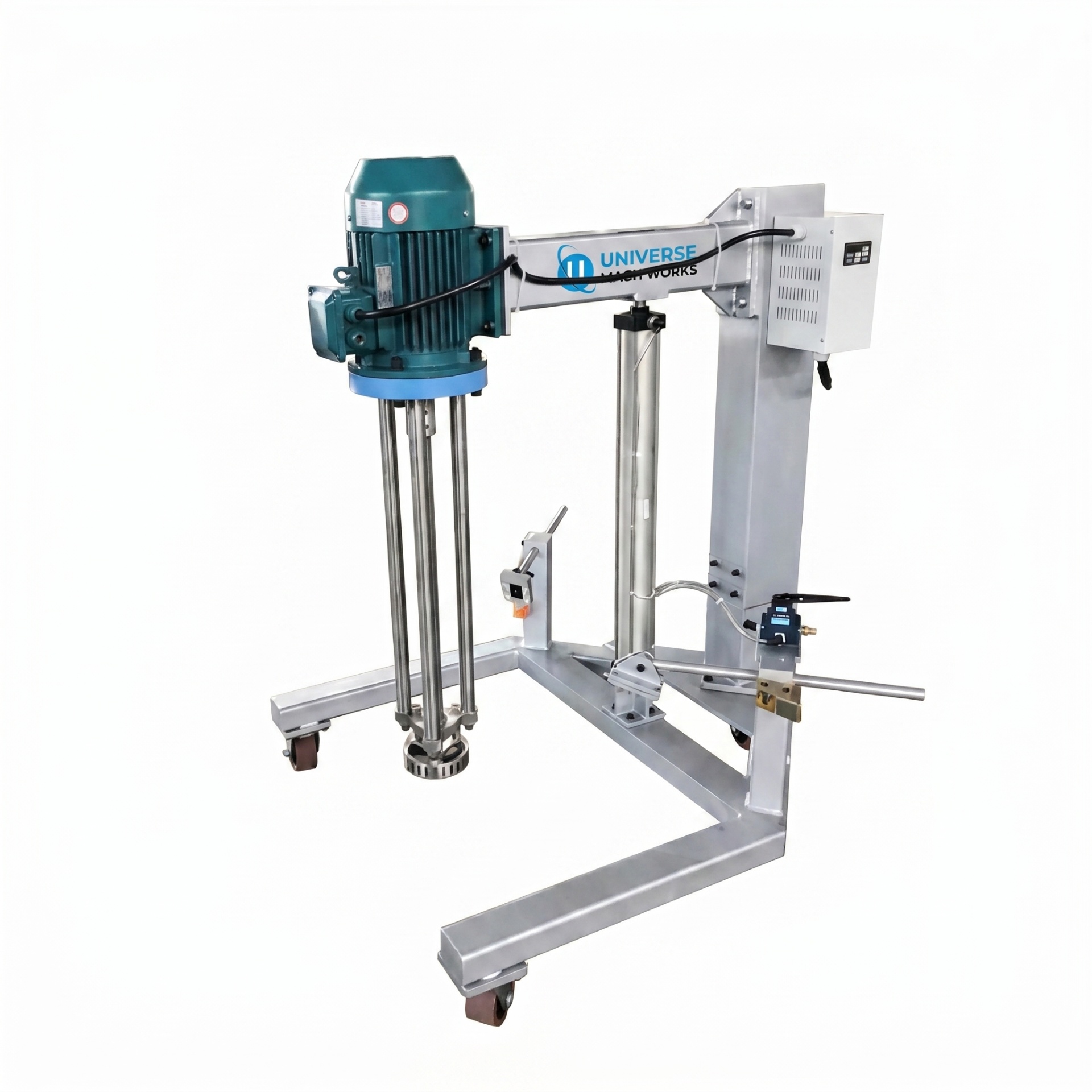
14. Homogenizer
A Homogenizer is used to reduce particle or droplet size and improve the uniformity of emulsions, suspensions, creams, and other formulations. High-shear homogenizing systems create intense local mixing and dispersion, helping produce a more uniform product.
Applications
- Pharmaceutical formulations
- Creams
- Lotions
- Cosmetic products
- Emulsions
- Suspensions
- Food products
Key Factors Affecting Selection
- Product viscosity
- Batch size
- Required shear level
- Rotor-stator configuration
- Homogenizing speed
- Heating/cooling requirements
- Vacuum requirements
- Material of construction
- Automation
For products that are sensitive to air incorporation, vacuum processing may be considered where appropriate to the formulation and equipment design.
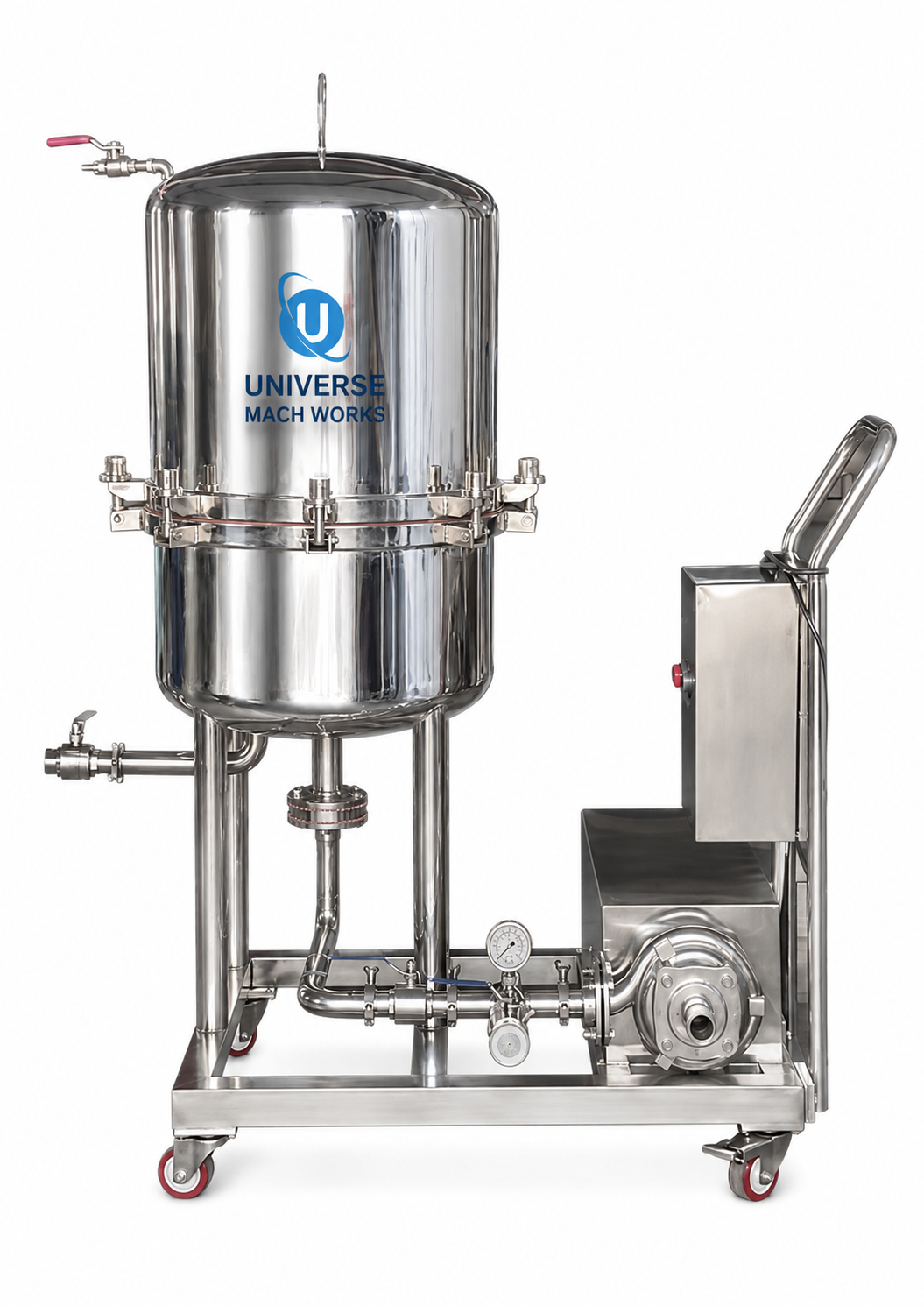
15. Filter Press
A Filter Press is a solid-liquid separation system used to separate suspended solids from process liquids. The system uses filter plates and filter media to retain solids while allowing the liquid phase to pass through.
Applications
- Pharmaceutical processing
- Chemical industries
- Food processing
- Herbal processing
- Wastewater and industrial filtration
Key Selection Factors
- Filtration area
- Slurry characteristics
- Solids concentration
- Required throughput
- Filter media
- Plate configuration
- Operating pressure
- Cake discharge requirements
Optional Features
- Hydraulic plate closing
- Automatic plate shifting
- Membrane plates
- Cake washing
- Drip trays
- Automated controls
How These Machines Work Together in Pharmaceutical Manufacturing
Pharmaceutical production typically involves multiple interconnected processing stages. The machines described above do not operate in isolation; each can play a specific role within a broader manufacturing process.
A simplified solid dosage manufacturing sequence can look like this:
- Raw Material Inspection
- Dispensing
- Vibro Sifting
- Blending
- Rapid Mixer Granulation
- Fluid Bed Drying / Tray Drying
- Multi Milling
- Final Blending
- Tablet Compression or Capsule Filling
- Coating — where required
- Inspection & Quality Control
- Packaging
The exact process depends on the formulation, dosage form, manufacturing method, and process validation requirements.
Top 15 Pharmaceutical Machines Comparison
| Machine | Primary Function | Common Application | Key Selection Factor |
|---|---|---|---|
| Vibro Sifter | Screening & sizing | Powders & granules | Mesh size & capacity |
| Rapid Mixer Granulator | Wet granulation | Tablet manufacturing | Batch capacity |
| Fluid Bed Dryer | Drying | Wet granules | Drying capacity & airflow |
| Multi Mill | Size reduction | Granules & powders | Screen & rotor configuration |
| Octagonal Blender | Powder blending | Dry formulations | Working volume |
| Double Cone Blender | Gentle blending | Powders & granules | Batch size |
| Ribbon Blender | Dry mixing | Powders & granules | Material characteristics |
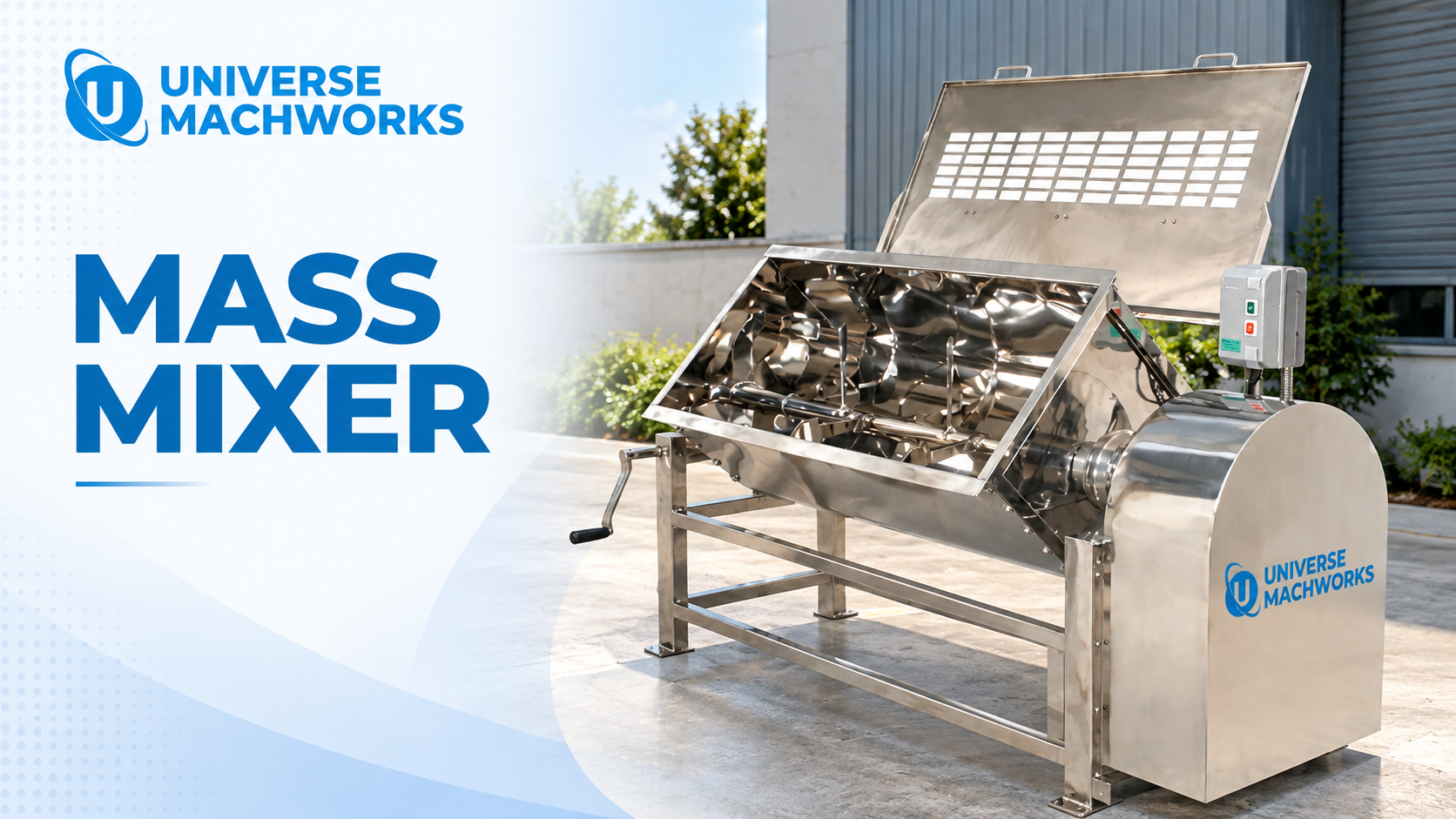
| Mass Mixer | Wet/dry mixing | Powders & pastes | Product viscosity |
| Tablet Compression Machine | Tablet compression | Tablets | Output & compression force |
| Coating Pan | Tablet coating | Film coating | Pan capacity & spray system |
| Capsule Filling Machine | Capsule filling | Capsules | Filling speed & dosage |
| Tray Dryer | Batch drying | Powders & granules | Tray capacity & temperature |
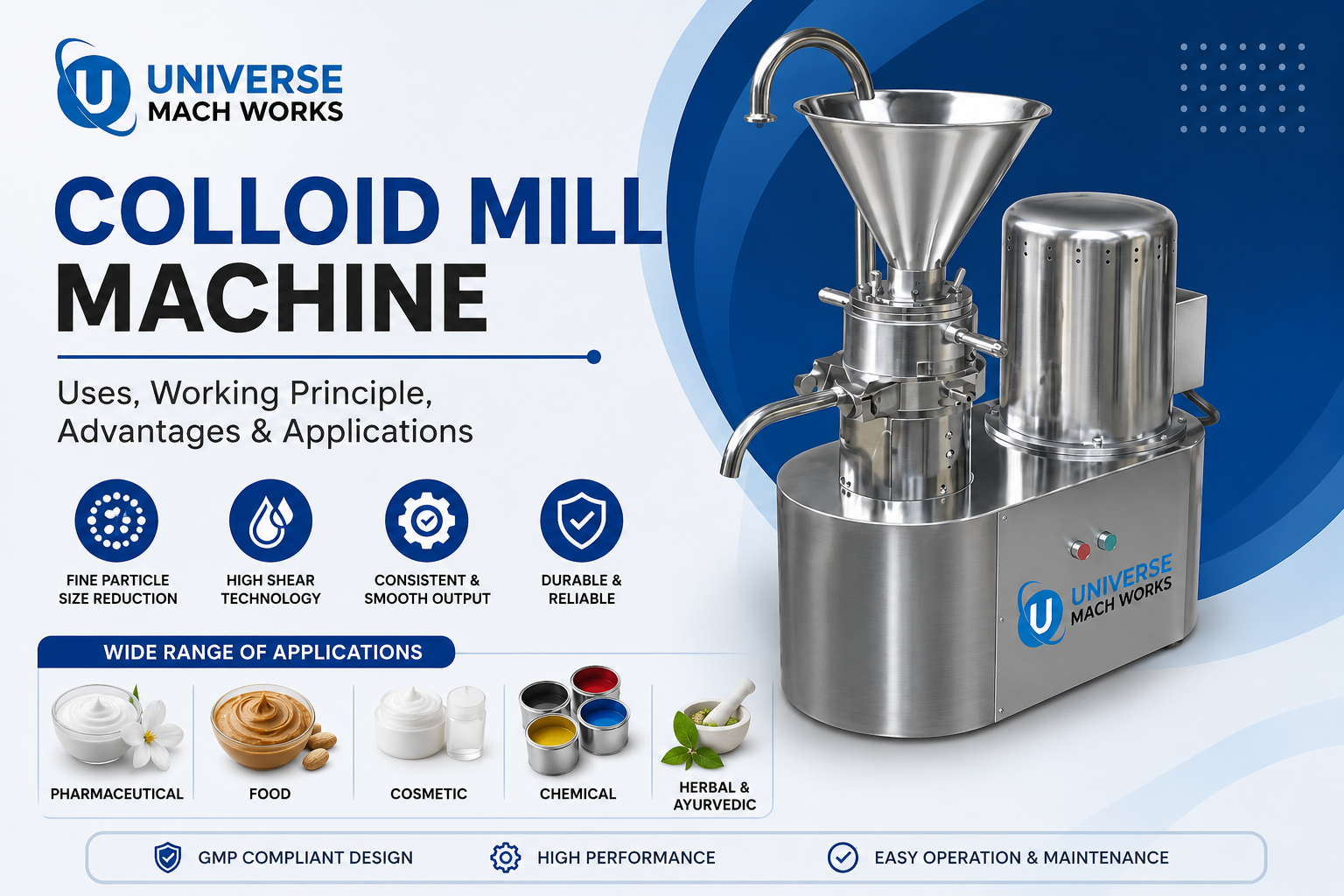
| Colloid Mill | Wet size reduction | Suspensions & emulsions | Rotor-stator configuration |
| Paste Kettle | Heating & mixing | Pastes & viscous products | Vessel & agitator design |
| Mixing Tank | Liquid mixing | Solutions & suspensions | Agitator & capacity |
Explore related machines
How to Choose the Right Pharmaceutical Machinery
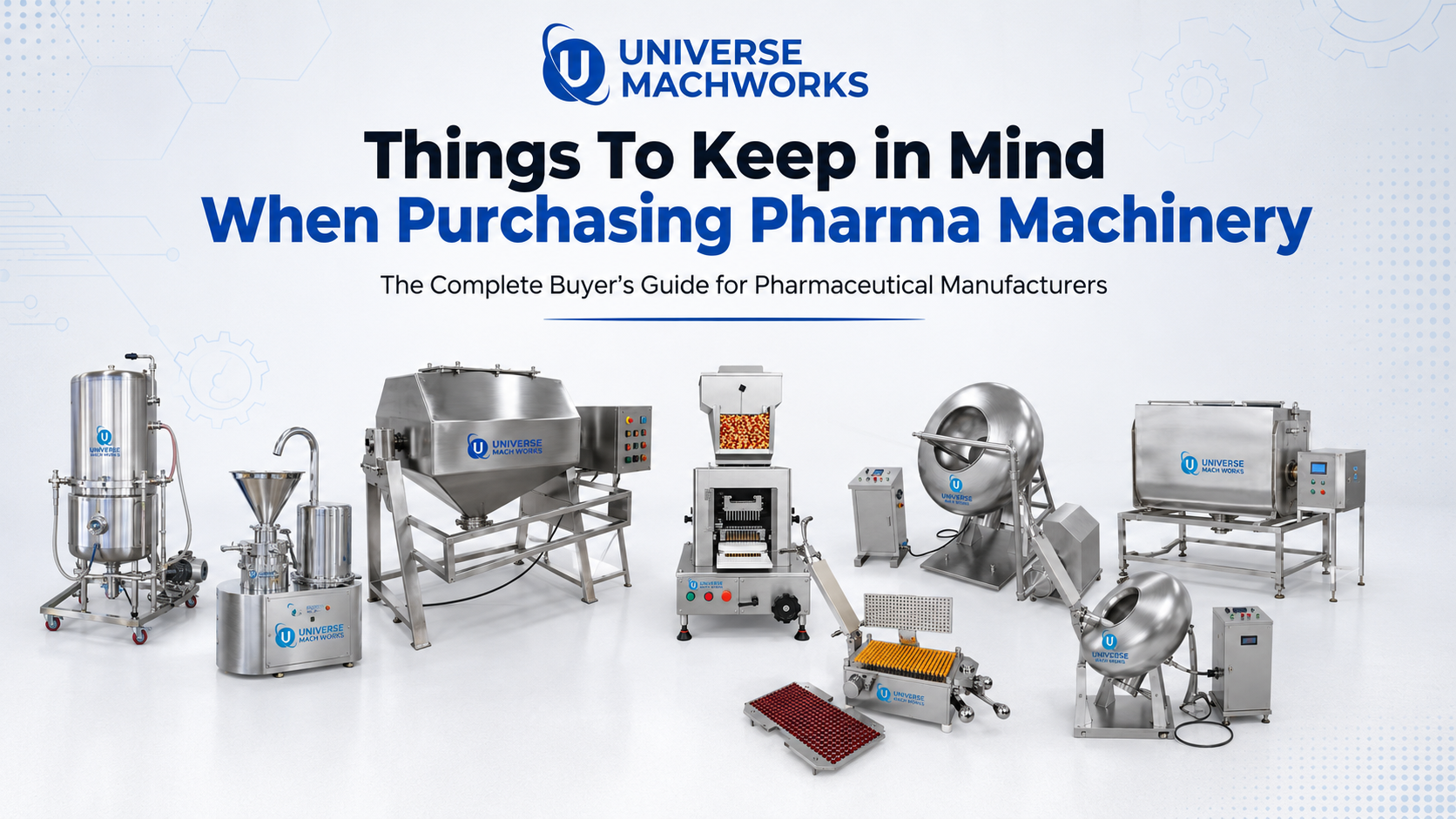
Selecting the correct pharmaceutical manufacturing equipment requires more than comparing machine prices.
1. Understand Your Product
- Powder characteristics
- Particle size
- Bulk density
- Flowability
- Moisture sensitivity
- Viscosity
- Heat sensitivity
- Required final dosage form
2. Determine Production Capacity
- Batch size
- Number of batches per shift
- Daily production target
- Annual production target
- Expected future demand
Avoid choosing equipment solely based on maximum capacity. The machine should operate efficiently at your intended working load.
3. Consider Material of Construction
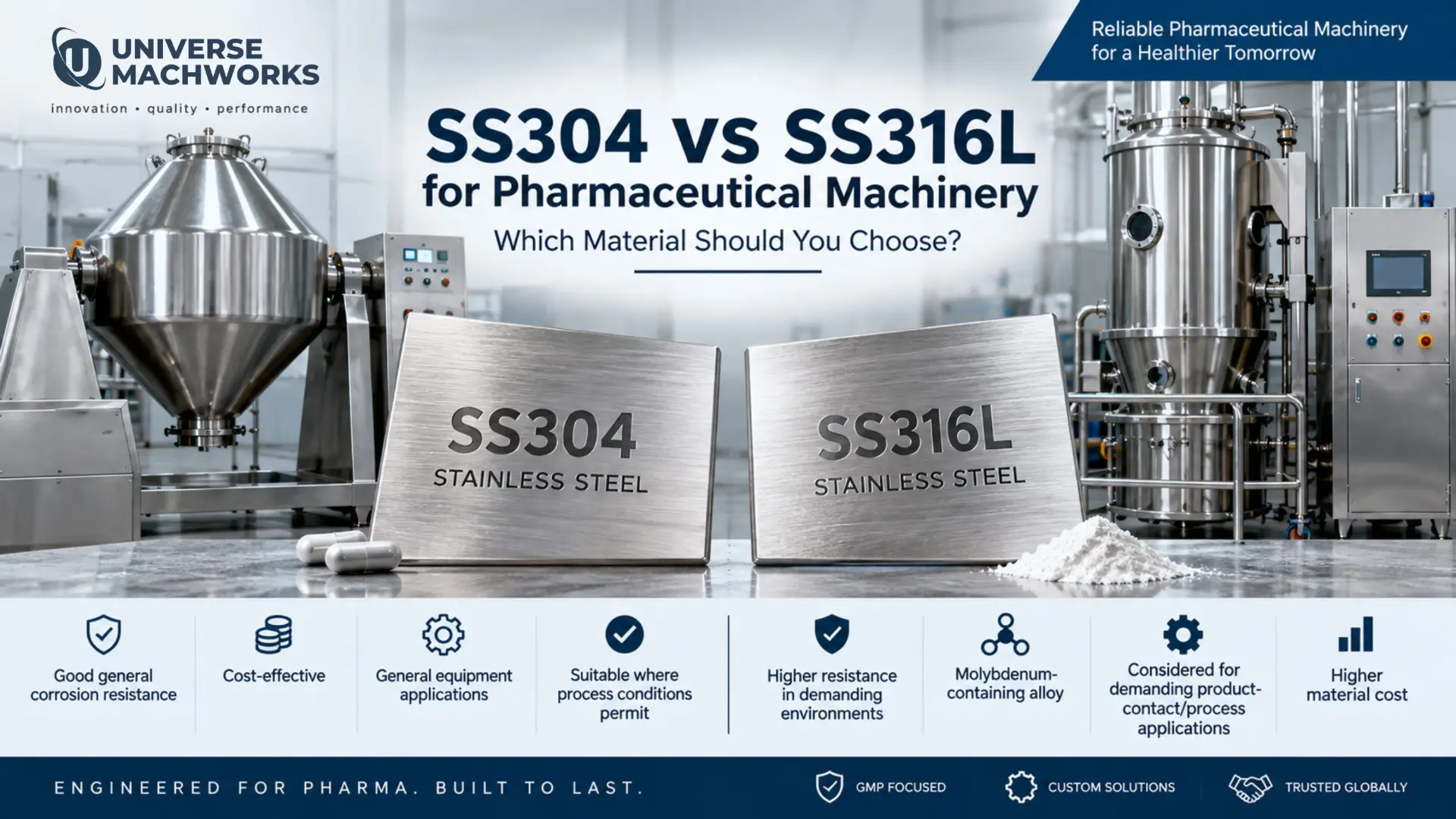
Product-contact surfaces should be selected according to the formulation, cleaning process, corrosion requirements, and applicable manufacturing standards. Common stainless-steel options include SS304 and SS316L, depending on the application.
4. Evaluate Automation Requirements
- PLC
- HMI
- VFD
- Sensors
- Temperature monitoring
- Pressure monitoring
- Recipe management
- Data logging
Automation can improve repeatability and process control, but it should be selected according to actual operational requirements.
5. Check Cleaning & Maintenance
- Accessible product-contact areas
- Minimal material-retention points
- Suitable surface finish
- Easy component removal
- Accessible seals and bearings
- Practical changeover arrangements
6. Evaluate Manufacturer Support
- Technical consultation
- Installation
- Commissioning
- Operator training
- Spare parts
- Preventive maintenance
- Troubleshooting
- Long-term technical support
A reliable support system can significantly reduce downtime during the machine's operating life.
GMP Considerations for Pharmaceutical Machinery
Pharmaceutical equipment should be designed and selected with the applicable GMP requirements of the manufacturing facility in mind. Important considerations include hygienic construction, cleanability, material compatibility, documentation, and process control.
- Hygienic construction — product-contact surfaces suitable for the formulation and cleaning process
- Cleanability — minimal difficult-to-clean areas and product accumulation
- Material compatibility with product, cleaning chemicals, temperature and process conditions
- Documentation — specifications, drawings, material certificates, manuals, testing and qualification documents
- Process control — automated monitoring for consistency and traceability where necessary
GMP requirements vary according to the product, market, facility, and applicable regulatory framework, so manufacturers should verify the specific requirements applicable to their operation.
Common Mistakes When Buying Pharmaceutical Machinery
One of the biggest mistakes buyers make is selecting equipment based only on the lowest quotation. Other common mistakes include:
- Choosing the wrong capacity — oversized machinery increases capital and utility costs, while undersized machinery creates bottlenecks
- Ignoring the formulation — a machine that suits one powder may not suit another
- Underestimating cleaning requirements, which increases downtime and complicates changeovers
- Buying without considering future expansion
- Ignoring after-sales support, spare parts and technical assistance
What to Look for in a Pharmaceutical Machinery Manufacturer
A reliable pharmaceutical machinery manufacturer should be able to understand your process rather than simply selling a standard machine. Before placing an order, consider:
- Engineering capability
- Manufacturing experience
- Quality of fabrication
- Material traceability
- Testing procedures
- Customization capability
- Documentation
- Installation support
- Spare parts availability
- After-sales service
It is also useful to provide the manufacturer with detailed process information so the machine can be appropriately specified.
Why Choose Universe Mach Works?
Selecting pharmaceutical machinery is a long-term investment. The right manufacturer should not only supply equipment but also understand the production process, capacity requirements, material characteristics, hygiene requirements, and future expansion plans.
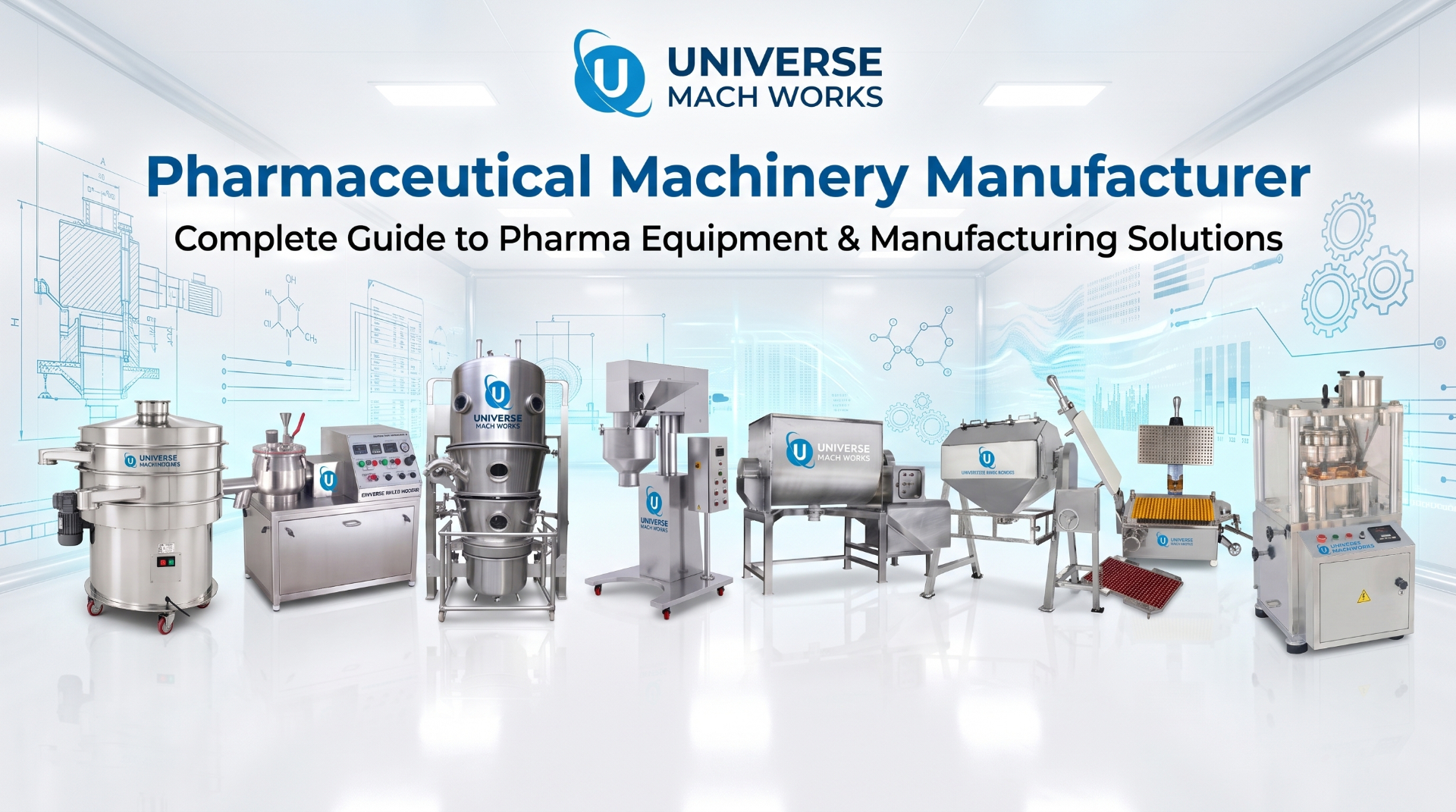
Universe Mach Works provides pharmaceutical and process machinery solutions designed for pharmaceutical, nutraceutical, food, cosmetic, herbal, and chemical manufacturing applications.
- 53+ years of experience in pharmaceutical & process machinery manufacturing
- Customized equipment solutions
- SS304 / SS316L construction options
- GMP-oriented machine design
- Precision stainless-steel fabrication
- PLC and HMI automation options
- Installation and commissioning support
- Operator training
- Spare parts and technical assistance
- Pan-India service support
The product range includes equipment for sifting, blending, granulation, drying, milling, compression, capsule filling, coating, liquid processing, filtration, and material handling. For manufacturers planning a new production line or expanding an existing facility, working directly with an experienced pharmaceutical machinery manufacturer can simplify equipment selection and project coordination.
How to Select the Right Machine for Your Plant
There is no single machine configuration that is ideal for every pharmaceutical manufacturing facility. The correct equipment depends on the formulation, production process, batch size, and required output.
Start With Your Manufacturing Process
First map the complete production process from raw material receipt to finished product: Raw Materials → Sifting → Blending → Granulation → Drying → Milling → Final Blending → Tablet Compression / Capsule Filling → Coating → Inspection → Packaging. Once the process is mapped, determine the equipment required at each stage.
Pharmaceutical Machinery Buying Checklist
Product & Process
- Product type identified
- Material characteristics evaluated
- Required batch size calculated
- Required production output determined
- Heating/cooling requirements identified
Machine Specification
- Correct machine capacity
- Suitable material of construction
- Appropriate surface finish
- Suitable agitator/rotor/blade configuration
- Appropriate discharge arrangement
- Cleaning requirements evaluated
Automation
- Manual / semi-automatic / automatic requirement established
- PLC requirement evaluated
- HMI requirement evaluated
- VFD requirement evaluated
- Sensors and process controls identified
Manufacturer
- Manufacturing experience checked
- Technical specifications reviewed
- Documentation requirements confirmed
- Warranty terms confirmed
- Spare-parts availability confirmed
- Installation support confirmed
- After-sales service evaluated
What Are the Most Important Pharmaceutical Machines?
The most important pharmaceutical machines depend on the manufacturing process, but a typical solid-dose pharmaceutical facility may use Vibro Sifters, Blenders, Rapid Mixer Granulators, Fluid Bed Dryers, Multi Mills, Tablet Compression Machines, Capsule Filling Machines, and Coating Pans, along with supporting equipment for drying, liquid processing, filtration, and material handling.
What Machine Is Used for Pharmaceutical Powder Mixing?
Pharmaceutical powders and granules can be mixed using equipment such as Ribbon Blenders, Double Cone Blenders, Octagonal Blenders, and other specialized powder mixers. The appropriate machine depends on batch size, powder flowability, bulk density, particle characteristics, required mixing time, and formulation requirements.
What Machine Is Used for Tablet Manufacturing?
A typical tablet manufacturing process can involve a Vibro Sifter, Blender, Rapid Mixer Granulator, Fluid Bed Dryer, Multi Mill, Tablet Compression Machine, and Coating Pan, depending on whether the formulation uses direct compression, wet granulation, or another manufacturing process.
What Should I Consider When Buying Pharmaceutical Machinery?
The main factors include production capacity, formulation characteristics, machine design, material of construction, cleaning requirements, automation, GMP requirements, documentation, energy consumption, maintenance, spare-parts availability, installation, and after-sales support.
Voice Search Questions
What machines are used in pharmaceutical manufacturing?
Pharmaceutical manufacturing uses different machines depending on the dosage form and process. Common equipment includes sifters, blenders, granulators, dryers, mills, tablet presses, capsule filling machines, coating machines, mixing tanks, and filtration equipment.
Which machine is used for tablet manufacturing?
Tablet manufacturing commonly involves powder screening, blending, granulation where required, drying, milling, compression, and optional coating. Different machines are used for each stage.
What is a Rapid Mixer Granulator used for?
A Rapid Mixer Granulator is primarily used for wet granulation, where powders are mixed with a binder solution to form granules suitable for subsequent processing.
What is a Fluid Bed Dryer used for?
A Fluid Bed Dryer is commonly used to remove moisture from wet pharmaceutical granules using controlled airflow and temperature.
Which blender is best for pharmaceutical powders?
The appropriate blender depends on the powder characteristics, batch size, density, flowability, mixing requirements, and formulation. Ribbon, Double Cone, and Octagonal Blenders are among the commonly used options.
How do I choose pharmaceutical machinery?
Start by defining your product, manufacturing process, batch size, production target, material characteristics, cleaning requirements, automation needs, and applicable quality requirements. Then select equipment based on these specifications.
Explore the Product
Complete Pharma Machinery Range by Universe Mach Works
View technical specifications, applications and request a customized quote.
View Complete Pharma Machinery RangeFrequently Asked Questions
What are the most commonly used pharmaceutical machines?+
Common pharmaceutical processing machines include Vibro Sifters, Blenders, Rapid Mixer Granulators, Fluid Bed Dryers, Multi Mills, Tablet Compression Machines, Capsule Filling Machines, Coating Pans, Tray Dryers, Mixing Tanks, and filtration equipment.
Which machines are required for tablet manufacturing?+
A tablet manufacturing line may require a Vibro Sifter, Blender, Rapid Mixer Granulator, Fluid Bed Dryer, Multi Mill, Tablet Compression Machine, and Coating Pan, depending on the formulation and manufacturing process.
What is the purpose of a Vibro Sifter?+
A Vibro Sifter separates particles according to size and can help remove oversized material and lumps from pharmaceutical powders and granules.
What is the difference between a Ribbon Blender and Double Cone Blender?+
A Ribbon Blender uses horizontal ribbon elements to move and mix material, while a Double Cone Blender uses vessel rotation and tumbling action. The appropriate choice depends on the formulation and process requirements.
What is an Octagonal Blender used for?+
An Octagonal Blender is used for blending pharmaceutical powders and granules and is commonly selected for applications requiring efficient dry mixing.
What does a Rapid Mixer Granulator do?+
An RMG combines powders with a binder solution to form wet granules during the wet granulation process.
Why is a Fluid Bed Dryer used after granulation?+
After wet granulation, the material contains moisture. A Fluid Bed Dryer can provide controlled drying to achieve the desired moisture level before further processing.
What is a Multi Mill used for?+
A Multi Mill is used for size reduction, breaking lumps, and sizing pharmaceutical granules or powders.
What is a Tablet Compression Machine?+
A Tablet Compression Machine compresses pharmaceutical granules or suitable powder blends into tablets with controlled dimensions and weight.
What is a Capsule Filling Machine?+
A Capsule Filling Machine fills empty hard capsules with suitable pharmaceutical powders, granules, pellets, or other formulations.
What is the purpose of a Coating Pan?+
A Coating Pan is used to apply coating material to tablets. Depending on the formulation, coating can provide functional, protective, taste-masking, or appearance-related benefits.
What is a Tray Dryer used for?+
A Tray Dryer is a batch drying system used for removing moisture from materials such as pharmaceutical powders, granules, herbs, and other suitable products.
What is a Paste Kettle used for?+
A Paste Kettle is generally used for heating and mixing viscous materials, pastes, creams, gels, and other suitable formulations.
What factors affect pharmaceutical machinery cost?+
Machine type, capacity, material of construction, automation, customization, surface finish, utilities, documentation, installation, and after-sales requirements can all influence the overall investment.
Is SS316L necessary for every pharmaceutical machine?+
Not necessarily. The appropriate material depends on the product, process, cleaning chemicals, corrosion requirements, and applicable specifications. Product-contact components may require a different material specification from non-contact structural components.
Should pharmaceutical machinery be automated?+
Automation can improve process control, repeatability, monitoring, and operator convenience. However, the appropriate automation level depends on production requirements and budget.
How important is after-sales support?+
After-sales support is important because installation, commissioning, preventive maintenance, spare parts, troubleshooting, and technical assistance can directly affect equipment uptime.
Can pharmaceutical machinery be customized?+
Yes. Depending on the machine and process, manufacturers can customize capacity, material of construction, discharge arrangements, automation, heating/cooling systems, and other process-specific features.
Conclusion
A pharmaceutical manufacturing plant depends on a coordinated combination of processing equipment. From Vibro Sifting and powder blending to granulation, drying, milling, tablet compression, capsule filling, coating, liquid processing, and filtration, each machine performs a specific role in achieving consistent and efficient production.
The top 15 pharmaceutical machines discussed in this guide provide a useful starting point for understanding the equipment commonly required across pharmaceutical manufacturing operations. However, the right combination will always depend on the product, manufacturing method, production capacity, facility design, and process requirements.
When selecting pharmaceutical machinery, manufacturers should look beyond the initial purchase price. Equipment quality, hygienic construction, capacity, automation, cleanability, documentation, maintenance, spare-parts availability, and technical support all contribute to the machine's long-term value.
Universe Mach Works provides pharmaceutical and process machinery solutions for manufacturers looking for reliable equipment tailored to their production requirements. From individual processing machines to customized equipment solutions, the focus is on practical engineering, quality construction, and dependable performance.
For manufacturers planning a new facility, expanding production, or upgrading existing equipment, selecting the right pharmaceutical machinery manufacturer is an important first step toward building an efficient and scalable production operation.