Investing in pharmaceutical machinery is one of the most important financial decisions for any pharmaceutical, nutraceutical, herbal, cosmetic, food processing, or chemical manufacturing business. Whether you are establishing a new manufacturing plant, expanding an existing production facility, or replacing outdated equipment, understanding the cost of pharmaceutical machinery is essential for making an informed investment.
One of the most common questions buyers ask is, "How much does pharmaceutical machinery cost?" The answer is not straightforward because pharmaceutical machinery is highly specialized and engineered to meet different production capacities, regulatory requirements, and product types. Unlike standard industrial equipment, pharmaceutical machines are often customized based on plant layout, production volume, automation level, and specific manufacturing processes.
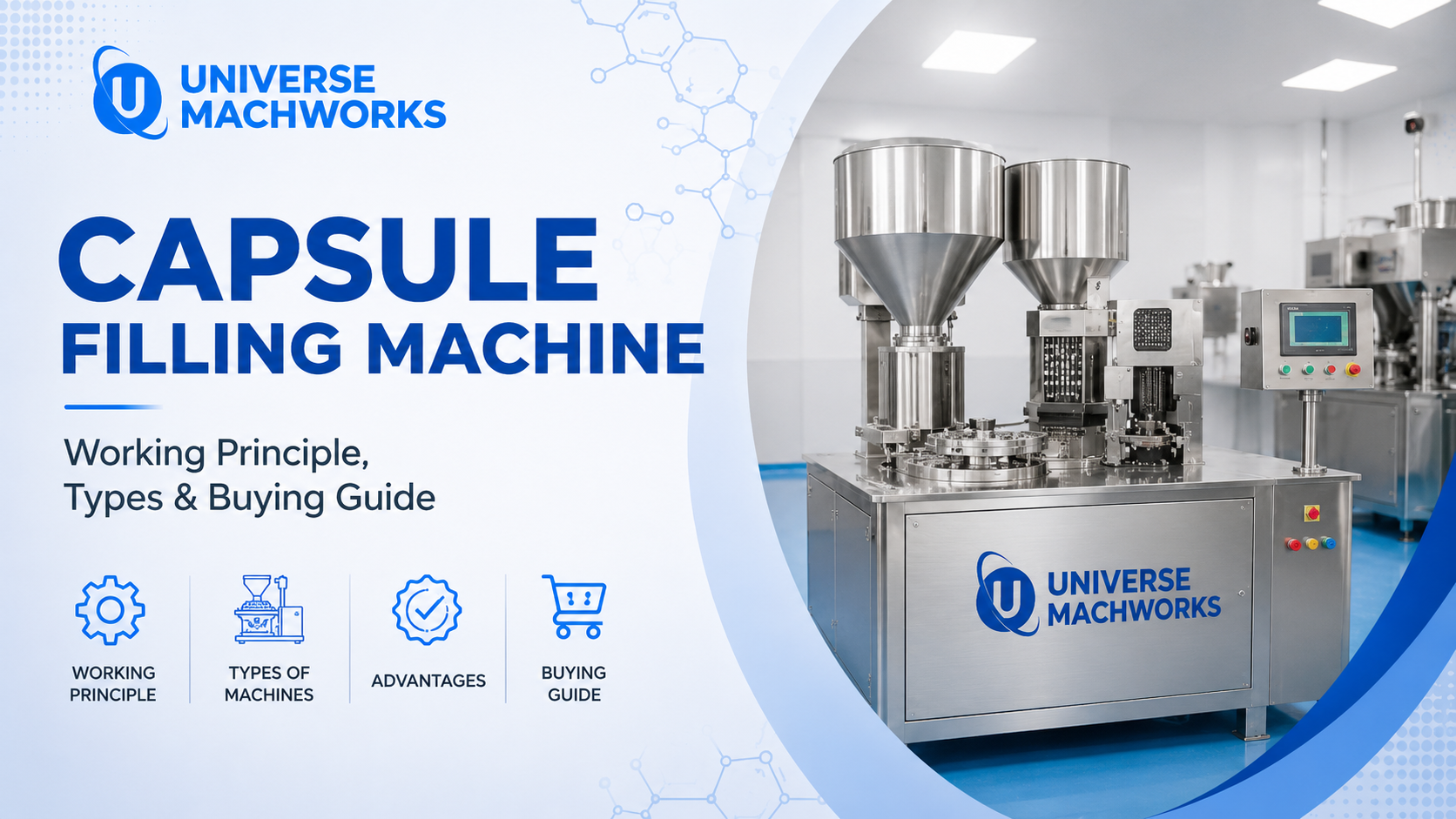
For example, a laboratory-scale Vibro Sifter designed for research and development has very different specifications and pricing compared to a high-capacity industrial model used in continuous pharmaceutical production. Similarly, an automatic Capsule Filling Machine equipped with PLC controls, servo-driven technology, and GMP-compliant features will cost significantly more than a semi-automatic version designed for smaller production facilities.
Several factors influence the total investment, including machine capacity, material of construction, automation, customization, quality standards, optional accessories, installation requirements, and after-sales support. Understanding these factors allows manufacturers to compare equipment based on long-term value rather than purchase price alone.
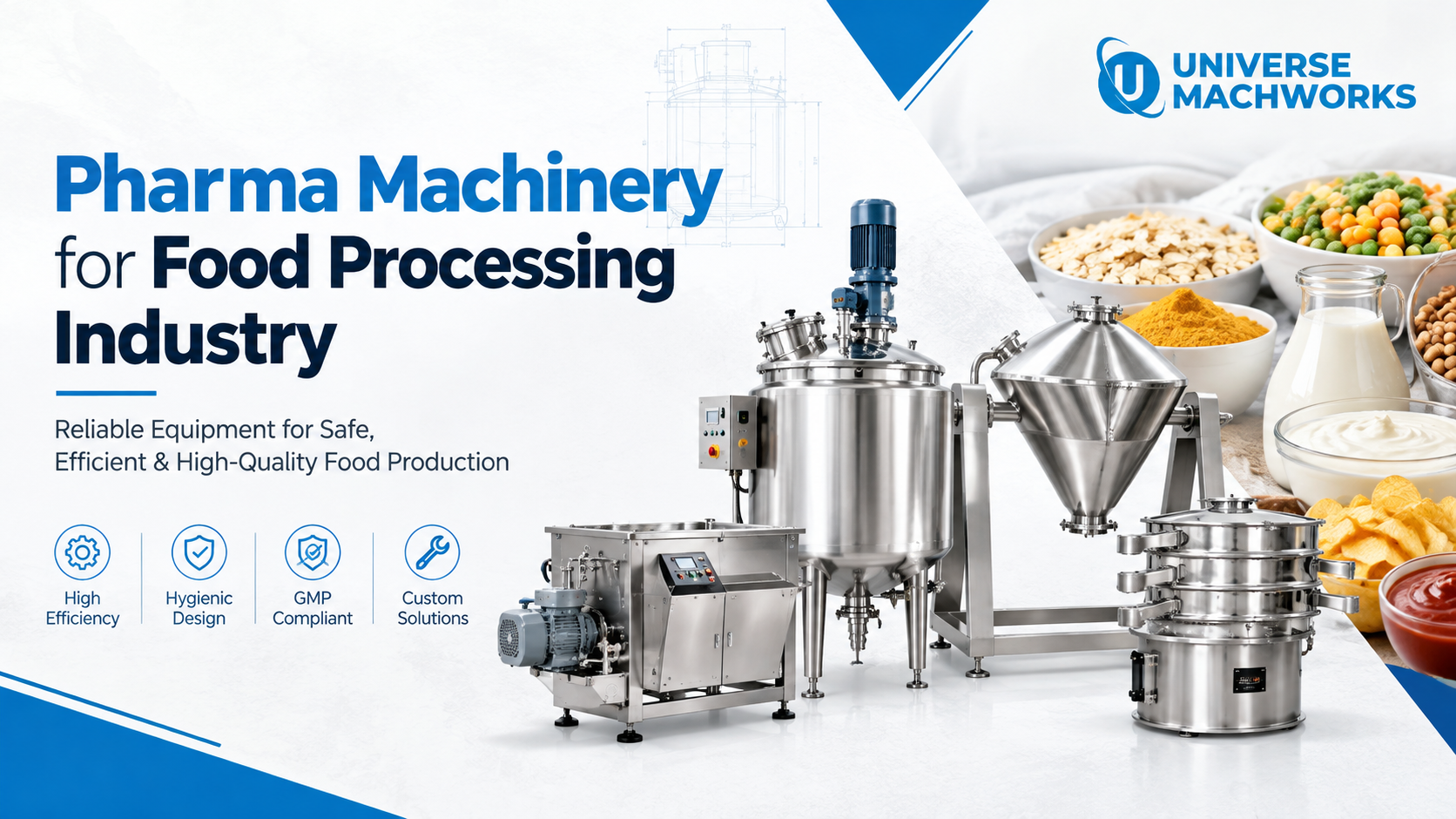
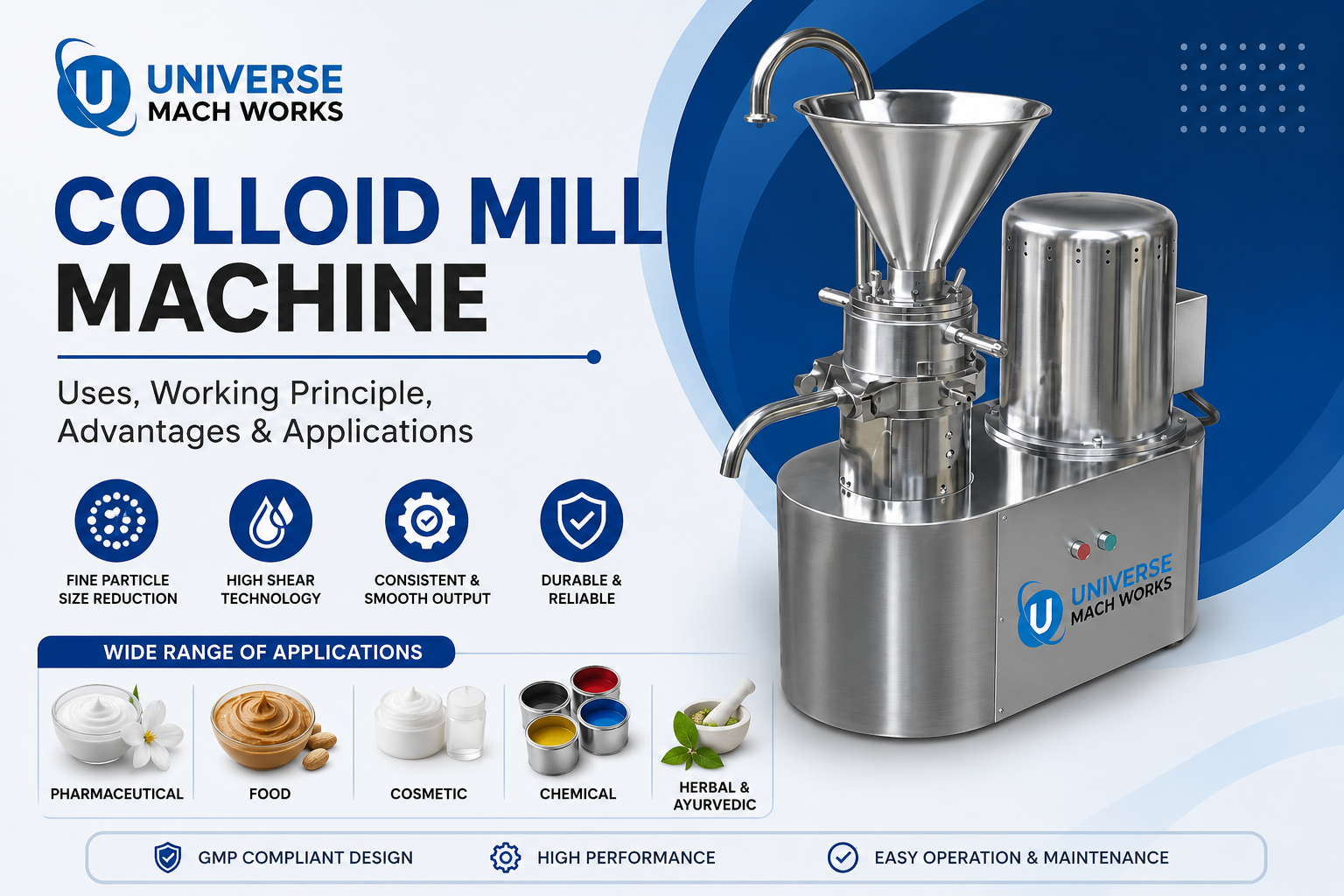
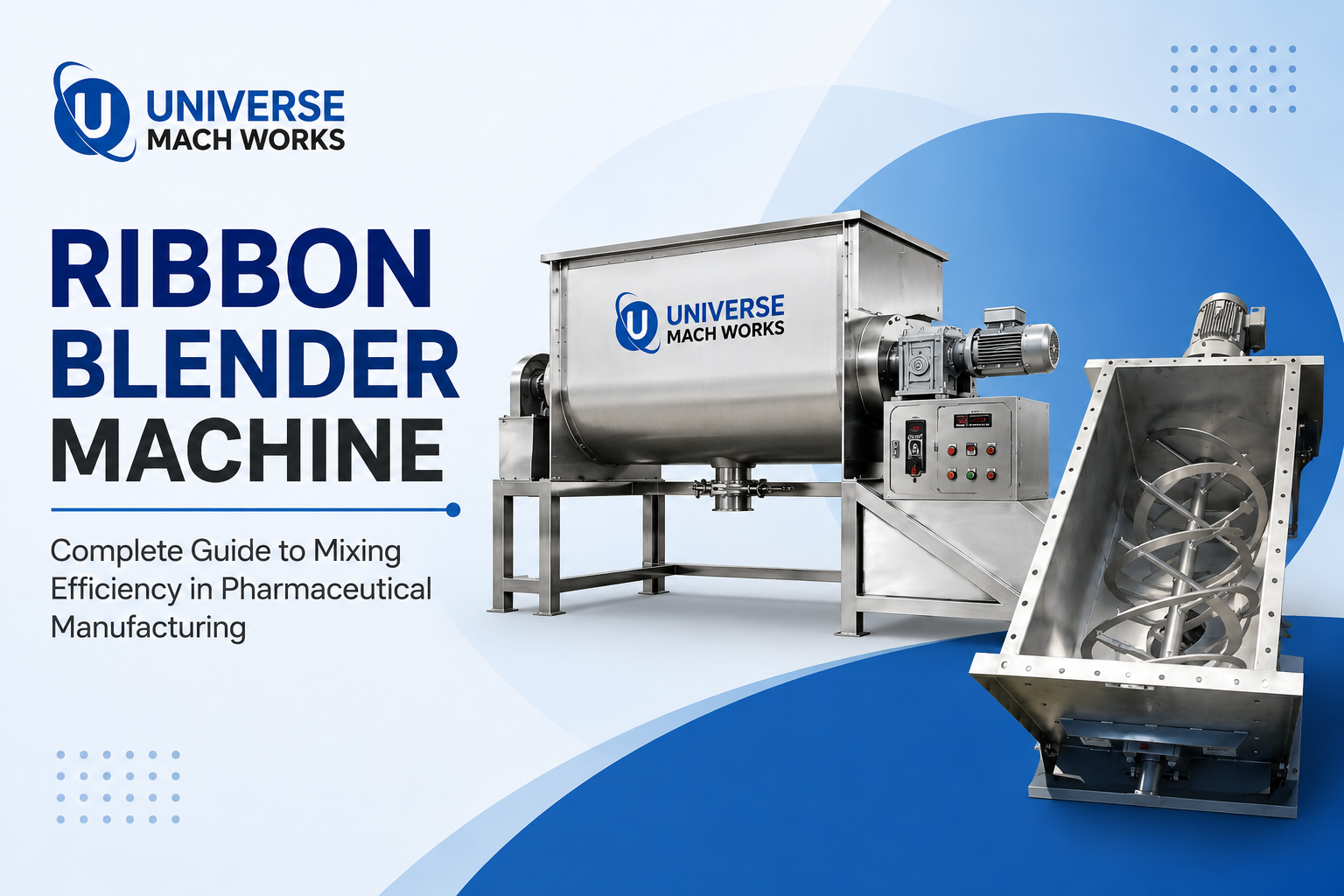
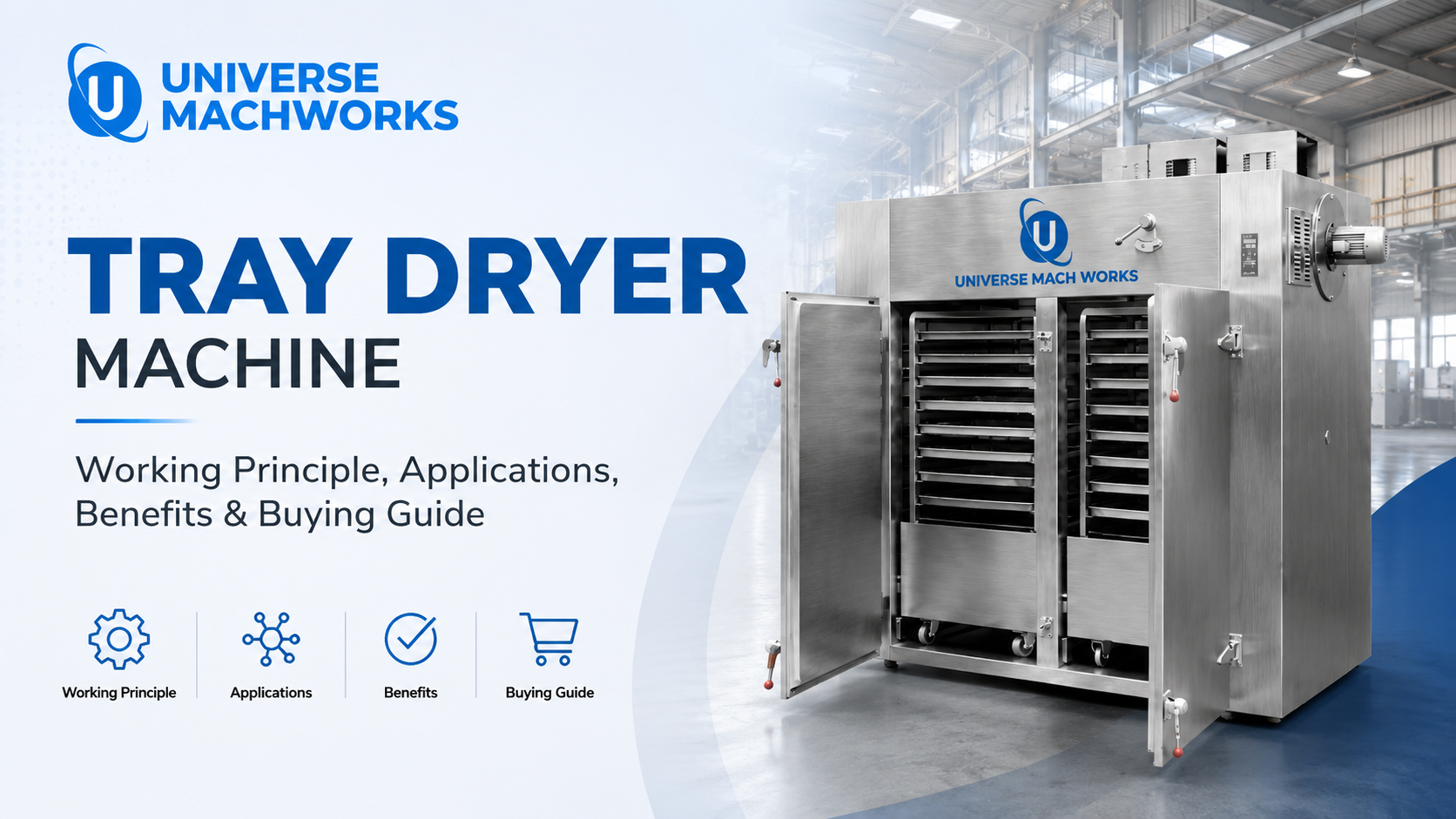
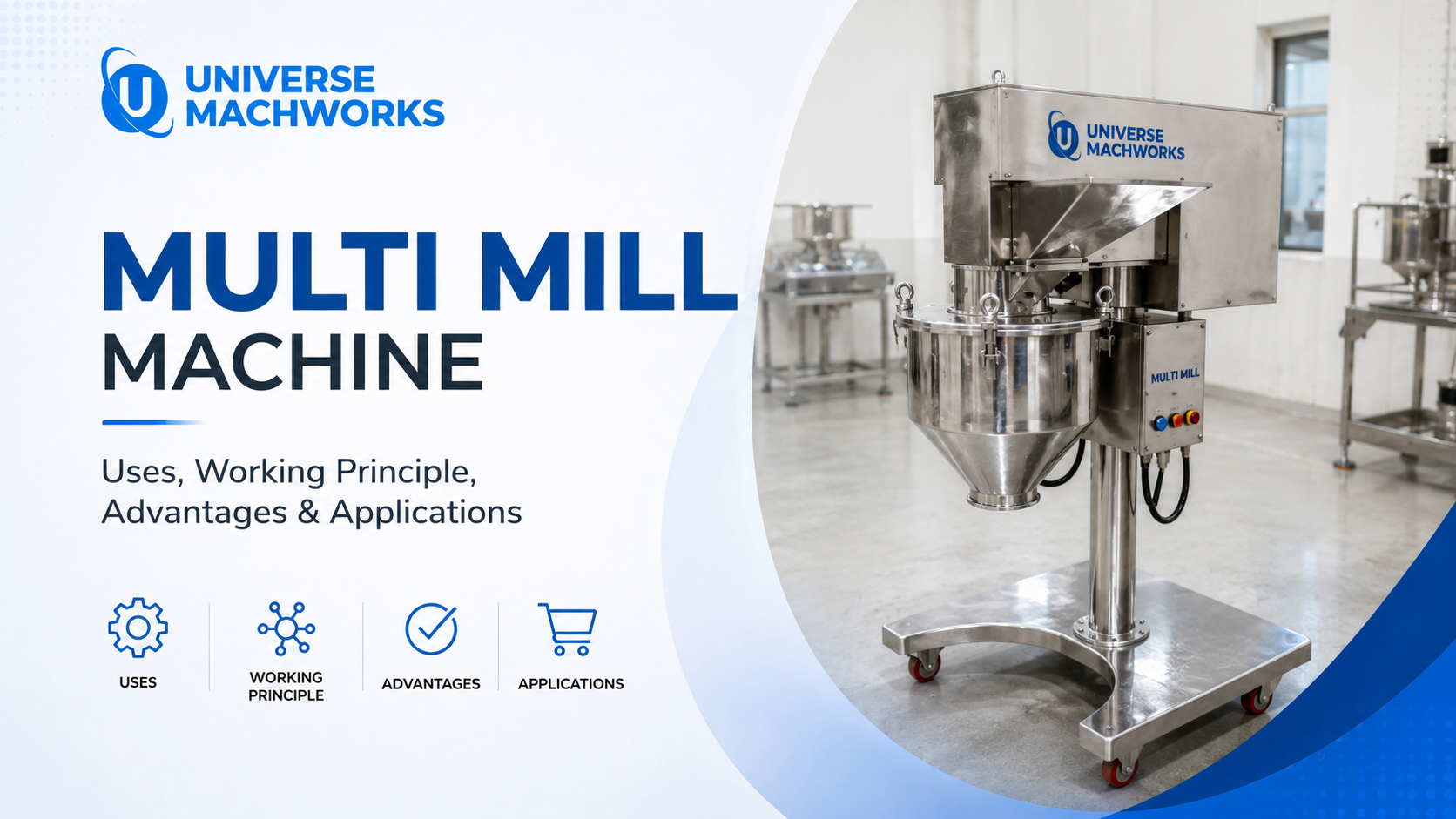
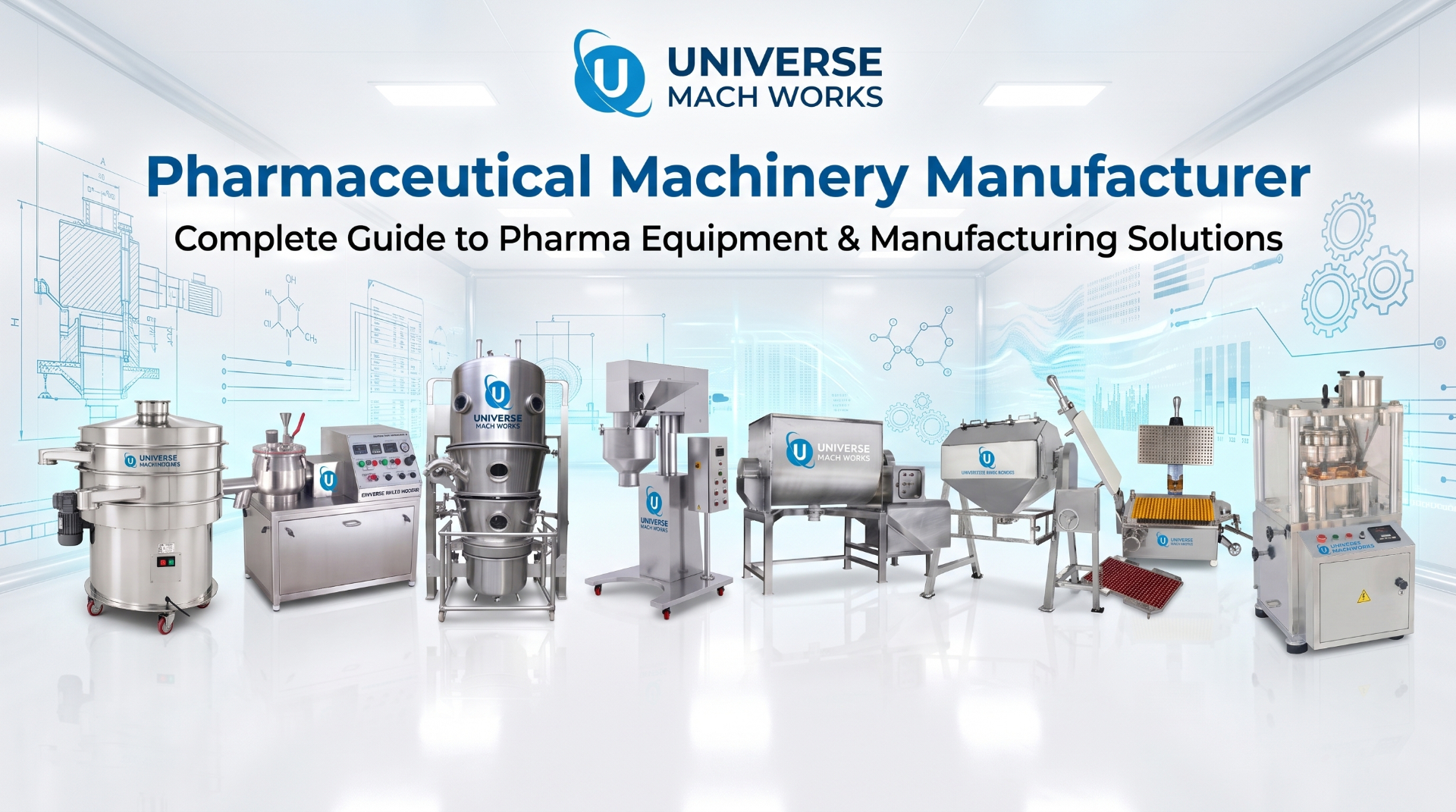
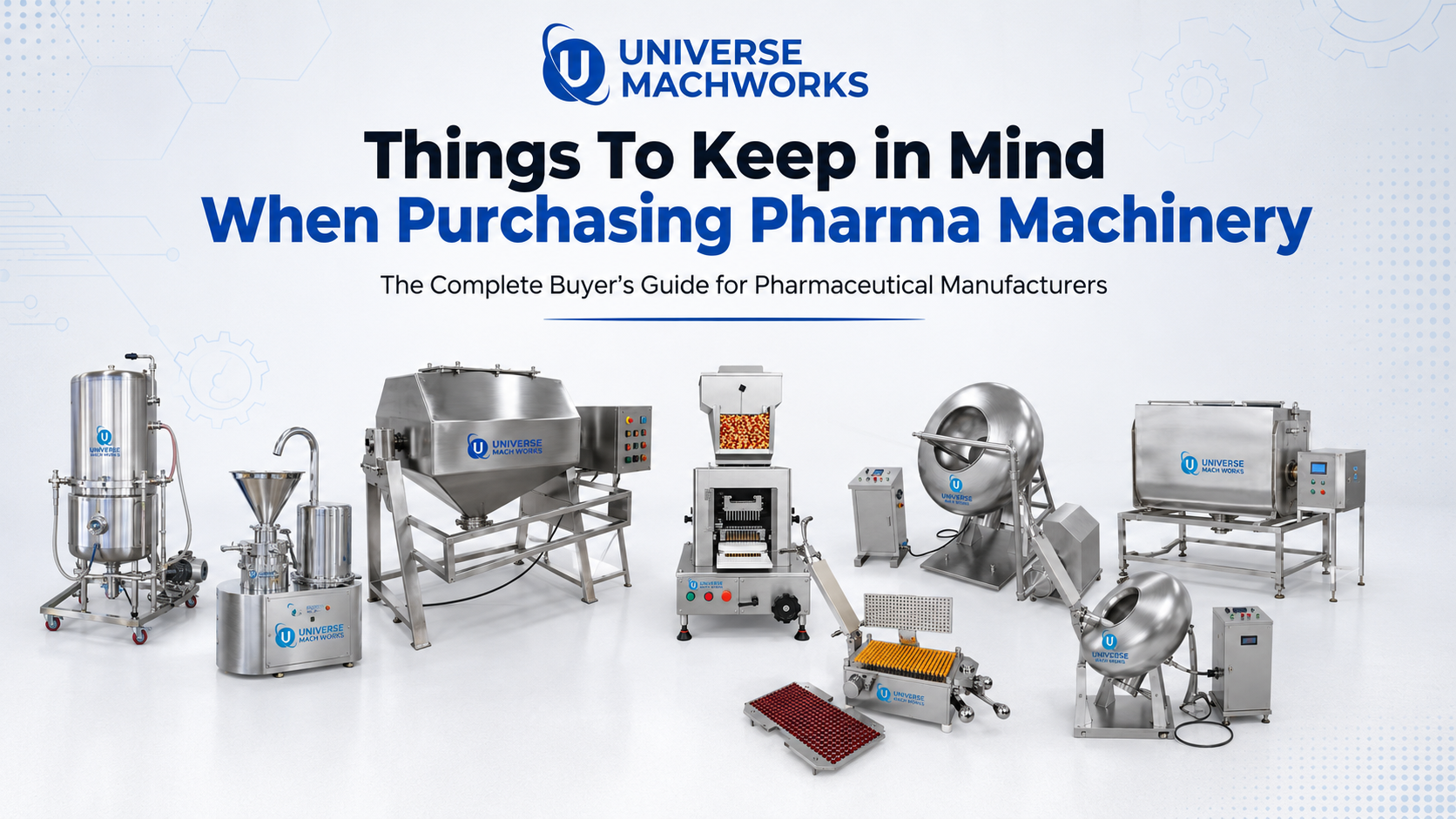
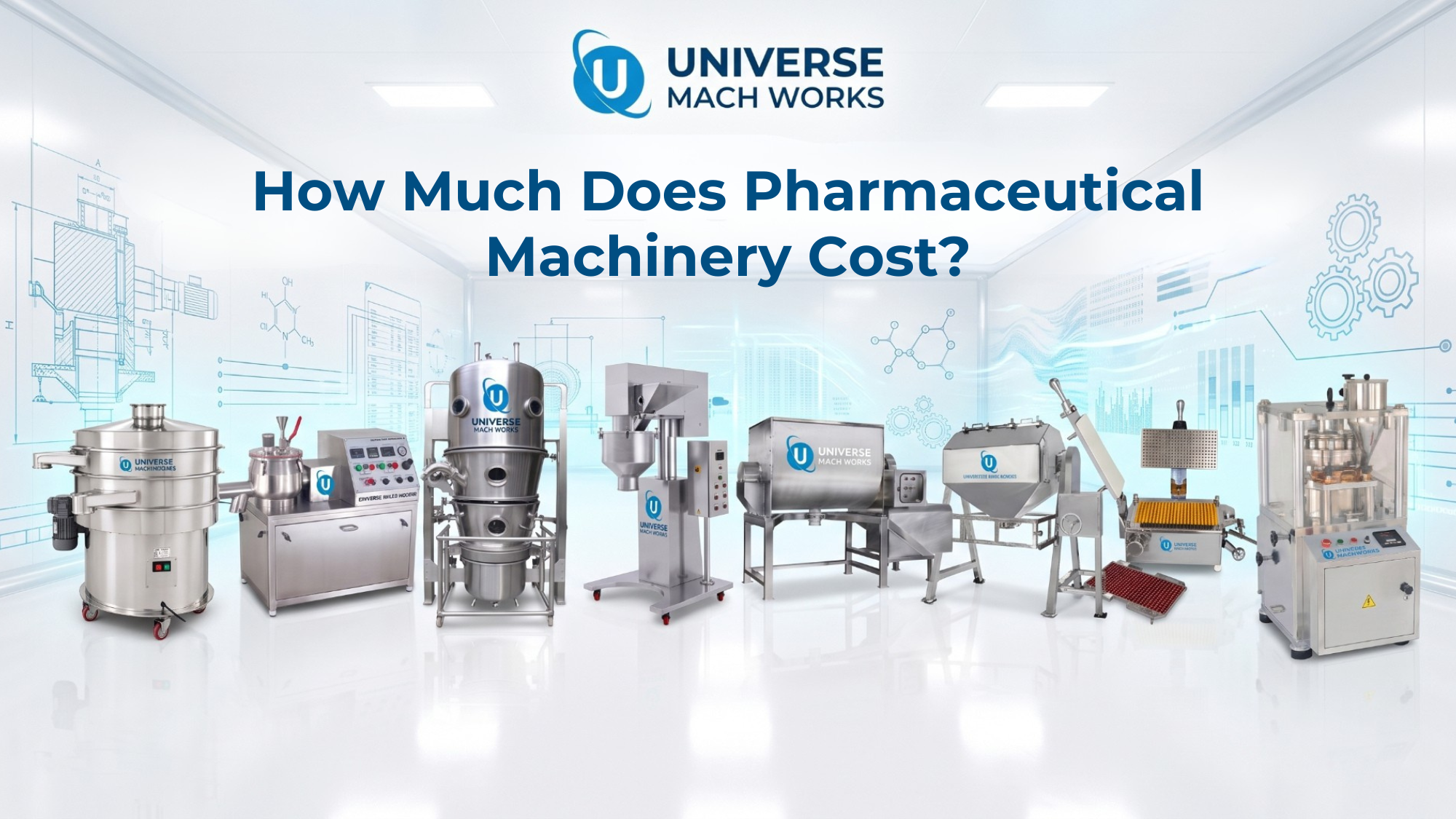
At Universe Mach Works, we manufacture a complete range of pharmaceutical processing equipment, including Vibro Sifters, Ribbon Blenders, Double Cone Blenders, Octagonal Blenders, Rapid Mixer Granulators (RMG), Fluid Bed Dryers (FBD), Tray Dryers, Multi Mills, Tablet Compression Machines, Capsule Filling Machines, Paste Kettles, Mixing Tanks, Filter Presses, Pressure Nutsche Filters, and Emulsifier/Homogenizers. Every machine is designed to provide reliable performance, GMP compliance, and excellent return on investment.
This guide explains why pharmaceutical machinery prices vary, the key factors that influence equipment costs, and how to choose machinery that delivers the best long-term value for your manufacturing facility.
Why Pharmaceutical Machinery Prices Vary
Many buyers expect pharmaceutical machinery to have a fixed market price. However, unlike consumer products, pharmaceutical equipment is engineered according to each customer's production requirements, regulatory standards, and plant configuration. As a result, two machines with the same name may have very different specifications—and therefore very different costs.
A Rapid Mixer Granulator (RMG) with a 100-litre capacity, for example, differs significantly from a 600-litre model in terms of motor size, structural design, utility requirements, and production output. Likewise, a Tablet Compression Machine intended for research laboratories has different capabilities and pricing compared to a high-speed rotary tablet press designed for commercial manufacturing.
Customization is another major factor. Many pharmaceutical companies request features such as PLC-based automation, touchscreen HMIs, Variable Frequency Drives (VFDs), load cells, recipe management systems, SCADA integration, and validation documentation. While these enhancements improve productivity and regulatory compliance, they also influence the overall project cost.
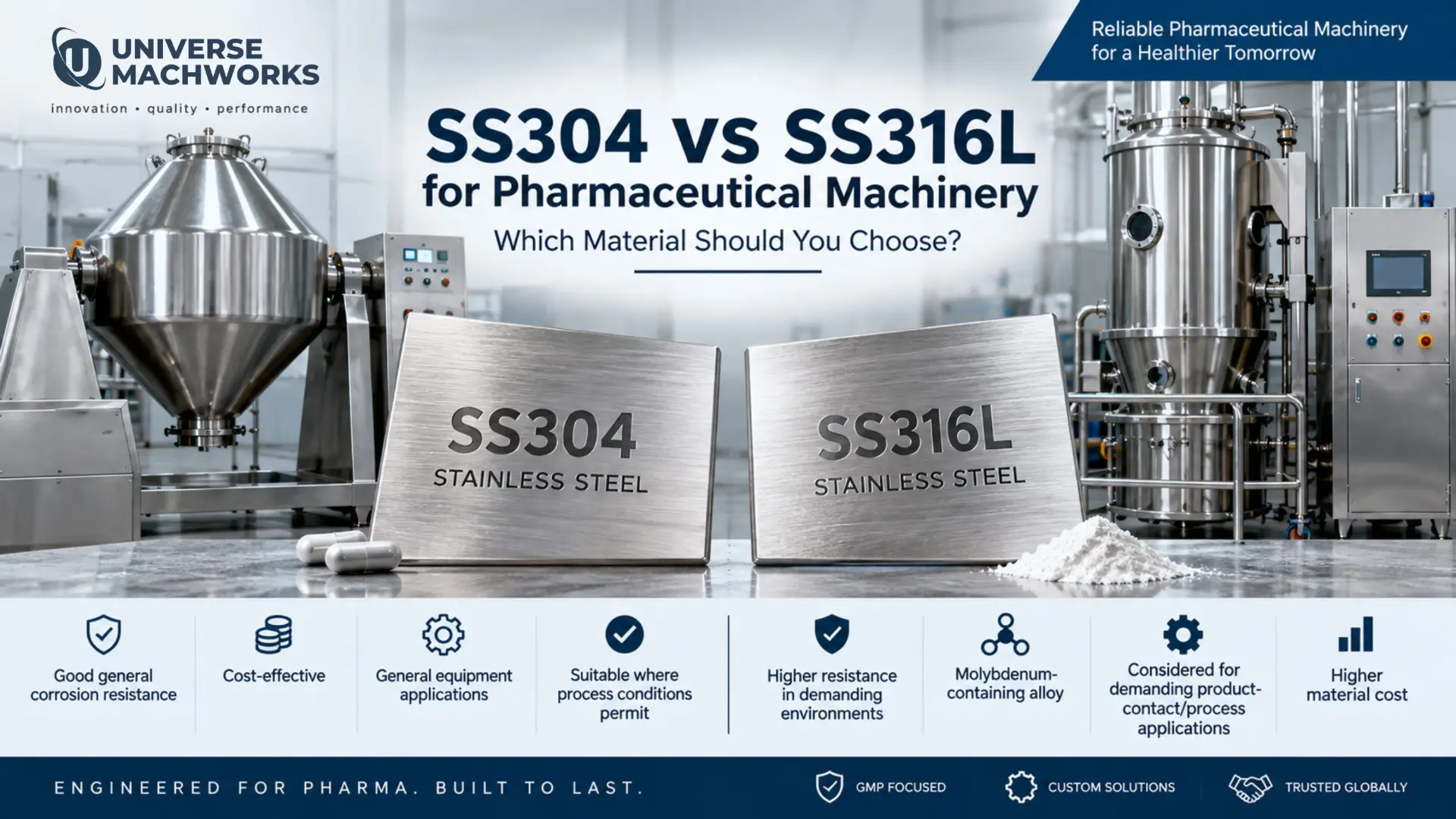
The grade of stainless steel also affects pricing. Machines built with SS316L product-contact parts generally cost more than those made primarily from SS304, but they offer superior corrosion resistance and are preferred for many pharmaceutical applications.
Other considerations include:
- Production capacity
- Batch size
- Utility requirements
- Surface finish
- Validation documents (IQ/OQ)
- Optional accessories
- Installation and commissioning
- Packaging and transportation
- Export specifications
- Warranty and after-sales support
For these reasons, reputable pharmaceutical machinery manufacturers usually provide customized quotations rather than publishing fixed prices.
Factors That Affect Pharmaceutical Machinery Cost
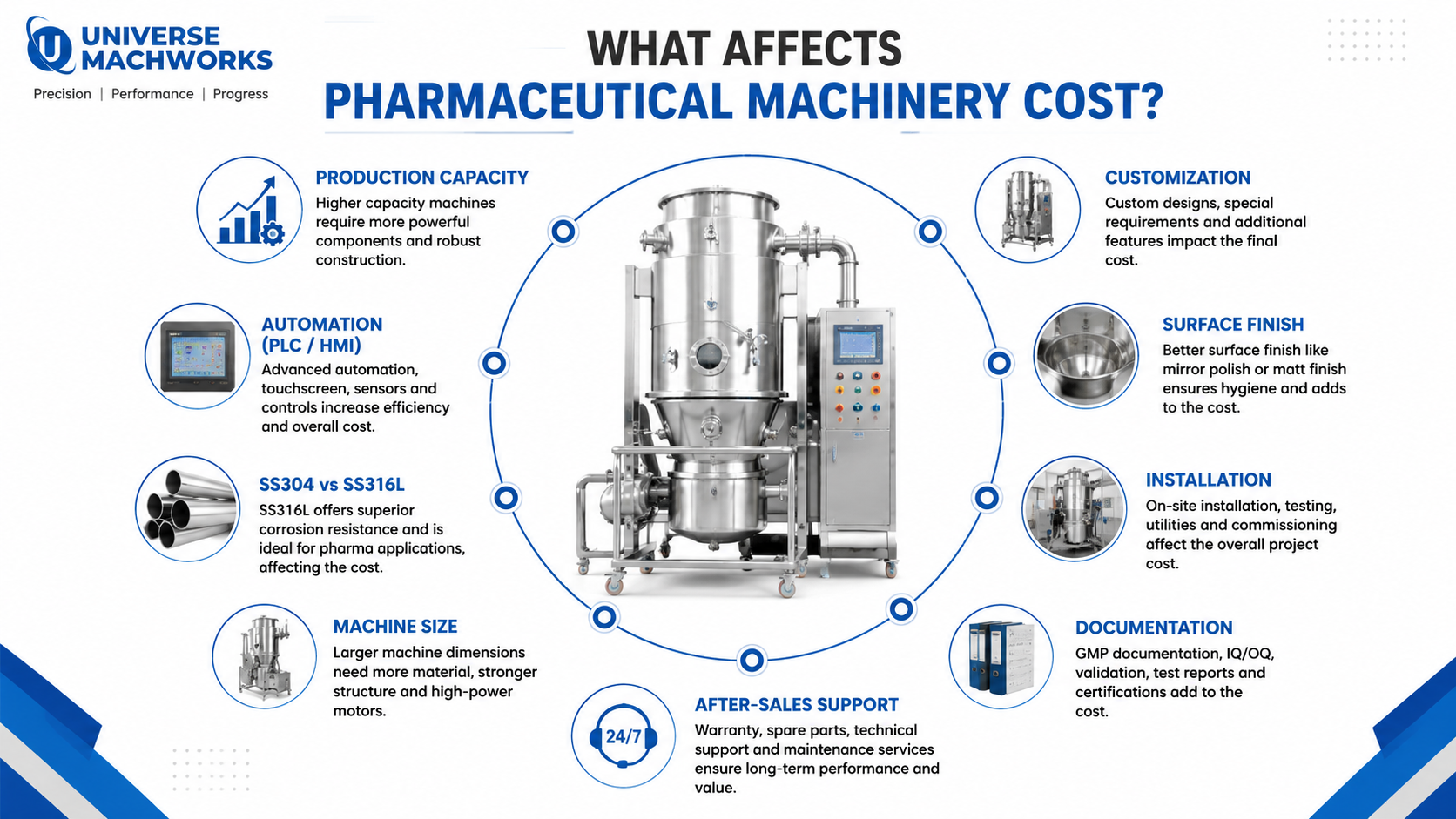
Understanding what drives machinery pricing helps buyers evaluate equipment based on long-term performance rather than initial investment alone.
1. Machine Type
Different machines have different engineering complexity and manufacturing costs. Examples include:
- Vibro Sifter
- Ribbon Blender
- Double Cone Blender
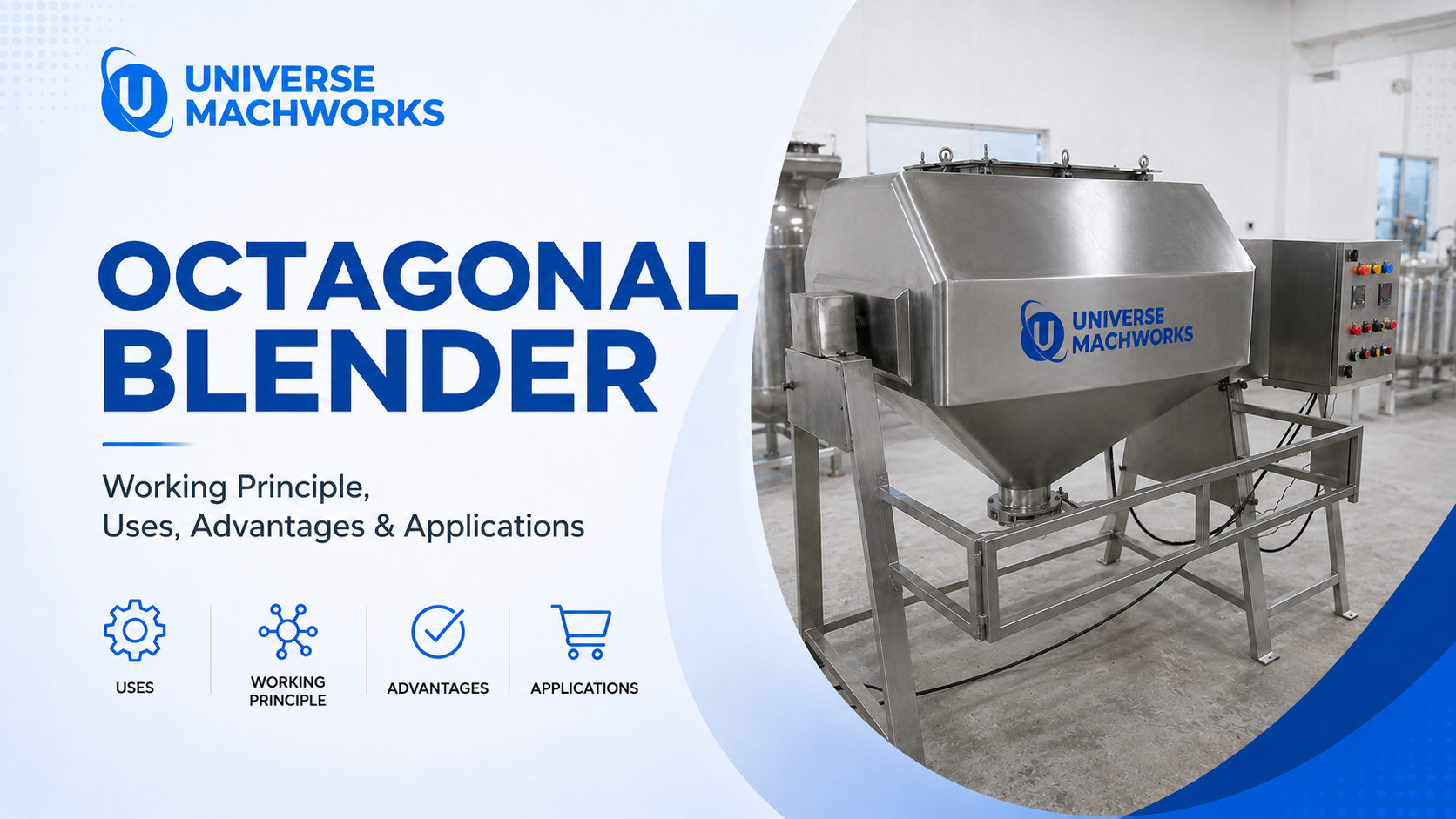
- Octagonal Blender
- Rapid Mixer Granulator (RMG)
- Fluid Bed Dryer (FBD)
- Tray Dryer
- Multi Mill
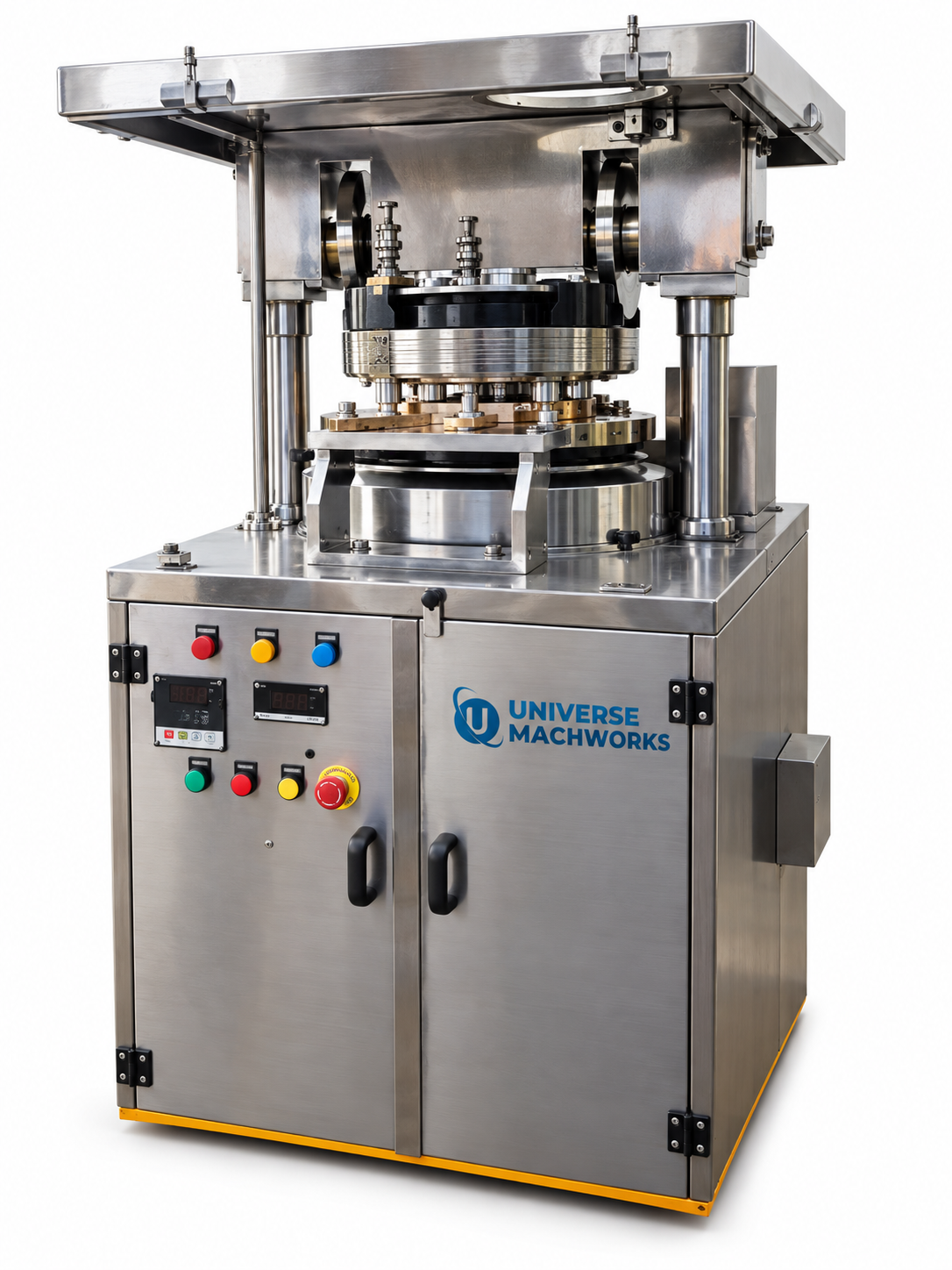
- Tablet Compression Machine
- Capsule Filling Machine
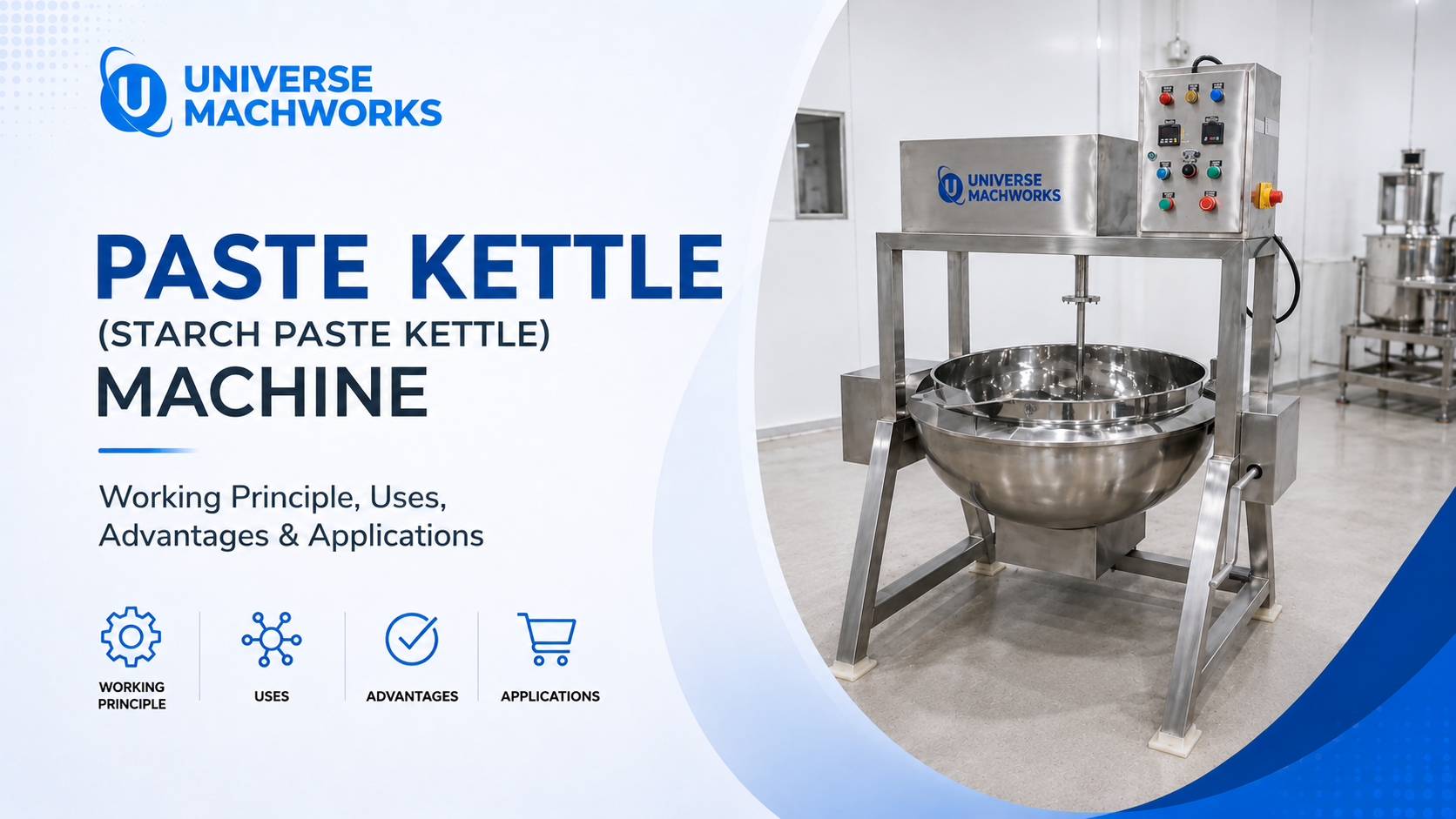
- Paste Kettle
- Mixing Tank
- Emulsifier / Homogenizer
- Filter Press Machine
- Pressure Nutsche Filter
Machines with advanced mechanical assemblies, automation, or precision dosing systems generally require greater engineering effort and more sophisticated components.
2. Material of Construction
The material used to manufacture pharmaceutical equipment significantly impacts durability, hygiene, and cost. Common options include SS304, SS316, and SS316L stainless steel. Higher-grade stainless steel improves corrosion resistance, chemical compatibility, and equipment lifespan, particularly in demanding pharmaceutical environments.
3. Production Capacity
Equipment is available in multiple capacities to suit different production requirements—laboratory scale, pilot scale, small production, medium production, and large industrial production. Larger-capacity machines require stronger structural frames, larger motors, heavy-duty gearboxes, bigger vessels, and higher utility consumption. Consequently, production capacity has a major influence on overall cost.
4. Automation Level
Basic machines generally include manual controls, while advanced systems may incorporate:
- PLC Control Systems
- Touchscreen HMI
- Servo Drives
- Variable Frequency Drives (VFD)
- Recipe Storage
- Batch Recording
- Alarm History
- Remote Diagnostics
- SCADA Integration
Higher automation improves efficiency, consistency, and traceability but also increases the initial investment.
5. Customization
- Special capacities
- Custom discharge systems
- CIP (Clean-in-Place) systems
- Explosion-proof designs
- Vacuum systems
- Jacketed vessels
- Additional safety features
- Utility-specific configurations
Custom engineering increases manufacturing complexity and project cost but ensures the equipment matches operational requirements.
6. Surface Finish
- Standard Industrial Finish
- Matte Finish
- Mirror Polish
- Electropolished Surfaces
Higher-quality finishes improve hygiene and simplify cleaning but require additional manufacturing processes.
7. Compliance & Documentation
- Material Test Certificates (MTC)
- Factory Acceptance Test (FAT)
- Installation Qualification (IQ)
- Operational Qualification (OQ)
- User Manuals
- Electrical Drawings
- Mechanical Drawings
- Calibration Certificates
8. Installation & After-Sales Support
- Installation
- Commissioning
- Operator Training
- Preventive Maintenance
- Spare Parts
- Technical Support
A comprehensive after-sales package helps maximize equipment uptime and long-term performance.
SS304 vs SS316 Construction
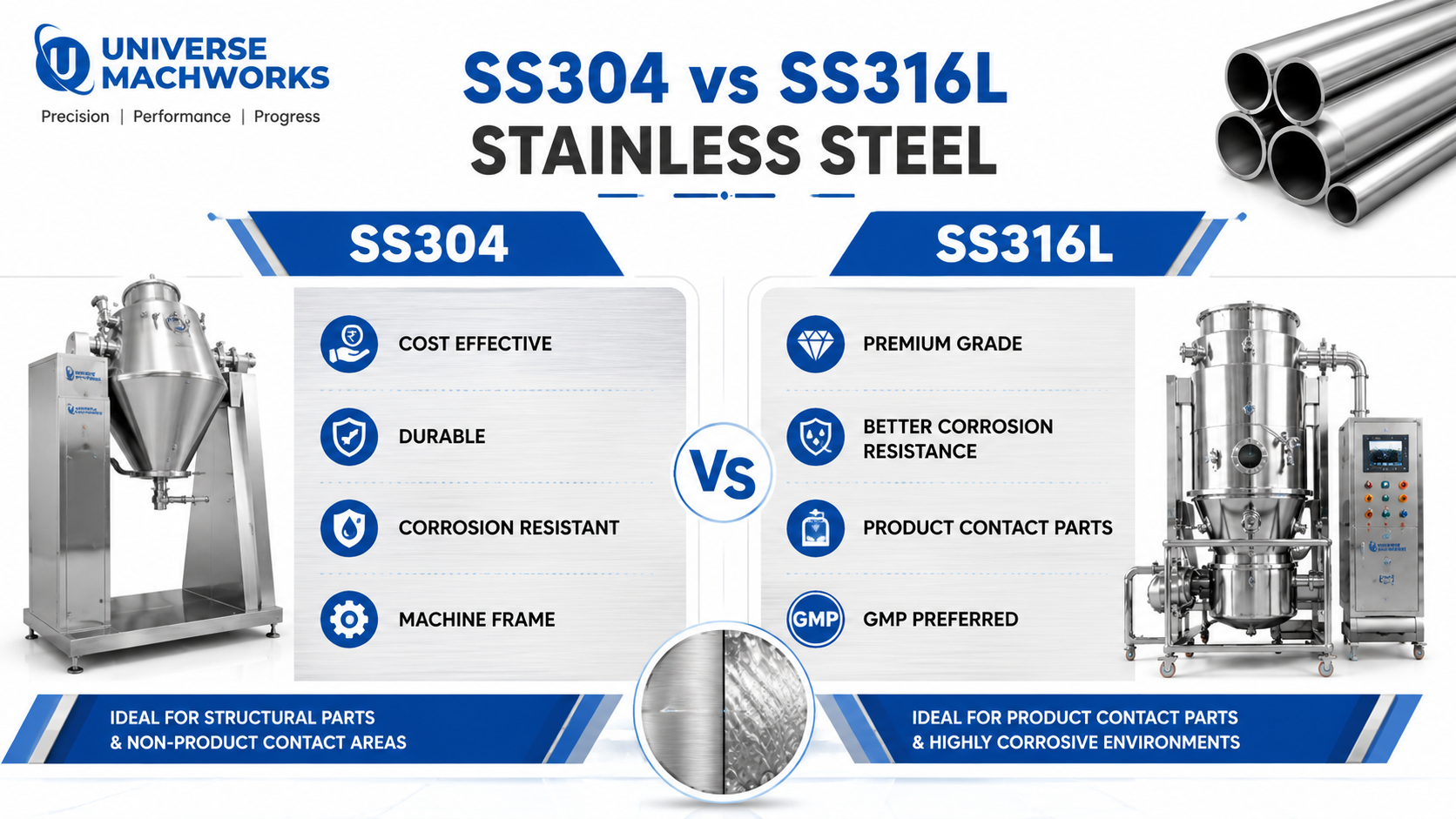
The stainless steel grade used in pharmaceutical machinery has a direct impact on both performance and price.
SS304 Stainless Steel
SS304 is the most widely used material for pharmaceutical equipment frames and many non-product-contact components.
- Excellent corrosion resistance
- Durable construction
- Cost-effective
- Easy fabrication
- Long service life
Typical applications: machine frames, external panels, structural components, and non-contact assemblies.
SS316 Stainless Steel
SS316 offers higher corrosion resistance due to the addition of molybdenum, making it better suited for product-contact parts exposed to aggressive chemicals or frequent cleaning.
- Superior corrosion resistance
- Better chemical compatibility
- Excellent hygienic properties
- Preferred for pharmaceutical applications
- Longer operational life
Common applications: product-contact surfaces, mixing vessels, powder-contact components, and liquid processing equipment. While SS316 generally increases the initial investment, it provides better long-term durability and supports compliance with pharmaceutical manufacturing standards.
Automation & PLC Systems
Modern pharmaceutical manufacturing increasingly relies on automation to improve productivity, consistency, and regulatory compliance. Basic equipment may use conventional electrical controls, whereas advanced systems integrate programmable automation technologies.
Common automation features
- PLC Control Systems
- Touchscreen HMI
- Variable Frequency Drives (VFD)
- Servo Drives
- Automatic Batch Recording
- Recipe Management
- User Access Control
- Alarm History
- Process Monitoring
- Data Logging
Benefits of Automation
- Reduced operator dependency
- Improved batch consistency
- Lower risk of human error
- Faster production
- Better traceability
- Easier process validation
- Simplified troubleshooting
Although automated machines require a higher initial investment, many manufacturers find that improved productivity, reduced wastage, and better process control provide significant long-term value.
Capacity & Production Output
Production capacity is one of the largest contributors to pharmaceutical machinery cost. Before investing in equipment, manufacturers should evaluate:
- Current production volume
- Future expansion plans
- Batch sizes
- Available factory space
- Utility capacity
- Production scheduling
Choosing equipment based solely on current demand can limit future growth, while purchasing oversized machinery may increase capital expenditure and operating costs unnecessarily. The best approach is to select machinery that supports expected production growth over the coming years while maintaining efficient operation under current manufacturing conditions.
At Universe Mach Works, we help customers select the most appropriate equipment capacity based on production objectives, available utilities, and long-term expansion plans, ensuring they receive a solution that balances performance, scalability, and overall value rather than focusing only on the initial purchase price.
Approximate Price Factors by Machine Category
When evaluating the cost of pharmaceutical machinery, it's important to understand that there is no universal fixed price. Each machine is manufactured according to the customer's production requirements, automation level, material of construction, and industry standards. Below are the major factors that influence the cost of each type of pharmaceutical machine.
1. Vibro Sifter
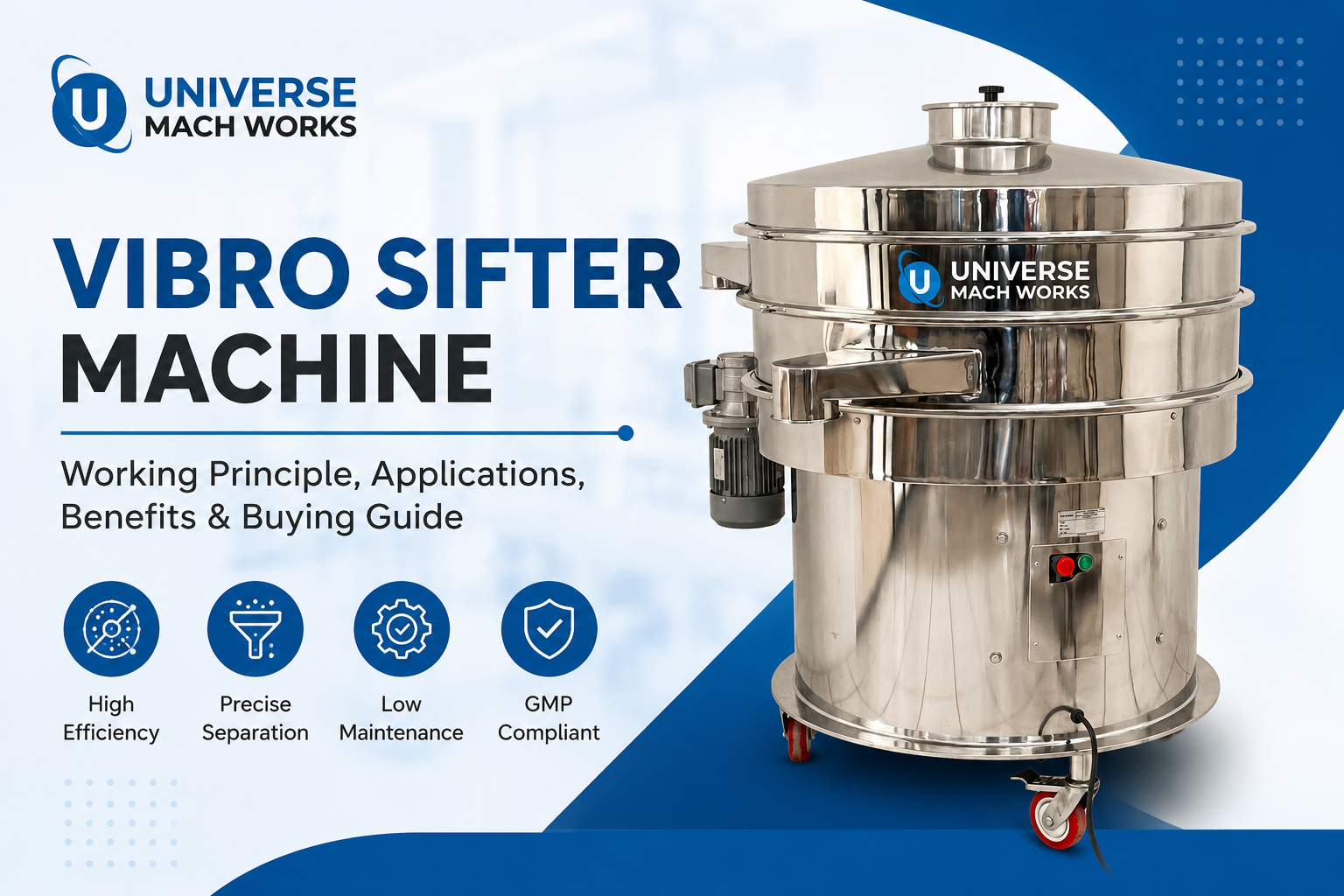
A Vibro Sifter is used for screening, grading, and removing oversized particles from powders and granules.
| Category | Details |
|---|---|
| Price Influencers | Screen diameter, number of decks, SS304/SS316L, motor quality, vibration system, GMP finish, explosion-proof motors |
| Capacity Options | Laboratory, 24", 30", 36", 48", 60" |
| Optional Features | Multiple decks, dust cover, magnetic separator, CIP compatibility, mobile trolley, variable vibration control |
| Industries | Pharmaceutical, Nutraceutical, Food, Chemical, Cosmetic, Herbal |
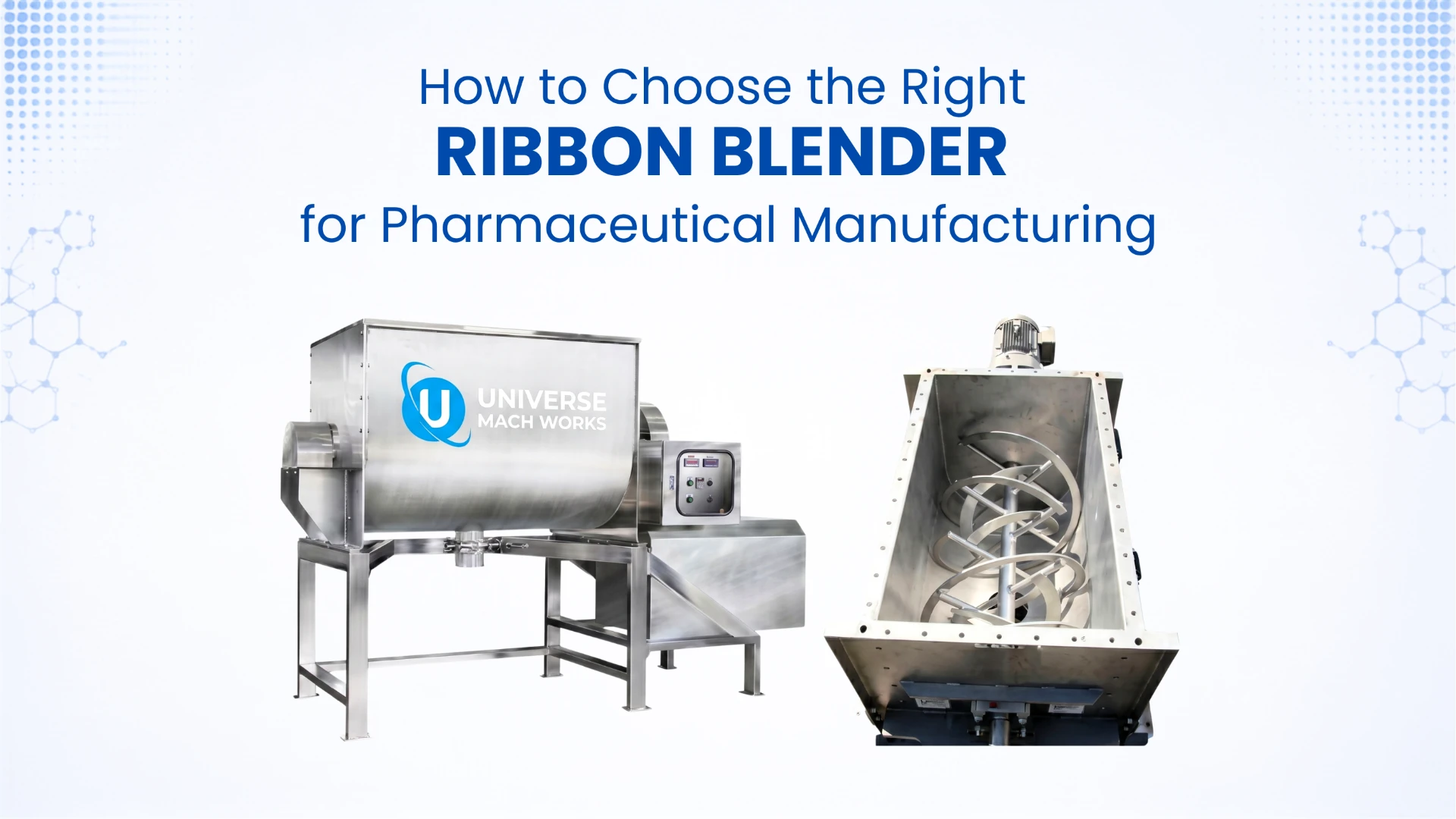
2. Ribbon Blender
Ribbon Blenders are designed for homogeneous mixing of dry powders and granules.
| Category | Details |
|---|---|
| Price Influencers | Mixing capacity, ribbon design, motor size, SS grade, discharge valve type, PLC automation, surface finish |
| Capacity Options | 100 L, 250 L, 500 L, 1000 L, 2000 L, custom |
| Optional Features | Heating jacket, cooling jacket, spray system, load cells, PLC, VFD |
| Industries | Pharmaceutical, Food, Chemical, Cosmetic, Animal Feed |
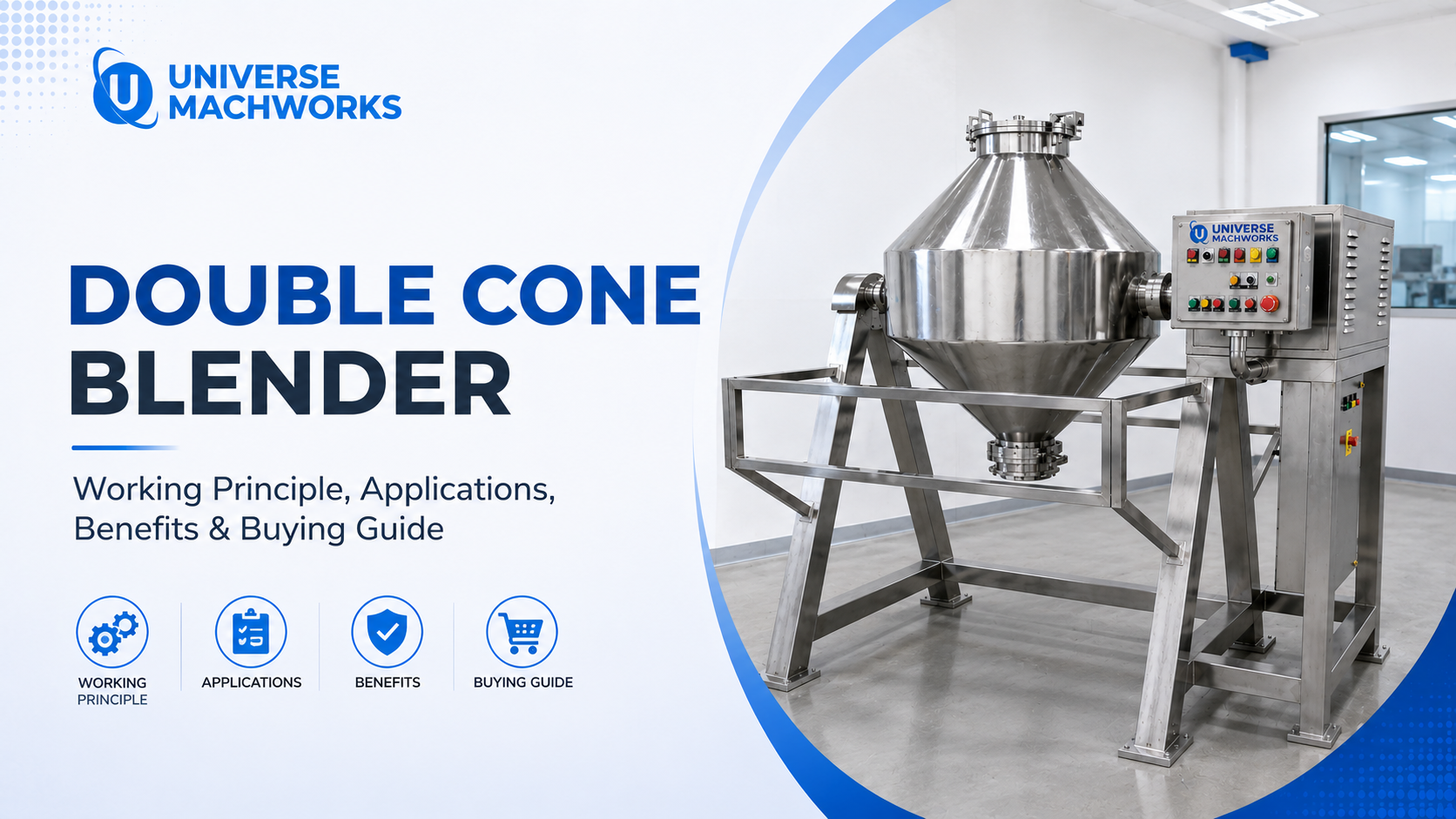
3. Double Cone Blender
| Category | Details |
|---|---|
| Price Influencers | Vessel capacity, SS grade, intensifier bar, automation level, mirror polishing, drive system, discharge mechanism |
| Capacity Options | 50 L, 100 L, 300 L, 500 L, 1000 L, 3000 L+ |
| Optional Features | Intensifier bar, PLC, VFD, vacuum operation, jacketed vessel |
| Industries | Pharmaceutical, Nutraceutical, Food, Chemical, Herbal |
4. Octagonal Blender
| Category | Details |
|---|---|
| Price Influencers | Vessel size, machine frame, automation, SS quality, drive assembly, safety systems |
| Capacity Options | 100 L, 300 L, 600 L, 1000 L, 2000 L |
| Optional Features | PLC, HMI, VFD, load cells, automatic discharge |
| Industries | Pharmaceutical, Nutraceutical, Herbal, Food |
5. Rapid Mixer Granulator (RMG)
| Category | Details |
|---|---|
| Price Influencers | Bowl capacity, chopper design, main impeller, PLC automation, pneumatic controls, discharge system, validation package |
| Capacity Options | 25 L, 50 L, 100 L, 300 L, 600 L |
| Optional Features | Touchscreen HMI, PLC, CIP system, load cells, vacuum charging |
| Industries | Pharmaceutical, Nutraceutical, Chemical |
6. Fluid Bed Dryer (FBD)
| Category | Details |
|---|---|
| Price Influencers | Bowl capacity, heating system, air handling unit, filter bags, PLC automation, explosion protection |
| Capacity Options | 30 kg, 60 kg, 120 kg, 200 kg, 300 kg |
| Optional Features | WIP system, PLC, HMI, humidity monitoring, automatic controls |
| Industries | Pharmaceutical, Nutraceutical, Food, Chemical |
7. Tray Dryer
| Category | Details |
|---|---|
| Price Influencers | Number of trays, heating method, air circulation, insulation quality, SS construction |
| Capacity Options | 12 / 24 / 48 / 96 Trays, custom sizes |
| Optional Features | Digital controller, PLC, steam heating, electric heating, temperature recorder |
| Industries | Pharmaceutical, Food, Herbal, Chemical |
8. Multi Mill
| Category | Details |
|---|---|
| Price Influencers | Rotor design, motor power, screen sizes, SS grade, automation, production capacity |
| Capacity Options | Laboratory, Small, Medium, Industrial |
| Optional Features | Variable speed, interchangeable screens, PLC controls, dust extraction |
| Industries | Pharmaceutical, Food, Chemical, Herbal |
9. Tablet Compression Machine
| Category | Details |
|---|---|
| Price Influencers | Number of stations, production speed, tooling, compression force, automation, PLC, servo technology |
| Capacity Options | Single Rotary, Double Rotary, High-Speed Rotary |
| Optional Features | Auto weight control, force monitoring, PLC, HMI, dust extraction |
| Industries | Pharmaceutical, Nutraceutical, Herbal |
10. Capsule Filling Machine
| Category | Details |
|---|---|
| Price Influencers | Filling speed, capsule sizes, automation, dosing system, PLC controls, vacuum system |
| Capacity Options | Semi-Automatic, Automatic, High-Speed Automatic |
| Optional Features | Capsule loader, capsule polisher, rejection system, HMI, servo drives |
| Industries | Pharmaceutical, Nutraceutical, Herbal, Veterinary |
11. Paste Kettle
| Category | Details |
|---|---|
| Price Influencers | Vessel capacity, heating method, agitator type, jacket design, insulation, material grade |
| Capacity Options | 50 L, 100 L, 250 L, 500 L, 1000 L |
| Optional Features | Steam jacket, electric heating, anchor stirrer, scraper, PLC |
| Industries | Pharmaceutical, Cosmetic, Food, Chemical |
12. Mixing Tank
| Category | Details |
|---|---|
| Price Influencers | Tank capacity, agitator design, heating system, SS grade, insulation, automation |
| Capacity Options | 100 L, 250 L, 500 L, 1000 L, 5000 L+ |
| Optional Features | Bottom homogenizer, top stirrer, jacket, load cells, CIP system |
| Industries | Pharmaceutical, Cosmetic, Food, Chemical |
13. Homogenizer (Emulsifier)
| Category | Details |
|---|---|
| Price Influencers | Homogenizing power, rotor-stator design, vessel size, heating system, vacuum system, PLC automation |
| Capacity Options | Laboratory, 100 L, 250 L, 500 L, 1000 L |
| Optional Features | Vacuum system, jacket, PLC, touchscreen HMI, CIP |
| Industries | Pharmaceutical, Cosmetic, Food, Chemical |
14. Filter Press Machine
| Category | Details |
|---|---|
| Price Influencers | Filter area, number of plates, hydraulic system, plate material, automation, pump selection |
| Capacity Options | Laboratory, Pilot Scale, Industrial Models |
| Optional Features | Automatic plate shifting, PLC controls, hydraulic closing, membrane plates |
| Industries | Pharmaceutical, Chemical, Food, Herbal |
15. Pressure Nutsche Filter
| Category | Details |
|---|---|
| Price Influencers | Vessel diameter, pressure rating, agitator design, heating jacket, automation, material of construction |
| Capacity Options | Laboratory, Pilot Plant, Industrial Production |
| Optional Features | Vacuum drying, heating jacket, PLC, HMI, CIP/SIP systems, automatic discharge |
| Industries | Pharmaceutical, API Manufacturing, Fine Chemicals, Agrochemicals, Specialty Chemicals |
Explore Machines Mentioned in This Guide
Final Buying Tip
When comparing pharmaceutical machinery, avoid choosing equipment based only on the lowest purchase price. Instead, evaluate the total value offered by the manufacturer, including:
- GMP-compliant design
- SS304/SS316L construction
- Production capacity
- Automation options
- Energy efficiency
- Ease of cleaning and maintenance
- Availability of spare parts
- Installation and commissioning support
- Warranty and after-sales service
- Long-term reliability and scalability
A well-engineered machine from a trusted manufacturer such as Universe Mach Works may have a higher initial investment but often delivers lower operating costs, reduced downtime, better product quality, and a stronger return on investment over its service life.
Cost of Setting Up a Pharmaceutical Manufacturing Plant
The total investment required to establish a pharmaceutical manufacturing plant depends on several factors, including production capacity, product type, automation level, regulatory requirements, and the range of machinery installed. A facility producing tablets and capsules will have different equipment needs than one manufacturing syrups, ointments, injectables, or nutraceutical products.
Instead of focusing solely on machinery prices, manufacturers should consider the complete project cost, which includes infrastructure, utilities, installation, validation, and long-term operational expenses.
Land & Factory Building
- Production Area
- Warehouse
- Quality Control Laboratory
- Raw Material Storage
- Finished Goods Storage
- Utility Room
- Engineering Workshop
- Administrative Office
Pharmaceutical Machinery
The machinery investment depends on product type, production capacity, automation level, number of production lines, GMP requirements, and future expansion plans. A complete production line may include:
- Vibro Sifter
- Ribbon Blender
- Double Cone Blender
- Octagonal Blender
- Rapid Mixer Granulator
- Fluid Bed Dryer
- Tray Dryer
- Multi Mill
- Tablet Compression Machine
- Capsule Filling Machine
- Paste Kettle
- Mixing Tank
- Homogenizer
- Filter Press
- Packaging Equipment
Utilities
- Electrical Supply
- Steam Generation
- Compressed Air
- Purified Water
- HVAC System
- Dust Collection
- Chilled Water
- Air Compressors
Validation & Documentation
- IQ Documentation
- OQ Documentation
- SOP Preparation
- Validation Protocols
- Calibration
- Training
Installation & Commissioning
- Proper machine alignment
- Safe operation
- Utility integration
- Performance verification
- Operator training
Investing in proper commissioning helps prevent costly production issues later.
Hidden Costs Buyers Often Miss
Many pharmaceutical companies focus only on the purchase price of machinery. However, several hidden costs can affect the total investment over the machine's lifetime.
1. Installation Charges
- Rigging
- Positioning
- Alignment
- Utility connections
- Trial runs
2. Electrical Infrastructure
- Three-phase power supply
- Control panels
- Dedicated wiring
- Circuit protection
- Earthing systems
3. Utility Connections
- Steam lines
- Compressed air
- Water supply
- Drainage
- Exhaust systems
4. Validation Expenses
- IQ
- OQ
- PQ
- Calibration
- Documentation
5. Spare Parts
- Bearings
- Gaskets
- Seals
- Belts
- Screens
- Motors
- Electrical components
6. Operator Training
- Production efficiency
- Product quality
- Equipment life
- Workplace safety
7. Preventive Maintenance
Routine maintenance reduces unexpected breakdowns and extends equipment lifespan. Annual maintenance planning helps reduce long-term operating costs.
8. Future Expansion
Many manufacturers eventually increase production capacity. Selecting machinery that supports future expansion can avoid expensive equipment replacement.
Tips to Reduce Machinery Costs Without Compromising Quality
Reducing investment costs does not mean purchasing the cheapest equipment. Instead, manufacturers should focus on maximizing value and long-term performance.
Buy Directly from the Manufacturer
Purchasing directly from an experienced pharmaceutical machinery manufacturer eliminates intermediaries and improves communication throughout the project.
Choose the Right Capacity
Avoid purchasing equipment that is significantly larger or smaller than your production requirements. Proper capacity selection improves both productivity and cost efficiency.
Invest in Quality Construction
- Longer service life
- Lower maintenance
- Better corrosion resistance
- Easier cleaning
A higher initial investment often results in lower lifetime costs.
Prioritize Essential Automation
- PLC Controls
- HMI
- VFD
Avoid unnecessary features that add cost without delivering operational benefits.
Plan for Future Growth
Choose equipment that can integrate with future production expansion rather than replacing machinery after a short period.
Compare Total Cost of Ownership
- Energy consumption
- Maintenance requirements
- Spare parts availability
- Equipment lifespan
- Production efficiency
- Technical support
Select a Reliable Manufacturer
- Better engineering
- Higher quality
- Faster service
- Reliable spare parts
- Strong technical support
Buying Guide
Before investing in pharmaceutical machinery, evaluate the following factors.
| Consideration | What to Evaluate |
|---|---|
| Production Capacity | Daily production, batch size, future demand |
| Product Portfolio | Tablets, capsules, powders, liquids, ointments, nutraceuticals |
| GMP Compliance | Current WHO-GMP / cGMP requirements |
| Material of Construction | SS304, SS316, SS316L for hygiene and durability |
| Automation | Manual, semi-automatic, or fully automatic equipment |
| After-Sales Support | Installation, commissioning, training, maintenance, spares |
| Documentation | User Manual, FAT Reports, IQ/OQ, Material Certificates, Drawings |
Why Choose Universe Mach Works?
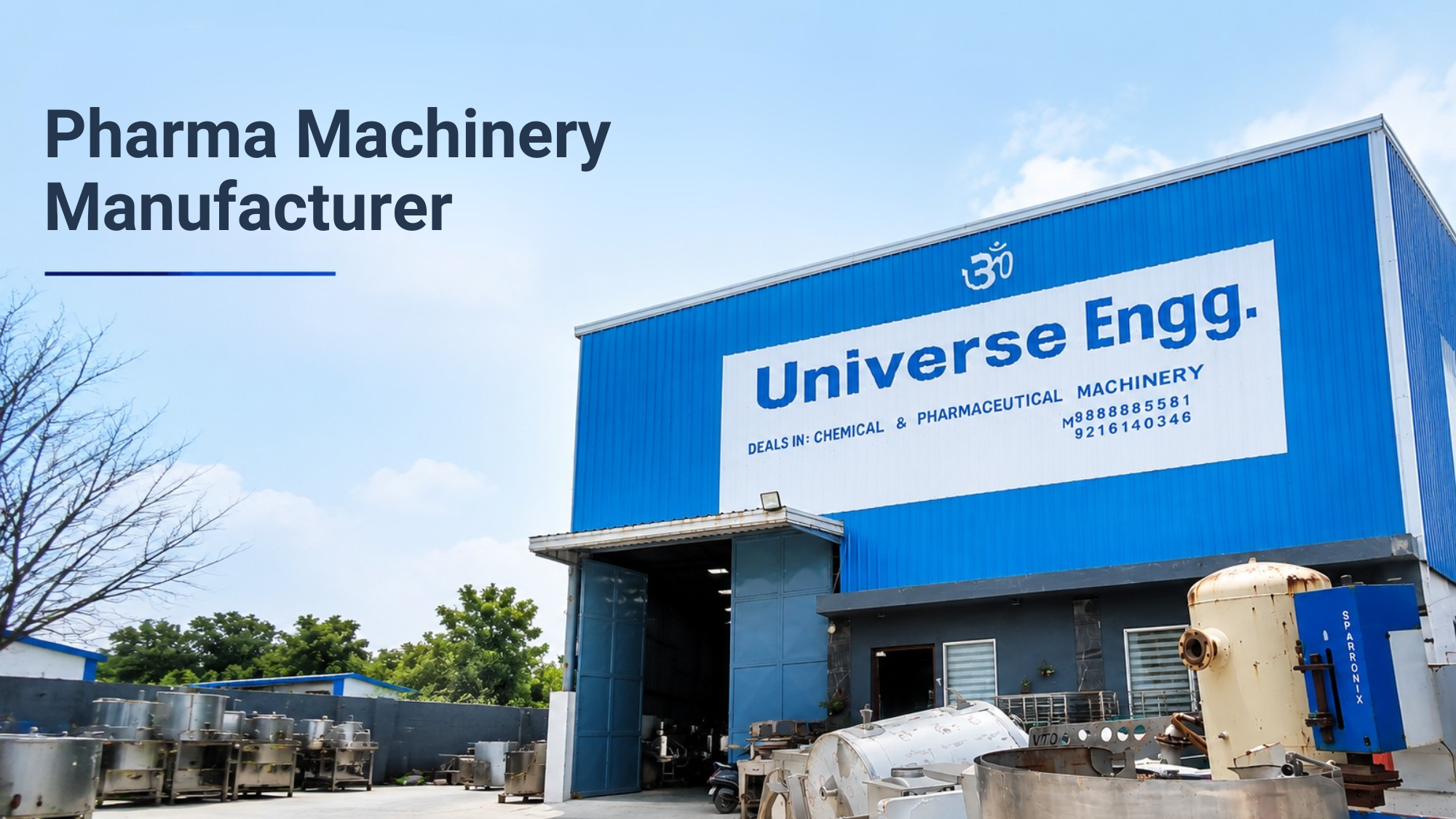
At Universe Mach Works, we understand that purchasing pharmaceutical machinery is a long-term investment. That's why we focus on delivering equipment that combines precision engineering, regulatory compliance, and dependable performance.
- Over 50 Years of Engineering Excellence
- Complete Pharmaceutical Processing Equipment Range
- GMP & cGMP Compliant Manufacturing
- SS304 & SS316L Stainless Steel Construction
- Customized Machine Solutions
- Advanced PLC & Automation Options
- Precision Engineering
- Low Maintenance Equipment
- Energy-Efficient Designs
- Factory Acceptance Testing (FAT)
- Installation & Commissioning Support
- Operator Training
- Genuine Spare Parts
- Pan India Supply
- Export-Ready Pharmaceutical Machinery
From powder processing and granulation to tablet compression, capsule filling, liquid processing, and filtration, we provide complete machinery solutions tailored to your production requirements.
Explore the Product
Complete Pharma Machinery Range by Universe Mach Works
View technical specifications, applications and request a customized quote.
View Complete Pharma Machinery RangeFrequently Asked Questions
How much does pharmaceutical machinery cost?+
The cost depends on machine type, production capacity, automation level, material of construction, customization, and GMP requirements. Most manufacturers provide customized quotations based on project specifications.
What factors affect pharmaceutical machinery prices?+
Key factors include capacity, automation, stainless steel grade, machine type, optional features, validation requirements, installation, and after-sales support.
Why is SS316 more expensive than SS304?+
SS316 contains molybdenum, providing better corrosion resistance and chemical compatibility, making it ideal for many pharmaceutical product-contact applications.
Does automation increase machinery cost?+
Yes. Features such as PLC controls, HMIs, VFDs, and recipe management increase the initial investment but often improve productivity and reduce operating costs over time.
Should I buy the cheapest pharmaceutical machinery?+
Not necessarily. Consider the total cost of ownership, including maintenance, energy efficiency, spare parts, and after-sales support, rather than focusing only on the purchase price.
Can pharmaceutical machinery be customized?+
Yes. Manufacturers can customize capacity, automation, material of construction, utility requirements, and process configurations to suit your production needs.
What documents should accompany pharmaceutical machinery?+
Typical documentation includes user manuals, material certificates, Factory Acceptance Test (FAT) reports, IQ/OQ documentation, electrical drawings, and mechanical drawings.
Does Universe Mach Works provide installation and technical support?+
Yes. Universe Mach Works offers installation assistance, commissioning, operator training, preventive maintenance guidance, technical support, and genuine spare parts.
How can I request a quotation?+
Share your production requirements, product type, expected capacity, and automation preferences with our team. We will recommend suitable equipment and provide a customized quotation.
Which industries use pharmaceutical machinery?+
Our machinery serves pharmaceutical, nutraceutical, food processing, cosmetic, herbal, veterinary, biotechnology, and chemical industries.
Conclusion
Understanding the cost of pharmaceutical machinery requires looking beyond the purchase price. Factors such as machine capacity, automation, material of construction, customization, validation, installation, and long-term maintenance all influence the overall investment and the value you receive over the equipment's lifetime.
A well-planned investment in high-quality, GMP-compliant machinery can improve production efficiency, reduce downtime, maintain consistent product quality, and support future business growth. Rather than choosing equipment based solely on the lowest quotation, manufacturers should evaluate reliability, engineering quality, after-sales support, and total cost of ownership.
At Universe Mach Works, we manufacture a complete range of pharmaceutical processing equipment designed to meet modern industry standards. Our focus on precision engineering, customized solutions, and dependable customer support helps pharmaceutical manufacturers build efficient and scalable production facilities with confidence.