Mixing is one of the most important operations in pharmaceutical and process manufacturing. Whether the material is a pharmaceutical formulation, wet granulation mass, powder blend, nutraceutical formulation, food ingredient, cosmetic compound, or chemical mixture, achieving a consistent and uniform mass is essential for reliable downstream processing.
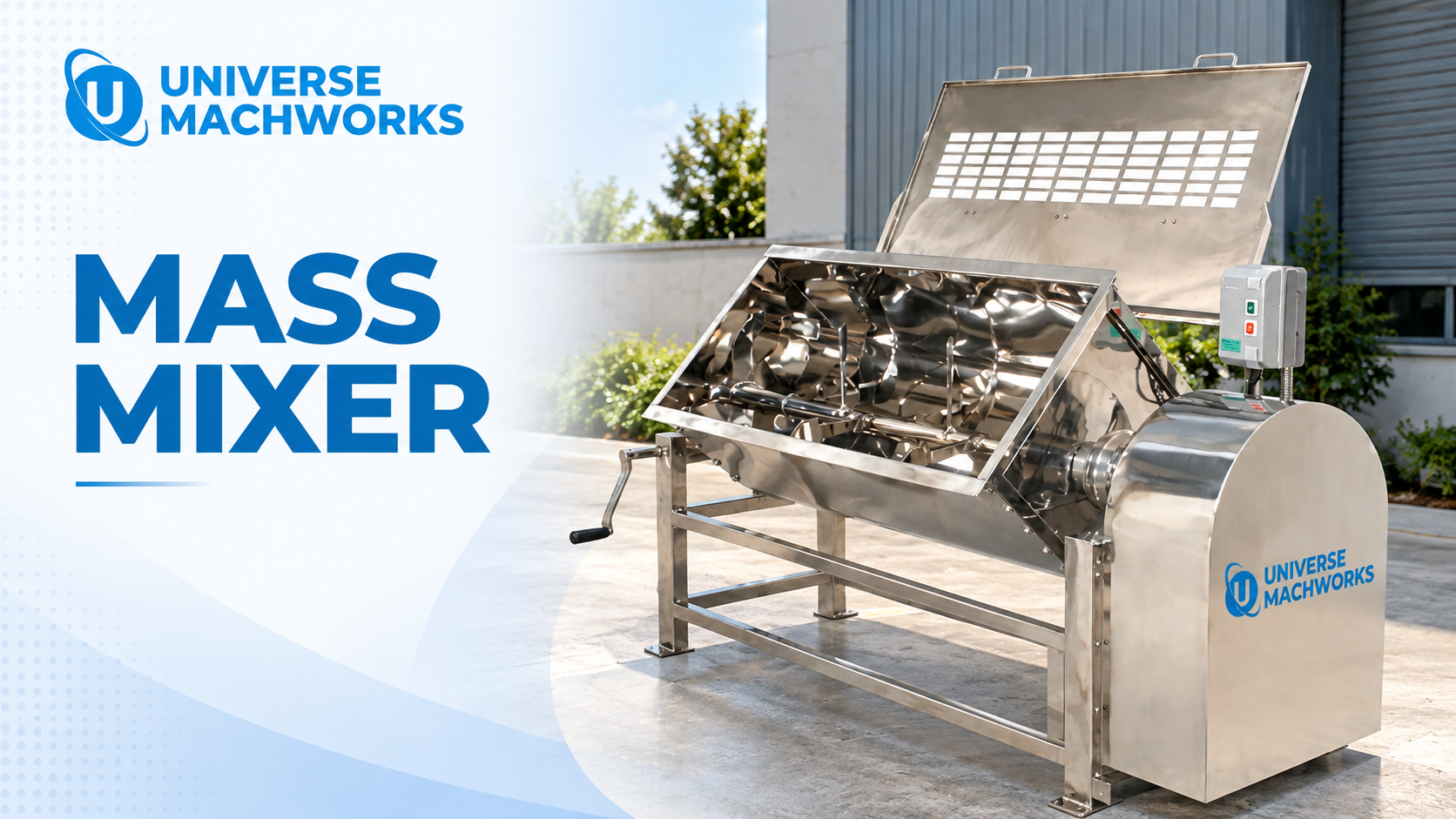
A Mass Mixer is an industrial mixing machine designed to efficiently mix and knead different materials to produce a homogeneous mass. Depending on the formulation and process requirement, the machine can be configured for different materials, capacities, mixing intensities, and discharge arrangements.
In pharmaceutical manufacturing, Mass Mixers are commonly associated with processes where powders, granules, binders, liquids, or other ingredients need to be combined into a uniform mass before subsequent processing.
Selecting the right Mass Mixer involves much more than choosing a machine based on capacity. Product characteristics, batch size, material of construction, mixing mechanism, discharge arrangement, cleaning requirements, motor configuration, automation, and process requirements all need to be considered.
This guide explains the Mass Mixer working principle, types, components, applications, advantages, maintenance requirements, GMP considerations, and important factors to consider before purchasing a Mass Mixer machine.
What Is a Mass Mixer?
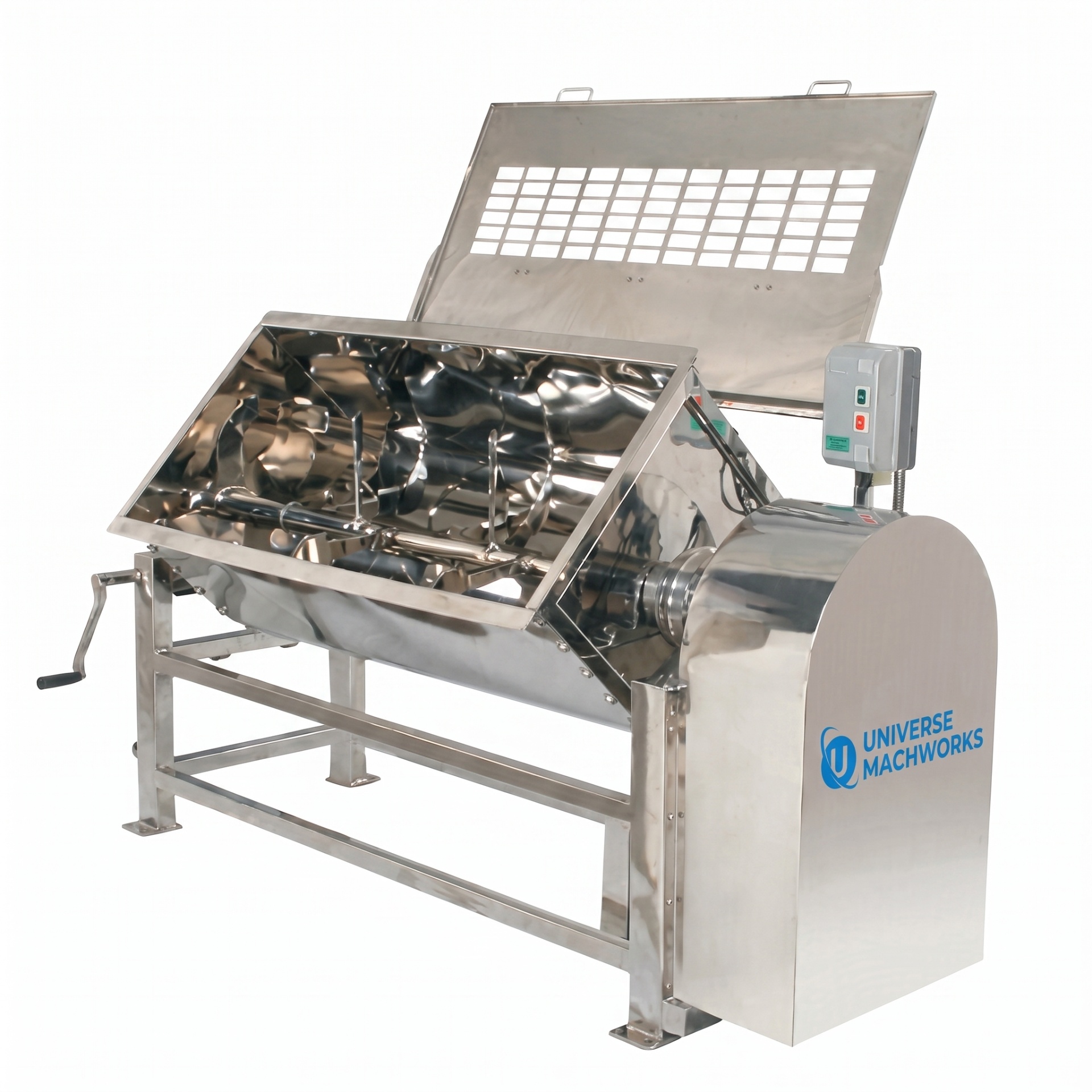
A Mass Mixer is a mechanical mixing machine used to blend and knead powders, granules, wet masses, pastes, and other compatible materials. It generally consists of a horizontal mixing vessel or trough fitted with rotating mixing blades or paddles.
- Lifting and folding
- Kneading
- Turning
- Repeated redistribution
- Radial and axial movement
- Breaking up localized concentrations
- Movement of material from one region of the chamber to another
The objective is to obtain a sufficiently uniform mixture within the required process time. For pharmaceutical applications, equipment should be selected for its intended use and process requirements rather than assuming one configuration suits every formulation.
How Does a Mass Mixer Work?
The working principle of a Mass Mixer is based on controlled mechanical movement of material inside the mixing chamber.
1. Loading of Materials
Raw materials are introduced into the mixing chamber in the sequence required by the formulation and validated process.
- Powders
- Granules
- Active ingredients
- Excipients
- Binders
- Wet masses
- Food ingredients
- Cosmetic materials
- Chemical compounds
2. Mixing Mechanism Starts
Rotating blades or paddles move material throughout the chamber. Material close to the blades is lifted, pushed, folded, and redistributed to reduce localized concentrations.
3. Kneading and Redistribution
For materials requiring more intensive mixing, the blades provide a kneading action: lifted → moved → folded → redistributed → mixed again. Performance depends on blade design, speed, mixer geometry, fill level, material properties, moisture content, particle size, batch size, and mixing time.
4. Addition of Liquid or Binder
Where required, liquid or binder is introduced according to the process. Addition rate and sequence matter because rapid addition can create localized wet areas, while poor distribution can cause non-uniformity.
5. Homogenization
Continued mixing distributes materials throughout the batch. Mixing time should be determined for the specific product and process rather than assumed to be identical for every formulation.
6. Discharge
Once the required mixing stage is complete, material is removed through the specified discharge arrangement. Product characteristics, batch size, production layout, downstream equipment, and handling requirements influence the design.
Mass Mixer Working Principle in Simple Terms
The machine uses rotating blades or paddles to continuously move, lift, fold, knead, and redistribute materials inside a mixing chamber until the desired degree of uniformity is achieved.
Main Components of a Mass Mixer
1. Mixing Chamber
The chamber is where material is processed. Its internal geometry influences mixing efficiency, product movement, cleaning, retention, and discharge behavior.
2. Mixing Blades
Blade geometry determines how product moves and the balance of mixing, kneading, folding, lifting, and redistribution.
3. Drive System
- Electric motor
- Gearbox
- Coupling
- Drive shaft
- Bearings
- Supporting components
Motor and gearbox selection should account for the material's resistance to movement and the required operating conditions.
4. Shaft and Discharge Arrangement
The shaft transfers rotational power to the blades, while the discharge system is configured around product, batch, and material-handling requirements.
5. Safety Features
- Emergency stop
- Safety interlocks
- Motor protection
- Overload protection
- Guarding
- Control-panel safety functions
Types of Mass Mixers
1. Horizontal Mass Mixer
A horizontal Mass Mixer uses a horizontally oriented chamber with rotating blades and is commonly selected for batch mixing and efficient material movement.
2. Pharmaceutical Mass Mixer
A pharmaceutical configuration may include stainless-steel product-contact surfaces, hygienic construction, accessible cleaning areas, suitable discharge, controlled operation, and application-specific blade design.
3. Wet Mass Mixer
A wet Mass Mixer combines dry ingredients with liquid or binder to create a wet mass. Moisture level, binder properties, viscosity, mixing intensity, and batch size determine suitability.
4. Industrial Mass Mixer
Industrial Mass Mixers may serve chemical, food, cosmetic, nutraceutical, herbal, specialty-material, and other process applications.
Applications of Mass Mixer Machines
Pharmaceutical Industry
- Powder blending
- Wet mass preparation
- Granulation-related processing
- Excipients
- Formulation intermediates
- Other compatible pharmaceutical materials
Nutraceutical, Chemical, Food, Cosmetic, and Herbal Industries
Compatible applications include nutritional and herbal formulations, chemical blending or kneading, ingredient mixing, dough-like materials, food premixes, cosmetic compounds, powders, granules, binders, and specialty formulations.
Advantages of a Mass Mixer
1. Uniform Mixing
Continuous material movement supports the required level of batch uniformity.
2. Efficient Material Movement
The blade configuration promotes movement and redistribution throughout the chamber.
3. Suitable for Different Materials
Depending on the configuration, the mixer can process powders, granules, wet masses, pastes, and other compatible materials.
4. Controlled Batch Processing
Mass Mixers support repeatable batch-based production.
5. Customizable Design
- Capacity
- Material of construction
- Blade configuration
- Discharge
- Drive arrangement
- Controls
- Surface finish
6. Industrial Construction
Appropriately selected stainless-steel grades, surface conditions, design, and fabrication can support hygienic processing requirements.
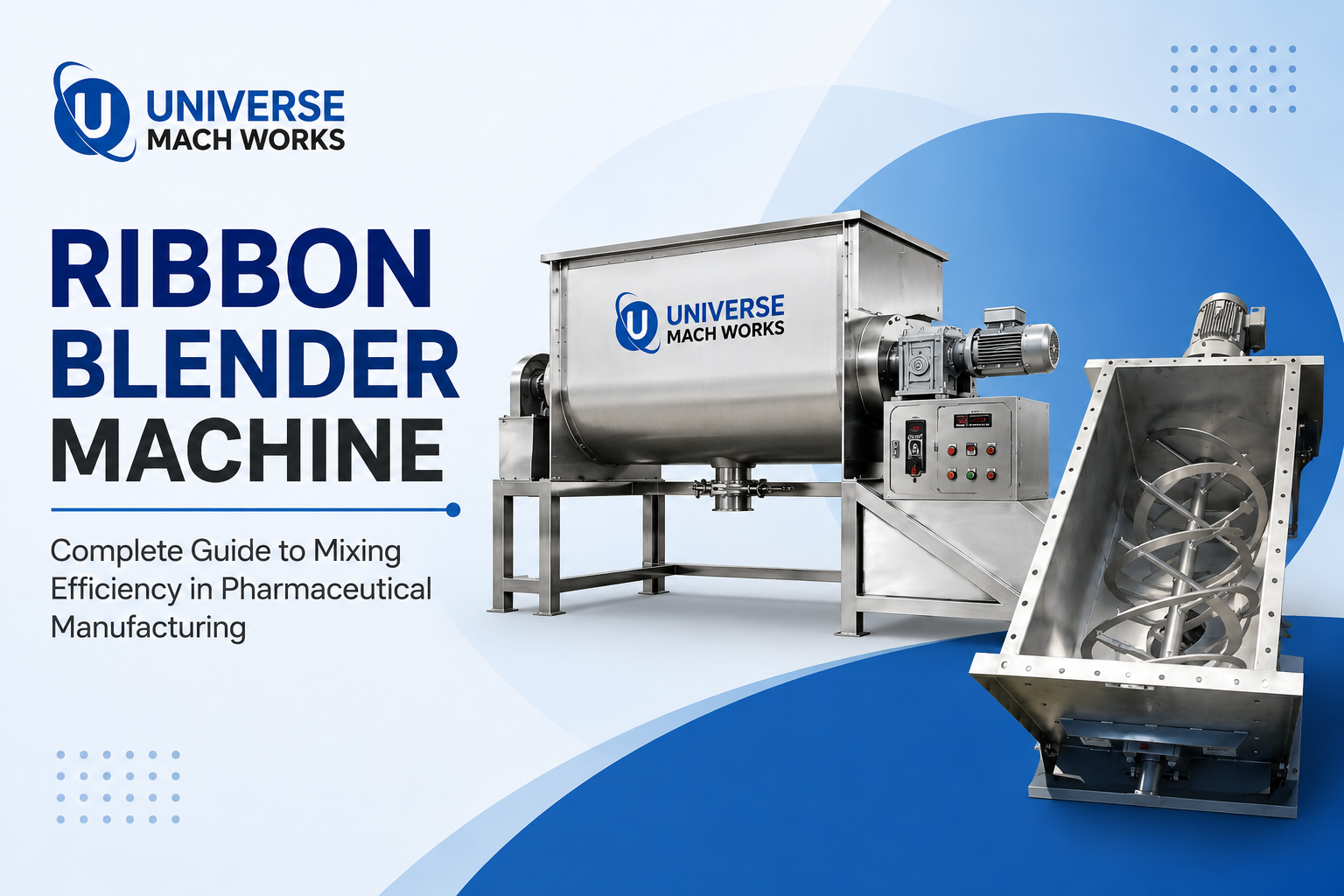
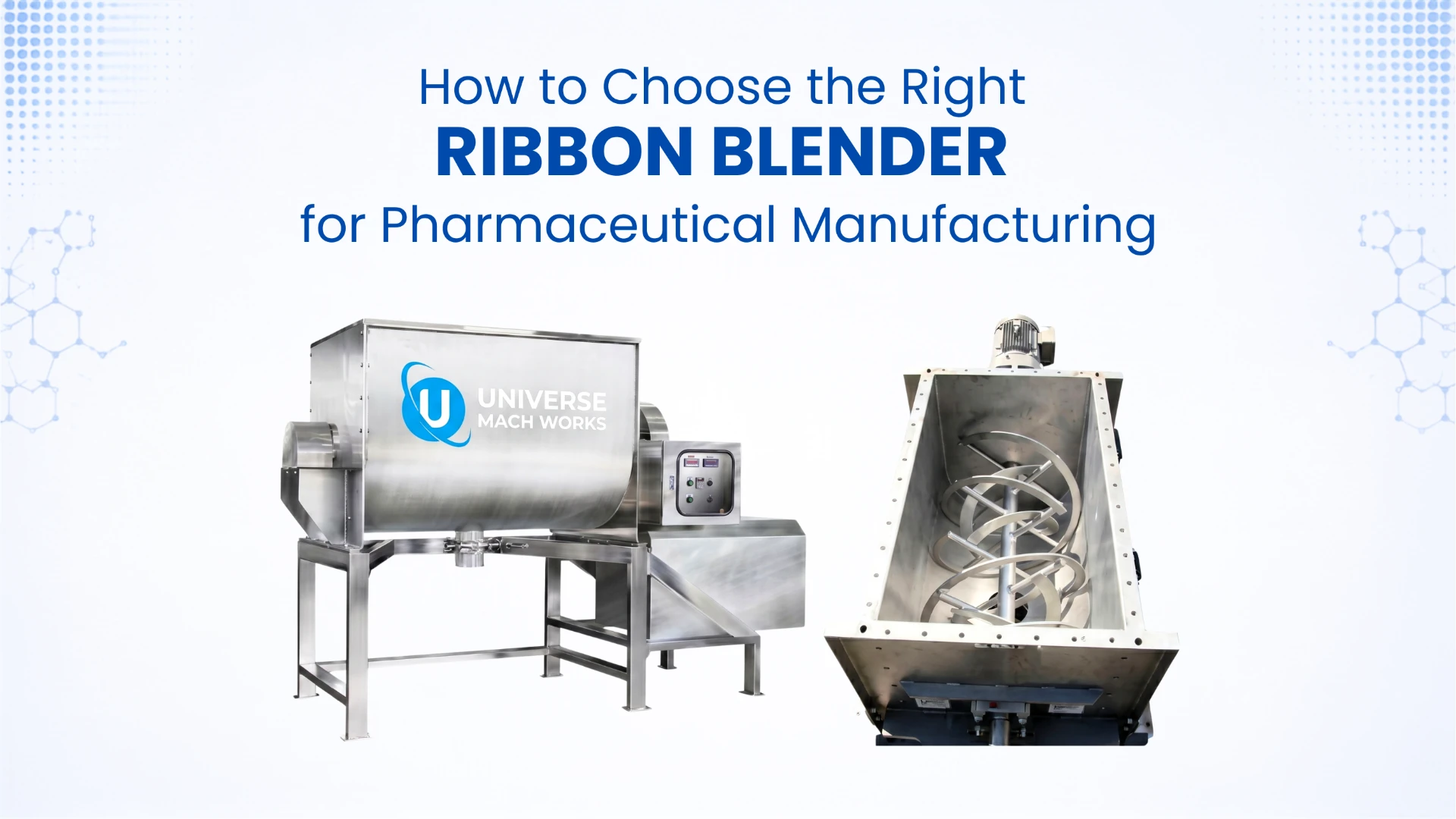
Mass Mixer vs Ribbon Blender
| Feature | Mass Mixer | Ribbon Blender |
|---|---|---|
| Primary action | Mixing and kneading | Convective powder blending |
| Typical materials | Powders, wet masses, granules, pastes | Mainly powders and dry solids |
| Mixing mechanism | Blades or paddles | Ribbon agitator |
| Wet mass processing | Suitable for compatible applications | Generally less suited to heavy wet masses |
| Pharmaceutical use | Formulation and wet-mass applications | Powder and dry blending applications |
| Selection factor | Material consistency and kneading requirement | Powder flow and blending characteristics |
The correct choice should be based on the formulation rather than the machine name alone.
Mass Mixer vs Rapid Mixer Granulator
| Feature | Mass Mixer | Rapid Mixer Granulator |
|---|---|---|
| Main function | Mixing and kneading | High-intensity mixing and granulation |
| Material movement | Blade or paddle driven | High-speed impeller |
| Granulation | Application dependent | Designed for granulation |
| Mixing intensity | Process dependent | Generally higher-intensity |
| Typical pharmaceutical role | Mixing and wet-mass applications | Wet granulation |
| Selection | Based on material and process | Based on granulation process |
The actual formulation and downstream process should be evaluated before selecting between the two machines.
How to Choose the Right Mass Mixer
1. Determine Batch Size
Consider minimum, normal, and maximum batch size, bulk density, working volume, and required fill level. Usable working volume can differ from total geometric volume.
2. Understand the Material
- Powder or wet mass
- Particle size
- Bulk density
- Moisture content
- Flowability
- Cohesiveness
- Viscosity
- Stickiness
- Abrasiveness
- Sensitivity to shear
3. Select the Appropriate Mixing Mechanism
Blade design should correspond to the product. A free-flowing powder and a sticky wet mass may require very different mixing behavior.
4. Select Material of Construction
For pharmaceutical processing, choose product-contact materials according to product chemistry, corrosion requirements, cleaning agents, temperature, process conditions, regulatory requirements, and required surface finish.
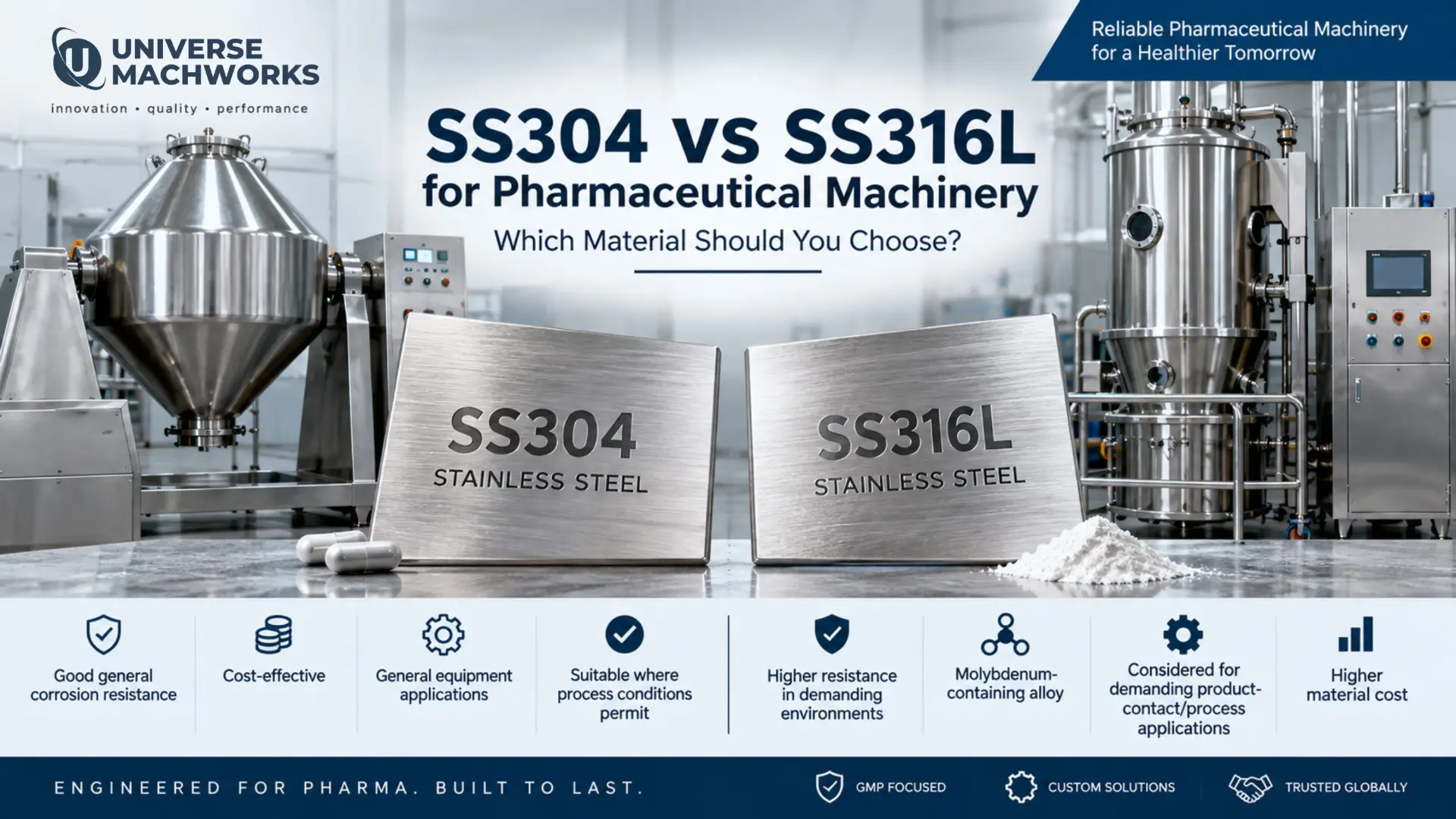
SS304 vs SS316L for a Mass Mixer
| Parameter | SS304 | SS316L |
|---|---|---|
| General corrosion resistance | Good | Higher in many demanding environments |
| Pharmaceutical applications | Commonly considered for suitable applications | Often selected for demanding product-contact applications |
| Chloride resistance | Lower than SS316L | Better |
| Cost | Generally lower | Generally higher |
| Selection | Based on process | Based on process and corrosion requirements |
The final specification should be based on the formulation and process environment rather than simply choosing the more expensive grade.
GMP Considerations for a Pharmaceutical Mass Mixer
GMP considerations should be addressed from the beginning. Process equipment should be appropriately designed and sized for intended use, cleaning, sanitation where appropriate, and maintenance. Product-contact surfaces should not adversely affect product quality.
Product-Contact Surfaces and Cleanability
Surfaces contacting material should suit the product and cleaning process, while the equipment should facilitate appropriate cleaning, inspection, and maintenance.
Product Retention and Surface Finish
Evaluate dead zones, difficult-to-clean areas, retention points, weld finish, and the internal surface finish required by the product and cleaning method.
Equipment Identification and Operating Range
Equipment and cleanliness status should be controlled under the applicable quality system, and qualified equipment should be operated within its established range.
Cleaning and Maintenance of a Mass Mixer
- Clean after batch completion
- Inspect mixing blades
- Inspect shaft and seals
- Check gearbox condition
- Check bearings and motor
- Check fasteners
- Inspect the discharge mechanism
- Check electrical connections
- Inspect safety interlocks
- Check product-contact surface condition
Cleaning procedures should be established around the process and contamination or carryover risks, with appropriate intervals and controls to prevent buildup.
Common Mass Mixer Buying Mistakes
Mistake 1: Choosing Only by Capacity
A larger machine is not automatically better. Consider working volume, bulk density, fill level, material characteristics, and required mixing performance.
Mistake 2: Ignoring Material Characteristics
A mixer that performs well with dry powder may not suit a sticky or highly cohesive wet mass.
Mistake 3: Not Checking Blade Design
Ask how the blade geometry moves material and why it is suited to your product.
Mistake 4: Ignoring Cleaning Requirements
Cleaning and maintenance should be considered during selection, not after installation.
Mistake 5: Buying Without a Process Discussion
A good specification should cover product, batch size, density, moisture, mixing objective, mixing time, MOC, surface finish, discharge, controls, and installation requirements.
New vs Refurbished Mass Mixer
New Mass Mixer
A new machine can be specified around current process requirements, with new components, application-specific design, custom configuration, new controls, and current documentation needs.
Refurbished Mass Mixer
A refurbished machine is used equipment that has undergone a defined inspection, servicing, restoration, or upgrade. Evaluate previous use, chamber and blade condition, shaft, bearings, gearbox, motor, seals, electrical system, surface finish, spare-parts availability, and the documented inspection and testing scope.
Used and refurbished should not automatically be treated as the same condition. The refurbishment scope should be clearly documented by the supplier.
Mass Mixer Technical Specifications
Exact specifications vary by model and application. Capacity, motor power, RPM, dimensions, surface finish, and other values should be confirmed from the actual machine specification rather than generic figures.
| Specification | Details |
|---|---|
| Machine Type | Mass Mixer |
| Application | Pharmaceutical / Chemical / Food / Nutraceutical |
| Working Capacity | As required |
| Gross Capacity | As required |
| Material of Construction | SS304 / SS316L / application-specific |
| Mixing Mechanism | Blade / paddle configuration |
| Drive | Motor + gearbox |
| Discharge | Application-specific |
| Surface Finish | Application-specific |
| Control System | Manual / Semi-Automatic / Automatic |
| Safety System | As configured |
| Installation | Optional |
| Customization | Available according to requirement |
Why Choose Universe Mach Works for a Mass Mixer?
Universe Mach Works provides pharmaceutical and process machinery solutions for manufacturers requiring equipment for mixing, processing, and material handling. Equipment can be discussed for pharmaceutical, nutraceutical, chemical, food, cosmetic, herbal, new, refurbished, and custom process requirements, with installation and technical support options.
The right Mass Mixer should be selected according to the actual product, batch size, process conditions, cleaning requirements, and production objectives.
Discuss your Mass Mixer requirement
Mass Mixer Buying Checklist
Product & Process
- ☐ Material and bulk density identified
- ☐ Dry, wet, sticky, or cohesive behavior defined
- ☐ Target batch size and mixing objective defined
- ☐ Required mixing degree confirmed
Machine & Construction
- ☐ Gross and recommended working capacity
- ☐ Blade configuration
- ☐ Motor and gearbox arrangement
- ☐ Discharge system
- ☐ Product-contact MOC
- ☐ Surface and weld finish
- ☐ Product-retention areas reviewed
Cleaning & Controls
- ☐ Cleaning and inspection access
- ☐ Replaceable seals and wear parts
- ☐ Manual, semi-automatic, or automatic operation
- ☐ Control panel and safety interlocks
- ☐ Operating-parameter monitoring
Supplier
- ☐ Pre-dispatch inspection
- ☐ Testing scope
- ☐ Documentation
- ☐ Installation services
- ☐ After-sales support
Explore the Product
Mass Mixer by Universe Mach Works
View technical specifications, applications and request a customized quote.
View Mass MixerFrequently Asked Questions
What is a Mass Mixer?+
A Mass Mixer is a mechanical mixing machine used to mix and knead powders, granules, wet masses, pastes, and other compatible materials.
What is a Mass Mixer used for?+
Mass Mixers are used across pharmaceutical, nutraceutical, chemical, food, cosmetic, and other process industries for applications requiring controlled mixing and material redistribution.
What is the working principle of a Mass Mixer?+
Rotating blades or paddles move, lift, fold, knead, and redistribute material inside a mixing chamber until the required degree of uniformity is achieved.
Is a Mass Mixer used in pharmaceutical manufacturing?+
Yes. It can be used for suitable pharmaceutical mixing and wet-mass applications when the machine design and materials are appropriate for the intended process.
What material is used to manufacture a pharmaceutical Mass Mixer?+
Stainless steel such as SS304 or SS316L may be specified depending on product, process, corrosion, cleaning, and customer requirements.
What is the difference between a Mass Mixer and a Ribbon Blender?+
A Mass Mixer is generally associated with mixing and kneading, while a Ribbon Blender is commonly used for blending dry powders and granular materials.
What is the difference between a Mass Mixer and an RMG?+
An RMG is designed for high-intensity mixing and granulation, whereas a Mass Mixer is generally selected for compatible mixing and kneading applications.
How do I select the right Mass Mixer?+
Consider batch size, material properties, working volume, mixing objective, blade configuration, material of construction, cleaning, discharge, controls, and installation space.
Can a Mass Mixer be customized?+
Yes. Capacity, MOC, blades, discharge, controls, surface finish, and other process requirements may be customized.
Can I buy a refurbished Mass Mixer?+
Yes, when its condition, refurbishment scope, critical components, inspection, and testing are clearly documented.
Conclusion
A Mass Mixer is an important piece of processing equipment for applications requiring efficient mixing and kneading of powders, granules, wet masses, pastes, and other compatible materials.
Performance depends on much more than nominal capacity. Blade design, material properties, working volume, drive system, construction material, surface finish, discharge arrangement, cleaning requirements, and process conditions all influence equipment selection.
For pharmaceutical applications, equipment should be appropriate for its intended use and designed with cleaning, maintenance, product-contact surfaces, and operating conditions in mind.
Whether evaluating a new, refurbished, pharmaceutical, or custom Mass Mixer, define the product and process requirements first and then select the machine configuration around them.
Universe Mach Works manufactures and supplies pharmaceutical and process machinery for different industrial applications, with options for customized equipment and technical support.