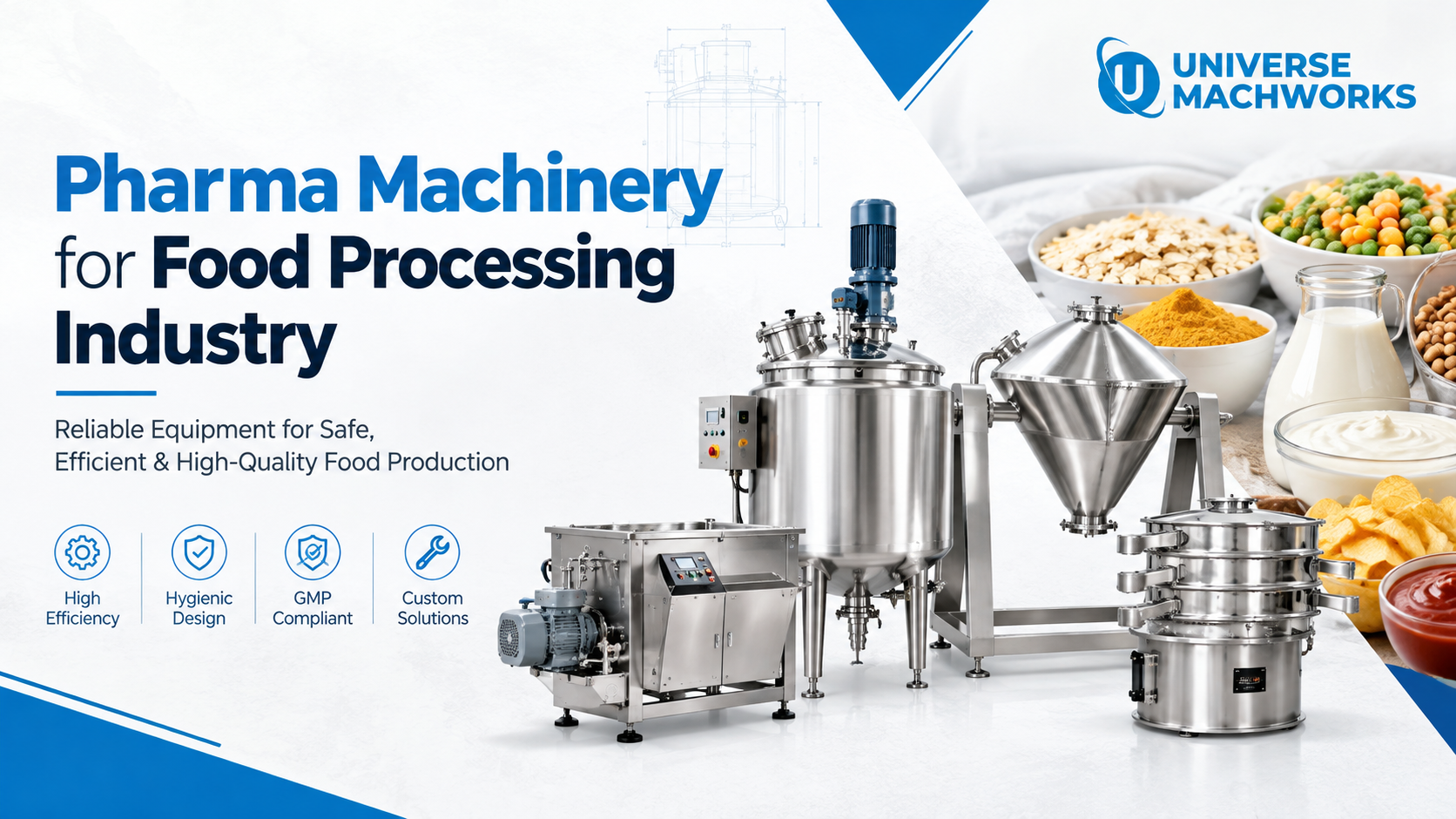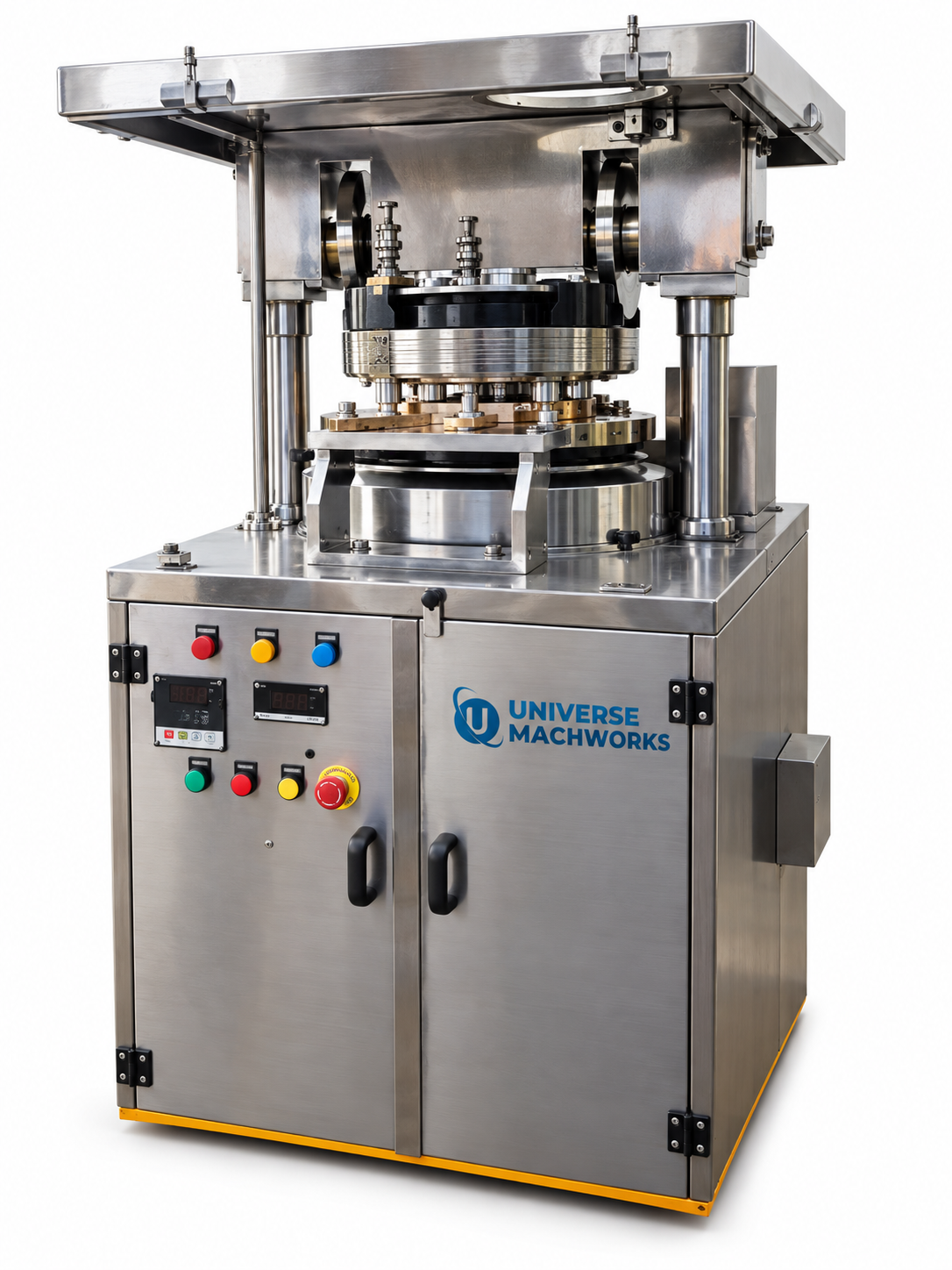
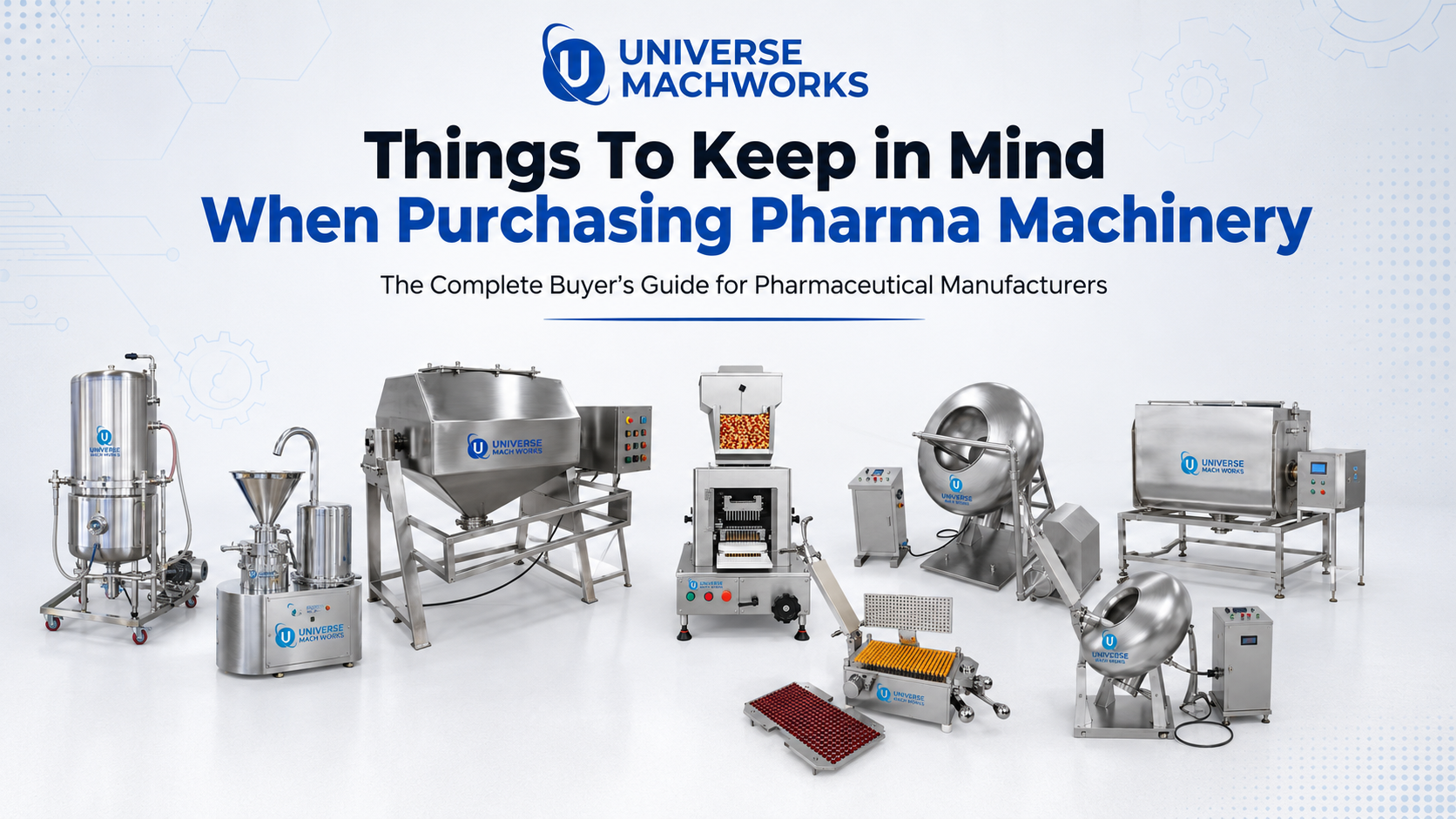
Purchasing pharmaceutical machinery is one of the most significant investments for any pharmaceutical manufacturing company. Whether you are establishing a new production facility, expanding your manufacturing capacity, or upgrading existing equipment, selecting the right machinery directly impacts product quality, operational efficiency, regulatory compliance, and long-term profitability.
Today's pharmaceutical industry operates under strict GMP regulations, international quality standards, and rapidly evolving production requirements. Buying machinery simply based on price is no longer a smart business decision. Instead, companies need to evaluate numerous technical, operational, and commercial factors before investing.
As experienced pharmaceutical machinery manufacturers, we've seen companies save millions through informed equipment selection — and others lose substantial resources by choosing machines that were not suitable for their production needs. This comprehensive guide explains everything buyers should consider before purchasing pharma machinery.
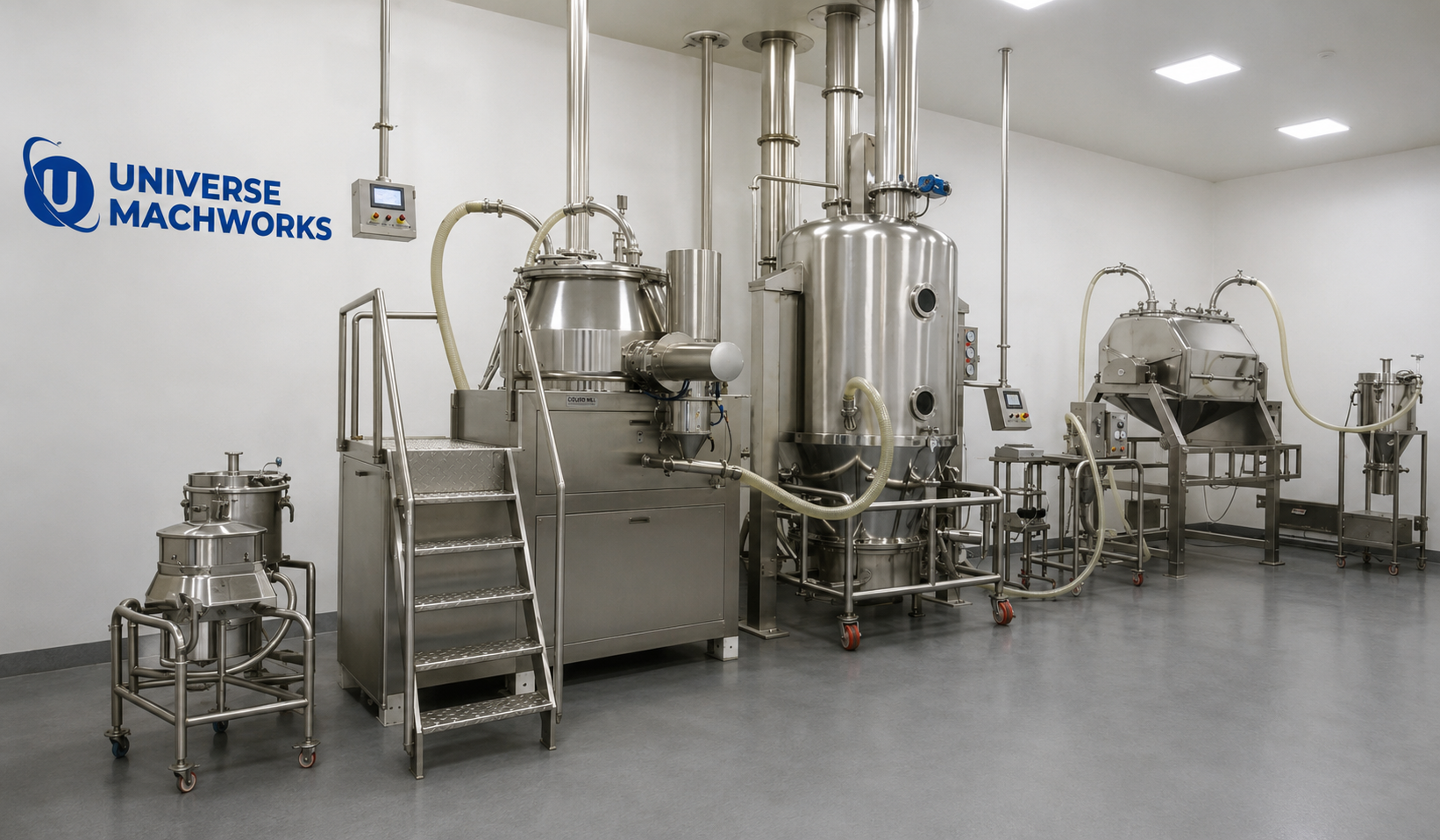
Why Choosing the Right Pharma Machinery Matters
Modern pharmaceutical manufacturing depends on precision, consistency, and regulatory compliance. Every machine in your production line contributes to product quality.
Poor-quality equipment can result in:
- Frequent machine breakdowns
- Product contamination
- Batch failures
- Increased maintenance costs
- Production downtime
- Regulatory non-compliance
- Low production efficiency
- Higher operating costs
Conversely, investing in high-quality equipment from experienced pharma equipment manufacturers offers:
- Higher productivity
- Better product consistency
- Lower operational costs
- Longer equipment lifespan
- Easy maintenance
- GMP compliance
- Higher ROI
- Better customer confidence
Understand Your Production Requirements First
Before contacting pharma machinery manufacturers, define your manufacturing requirements.
What products will be manufactured?
- Tablets
- Capsules
- Syrups
- Powders
- Granules
- Ointments
- Creams
- Nutraceuticals
- Herbal medicines
Each product requires different processing equipment.
What is your production capacity?
- Batch size
- Daily production
- Monthly output
- Future expansion plans
Avoid buying machinery that is either oversized or undersized.
Which production process is involved?
- Material handling
- Mixing
- Granulation
- Drying
- Milling
- Sieving
- Blending
- Compression
- Capsule filling
- Coating
- Inspection
- Packaging
Verify GMP Compliance
Good Manufacturing Practices (GMP) are mandatory for pharmaceutical production. Every machine should comply with:
- WHO GMP
- cGMP
- US FDA guidelines (if applicable)
- EU GMP
- Schedule M
- ISO standards
Machines should feature:
- Hygienic design
- Easy cleaning
- Smooth welds
- Dead-leg-free piping
- Stainless steel contact parts
- Documentation support
Never compromise on compliance.
Choose a Reputed Pharmaceutical Machinery Manufacturer
Selecting the right pharmaceutical machinery manufacturer is just as important as selecting the machine itself. Evaluate:
- Years of experience
- Manufacturing facility
- Customer reviews
- Technical expertise
- Installed machine base
- Industry certifications
- Export experience
- After-sales service
Evaluate Machine Construction Quality
Stainless Steel Grade
Food and pharma contact parts should preferably use:
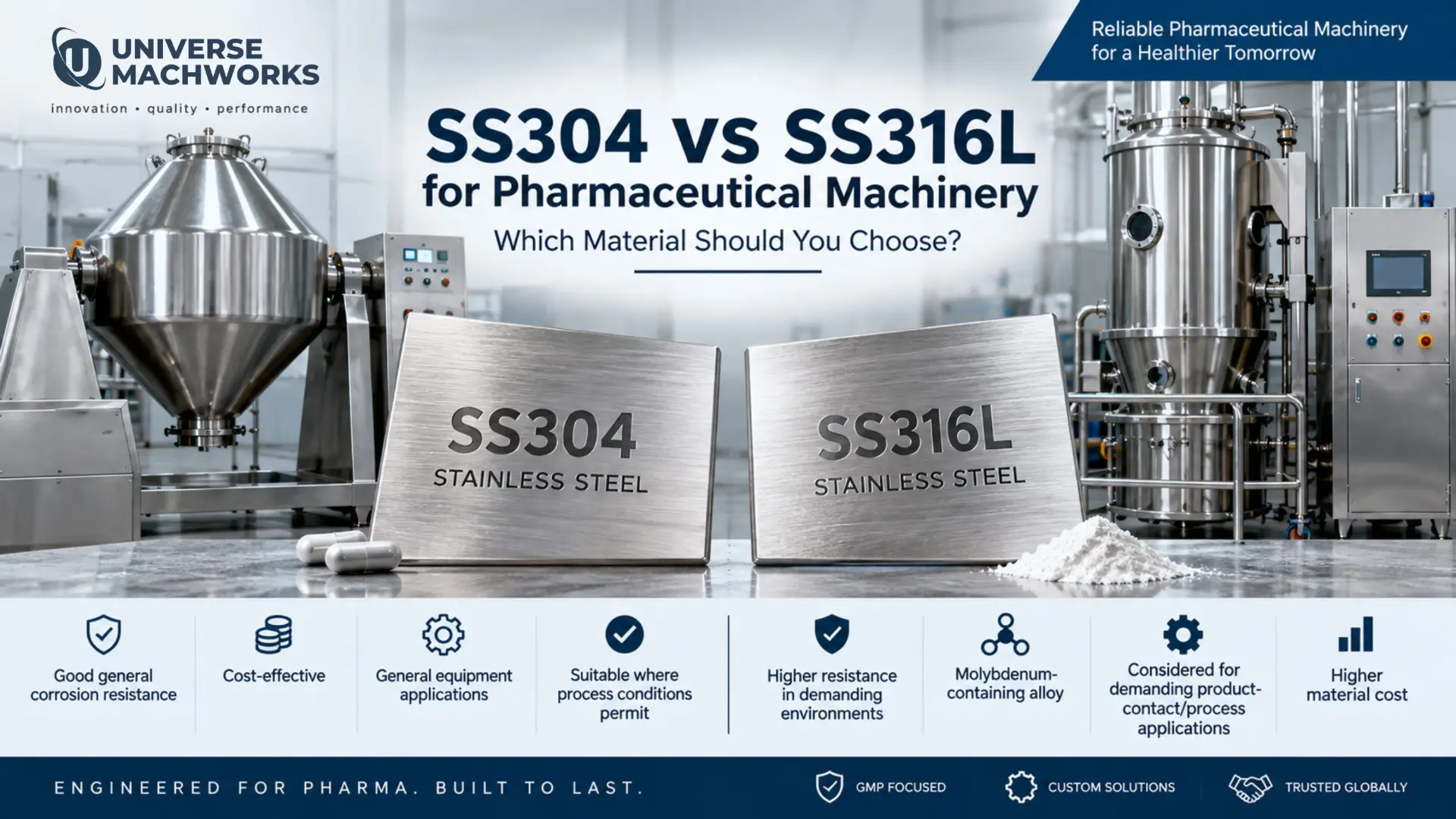
- SS304
- SS316
- SS316L
SS316L is highly preferred for pharmaceutical applications due to superior corrosion resistance.
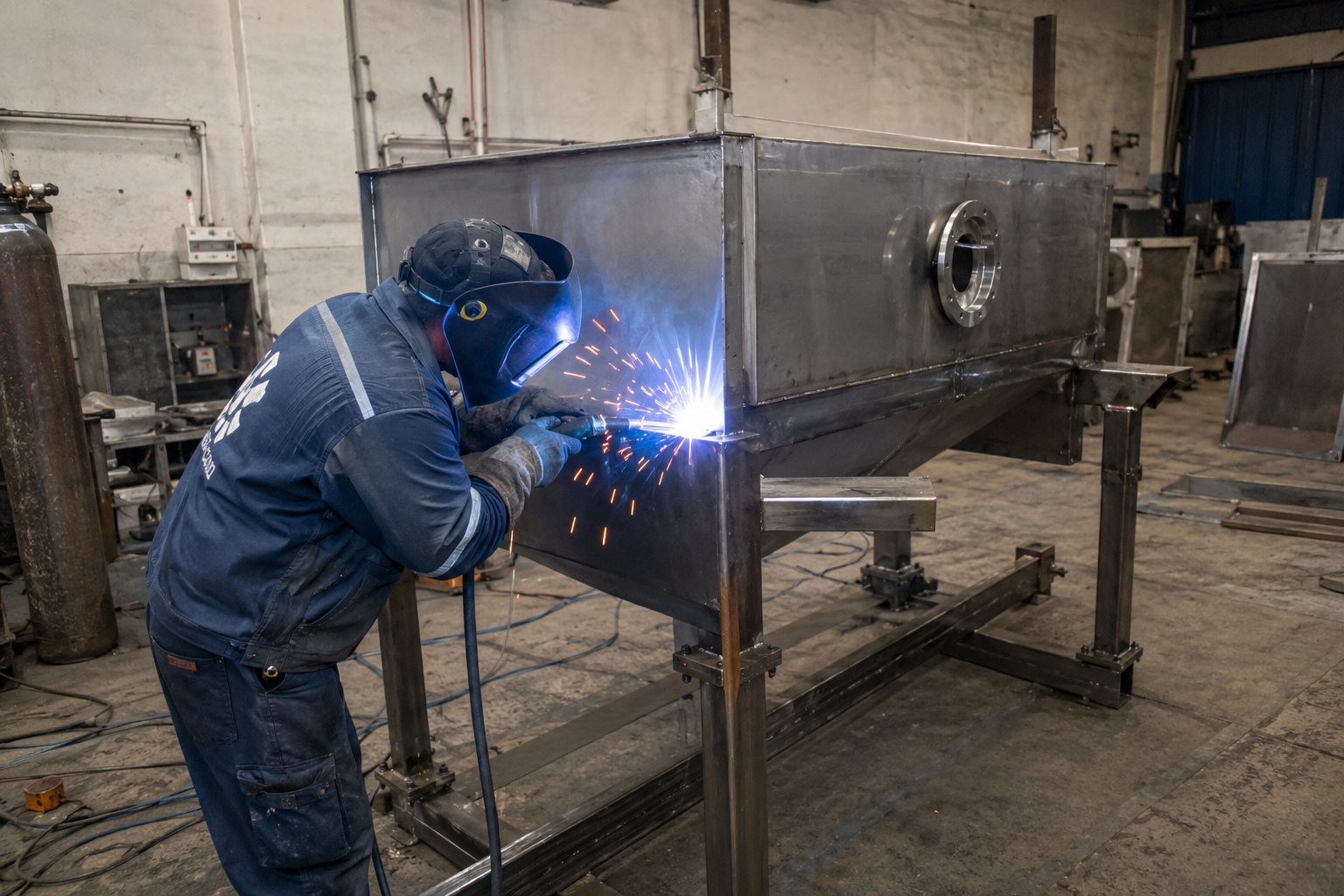
Welding Quality
- Smooth welding
- Polished joints
- No sharp corners
- Easy cleaning surfaces
Surface Finish
- Mirror finish
- Matte finish
- Low roughness (Ra value)
Check Machine Automation Level
Automation improves productivity, accuracy, safety, and repeatability. Modern pharma machinery may include:
- PLC controls
- Touchscreen HMI
- Recipe management
- Data logging
- Batch reports
- Alarm systems
- Password protection
- Automatic cleaning cycles
Consider Energy Efficiency
- High-efficiency motors
- Variable Frequency Drives (VFD)
- Optimized heating systems
- Efficient air handling
- Reduced power consumption
Evaluate Cleaning and Maintenance
- Tool-less disassembly
- Easy access panels
- CIP compatibility
- Quick cleaning
- Replaceable wear parts
- Accessible bearings
Spare Parts Availability
- Are spare parts readily available?
- What is the delivery time?
- Are critical components locally available?
- Is inventory maintained?
Technical Support and After-Sales Service
- Installation support
- Commissioning
- Operator training
- Preventive maintenance
- Annual Maintenance Contracts (AMC)
- Remote troubleshooting
- Emergency service support
Machine Validation Documentation
- IQ (Installation Qualification)
- OQ (Operational Qualification)
- PQ (Performance Qualification)
- FAT (Factory Acceptance Test)
- SAT (Site Acceptance Test)
- Material certificates
- Calibration certificates
- Electrical drawings
- Mechanical drawings
- User manuals
Future Scalability
- Capacity upgrades
- Automation upgrades
- Integration with future machines
- Expansion without replacing the complete line
Production Flexibility
- Multiple batch sizes
- Different formulations
- Quick product changeovers
- Easy cleaning between batches
Safety Features
- Emergency stop buttons
- Safety guards
- Interlock systems
- Overload protection
- Temperature monitoring
- Pressure protection
- Alarm systems
Compare Total Cost of Ownership (TCO)
Don't compare machines based only on purchase price. Instead, evaluate the total cost of ownership across the machine's lifetime.
| Factor | Importance |
|---|---|
| Purchase Cost | High |
| Installation Cost | High |
| Operating Cost | High |
| Maintenance Cost | High |
| Energy Consumption | High |
| Spare Parts | Medium |
| Downtime Cost | Very High |
| Equipment Life | Very High |
A slightly higher-priced machine often provides lower long-term costs.
Assess Manufacturing Capacity of the Supplier
- Modern fabrication facilities
- CNC machining
- Skilled engineers
- Quality inspection systems
- Testing facilities
- In-house assembly
Verify Industry Experience
- Pharmaceutical companies
- Nutraceutical industries
- Food manufacturers
- Cosmetic manufacturers
- Chemical industries
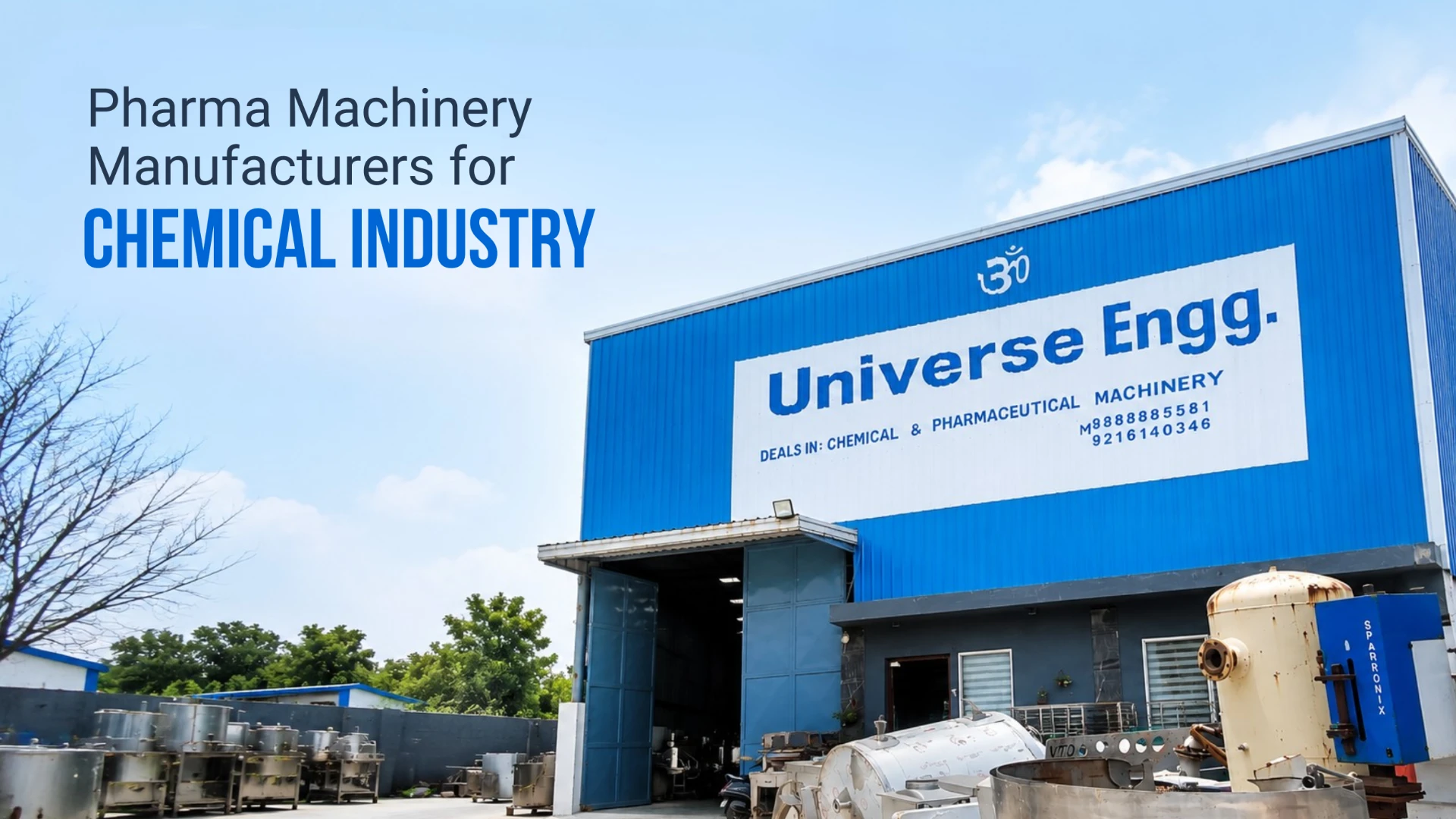
Visit the Manufacturing Facility
Whenever possible, inspect the supplier's factory. Observe:
- Machine fabrication
- Assembly process
- Testing procedures
- Quality control
- Engineering team
- Existing inventory
Ask for Customer References
- Machine performance
- Service response
- Spare parts support
- Reliability
- Overall satisfaction
Evaluate Lead Time
- Manufacturing timeline
- Testing schedule
- Dispatch timeline
- Installation timeline
Machine Testing Before Dispatch
Ensure every machine undergoes Factory Acceptance Testing (FAT). Testing should verify:
- Mechanical performance
- Electrical systems
- Safety features
- Automation functions
- Production capability
Common Mistakes Buyers Should Avoid
- Buying based solely on price
- Ignoring future expansion
- Choosing unknown suppliers
- Skipping factory visits
- Overlooking documentation
- Ignoring maintenance requirements
- Not checking spare parts availability
- Purchasing without process consultation
Essential Pharma Machinery for Modern Manufacturing
Material Handling
- Material Transfer Systems
- Vacuum Conveyors
Mixing Equipment
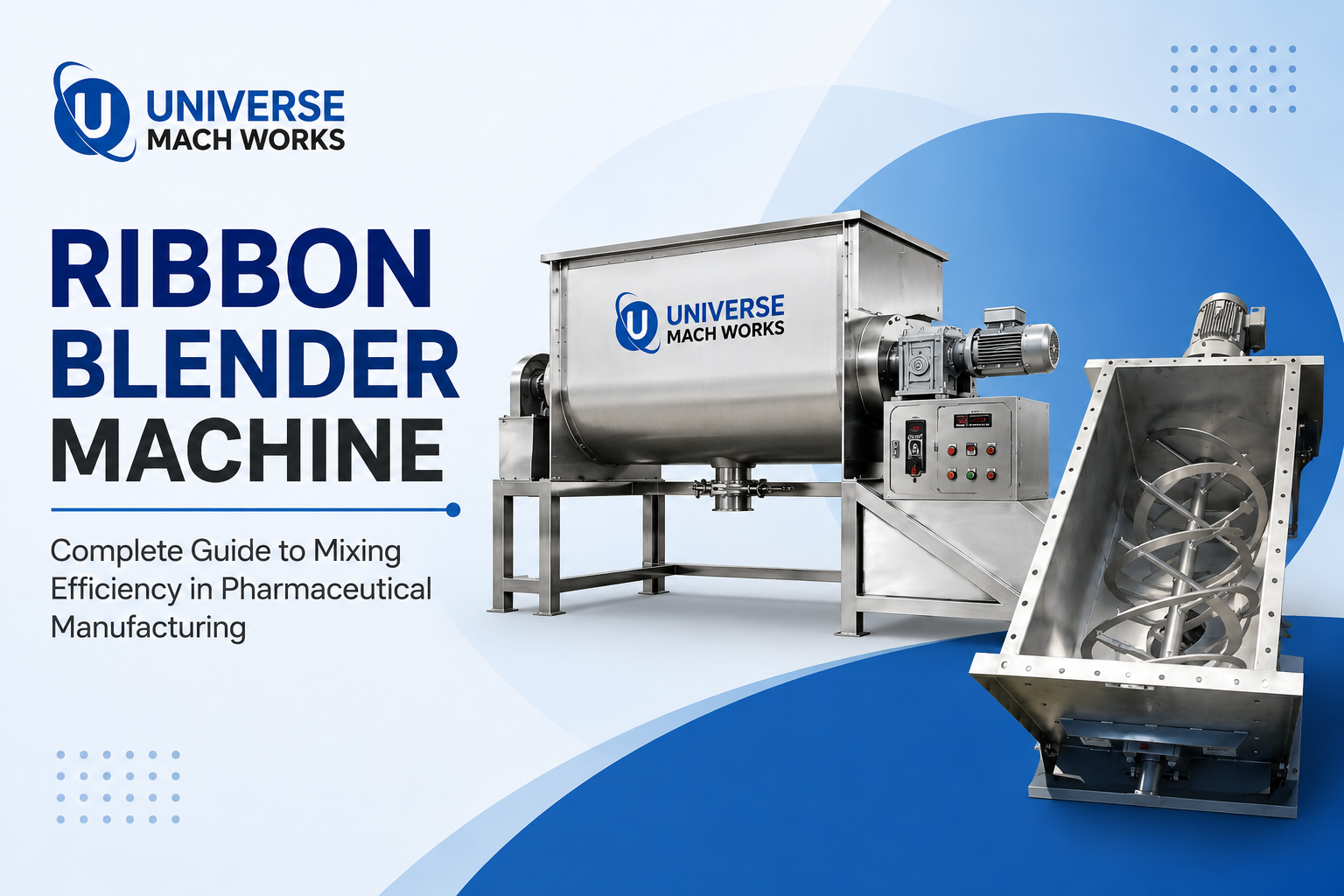
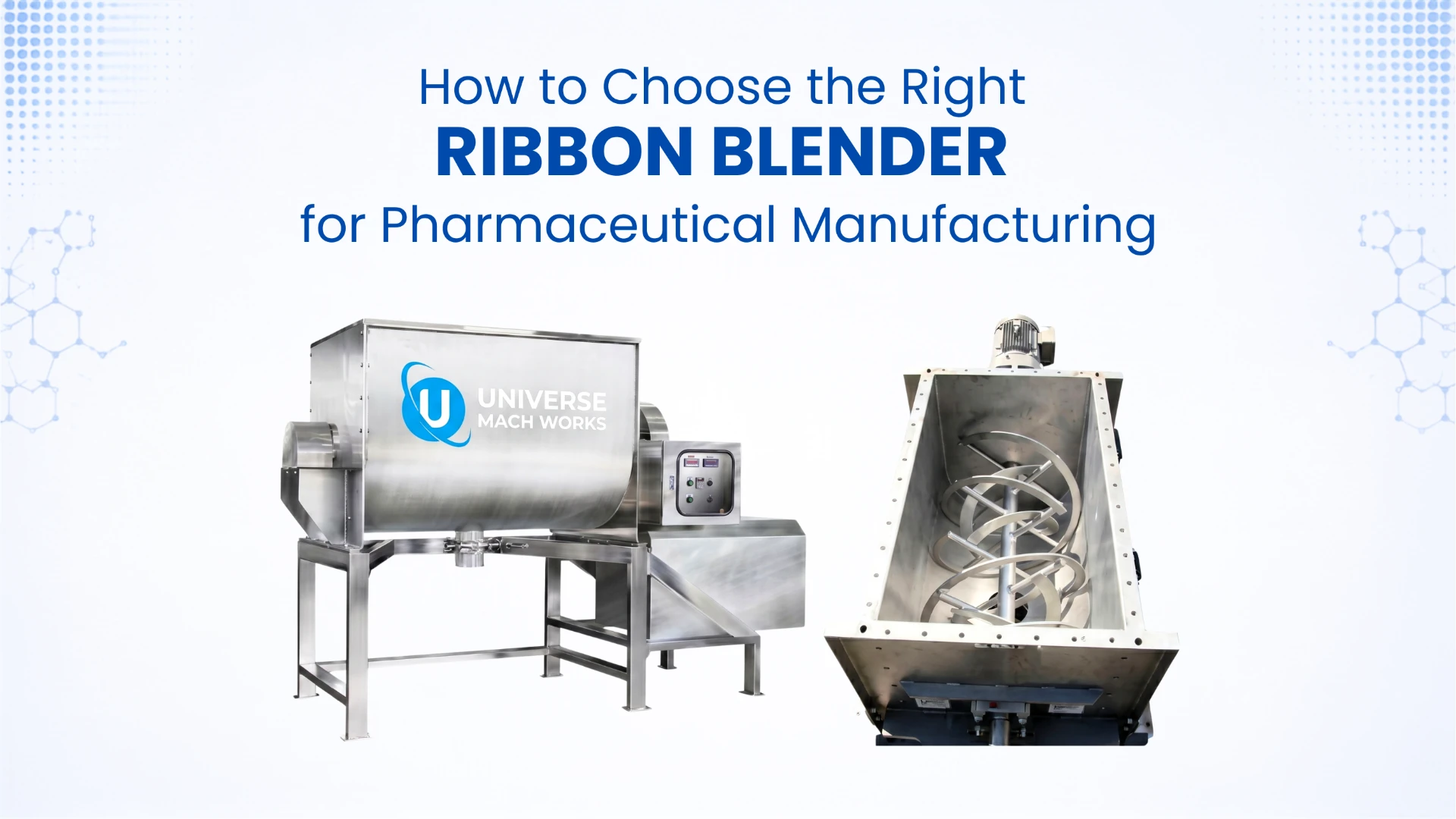
- Ribbon Blender
- Double Cone Blender
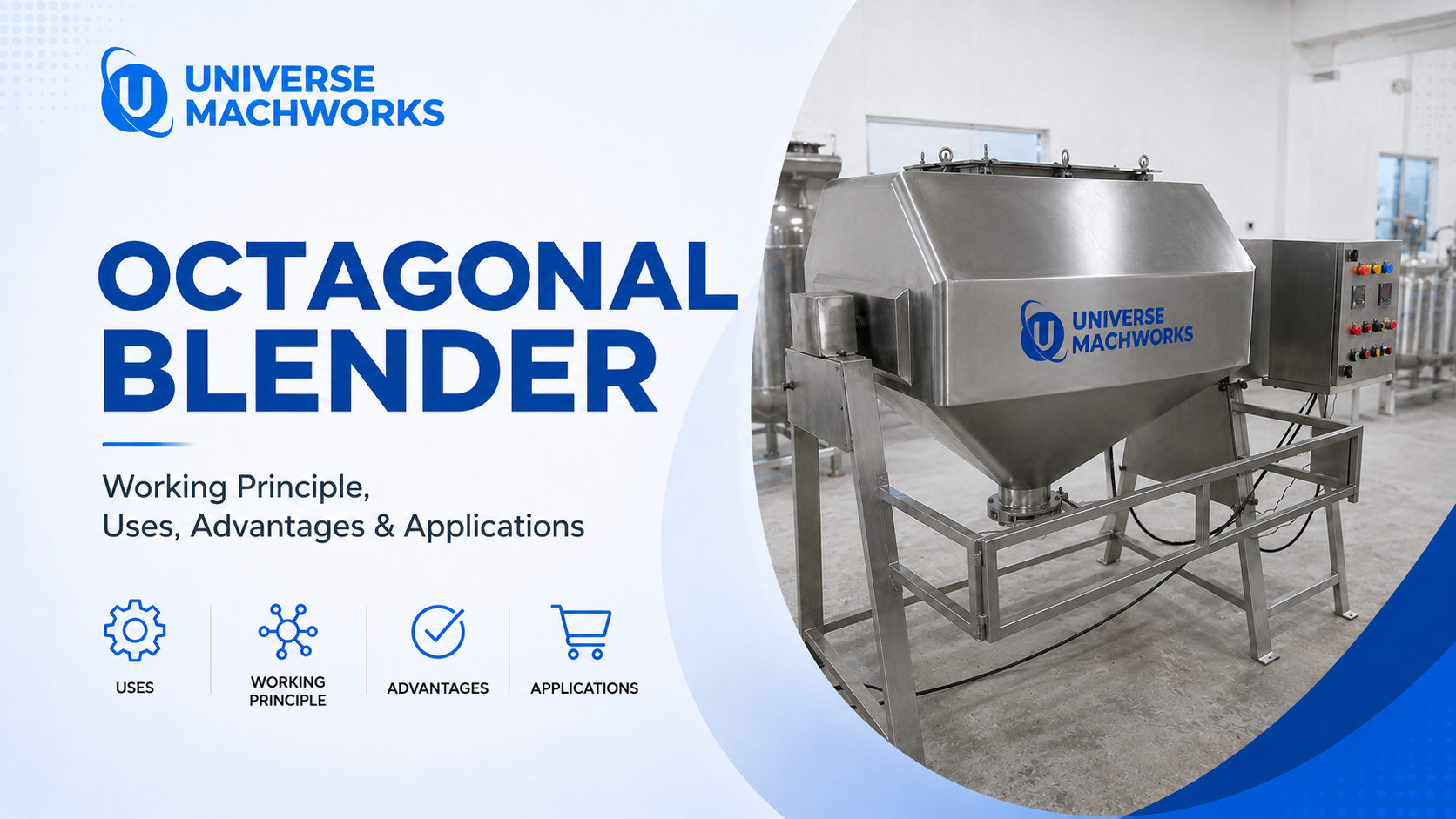
- Octagonal Blender
- V Blender
Granulation
- Rapid Mixer Granulator (RMG)
Drying
- Fluid Bed Dryer (FBD)
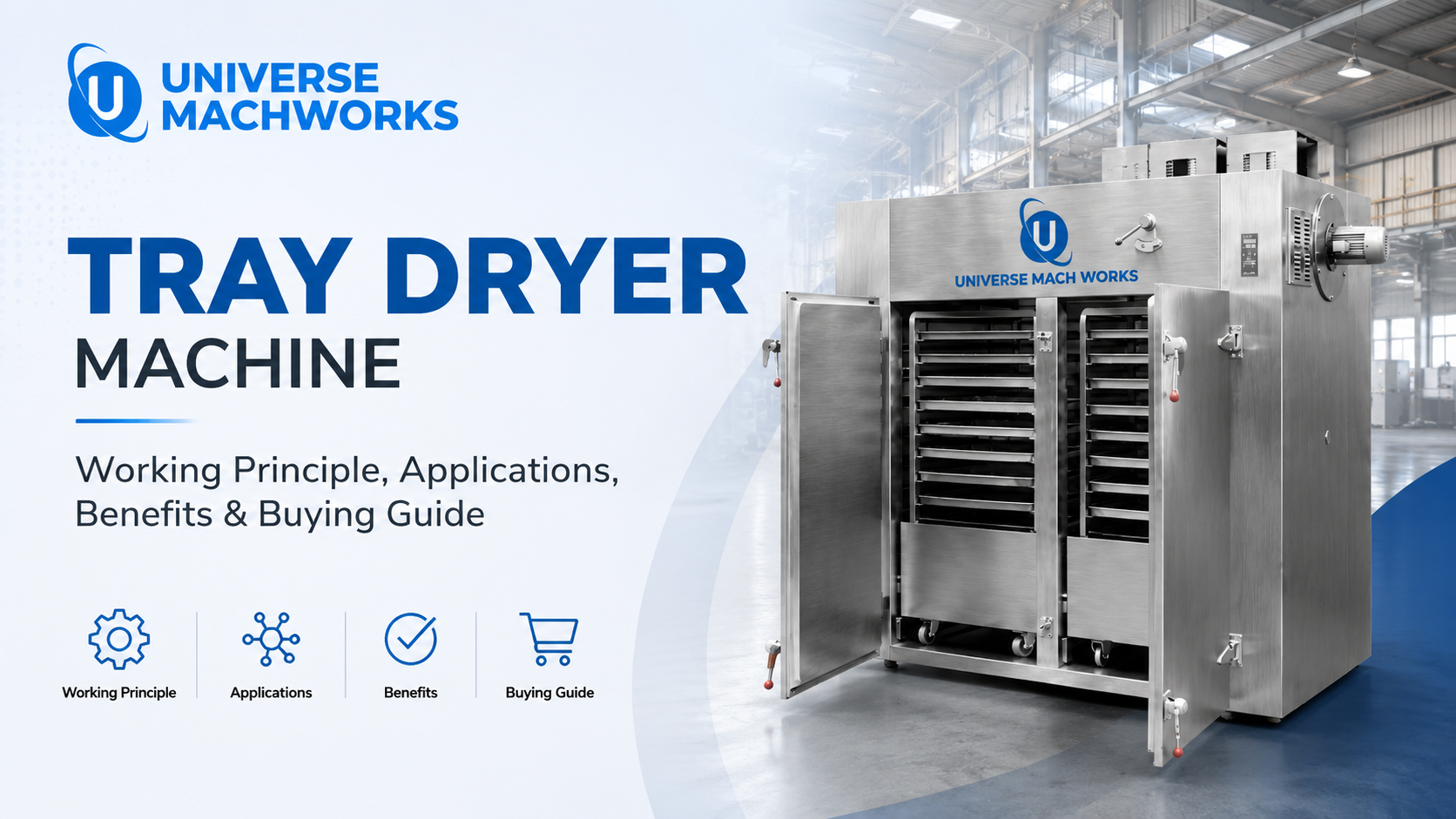
- Tray Dryer
Size Reduction
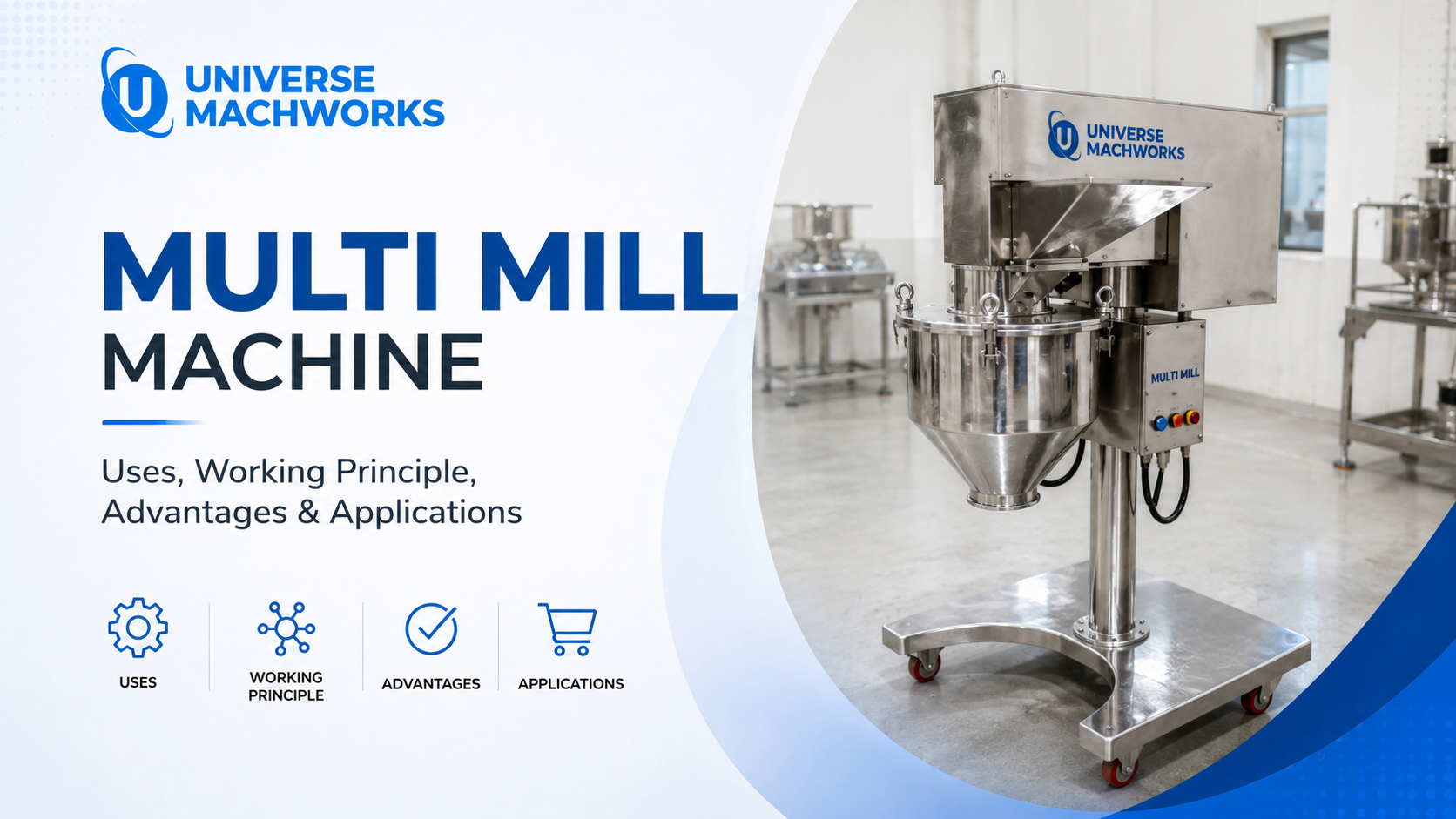
- Multi Mill
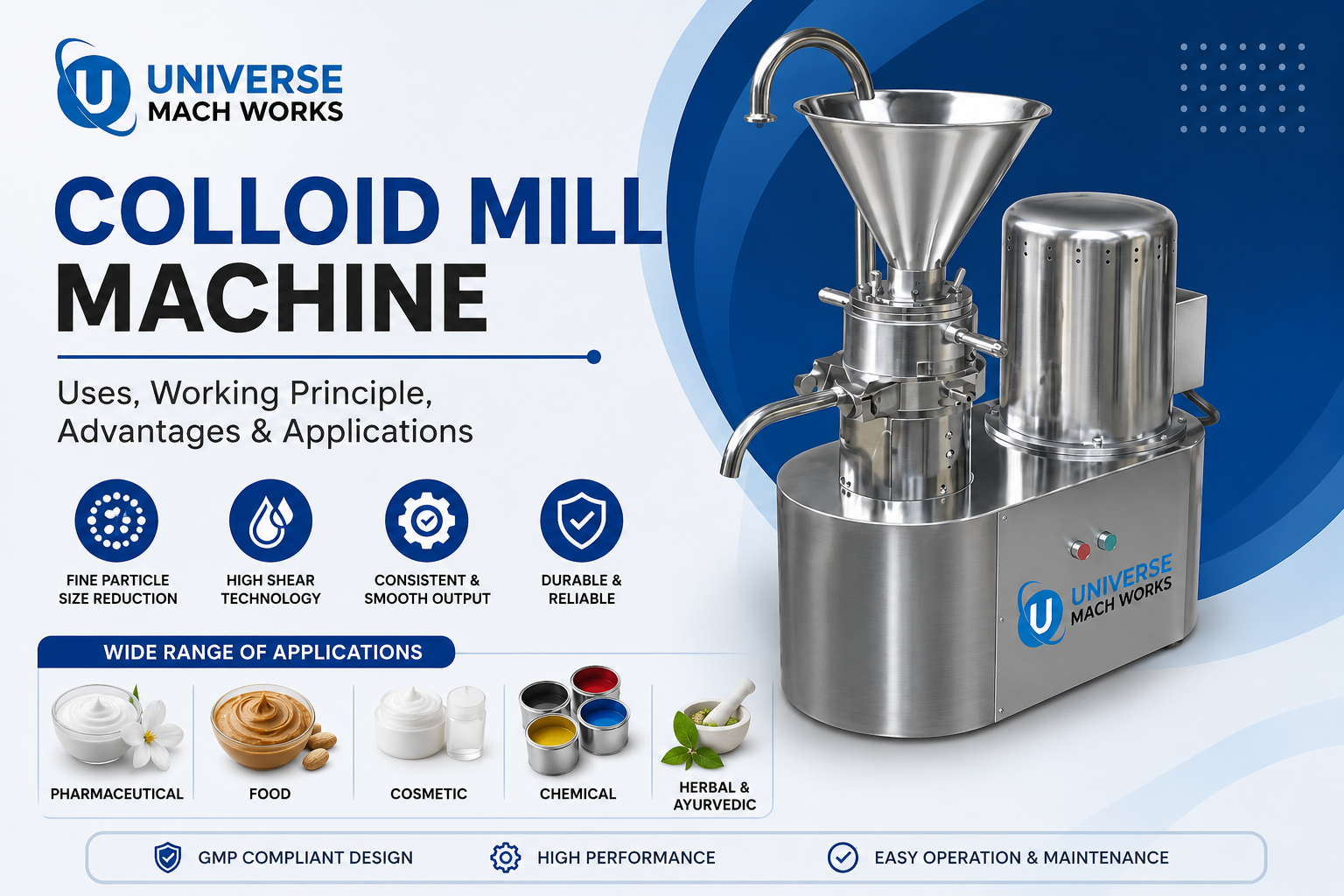
- Colloid Mill
- Hammer Mill
Sieving
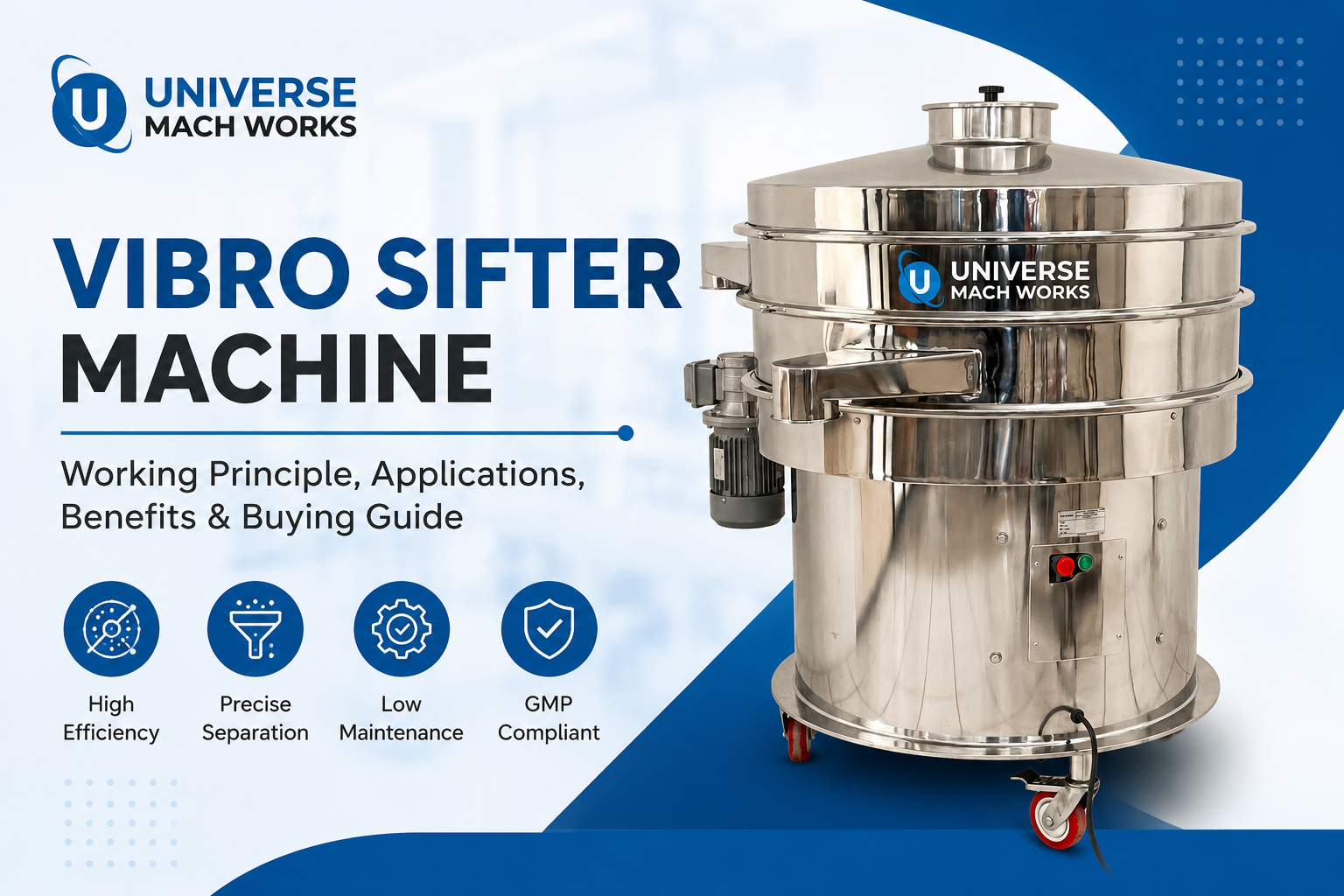
- Vibro Sifter
Compression
- Tablet Compression Machine
Capsule Section
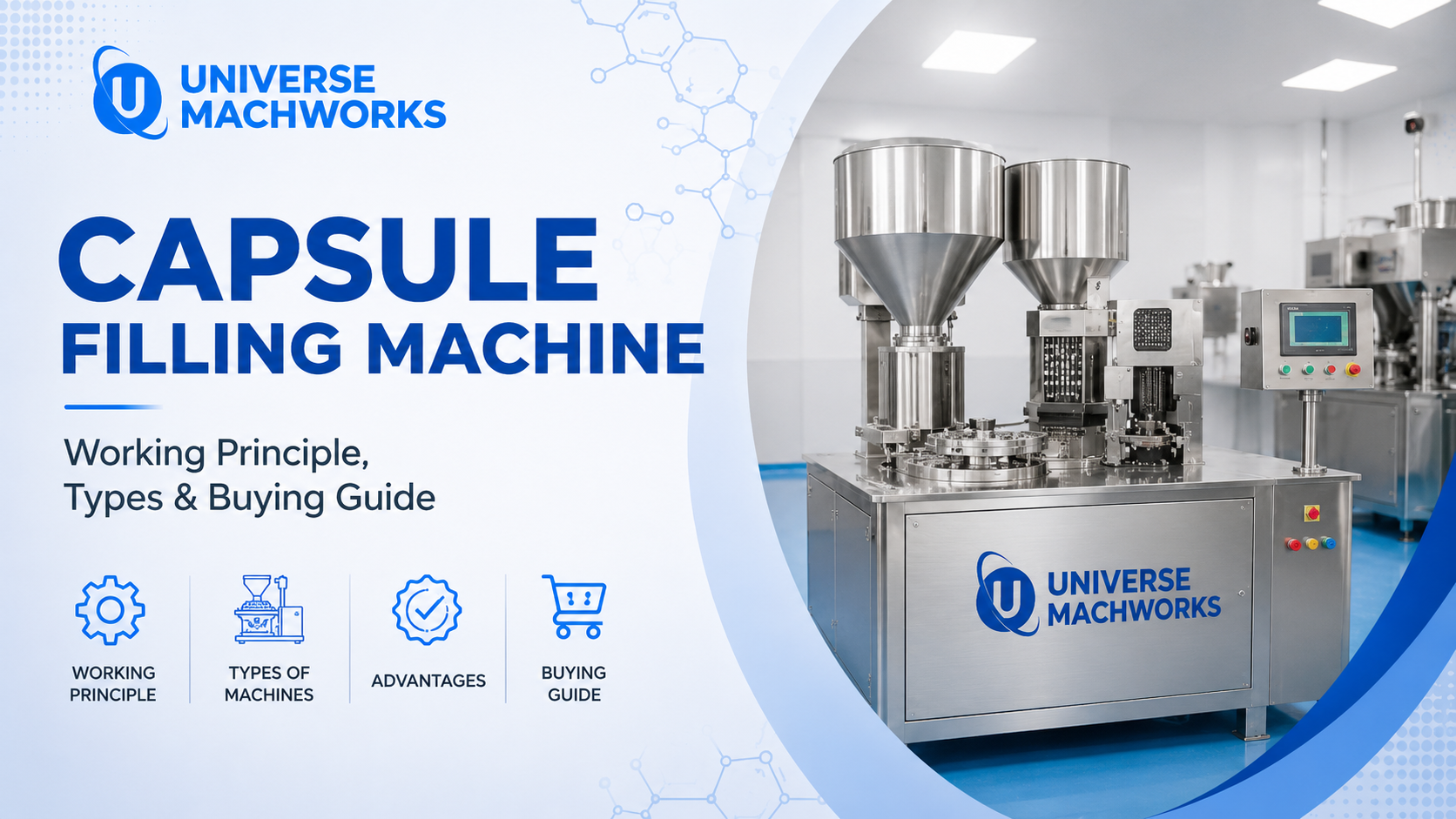
- Capsule Filling Machine
- Capsule Polishing Machine
Liquid Manufacturing
- Mixing Tanks
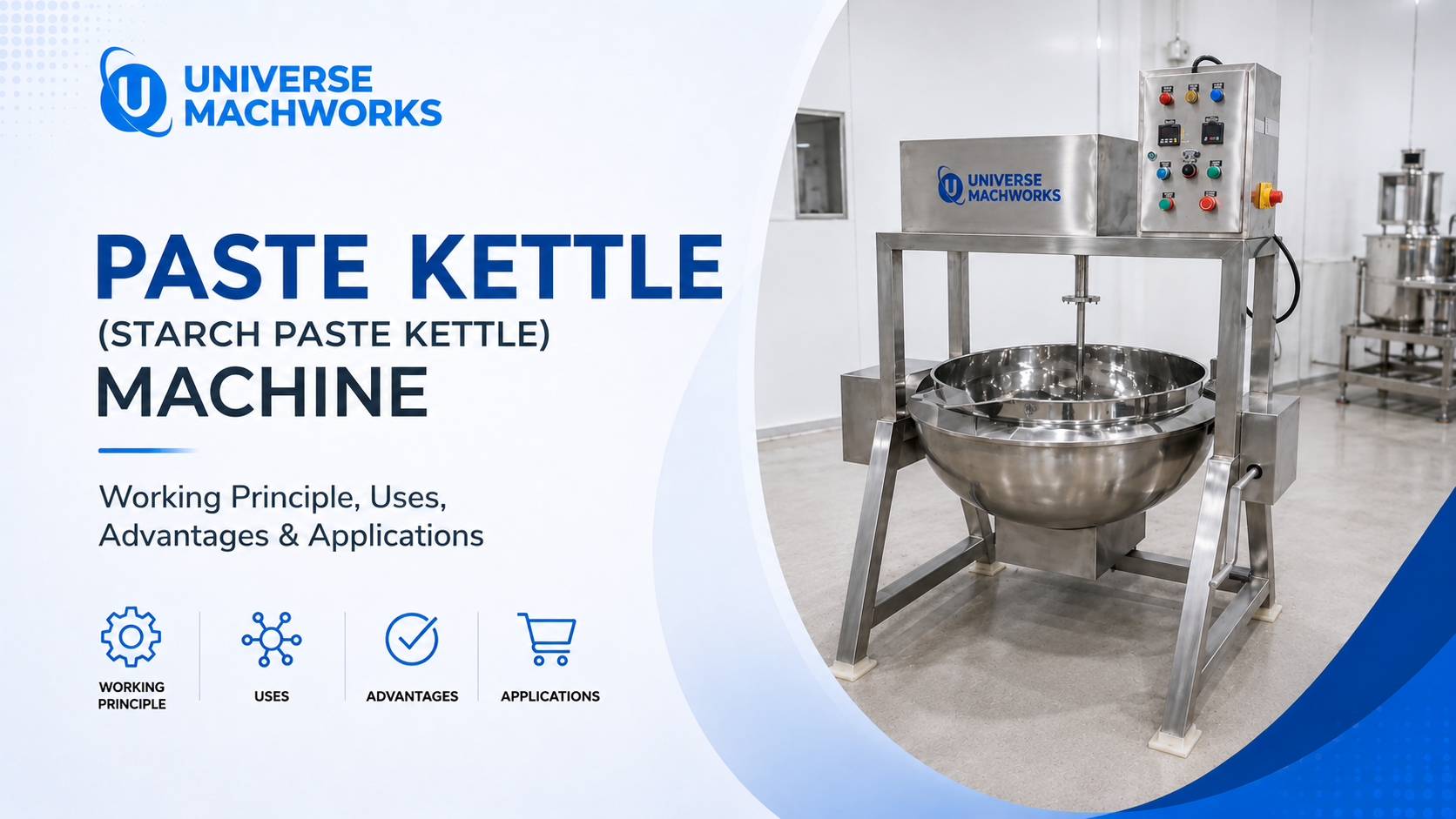
- Paste Kettle
- Homogenizer
Packaging
- Blister Packing Machine
- Bottle Filling Machine
- Labeling Machine
Why Experienced Pharmaceutical Machinery Manufacturers Make a Difference
Experienced pharmaceutical machinery manufacturers understand more than machine fabrication — they understand pharmaceutical production. They provide:
- Process optimization
- Machine customization
- Technical consultation
- Validation assistance
- GMP-compliant engineering
- Long-term service support
Why Universe Mach Works is a Trusted Choice
At Universe Mach Works, we specialize in designing and manufacturing high-performance pharmaceutical processing equipment for pharmaceutical, food, cosmetic, nutraceutical, and chemical industries. Our solutions are built with:
- Premium stainless steel construction
- GMP-compliant design
- Precision engineering
- Energy-efficient operation
- User-friendly automation
- Robust quality testing
- Comprehensive documentation
- Reliable after-sales support
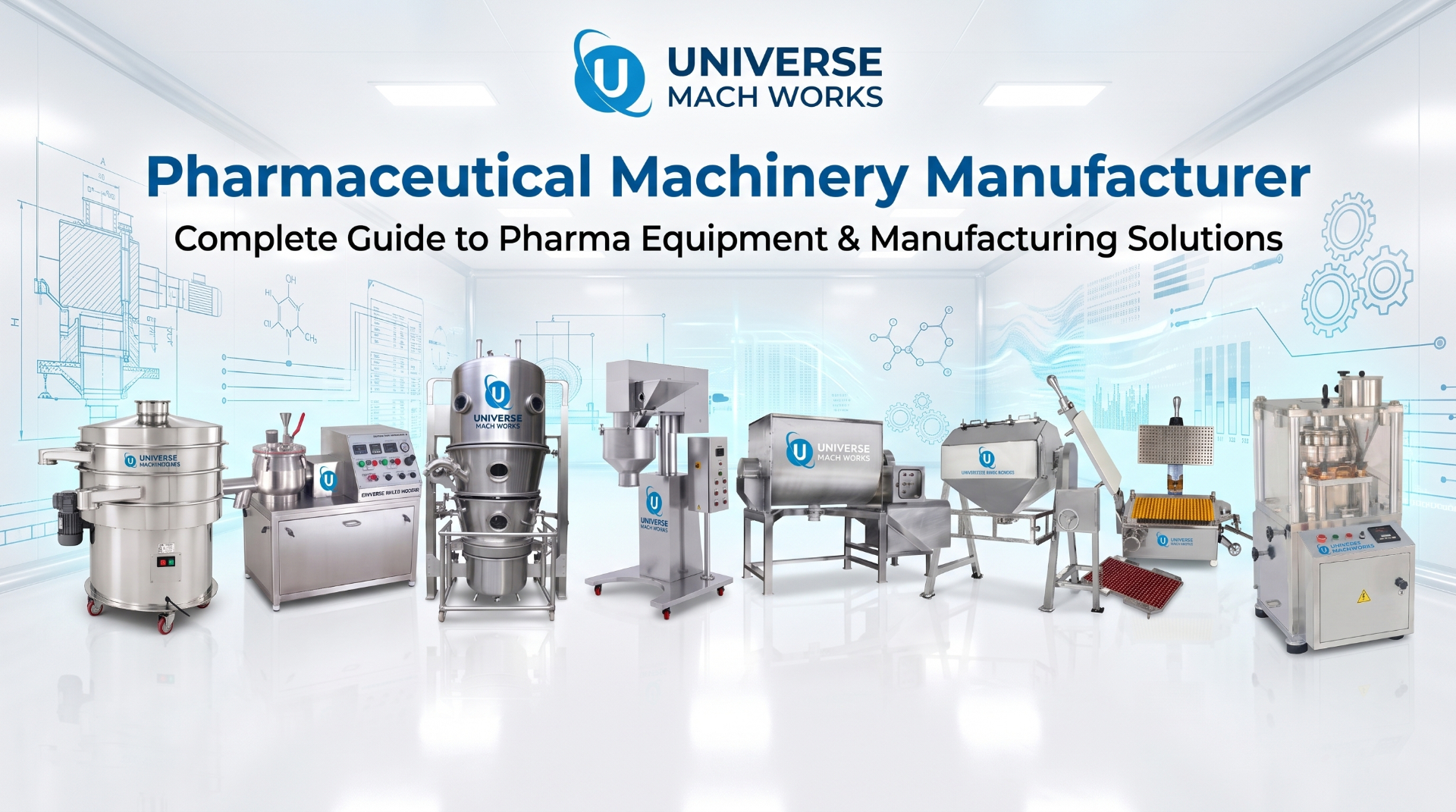
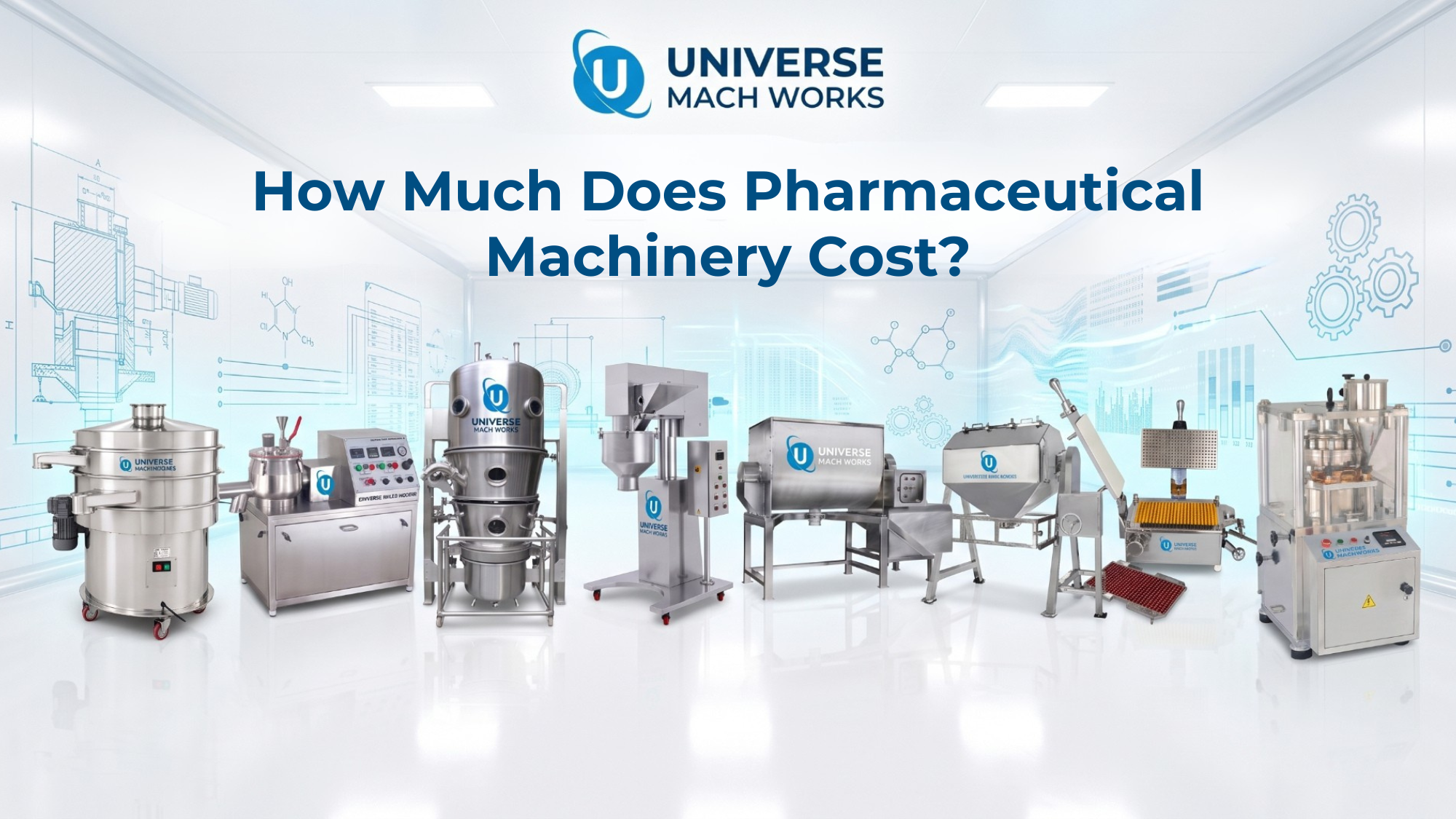
From Vibro Sifters and Fluid Bed Dryers to Rapid Mixer Granulators, Multi Mills, Ribbon Blenders, Capsule Filling Machines, and complete processing solutions, we help manufacturers improve productivity while maintaining the highest quality standards.
Explore the Product
Complete Pharma Machinery Range by Universe Mach Works
View technical specifications, applications and request a customized quote.
View Complete Pharma Machinery RangeFrequently Asked Questions
What should I consider before purchasing pharma machinery?+
Key factors include GMP compliance, machine quality, production capacity, automation, documentation, after-sales service, spare parts availability, energy efficiency, and the reputation of the manufacturer.
Which stainless steel grade is best for pharmaceutical machinery?+
SS316L is generally preferred for product-contact parts due to its superior corrosion resistance, hygienic properties, and compliance with pharmaceutical manufacturing standards.
Why is GMP compliance important?+
GMP-compliant machinery helps ensure product safety, consistent quality, easier cleaning, regulatory compliance, and reduced contamination risks.
How do I choose the right pharmaceutical machinery manufacturer?+
Evaluate their experience, manufacturing capabilities, certifications, customer references, service support, documentation, and industry reputation before making a decision.
What is the most important factor besides machine price?+
The total cost of ownership (TCO). Consider maintenance, energy use, downtime, spare parts, service availability, and equipment lifespan rather than focusing only on the initial purchase price.
Can pharma machinery be customized?+
Yes. Many experienced pharma equipment manufacturers offer customized equipment tailored to your product type, batch size, plant layout, and automation requirements.
How often should pharmaceutical machinery be maintained?+
Preventive maintenance should be scheduled according to the manufacturer's recommendations. Routine inspections, lubrication, calibration, and replacement of wear parts help maximize machine life and ensure consistent performance.
Conclusion
Purchasing pharma machinery is a strategic investment that directly influences manufacturing efficiency, regulatory compliance, and product quality. Instead of selecting equipment based solely on cost, evaluate every aspect — from construction quality and automation to validation documentation, after-sales service, and future scalability.
Partnering with experienced pharmaceutical machinery manufacturers ensures access to reliable equipment, expert guidance, and long-term support. By considering the factors outlined in this guide, you can make informed purchasing decisions that strengthen your manufacturing operations and deliver long-term value.
Whether you're upgrading a single machine or building a complete production line, choosing the right pharma equipment manufacturers will help your business remain competitive, compliant, and ready for future growth.