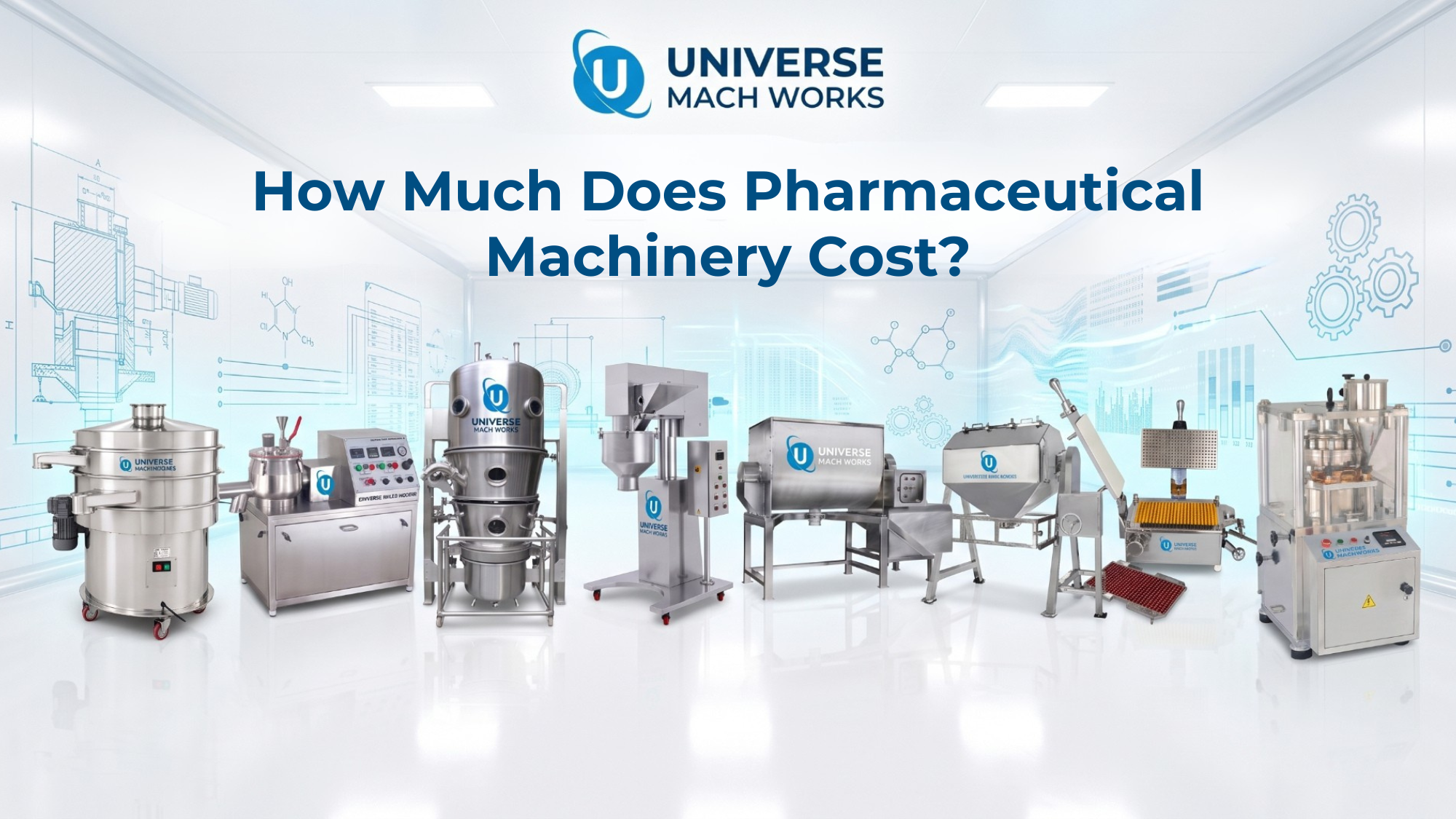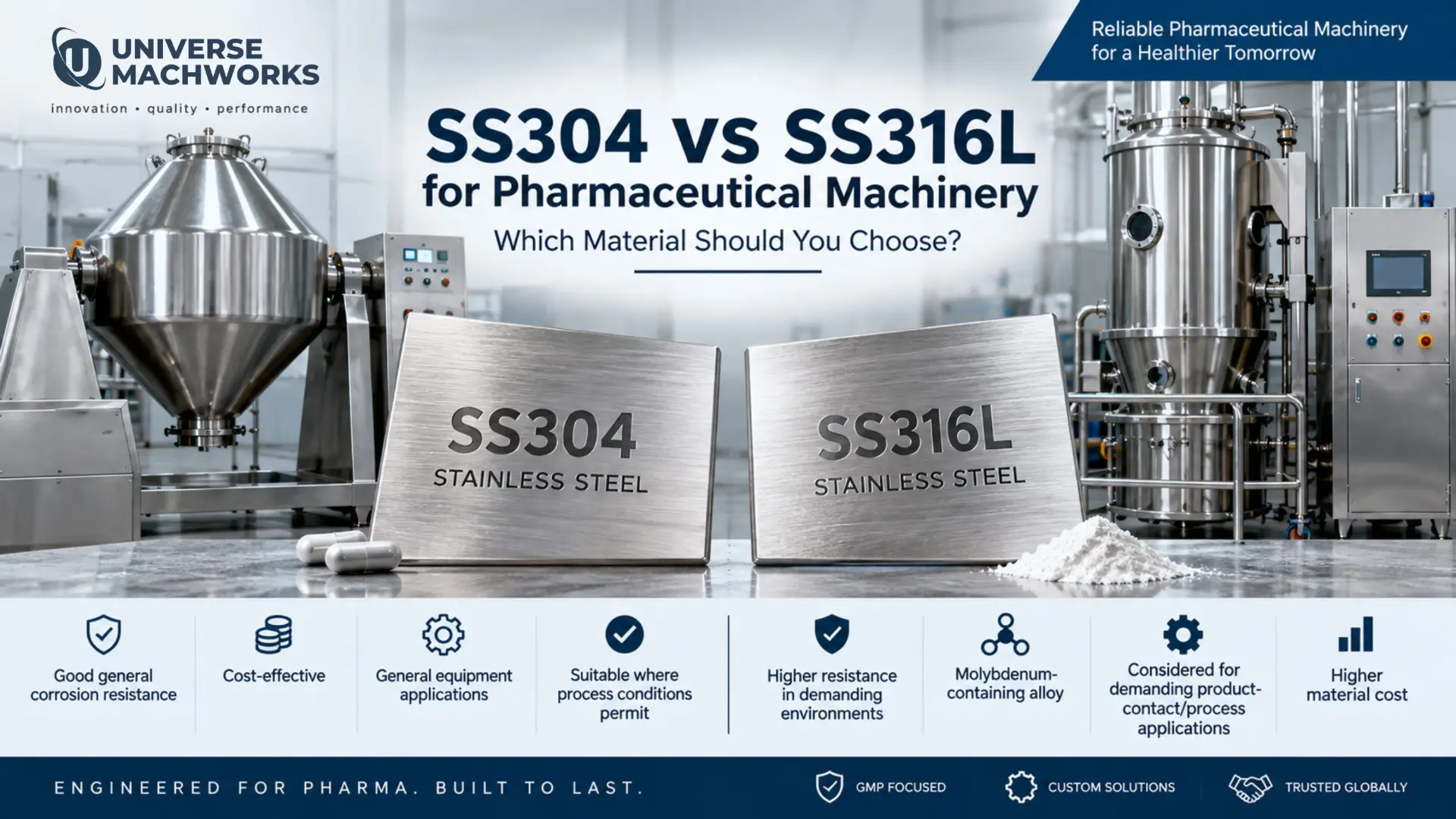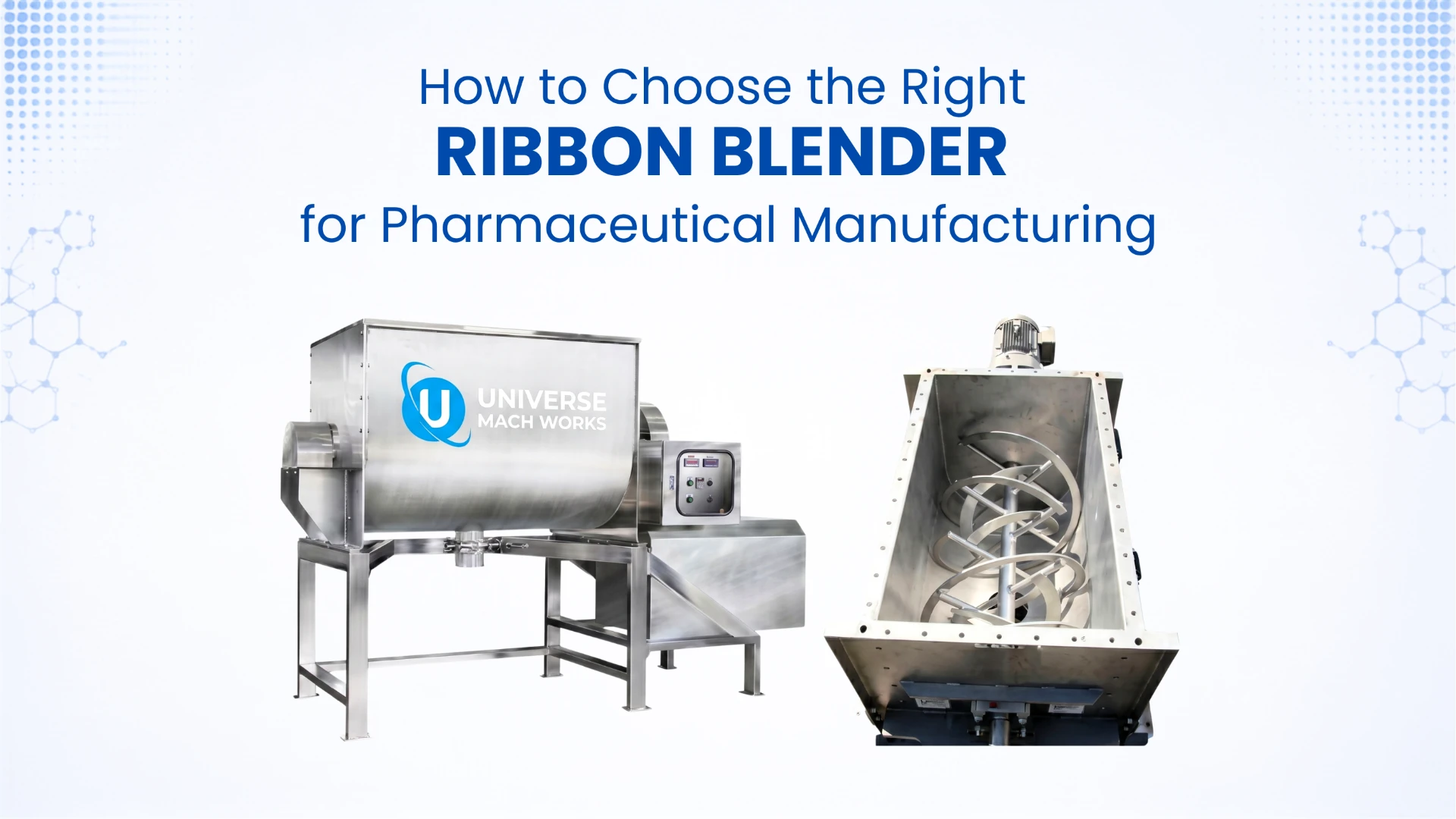

Choosing pharmaceutical machinery is one of the most important decisions when setting up, expanding, or upgrading a manufacturing facility.
For many pharmaceutical manufacturers, the decision is not simply which machine to buy, but whether to invest in new pharmaceutical machinery or consider professionally refurbished equipment.
New equipment can offer the latest design, controls, documentation, customization, and technology. Refurbished machinery, when properly evaluated and restored, can potentially reduce the initial capital investment and provide a practical solution for plants with specific budget or capacity requirements.
However, refurbished does not automatically mean “better value,” and new does not automatically mean “the right choice.” The correct decision depends on the machine, its intended use, condition, process requirements, documentation, maintenance history, production capacity, and applicable quality and regulatory expectations.
This guide explains the differences between new and refurbished pharmaceutical machinery, the advantages and limitations of both options, and the factors manufacturers should evaluate before making a purchase.
What Is New Pharmaceutical Machinery?
New pharmaceutical machinery is equipment manufactured specifically for the current project or supplied as a new production unit.
A new machine can generally be specified around the buyer's requirements, including:
- Capacity
- Material of construction
- Product-contact parts
- Surface finish
- Agitation or processing system
- Automation
- PLC / HMI
- Heating or cooling
- Discharge arrangement
- Safety systems
- Documentation requirements

For a new pharmaceutical manufacturing project, this can make equipment selection more straightforward because the machine can be designed around the intended process rather than adapting an existing unit.
What Is Refurbished Pharmaceutical Machinery?
Refurbished pharmaceutical machinery is previously manufactured equipment that has undergone inspection, repair, restoration, replacement of selected components, cleaning, finishing, testing, and other work intended to return it to a suitable operating condition.
The exact scope of refurbishment can vary considerably. A basic refurbishment may involve:
- Cleaning
- Inspection
- Mechanical servicing
- Replacement of worn components
- Surface restoration
- Electrical checks
- Testing
A more comprehensive refurbishment may include:
- Replacement of critical components
- Bearing and seal replacement
- Motor or gearbox servicing
- Electrical system upgrades
- Control-panel replacement
- PLC / HMI upgrades
- Stainless-steel surface restoration
- Re-polishing where required
- Safety improvements
- Performance testing

Therefore, “refurbished” should never be treated as a single standardized condition. Buyers should ask exactly what work has been performed and what components have been replaced.
New vs Refurbished Pharmaceutical Machinery: Quick Comparison
| Factor | New Machinery | Refurbished Machinery |
|---|---|---|
| Initial investment | Generally higher | Potentially lower |
| Customization | High | Depends on existing design |
| Technology | Latest available configuration | Depends on machine and upgrades |
| Machine history | New equipment history | Previous operating history should be reviewed |
| Documentation | Can be specified for project | Depends on available records and refurbishment scope |
| Availability | Depends on manufacturing lead time | May be faster if suitable equipment is available |
| Component condition | New | Requires detailed inspection |
| Warranty | Usually available from supplier | Depends on refurbishment provider |
| Process suitability | Can be designed for the process | Existing configuration must be evaluated |
| Long-term planning | Strong option for new facilities | Can be useful for selected applications |
Why Do Pharmaceutical Manufacturers Consider Refurbished Machinery?
The primary reason is usually capital efficiency.
A manufacturing plant may need several machines at different stages of production. Purchasing every machine new can represent a substantial capital investment, particularly for smaller manufacturers, startups, contract manufacturers, or plants expanding production incrementally.
Refurbished equipment may provide an opportunity to allocate capital selectively. For example, a manufacturer might choose new equipment for a critical high-speed production process while considering refurbished machinery for a less demanding supporting operation.
This is not a universal recommendation; the decision should be based on the actual process and risk assessment.
Advantages of New Pharmaceutical Machinery
1. Greater Customization
One of the biggest advantages of new machinery is the ability to specify the equipment according to the process. A manufacturer can discuss batch capacity, working volume, material of construction, product-contact surfaces, agitator configuration, heating and cooling requirements, automation, discharge arrangement, and safety requirements.
This is particularly valuable when the process has specific requirements that standard equipment cannot easily meet.
2. Modern Controls and Automation
New equipment can be supplied with modern automation systems, depending on project requirements. Possible features include:
- PLC
- HMI
- VFD
- Temperature monitoring
- Pressure monitoring
- Automated sequences
- Interlocks
- Alarm systems
- Data recording
Automation can improve repeatability and reduce operator dependency when appropriately designed.
3. Better Documentation Opportunities
When buying new machinery, documentation requirements can be discussed before manufacturing. Depending on the project, buyers may require:
- Technical specifications
- General arrangement drawings
- Material certificates
- Electrical drawings
- Operating manuals
- Maintenance manuals
- Testing documentation
- Qualification-related documentation
The exact documentation package should be agreed upon between the buyer and supplier.
4. Easier Capacity Planning
New machinery can be selected specifically around the required batch size and production output. If a manufacturer knows its target production volume, the supplier can help determine an appropriate blender capacity, RMG capacity, dryer capacity, mill capacity, tablet press output, or capsule filling capacity.
Explore new machinery options
This reduces the need to compromise around an existing machine configuration.
Advantages of Refurbished Pharmaceutical Machinery
1. Potentially Lower Initial Capital Cost
One of the primary attractions of refurbished machinery is the possibility of reducing the upfront investment compared with purchasing a comparable new machine. However, buyers should compare the total cost, not just the quoted purchase price.
Consider: purchase price + refurbishment + transportation + installation + modifications + qualification/testing + maintenance + spare parts. A lower initial price does not automatically mean a lower lifecycle cost.
2. Faster Availability
If a suitable refurbished machine is already available, it may be possible to obtain it faster than a newly manufactured machine. This can be valuable when:
- Production needs to start quickly
- A replacement machine is urgently required
- A plant is expanding an existing line
- A machine has unexpectedly failed
Actual delivery time depends on machine availability, refurbishment scope, customization, and testing.
3. Proven Machine Design
A previously operated machine has an operating history. If that history is available and reliable, it can help the buyer understand the previous application, operating conditions, maintenance history, major repairs, previous capacity, and component replacements. This information can be useful during technical evaluation.
Is Refurbished Pharmaceutical Machinery Suitable for GMP Manufacturing?
This is an important question, and the answer should not simply be yes or no.
Regulatory expectations focus on whether equipment is suitable for its intended use and can support appropriate cleaning, maintenance, and product-quality requirements. FDA states that CGMP does not maintain a list of specifically “approved” manufacturing equipment; manufacturers are responsible for selecting equipment capable of meeting applicable requirements.
FDA also states that equipment should be appropriately designed for its intended use and for cleaning and maintenance, and product-contact surfaces should not adversely affect the drug product. Therefore, the fact that a machine is refurbished does not by itself establish whether it is suitable or unsuitable.
The buyer should evaluate the actual machine. Important questions include:
- Is the machine suitable for the intended process?
- Are product-contact surfaces appropriate?
- Can the equipment be effectively cleaned?
- Are critical components in suitable condition?
- Is the equipment operating within an appropriate qualified range?
- Is adequate documentation available?
- Can required testing or qualification be performed?
- Can the machine support the facility's quality system?
For regulated manufacturing, these decisions should involve the plant's engineering, QA, validation, and regulatory teams as appropriate.
New vs Refurbished: GMP and Documentation Considerations
Equipment selection should be integrated into the pharmaceutical manufacturer's quality system. FDA's guidance for API manufacturing describes qualification activities such as Design Qualification (DQ), Installation Qualification (IQ), Operational Qualification (OQ), and Performance Qualification (PQ) where applicable.
This is important because purchasing a machine is only one part of bringing equipment into a controlled manufacturing process. A refurbished machine may require additional evaluation to establish its condition, modifications, operating range, and suitability for the intended application.
The documentation available should therefore be reviewed before purchase rather than after installation.
What Should You Check Before Buying Refurbished Pharmaceutical Machinery?
1. Machine History
Ask for whatever reliable history is available:
- Manufacturer
- Model
- Year of manufacture
- Serial number
- Previous application
- Previous operating environment
- Maintenance records
- Major repairs
- Previous modifications
A machine with a documented history is generally easier to evaluate than equipment with an unknown background.
2. Mechanical Condition
Inspect critical components such as:
- Bearings
- Shafts
- Gearboxes
- Motors
- Couplings
- Seals
- Valves
- Pneumatic components
- Drive systems
Wear should be evaluated based on the machine's actual operating requirements.
3. Product-Contact Surfaces
Inspect internal surfaces, welds, crevices, dead spots, scratches, pitting, corrosion, surface finish, and product-retention areas. FDA emphasizes that equipment must be designed and maintained in a manner that prevents contamination and protects product quality.
4. Electrical and Control System
For older machines, the mechanical equipment may still be useful while the original control system has become outdated. Check:
- Control panel
- PLC
- HMI
- VFD
- Sensors
- Electrical wiring
- Safety interlocks
- Emergency stops
- Control components
In some cases, modernization of the control system can significantly improve the usability of refurbished equipment.
When Is New Machinery the Better Choice?
New equipment is generally worth serious consideration in the following situations.
You Are Building a New Manufacturing Plant
A new facility often benefits from equipment designed around the complete production process.
The Process Is Highly Critical
For critical processing stages, manufacturers may prefer new equipment with known specifications, new components, and a clearly defined documentation package.
You Need Significant Customization
If the machine needs major modifications, it may make more sense to manufacture a new machine rather than extensively modify an existing one.
You Need Modern Automation
If advanced process control and data requirements are important, new equipment can provide a cleaner starting point.
Long-Term Expansion Is Planned
New equipment can be specified with future production requirements in mind.
When Can Refurbished Machinery Make Sense?
Refurbished equipment can be worth considering when:
- Budget is an important constraint
- A suitable machine is readily available
- The machine design is proven
- The application is well understood
- The machine has a traceable history
- Critical components can be inspected
- Required refurbishment can be clearly defined
- Testing can establish suitable performance
- Documentation requirements can be met
- The supplier provides appropriate support
The key is condition and suitability, not simply age.
Hidden Costs to Consider
Buyers sometimes compare only the purchase quotations. That can be misleading. For refurbished machinery, consider the following.
Refurbishment Costs
Will components need replacement after purchase?
Transportation
Large pharmaceutical machines may require specialized transportation and handling.
Installation
Consider dismantling, positioning, utilities, assembly, and commissioning.
Electrical Upgrades
Older equipment may require new panels, drives, sensors, or control systems.
Qualification and Testing
Your quality system may require appropriate qualification and verification activities.
Spare Parts
Check whether critical components remain commercially available.
Downtime
A machine requiring frequent repairs can create production losses that outweigh its lower purchase price.
New vs Refurbished: Total Cost of Ownership
A better comparison is: Total Cost of Ownership = Purchase + Installation + Modification + Qualification + Maintenance + Utilities + Downtime + Spare Parts.
| Cost Factor | New Machine | Refurbished Machine |
|---|---|---|
| Purchase | Higher | Lower |
| Modification | Usually lower | Potentially higher |
| Installation | Similar | Similar |
| Qualification | Project-dependent | Project-dependent |
| Initial maintenance | Usually lower | Potentially higher |
| Spare parts | Generally readily specified | Depends on availability |
| Technology upgrade | Available | May be required |
| Expected lifecycle | Depends on design/use | Depends heavily on condition |
This demonstrates why purchase price alone should not determine the decision.
Refurbished vs New: Which Is Better?
There is no universal winner.
Choose New Machinery When:
- You require customized equipment
- The process is critical
- Modern automation is required
- Documentation is important
- You are establishing a new production line
- Long-term capacity expansion is planned
Consider Refurbished Machinery When:
- Capital expenditure needs to be controlled
- A suitable machine is available
- The machine has a reliable history
- The refurbishment scope is clearly defined
- Critical components have been inspected or replaced
- Performance can be demonstrated
- The equipment can meet your intended process and quality requirements
Common Mistakes When Buying Refurbished Pharma Machinery
Mistake 1: Choosing Only by Price
The cheapest machine may require significant repairs after purchase.
Mistake 2: Not Inspecting the Machine
Photographs alone cannot establish the condition of critical components.
Mistake 3: Ignoring Machine History
Unknown history increases uncertainty.
Mistake 4: Not Defining the Refurbishment Scope
“Fully refurbished” can mean different things to different suppliers. Ask for a written scope.
Mistake 5: Ignoring Spare Parts
An old machine may depend on obsolete components.
Mistake 6: Forgetting About Controls
Mechanical equipment may be good while the electrical system is outdated.
Mistake 7: Not Involving QA and Engineering
Equipment selection should involve the appropriate technical and quality stakeholders for regulated manufacturing.
Questions to Ask a Refurbished Machinery Supplier
Before placing an order, ask:
- What is the machine's manufacturer and model?
- What is its year of manufacture?
- What was its previous application?
- What refurbishment work has been performed?
- Which components were replaced?
- Which components remain original?
- Has the machine been tested after refurbishment?
- What is the test procedure?
- What documentation is available?
- Is a warranty provided?
- Are spare parts available?
- Can the machine be inspected before purchase?
- Can the machine be demonstrated under suitable conditions?
- What installation support is provided?
- What modifications are included in the quoted price?
These questions can substantially reduce purchasing risk.
New vs Refurbished Pharmaceutical Machinery: Final Decision Checklist
Process
- Product characteristics
- Batch size
- Required production capacity
- Operating conditions
Machine
- Design suitability
- Material of construction
- Surface condition
- Mechanical condition
- Electrical condition
- Safety systems
Quality
- Cleaning requirements
- Product-contact surfaces
- Documentation
- Qualification requirements
- Maintenance procedures
Commercial
- Purchase price
- Installation cost
- Modification cost
- Spare parts
- Warranty
- Service support
- Total cost of ownership
Why Consider Universe Mach Works?
For manufacturers evaluating pharmaceutical and process machinery, Universe Mach Works can provide both new machinery solutions and refurbishment-related support, depending on the equipment and project requirements.
The important advantage is the ability to discuss the machine based on its actual process application, capacity, construction, condition, and required modifications rather than making the decision purely on price.
For refurbishment projects, the scope should be clearly defined before work begins, including the components to be inspected, repaired, replaced, refinished, upgraded, and tested.
For new equipment, the machine can be discussed around requirements such as:
- Capacity
- SS304 / SS316L construction
- Product-contact components
- Surface finish
- Agitation or processing system
- Automation
- PLC / HMI
- Safety features
- Discharge arrangement
- Installation requirements
This process-oriented approach can help manufacturers make a more informed equipment investment.
Explore the Product
Complete Pharma Machinery Range by Universe Mach Works
View technical specifications, applications and request a customized quote.
View Complete Pharma Machinery RangeFrequently Asked Questions
Is refurbished pharmaceutical machinery safe to use?+
Safety depends on the machine's condition, refurbishment quality, intended application, maintenance, testing, and compliance with applicable requirements. Refurbishment status alone does not establish suitability.
Is refurbished machinery cheaper than new machinery?+
It can have a lower initial purchase cost, but buyers should compare total ownership costs, including refurbishment, installation, modifications, maintenance, qualification, and spare parts.
Can refurbished machinery be used in GMP facilities?+
Potentially, depending on its suitability, condition, cleaning and maintenance characteristics, documentation, qualification, and the requirements of the manufacturer's quality system.
What is the biggest advantage of new pharmaceutical machinery?+
New machinery can provide greater customization, current technology, new components, and an opportunity to specify documentation and controls around the intended process.
What is the biggest advantage of refurbished machinery?+
The main potential advantage is capital efficiency, particularly when a suitable machine with a known history can be professionally restored.
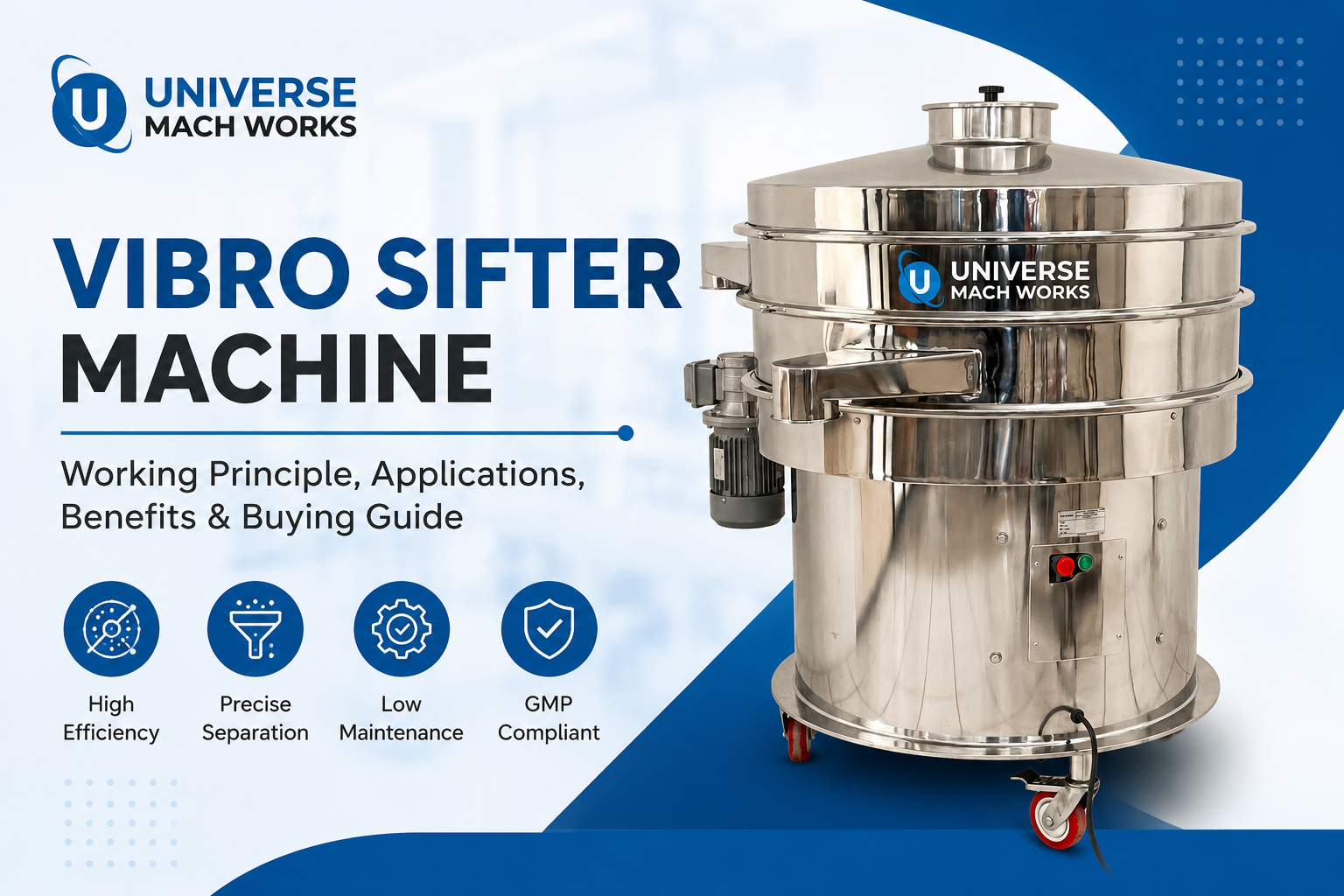
Should I buy a new or refurbished Vibro Sifter?+
The decision depends on your required capacity, budget, machine condition, screen requirements, construction, cleaning needs, and expected production life.
Should critical pharmaceutical equipment be purchased new?+
Many manufacturers may prefer new equipment for critical applications, but the appropriate decision depends on the company's risk assessment, process requirements, quality system, and applicable regulations.
What should I inspect in refurbished equipment?+
Inspect the product-contact surfaces, welds, seals, bearings, shafts, motors, gearboxes, electrical system, controls, safety systems, and overall machine condition.
Does refurbished mean used?+
Refurbished equipment has previously been manufactured or operated and has undergone some level of restoration or servicing. The exact refurbishment scope should always be verified with the supplier.
Can an old machine be upgraded?+
Depending on the machine, mechanical and electrical upgrades may be possible. Examples include replacing controls, drives, sensors, motors, seals, or other components.
Conclusion
The decision between new and refurbished pharmaceutical machinery should not be based solely on the initial quotation.
New machinery offers advantages in customization, modern controls, documentation, and configuration around a specific manufacturing process. Refurbished machinery can provide a cost-conscious alternative when the equipment has a suitable design, reliable history, appropriate condition, and clearly documented refurbishment scope.
For pharmaceutical manufacturers, the most important question is: Is the equipment suitable for its intended use and capable of consistently supporting the required quality, cleaning, maintenance, and process requirements?
FDA guidance emphasizes that pharmaceutical manufacturers are responsible for selecting equipment suitable for its intended use and capable of supporting applicable CGMP requirements. Therefore, whether you choose new or refurbished equipment, evaluate the machine, process, documentation, lifecycle cost, maintenance requirements, and supplier support as a complete package.
For manufacturers in India looking for pharmaceutical processing equipment, Universe Mach Works can help evaluate machinery requirements based on application, capacity, construction, customization, and project needs.