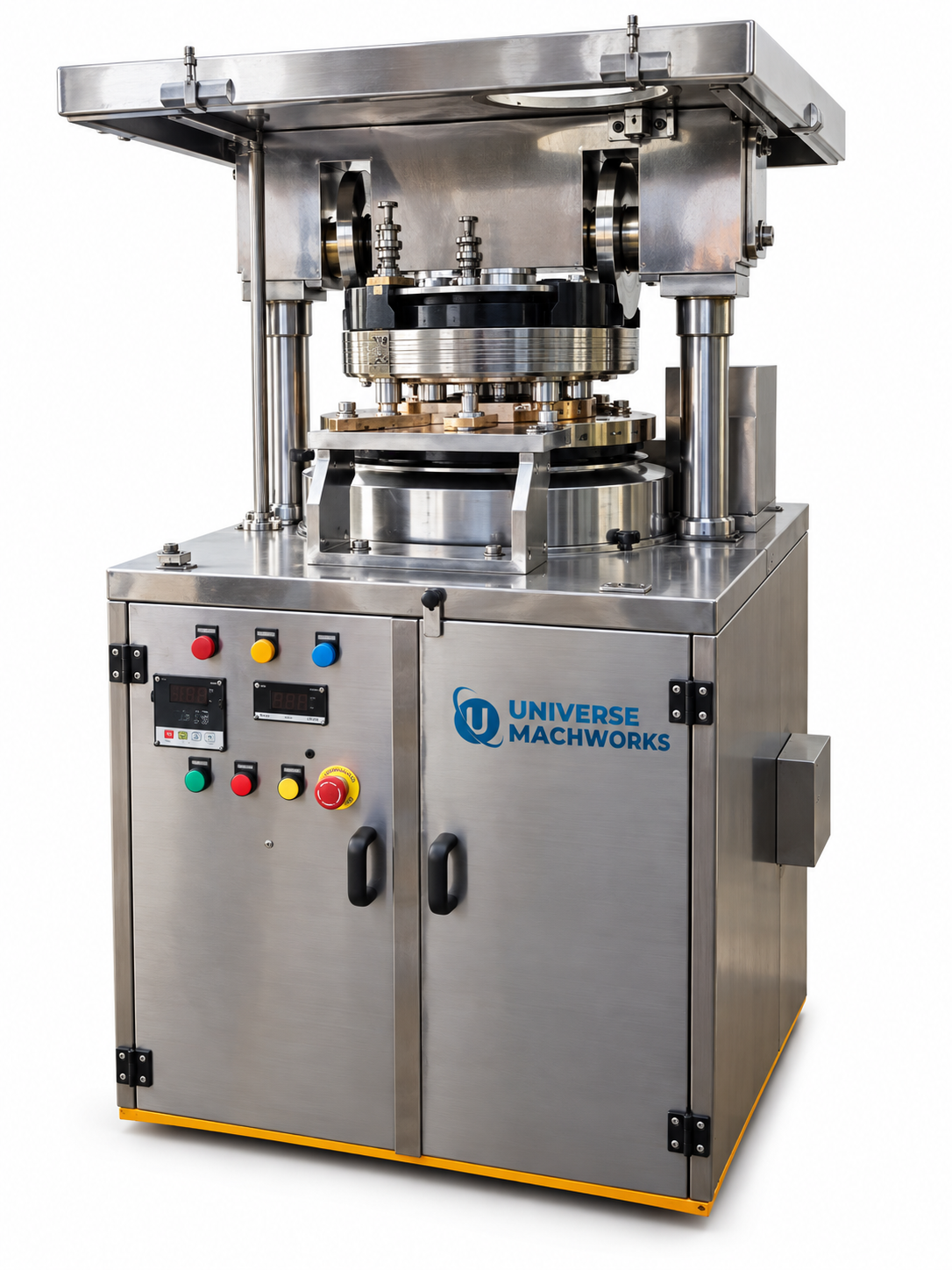
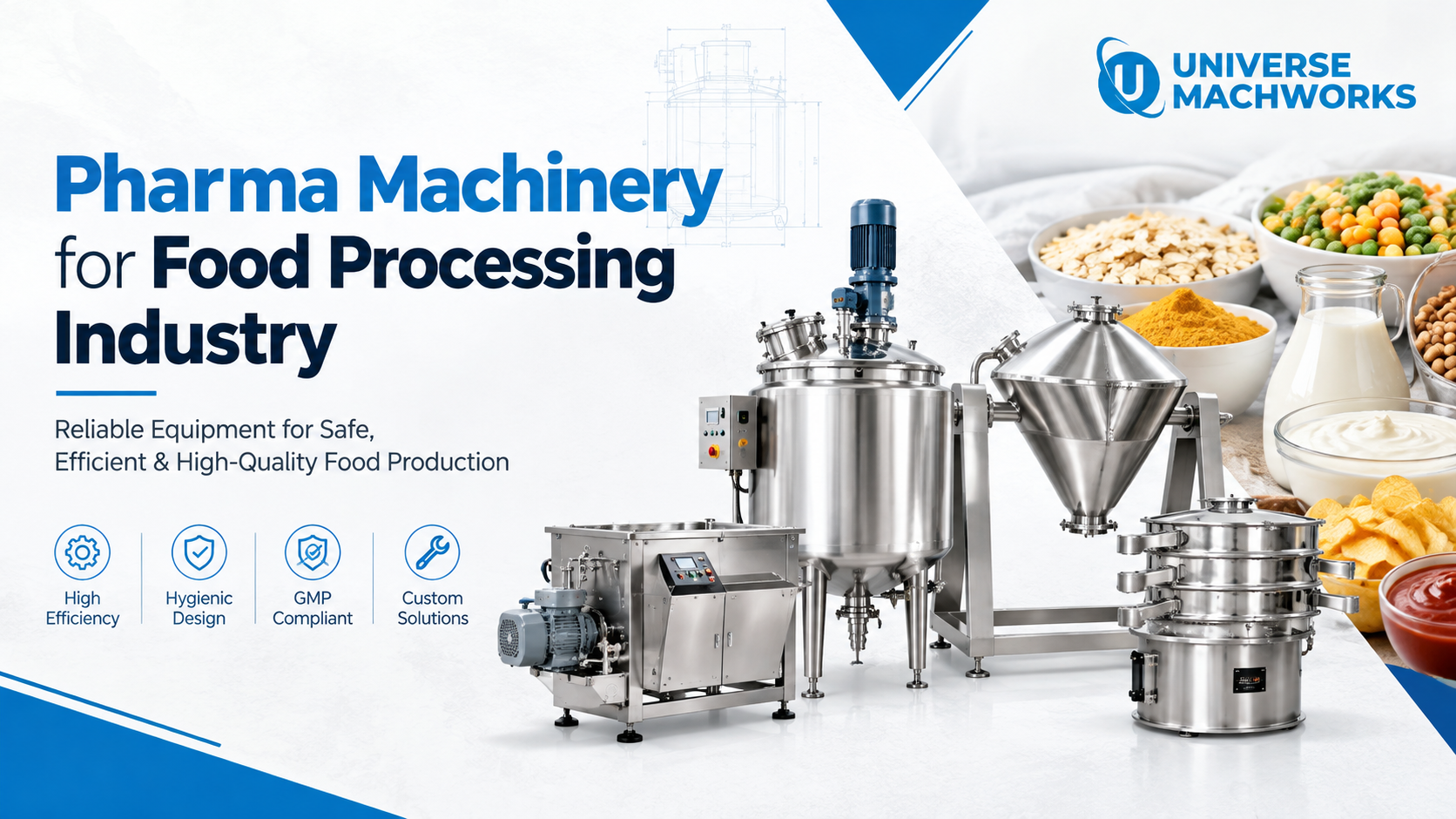
The food processing industry requires machinery that can handle mixing, blending, milling, sifting, drying, heating, filling, and other processing operations efficiently and hygienically. Many equipment technologies traditionally associated with pharmaceutical manufacturing can also be suitable for food processing applications when they are properly designed, configured, and manufactured for the intended food product and process.
This is why experienced pharma machinery manufacturers can also provide valuable equipment solutions for food processing companies.
From Mass Mixers and Ribbon Blenders to Vibro Sifters, Multi Mills, Mixing Tanks, Paste Kettles, and filling equipment, process machinery can help food manufacturers achieve better consistency, controlled processing, and efficient production.
However, choosing machinery for food processing is not simply about selecting the largest or fastest machine. The equipment must be appropriate for the product, batch size, processing conditions, cleaning requirements, material of construction, and production environment.
This complete guide explains the major types of machinery used in food processing, their applications, important selection factors, and what to consider when purchasing equipment from a pharmaceutical machinery manufacturer or process equipment manufacturer.
What Is Pharma Machinery for the Food Processing Industry?
Pharma machinery for the food processing industry refers to processing equipment and machinery technologies that can be adapted or configured for suitable food manufacturing applications.
The same basic processing principles are used across many industries.
For example:
- Powders need to be blended.
- Ingredients may need to be sifted.
- Lumps may need to be broken down.
- Materials may require size reduction.
- Liquid products may need mixing or homogenization.
- Products may require controlled heating.
- Moisture may need to be removed.
- Finished products may require filling and packaging.
Pharmaceutical machinery manufacturers often have experience designing equipment around these process requirements.
However, food-processing equipment should be specified according to food-product requirements, hygiene expectations, applicable regulations, cleaning procedures, and the actual process rather than simply assuming that pharmaceutical equipment is automatically suitable for every food application.
Why Food Processing Companies Need Specialized Equipment
Food manufacturing involves a wide variety of raw materials and products.
These may include:
- Flour
- Spices
- Starch
- Sugar
- Milk powders
- Nutritional powders
- Herbal ingredients
- Food additives
- Sauces
- Pastes
- Creams
- Syrups
- Liquid foods
- Seasoning blends
- Bakery ingredients
- Nutraceutical formulations
Each product behaves differently during processing.
Some powders may flow easily, while others may be cohesive or prone to forming lumps. Some liquid products may have low viscosity, while others require high-shear mixing or homogenization.
Therefore, the machinery should be selected according to the material characteristics and process requirements.
Major Pharma Machinery Used in Food Processing
A wide range of process machinery can be relevant to food manufacturing.
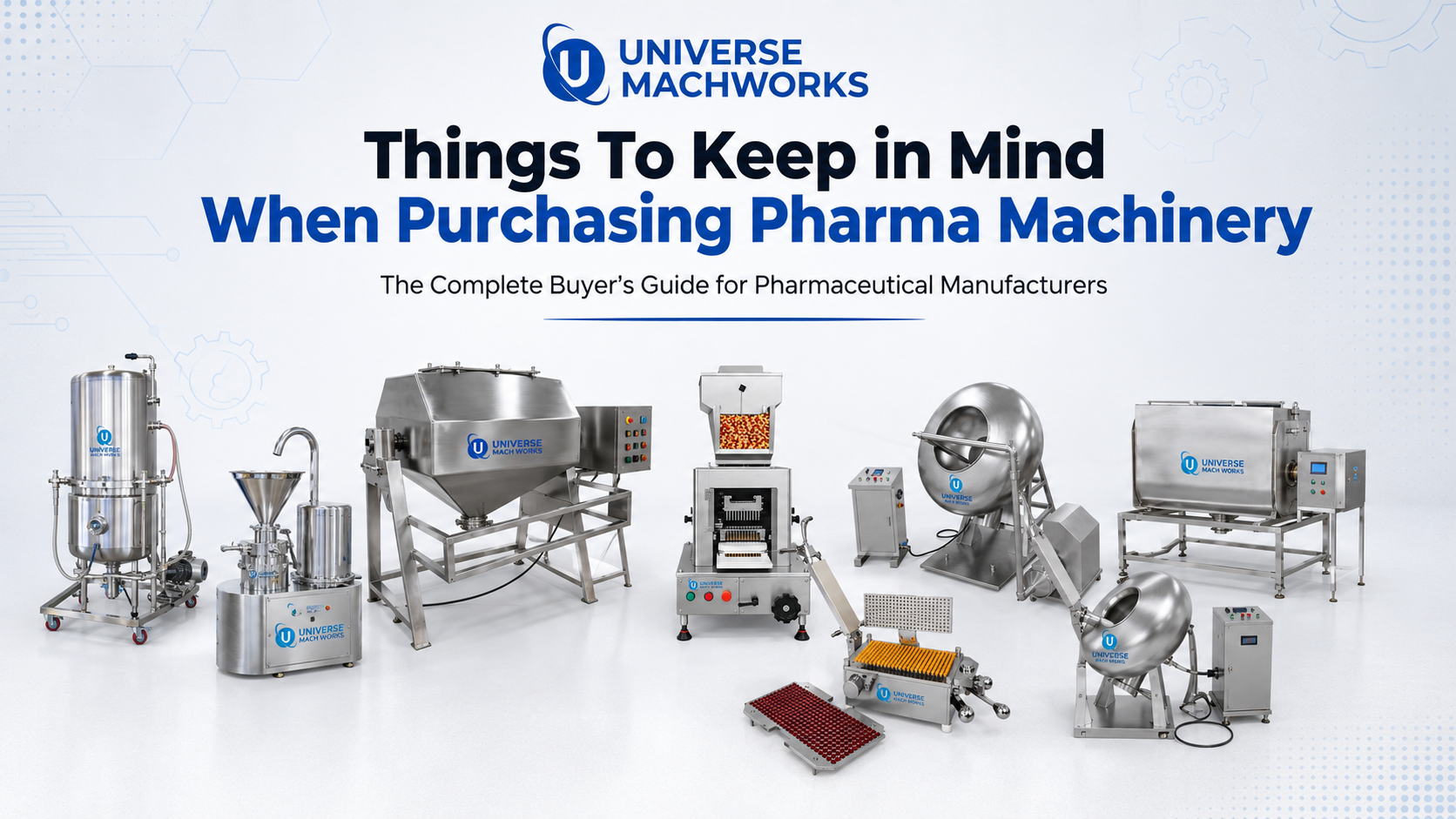
Some important equipment categories include:
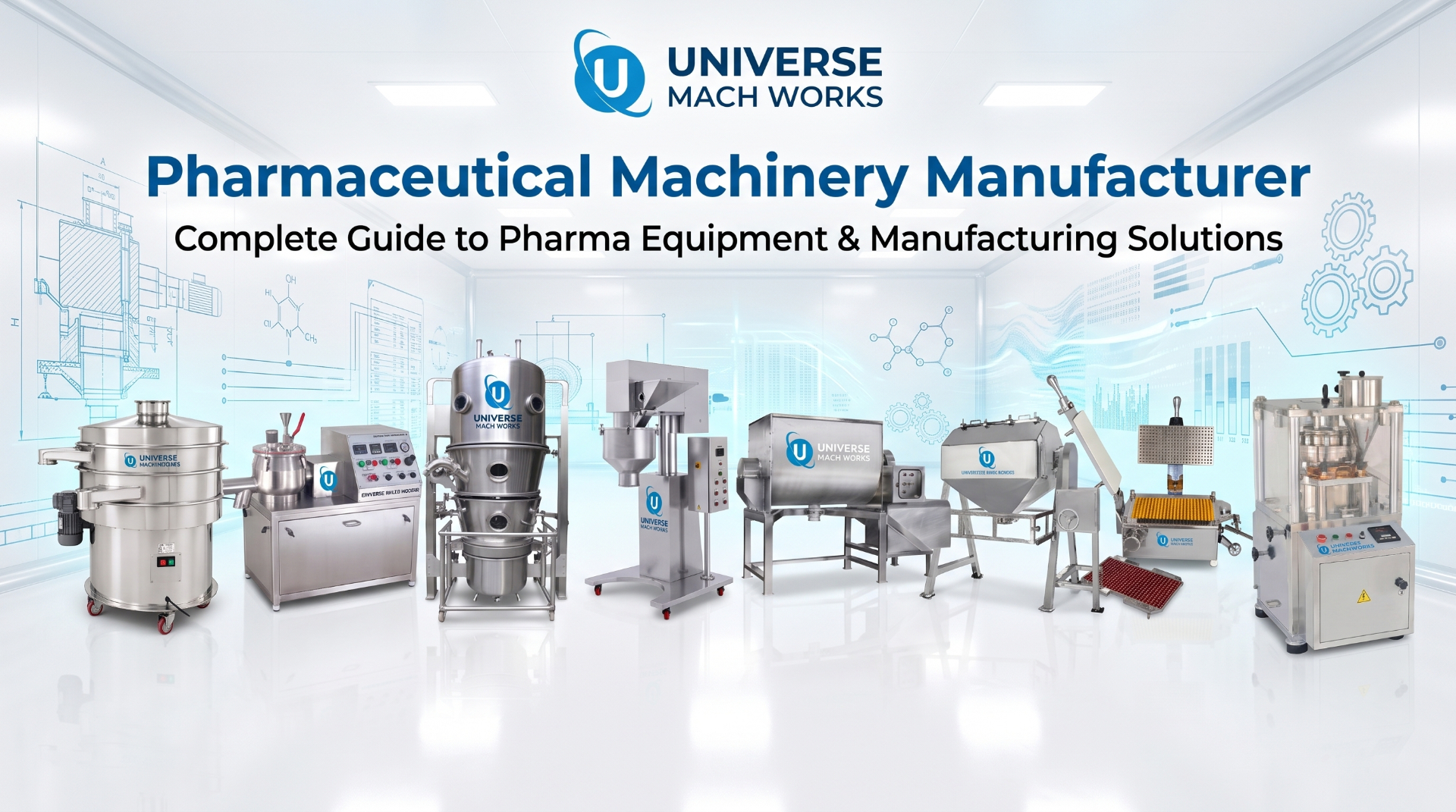
- Mass Mixer
- Ribbon Blender
- Octagonal Blender
- Double Cone Blender
- Vibro Sifter
- Multi Mill
- Fluid Bed Dryer
- Tray Dryer
- Mixing Tank
- Heating Tank with Stirrer
- Paste Kettle
- Homogenizer
- Colloid Mill
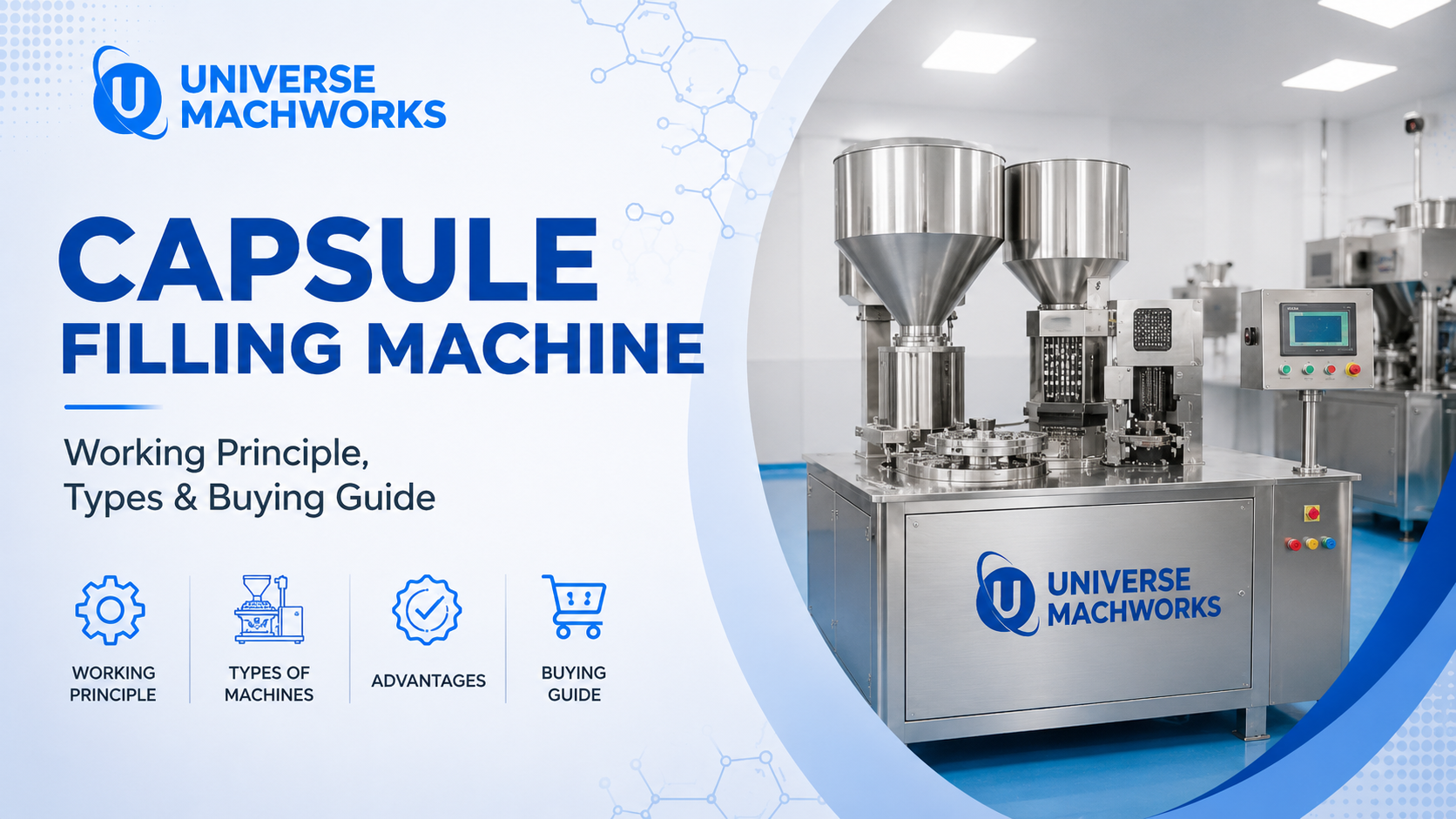
- Liquid Filling Machine
- Pneumatic Paste Filler
- Filter Press
- Customized Process Equipment
The correct machine depends on the food product and manufacturing process.
1. Mass Mixer for Food Processing
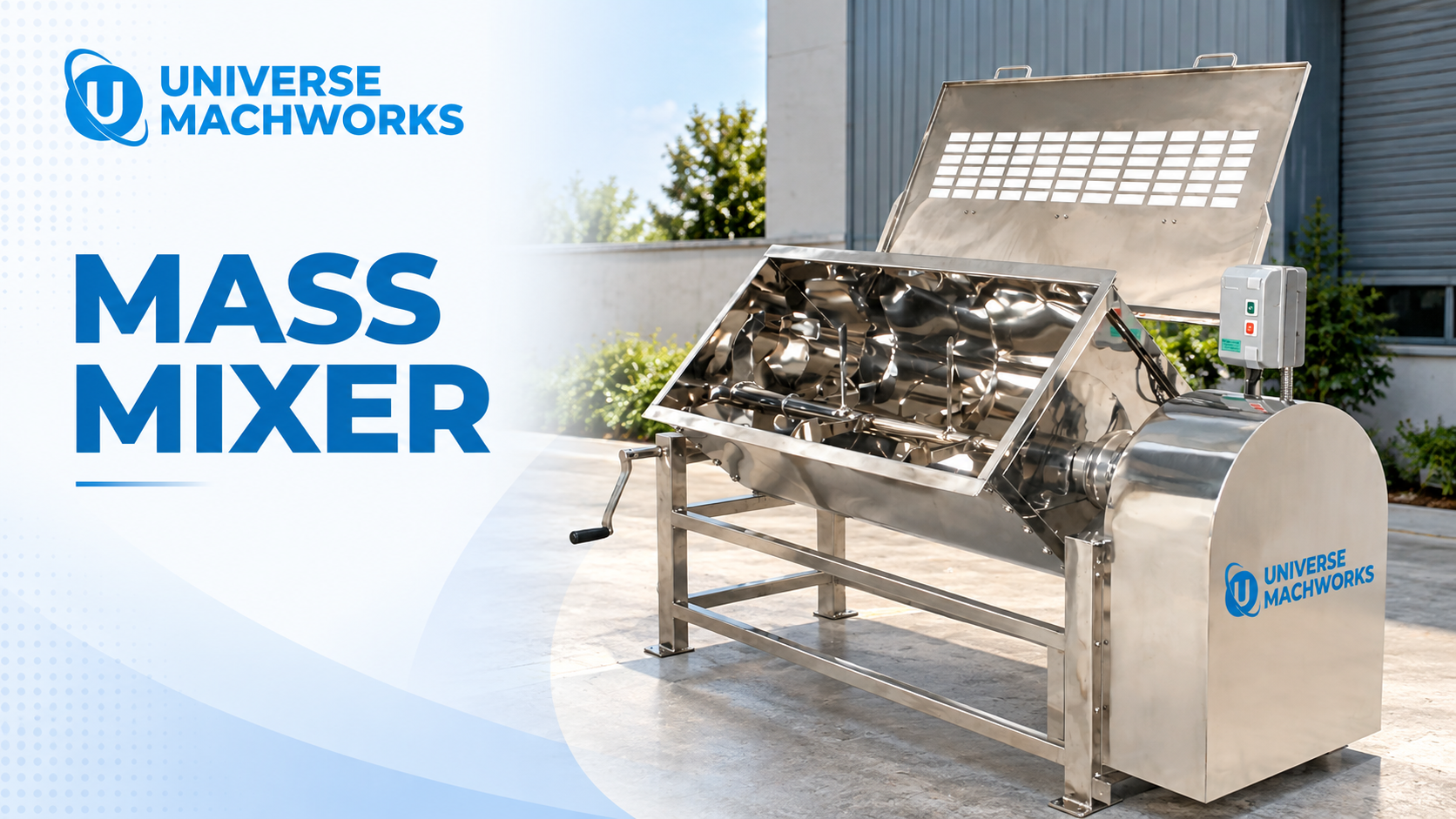
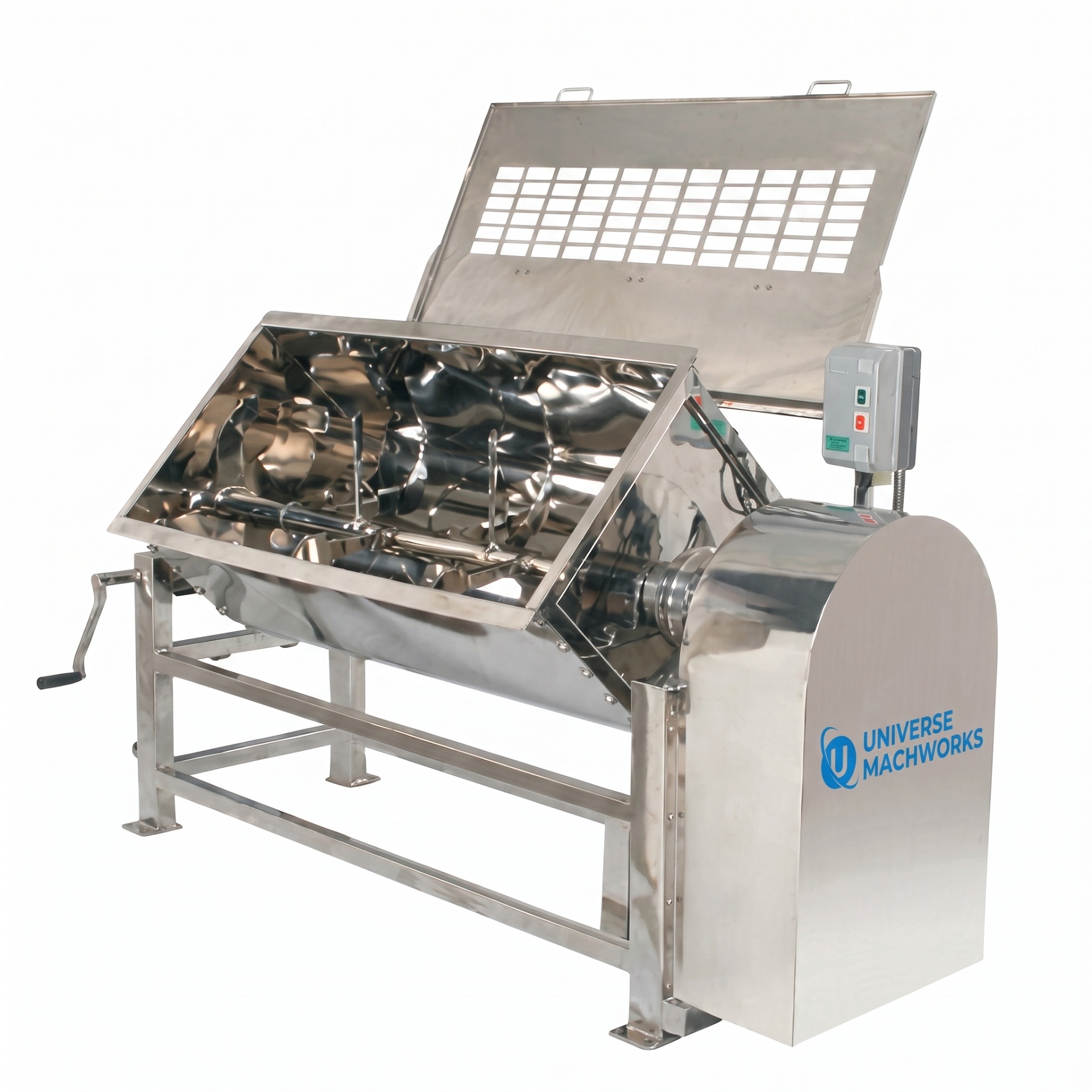
A Mass Mixer is designed for mixing and kneading applications where uniform distribution of ingredients is required.
Depending on its configuration and application, it can be used for suitable food products involving:
- Powder mixing
- Wet mass preparation
- Dough-like materials
- Pastes
- Granulated ingredients
- Herbal formulations
- Nutritional products
Food manufacturers may use mass mixing technology when conventional dry blending alone is not sufficient.
Important Selection Factors
Before purchasing a mass mixer, consider:
- Product type
- Batch size
- Bulk density
- Moisture content
- Mixing time
- Required mixing consistency
- Product viscosity
- Material of construction
- Cleaning requirements
2. Ribbon Blender for Food Processing
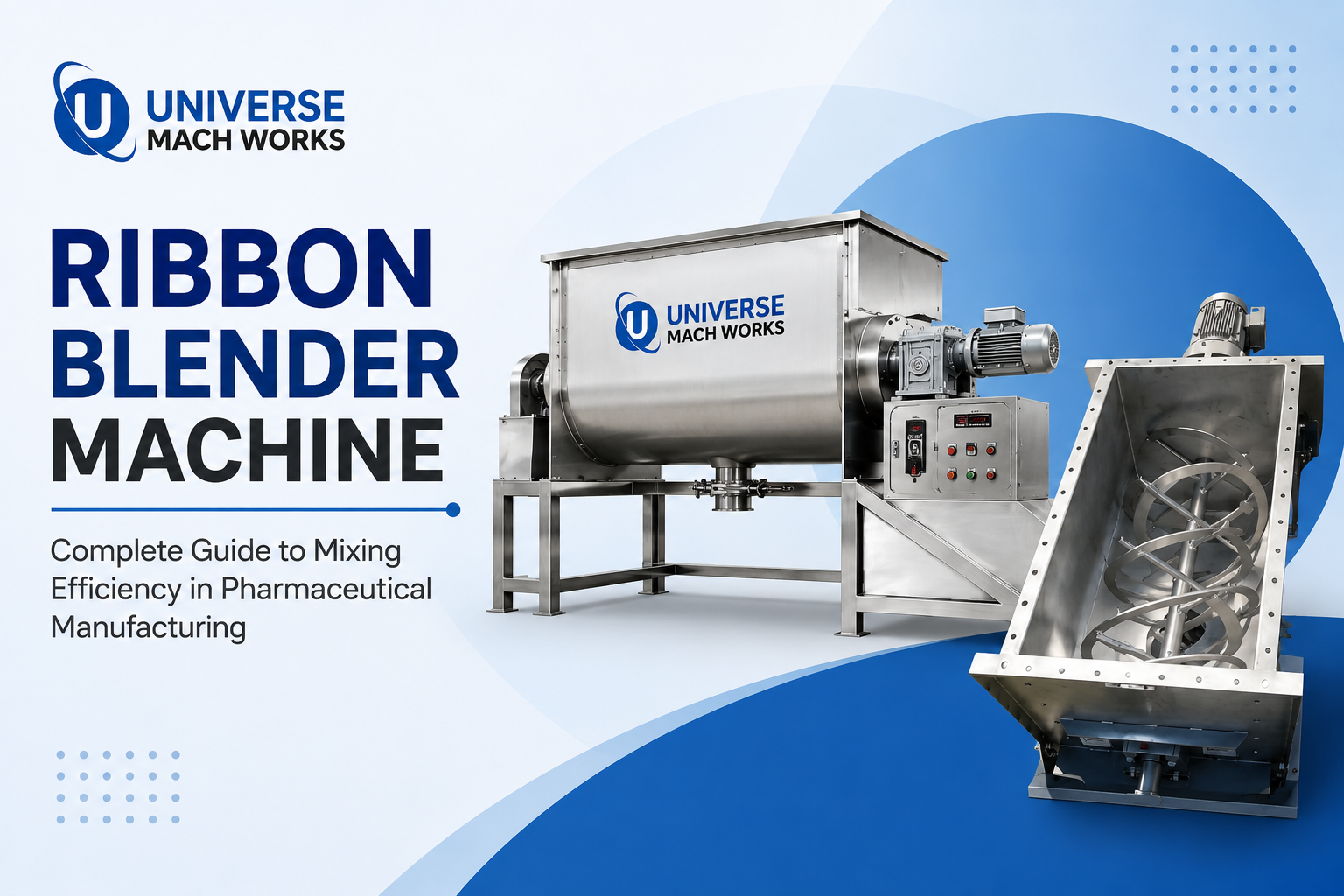
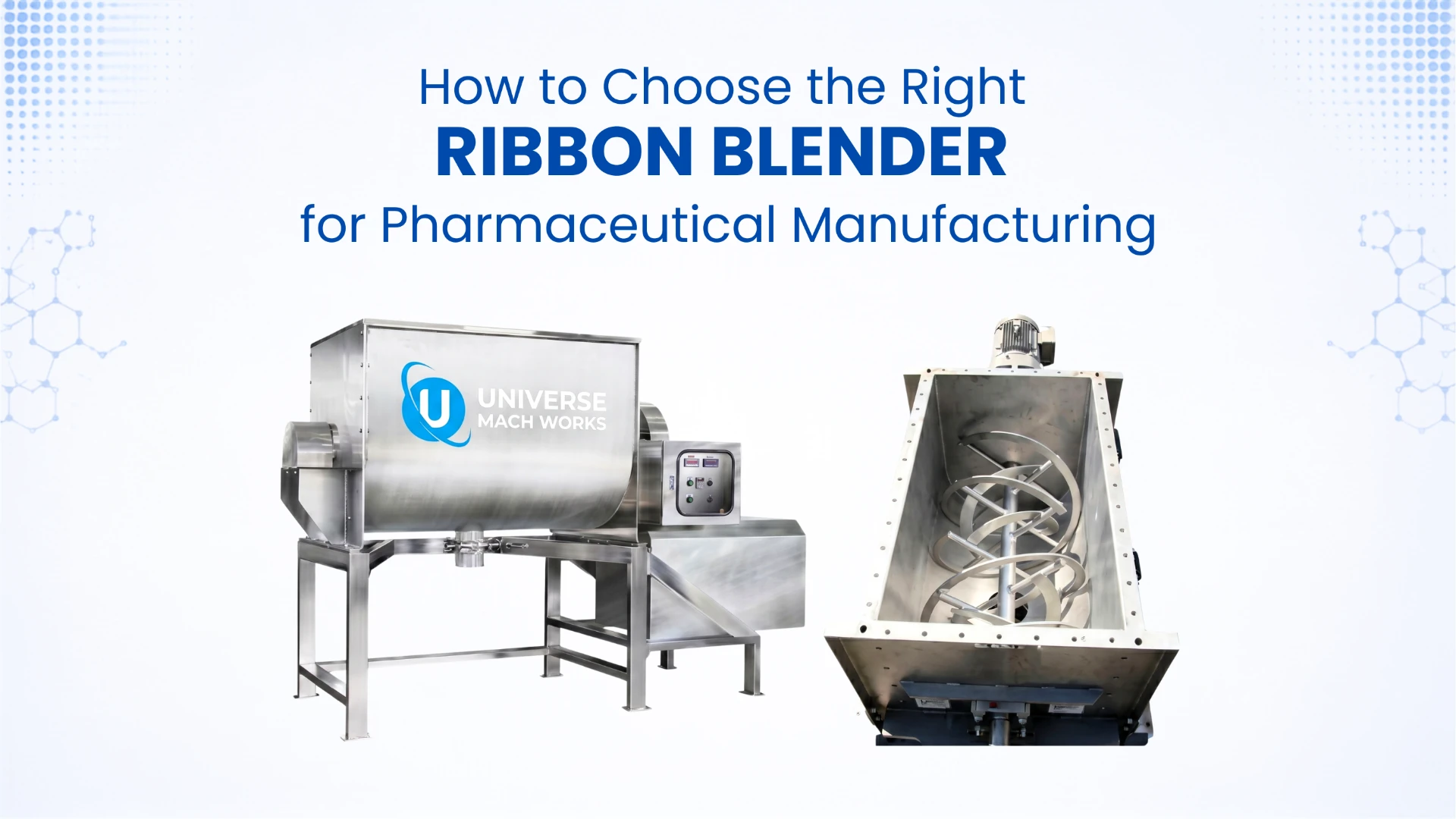
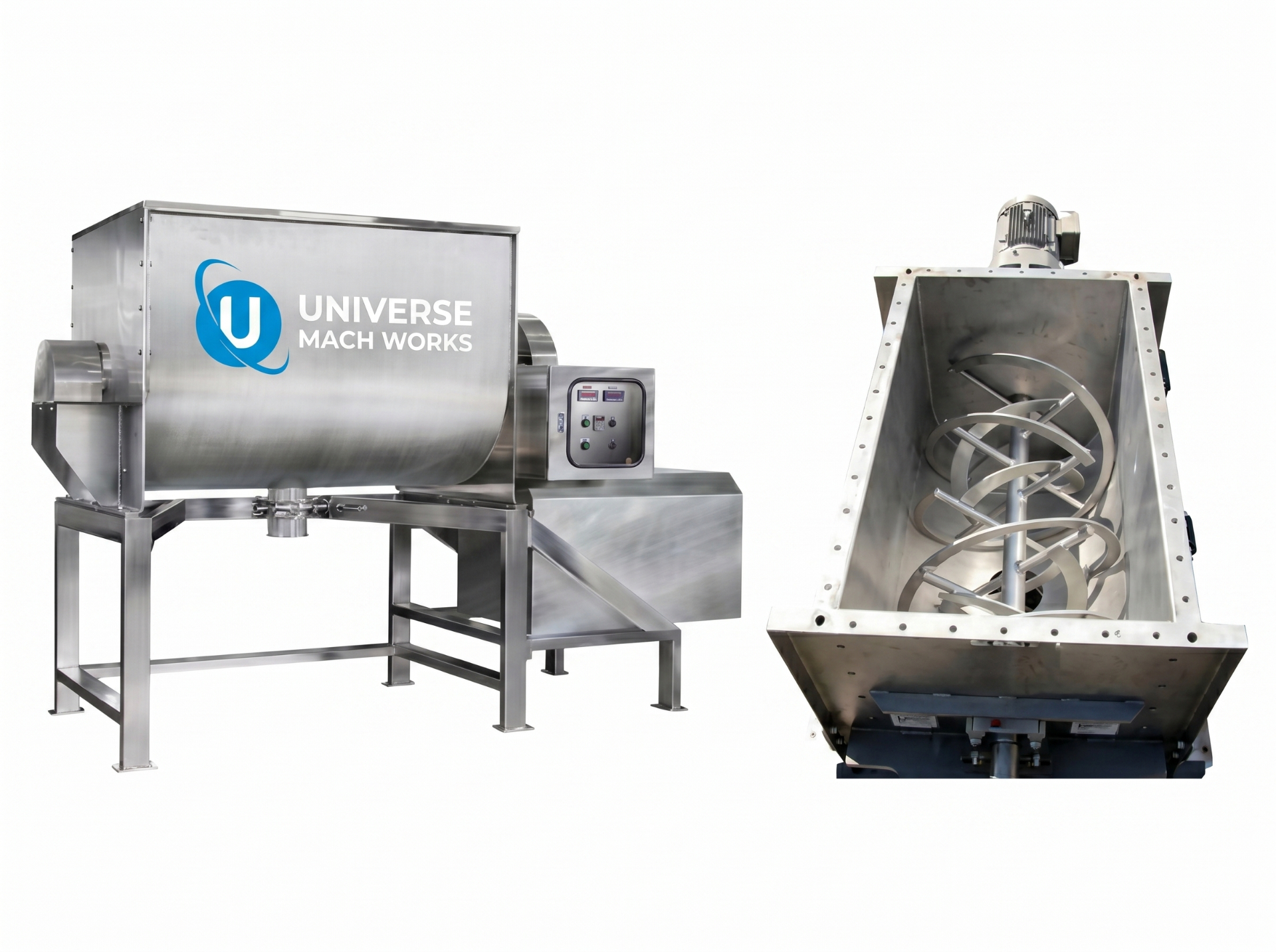
A Ribbon Blender is widely used for blending dry powders and granular materials.
The machine uses a ribbon-type agitator to move the product within the mixing chamber.
Typical food-processing applications can include suitable:
- Spice blends
- Flour blends
- Nutritional powders
- Dry premixes
- Seasoning formulations
- Ingredient mixtures
- Powdered food products
A ribbon blender can be particularly useful where consistent distribution of multiple dry ingredients is required.
What to Check Before Buying
Consider:
- Working capacity
- Total volume
- Filling percentage
- Mixing time
- Agitator design
- Discharge arrangement
- Product-contact material
- Cleaning access
- Motor and drive configuration
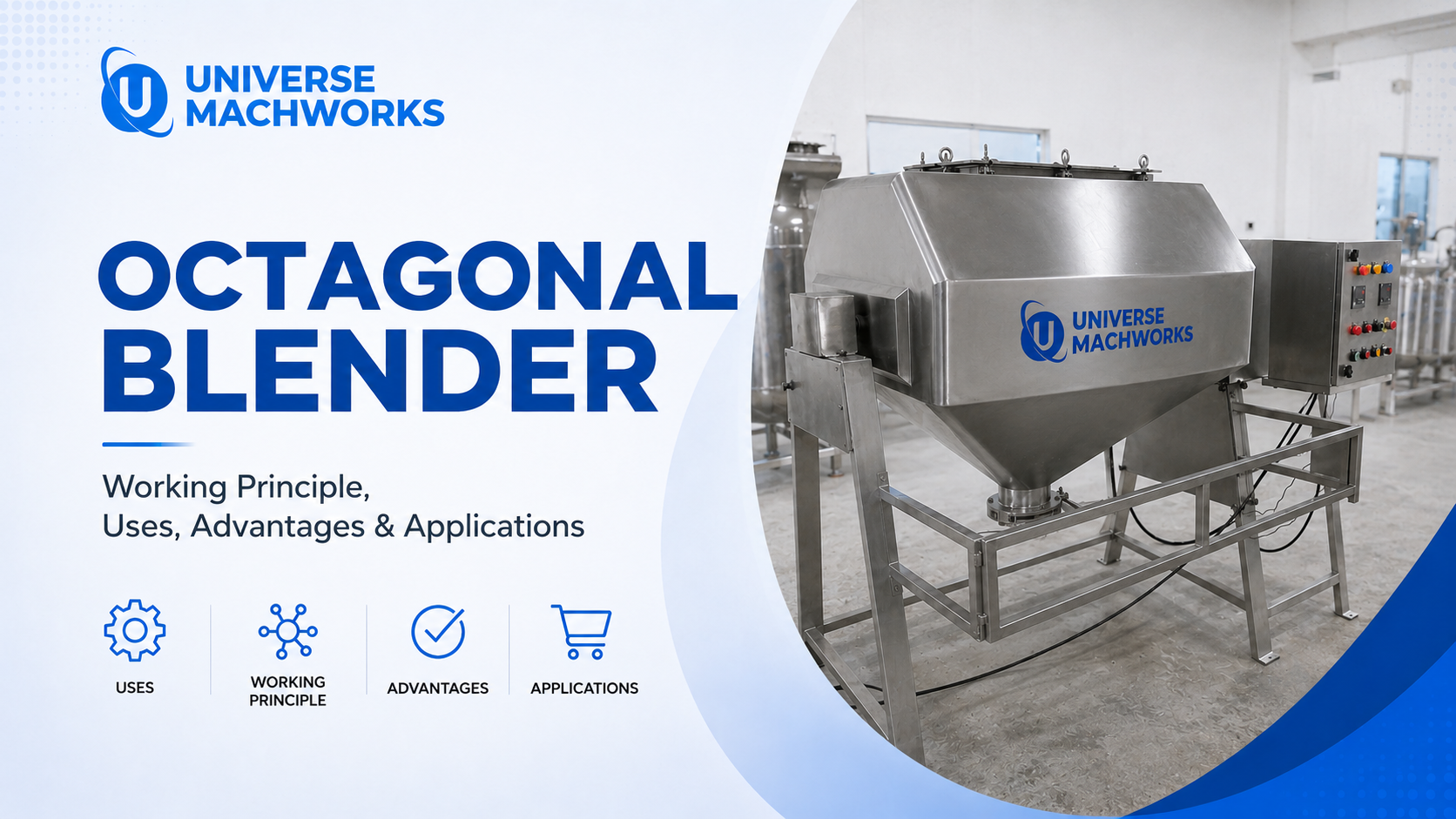
3. Octagonal Blender
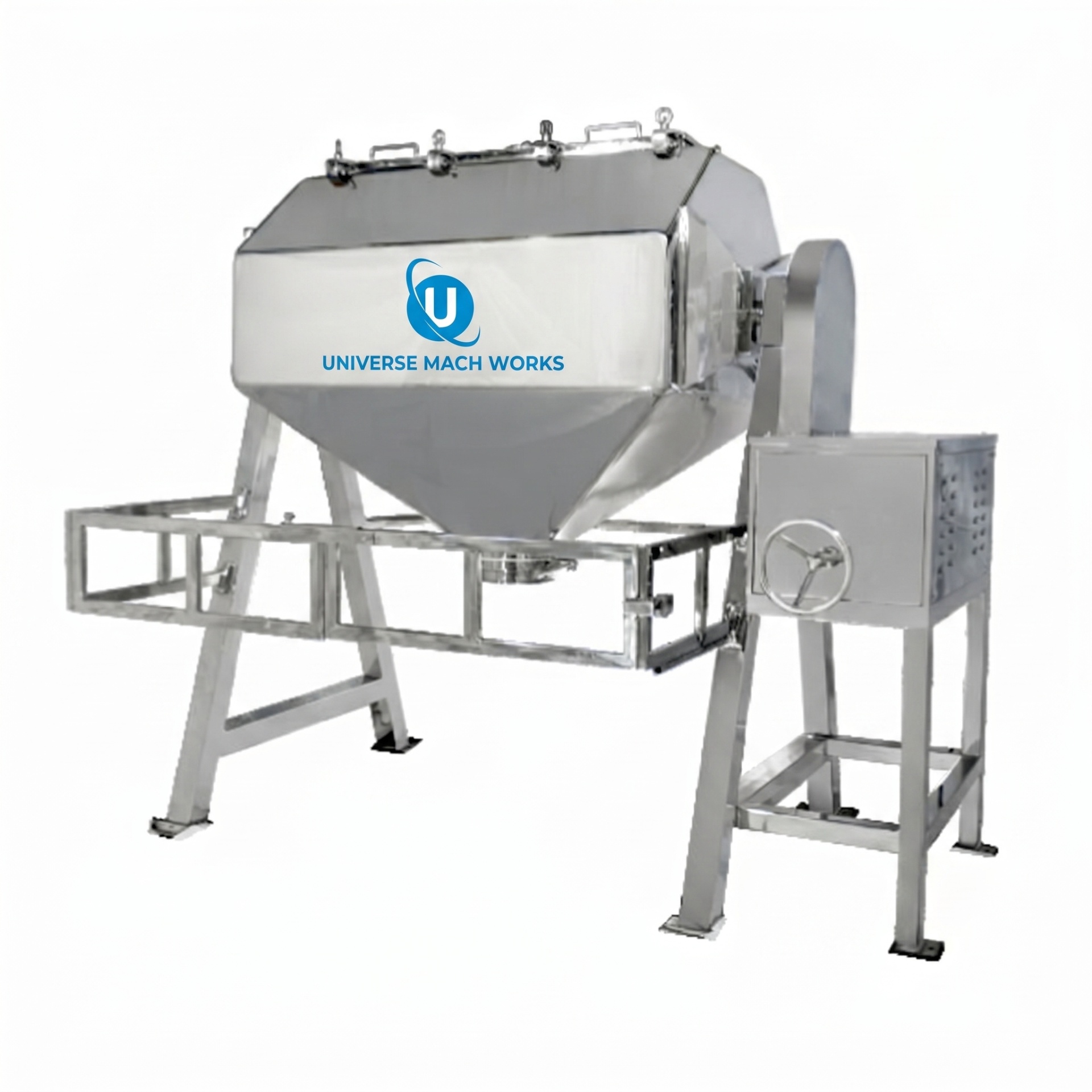
An Octagonal Blender is another type of powder and granule mixing equipment that can be used for suitable food-processing applications.
Its tumbling action helps distribute materials throughout the mixing chamber.
Applications may include:
- Dry food ingredients
- Nutritional powders
- Seasoning blends
- Spice mixtures
- Powdered supplements
- Premixes
The machine can be selected when gentle tumbling and uniform blending are important process requirements.
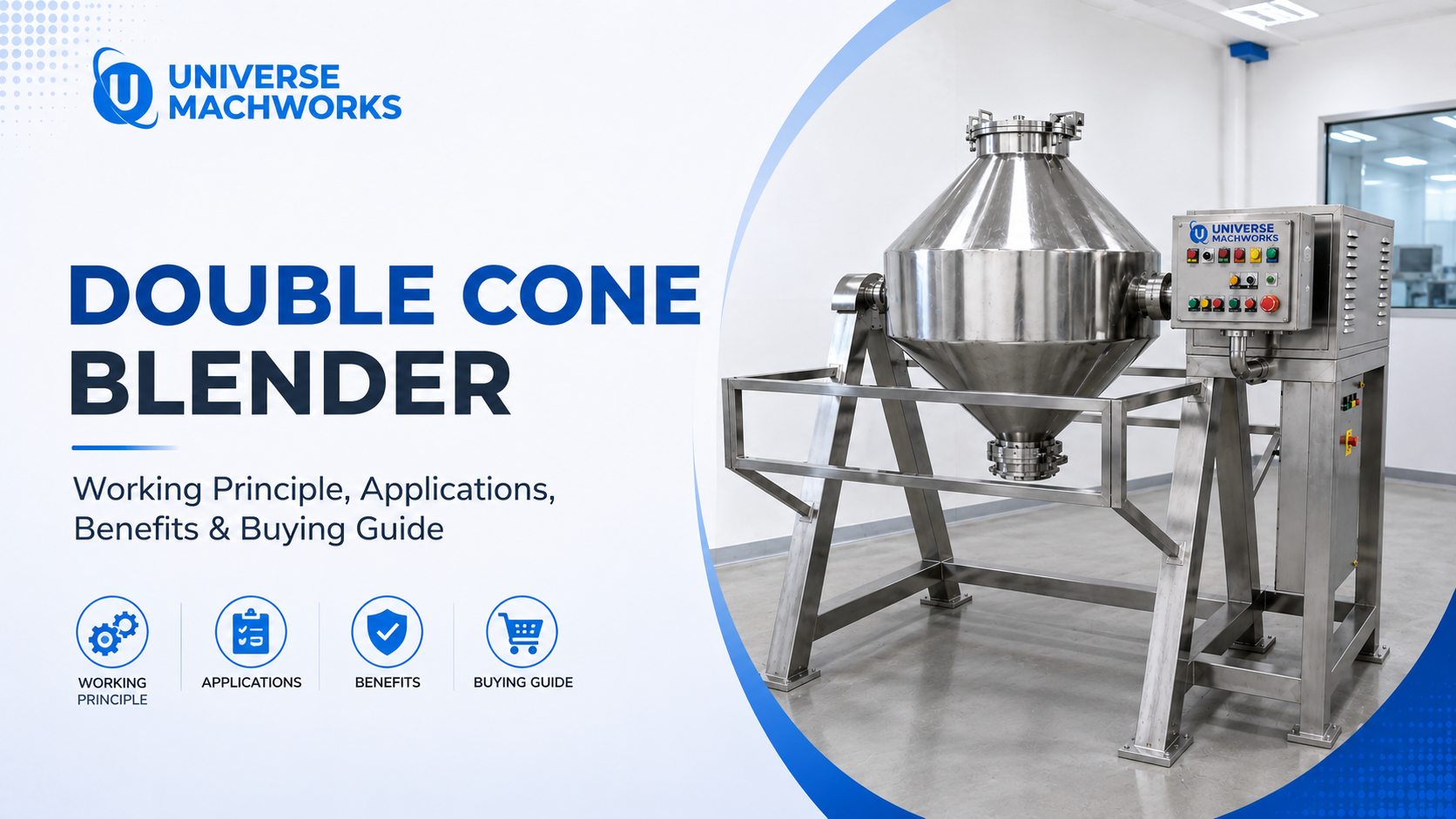
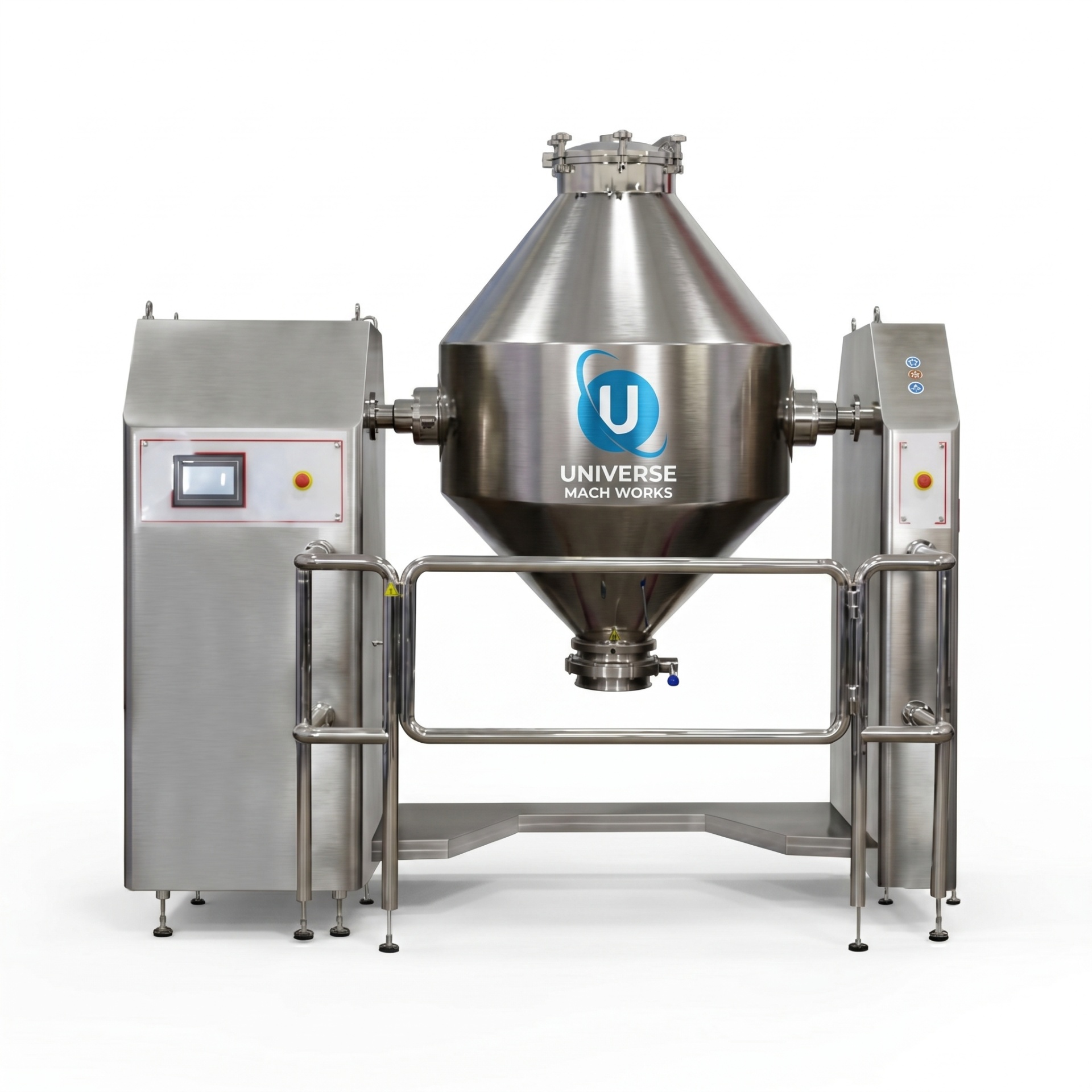
4. Double Cone Blender
A Double Cone Blender uses a rotating double-cone vessel to mix powders and granules.
It can be considered for applications where gentle blending is preferred.
Potential food-processing applications include:
- Dry ingredient blends
- Powdered food formulations
- Nutritional products
- Spice mixtures
- Dry premixes
The actual suitability depends on powder characteristics, required mixing performance, batch size, and formulation.
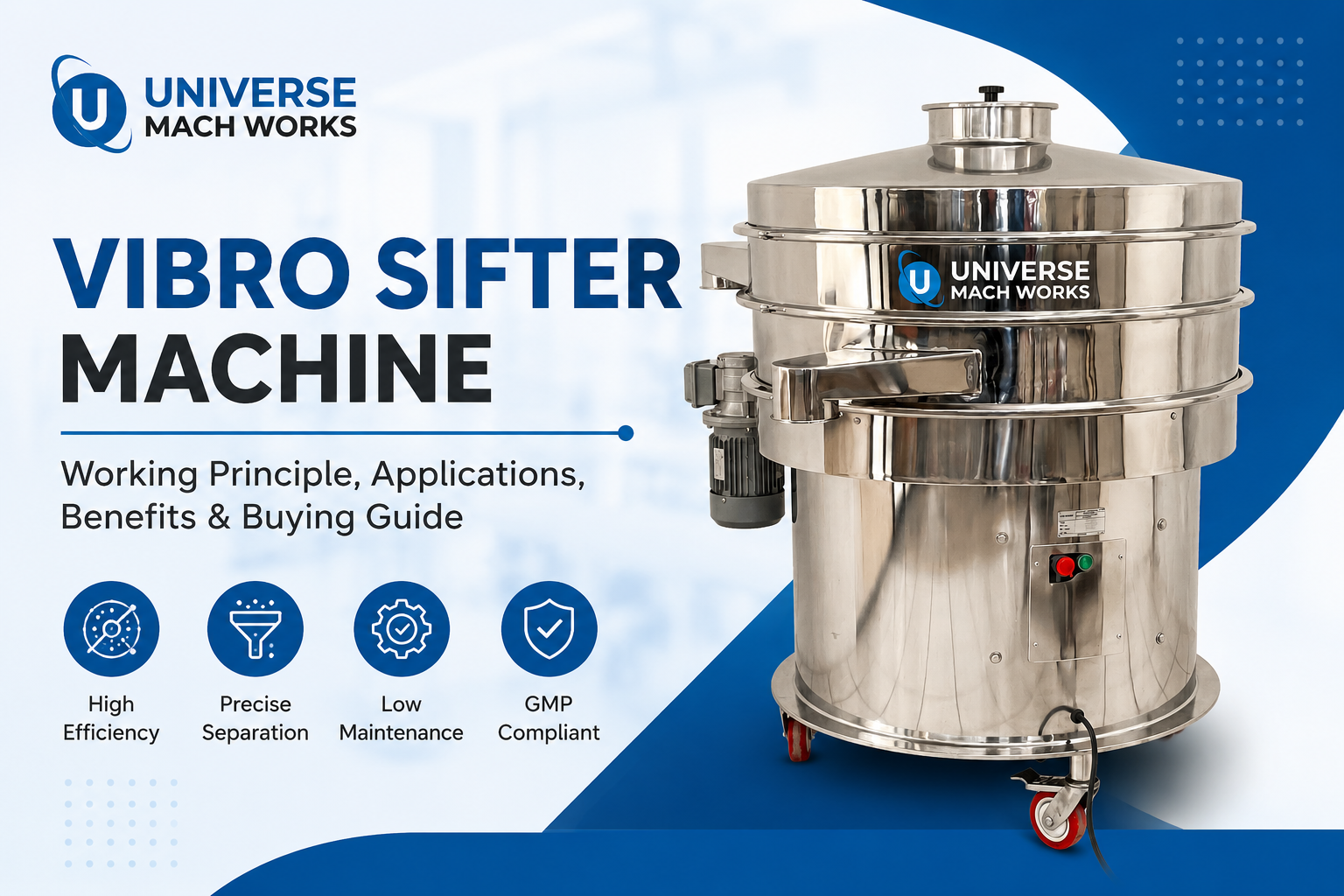
5. Vibro Sifter for Food Processing
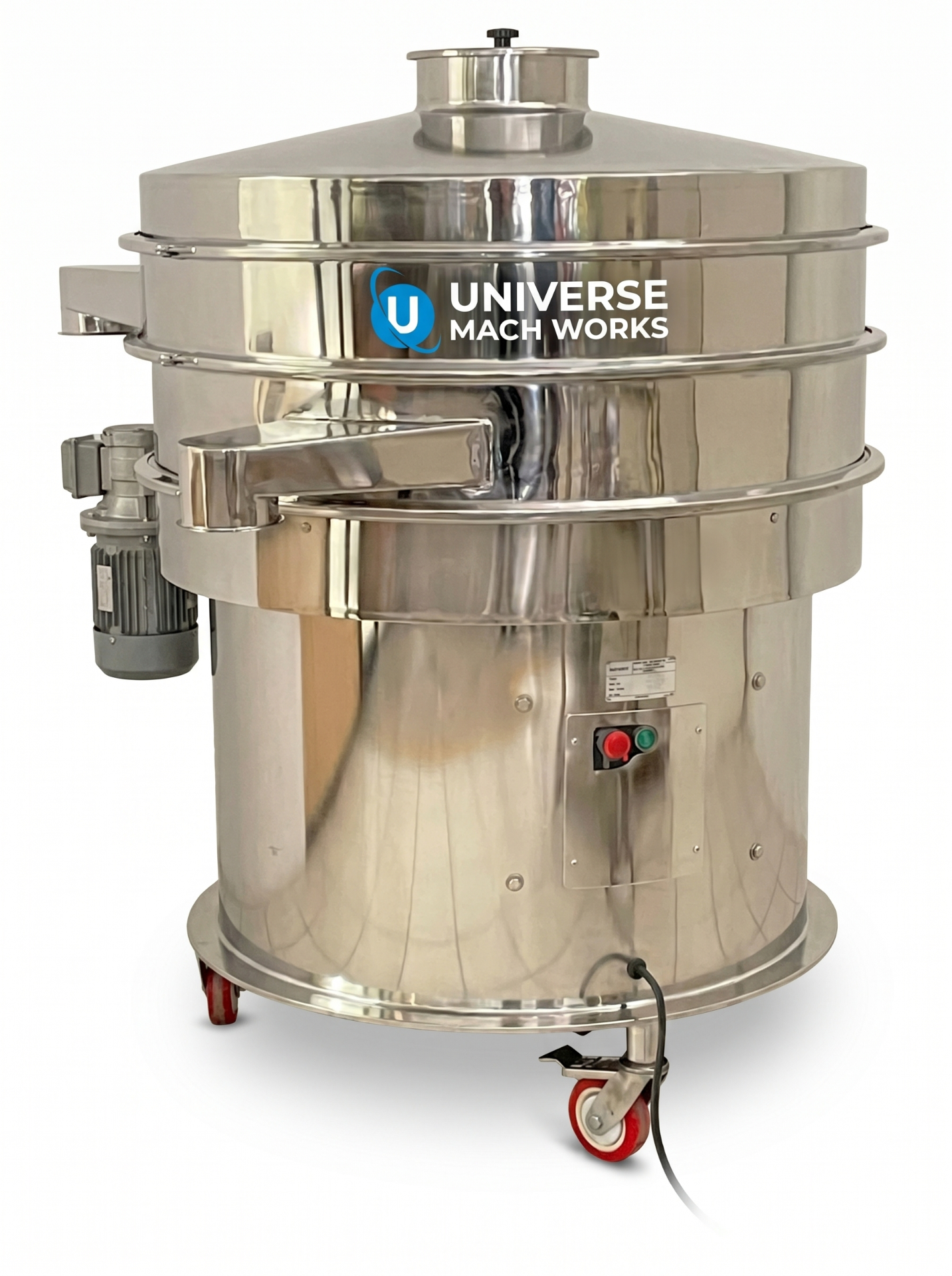
A Vibro Sifter is used for screening, sieving, and separating particles according to size.
It can be an important part of food powder processing.
Potential applications include:
- Flour screening
- Spice screening
- Sugar screening
- Powdered ingredients
- Nutritional powders
- Dry premixes
- Removing unwanted oversized particles
- De-lumping suitable powders
The correct screen size should be selected according to the required particle-size range and product characteristics.
Why Sifting Matters
Sifting can help manufacturers:
- Improve particle-size consistency
- Remove oversized particles
- Break up some agglomerates
- Improve downstream processing
- Support consistent blending
6. Multi Mill for Food Processing
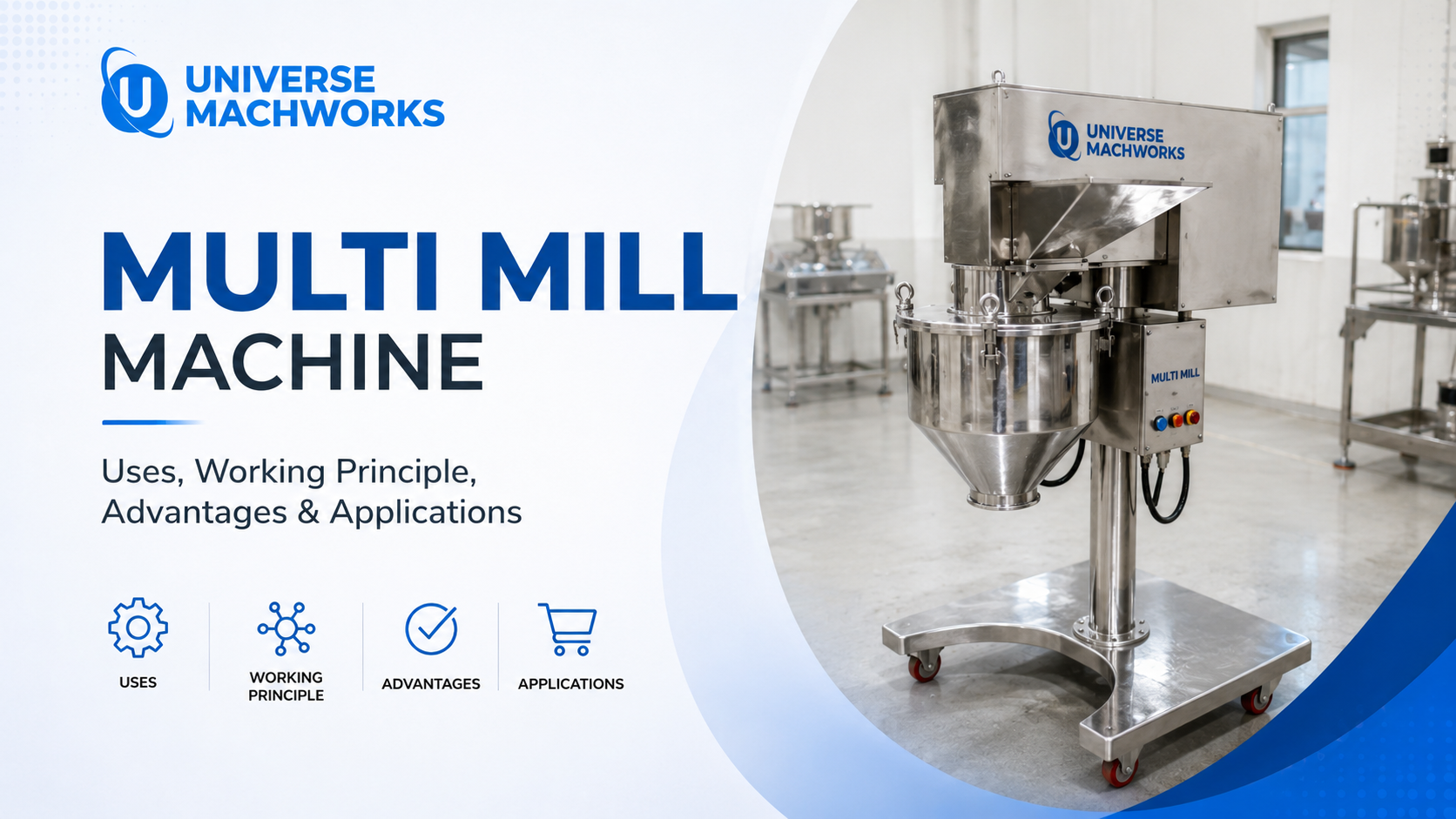
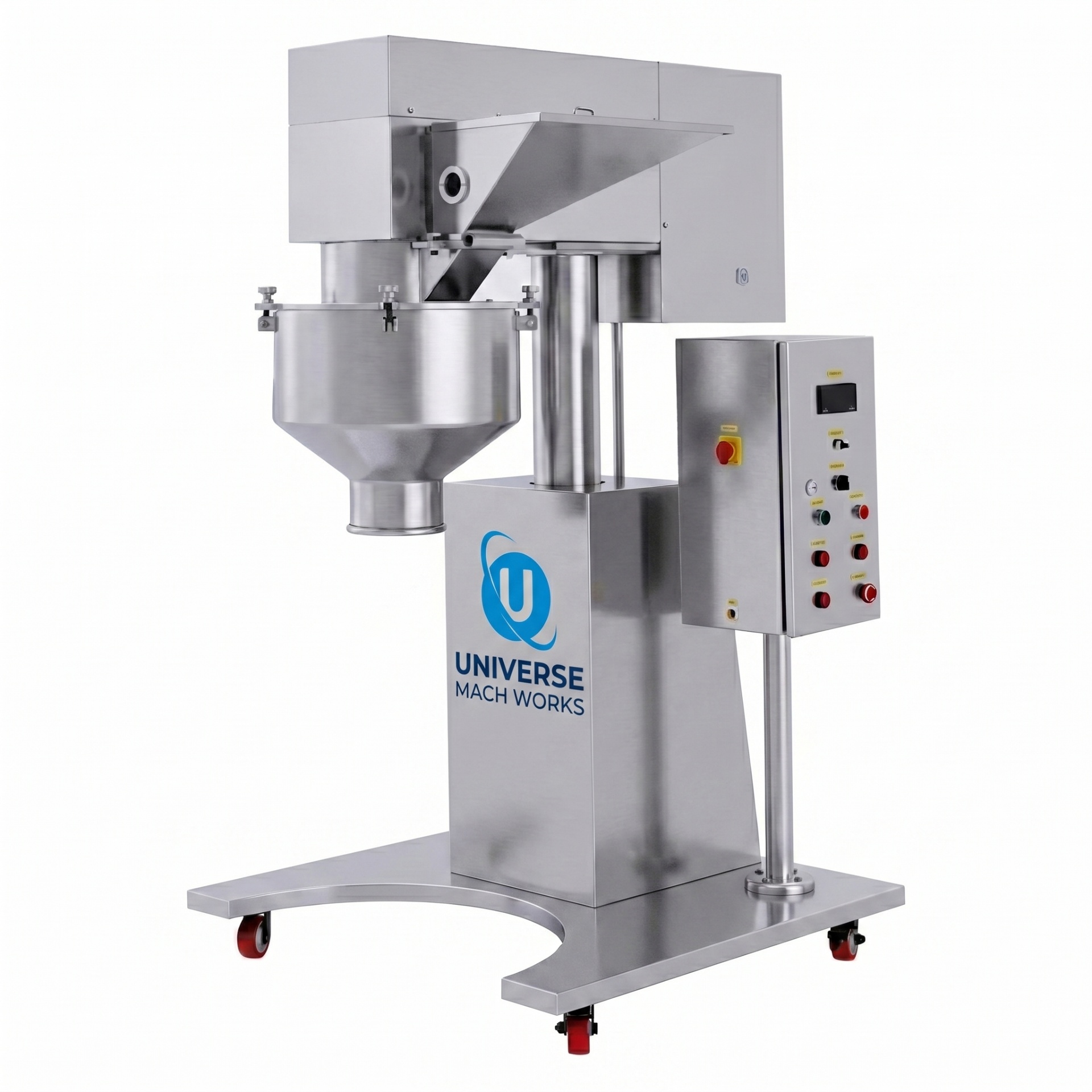
A Multi Mill is used for size reduction, de-lumping, granule sizing, and related particle-processing applications.
Depending on the product and machine configuration, it may be used for suitable food materials where controlled particle size is required.
Potential applications include:
- Food powders
- Granules
- Herbal materials
- Dried ingredients
- Nutritional products
- De-lumping applications
The appropriate screen, impeller, operating speed, and machine configuration depend on the product.
7. Fluid Bed Dryer
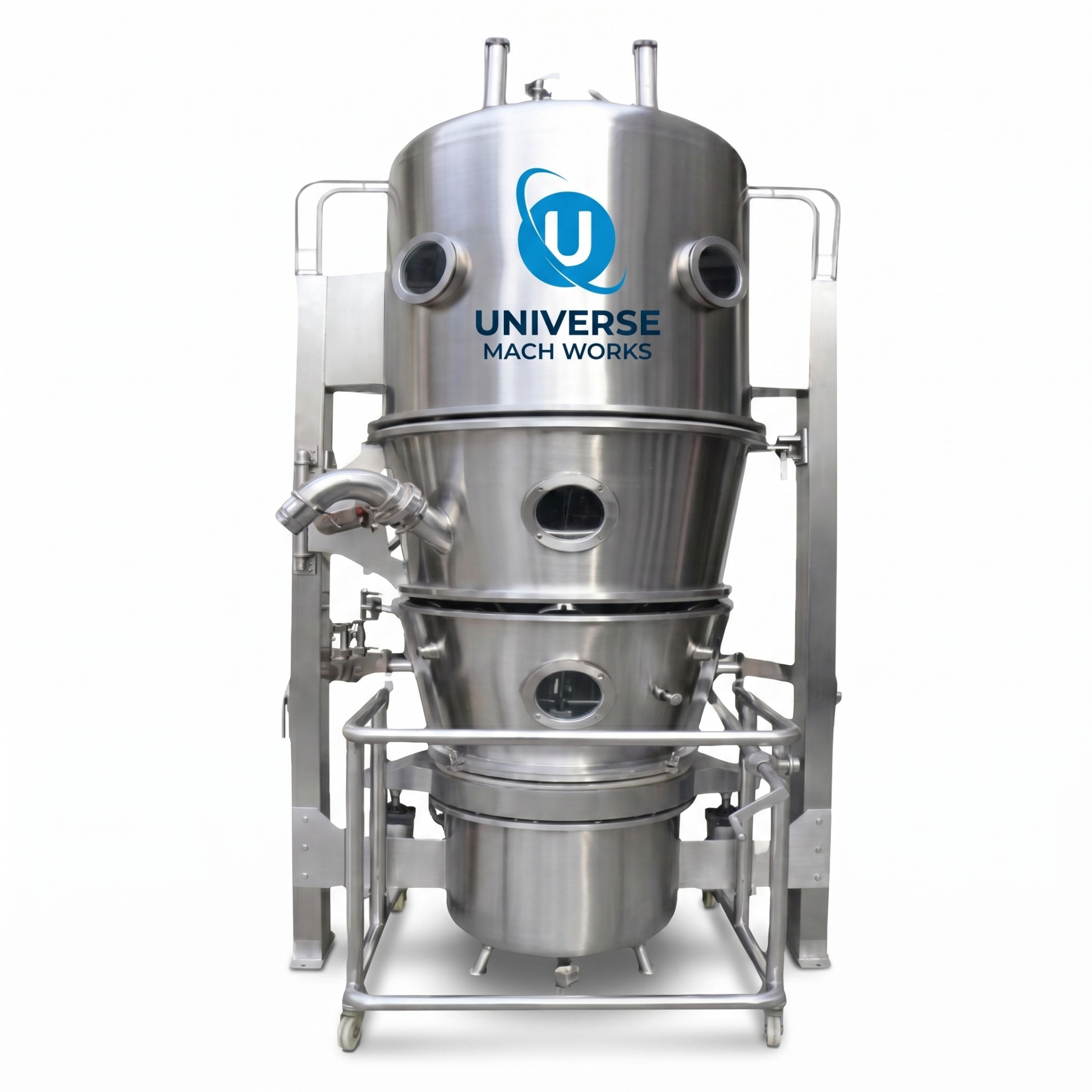
A Fluid Bed Dryer (FBD) uses controlled airflow to dry suitable wet materials.
While commonly associated with pharmaceutical processing, the underlying drying technology can also be relevant to food and nutraceutical applications where appropriate.
Potential applications include:
- Granulated ingredients
- Nutritional products
- Food powders
- Herbal materials
- Heat-sensitive materials, depending on formulation and process conditions
Important factors include:
- Product moisture
- Required final moisture level
- Inlet air temperature
- Outlet air temperature
- Airflow
- Product characteristics
- Drying time
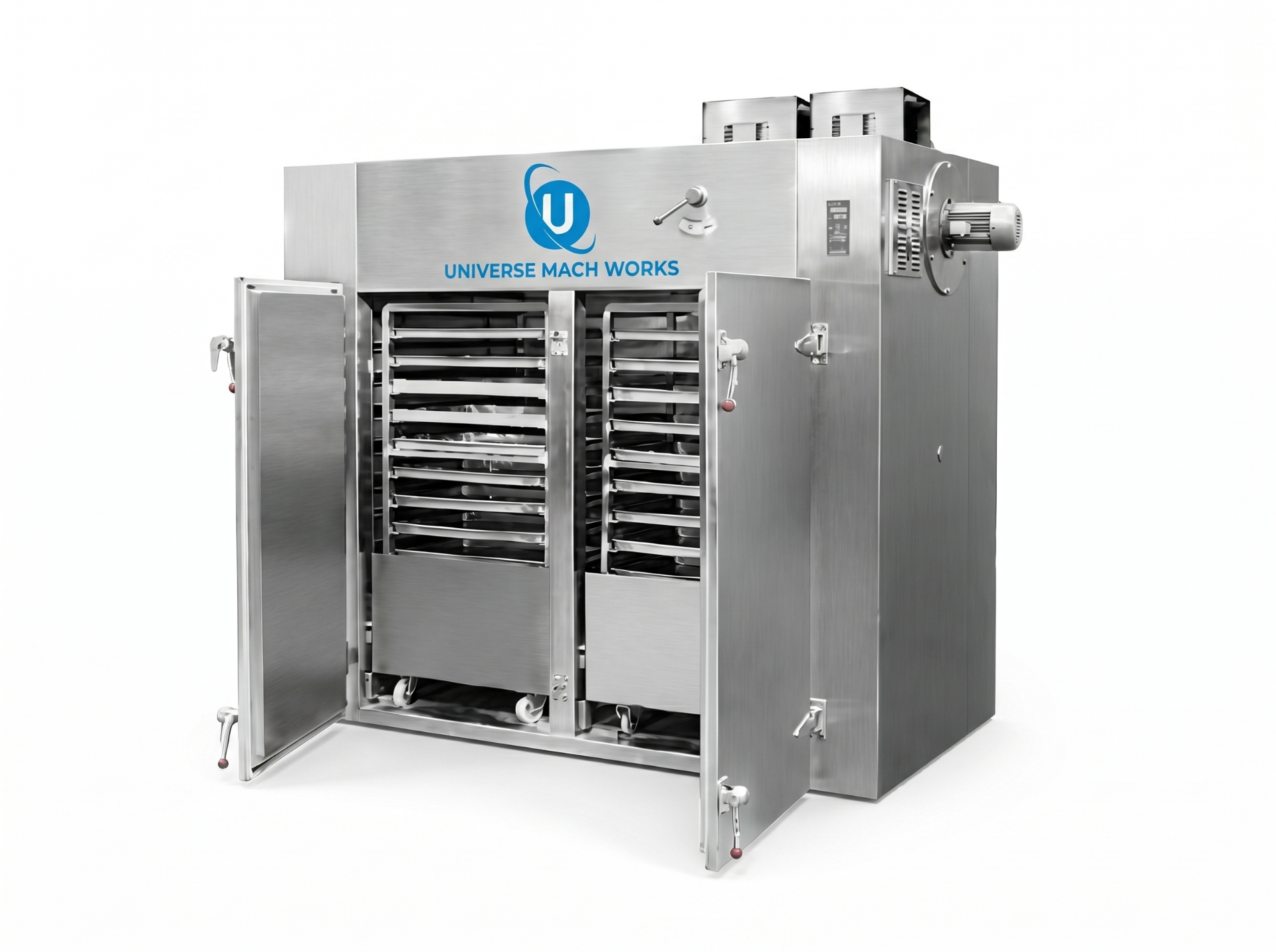
8. Tray Dryer
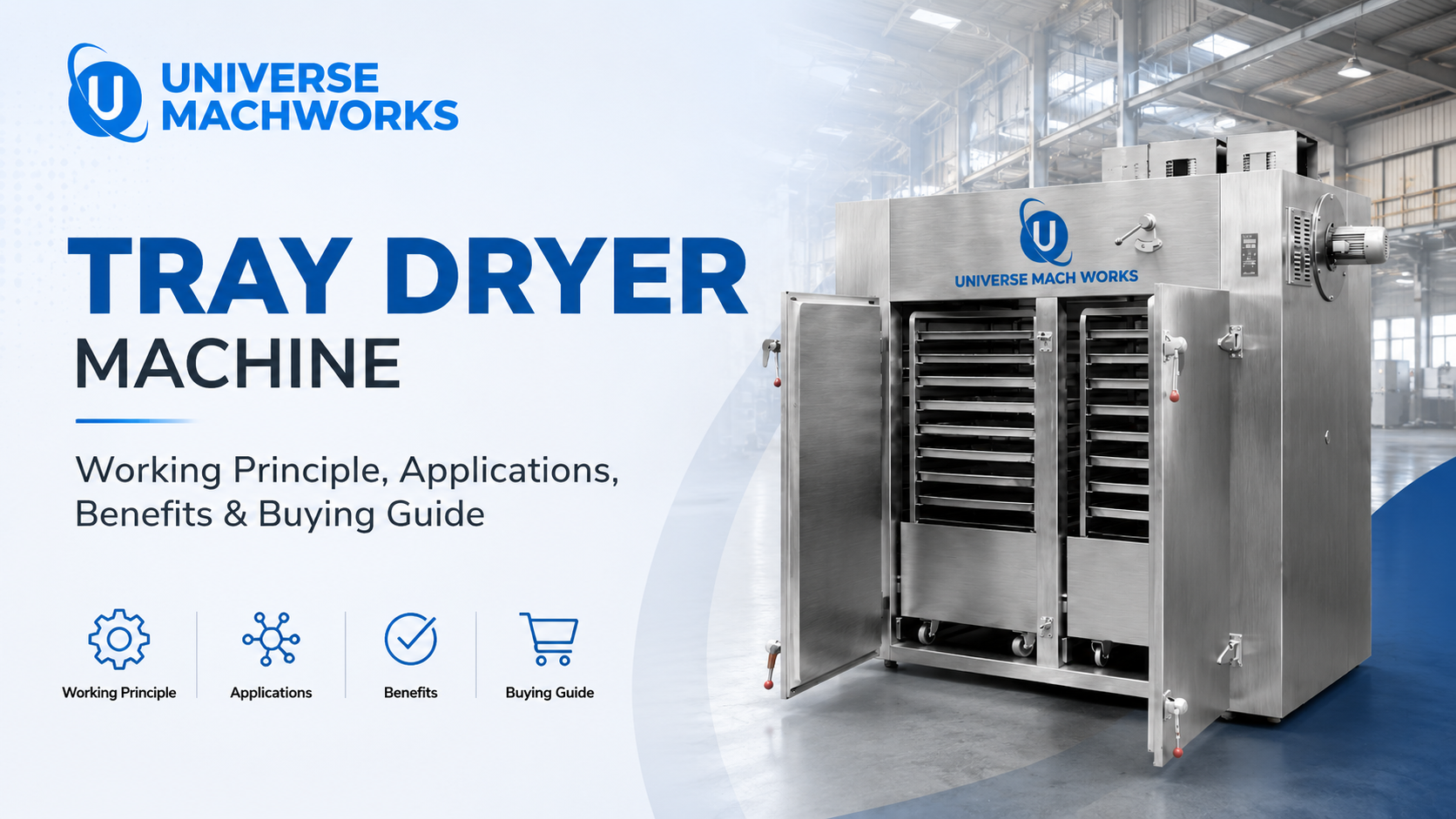
A Tray Dryer is used for batch drying of suitable materials placed on trays.
Food-processing applications may include:
- Herbs
- Spices
- Botanical materials
- Food ingredients
- Granulated materials
- Suitable wet products
Tray dryers are useful where batch drying and controlled temperature conditions are required.
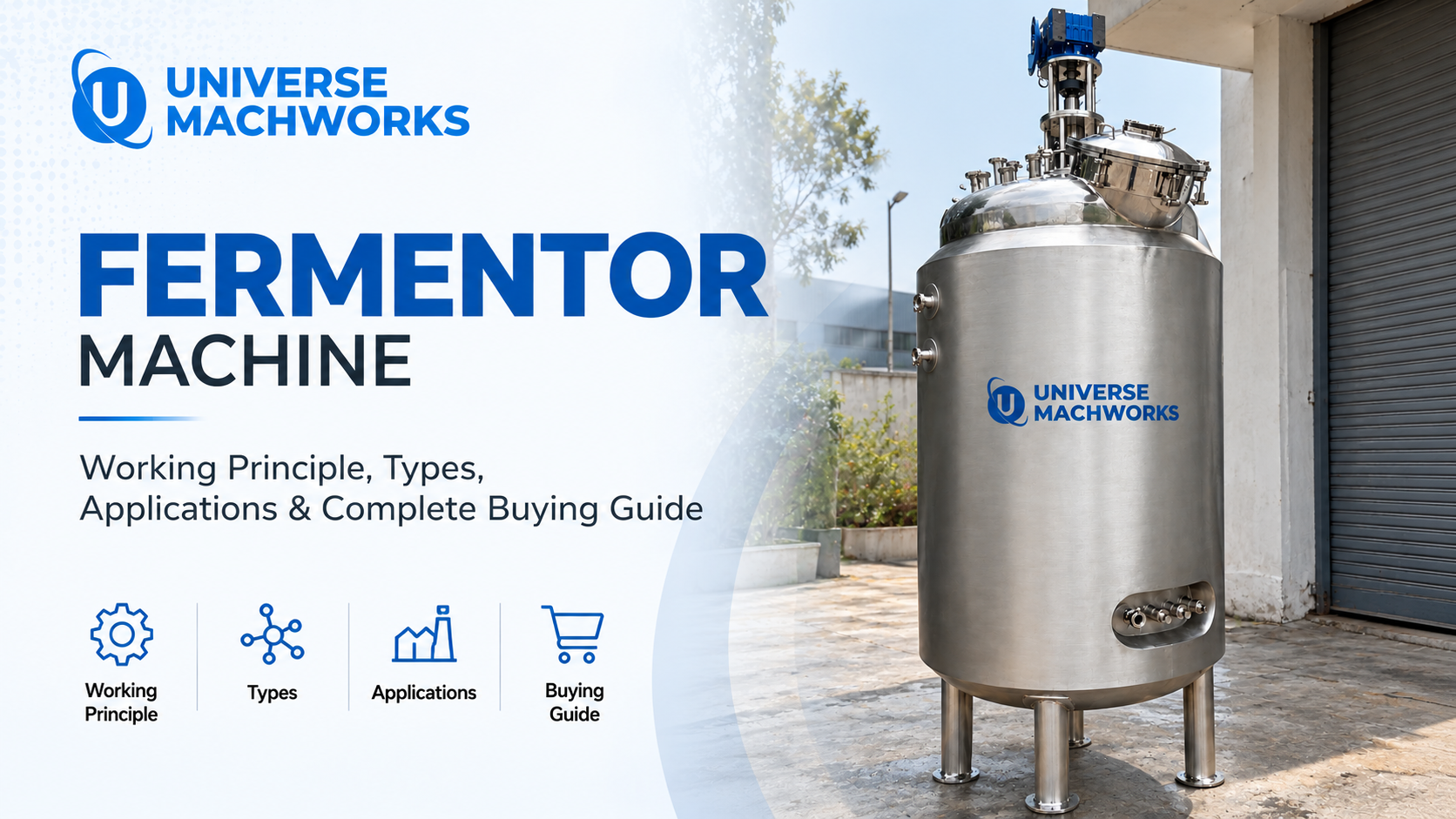
9. Mixing Tanks for Food Processing
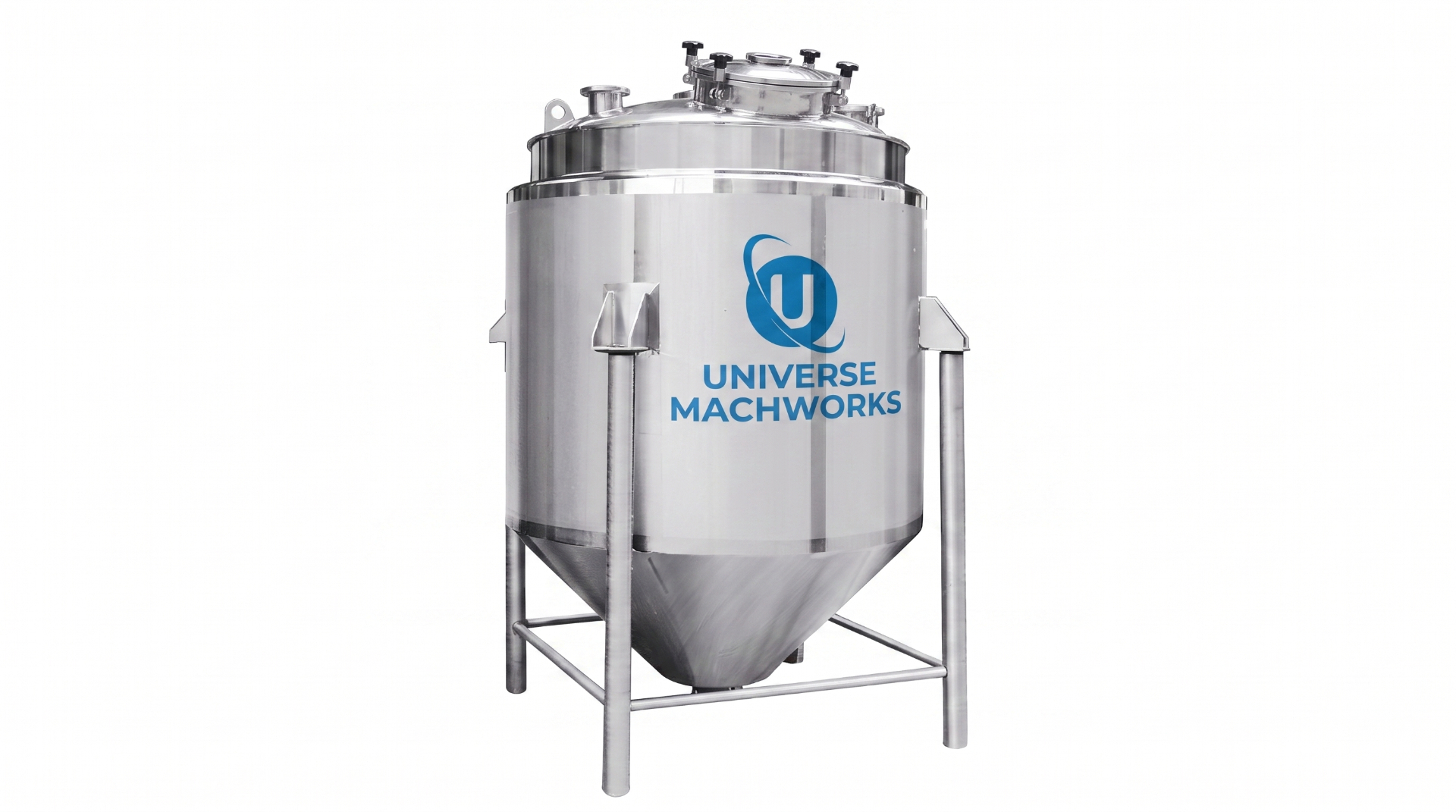
Stainless Steel Mixing Tanks are commonly used for liquid and semi-liquid food processing.
Depending on their design, they may be used for:
- Syrups
- Sauces
- Liquid food products
- Beverage ingredients
- Dairy-related formulations
- Nutritional liquids
- Herbal liquids
- Food-grade preparations
A mixing tank can be fitted with an agitator selected according to the viscosity and mixing requirements of the product.
Important Design Considerations
When purchasing a food-processing mixing tank, evaluate:
- Tank capacity
- Working volume
- Agitator type
- Mixing speed
- Product viscosity
- Heating/cooling requirements
- Material of construction
- Surface finish
- Drain arrangement
- Cleaning accessibility
10. Heating Tank with Stirrer
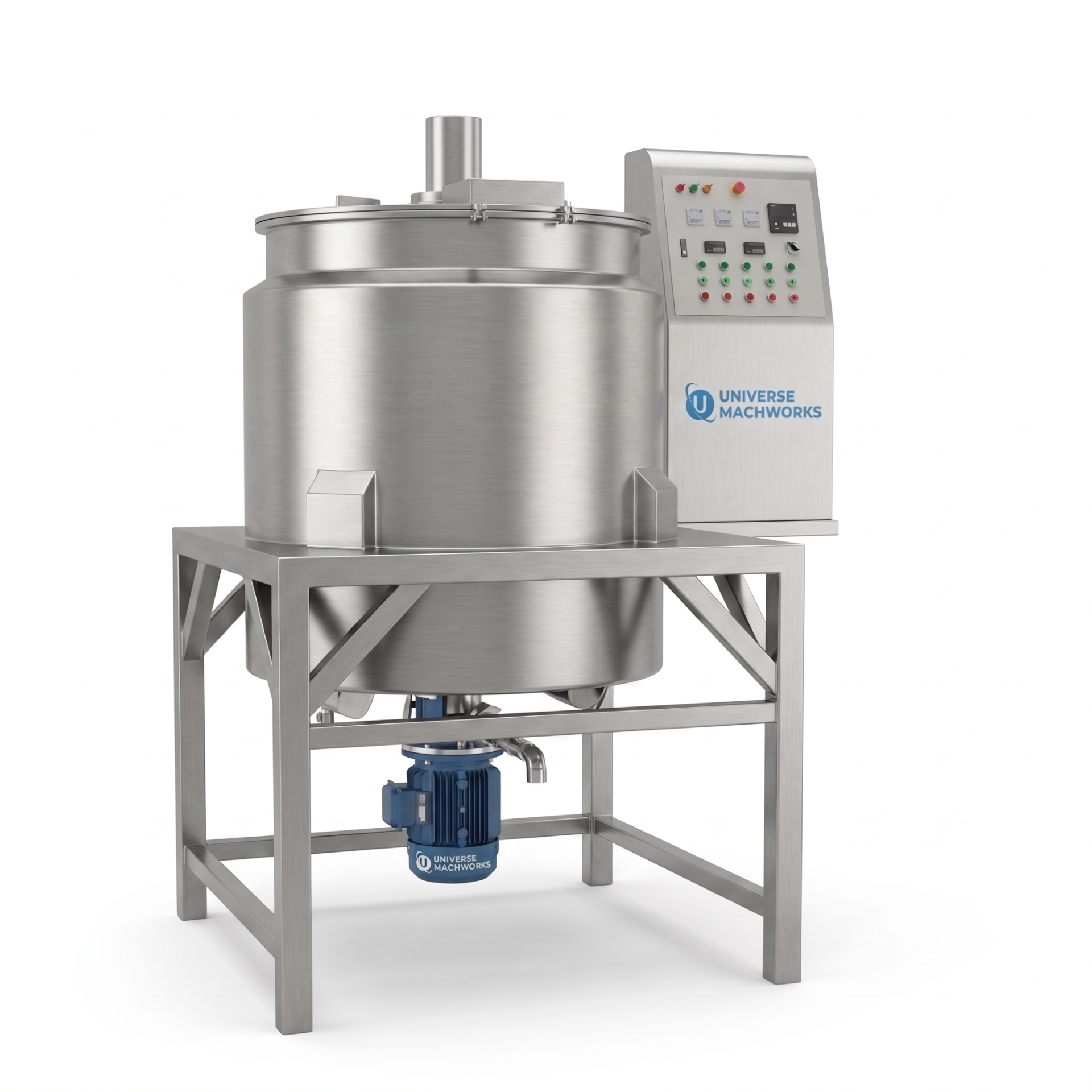
Some food products require controlled heating during processing.
A Heating Tank with Stirrer can combine heating and agitation to maintain more uniform processing conditions.
Potential applications include:
- Sauces
- Syrups
- Liquid food preparations
- Food pastes
- Nutritional formulations
- Herbal products
The heating system and agitator should be selected according to the product's thermal and mixing requirements.
11. Paste Kettle
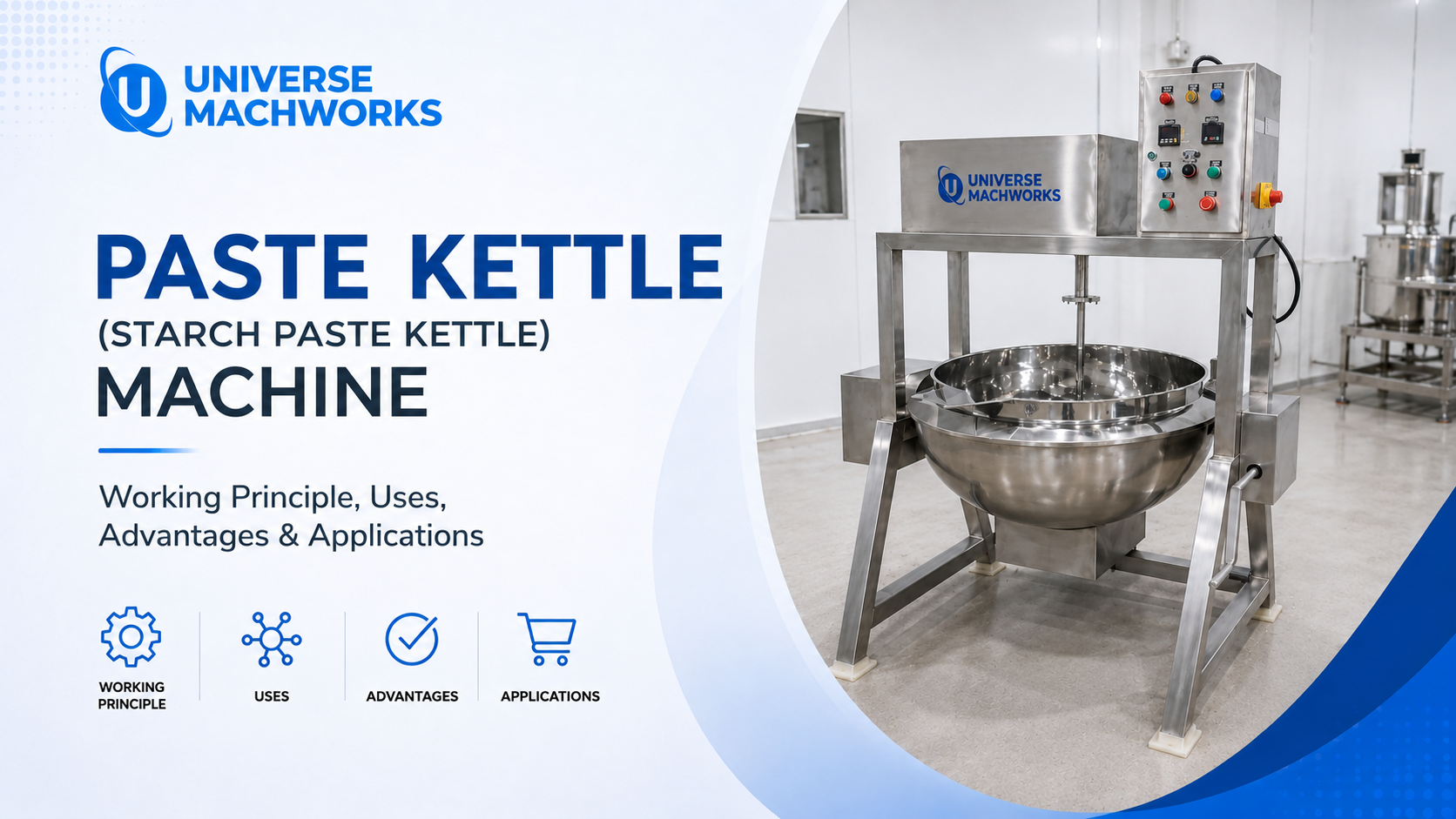
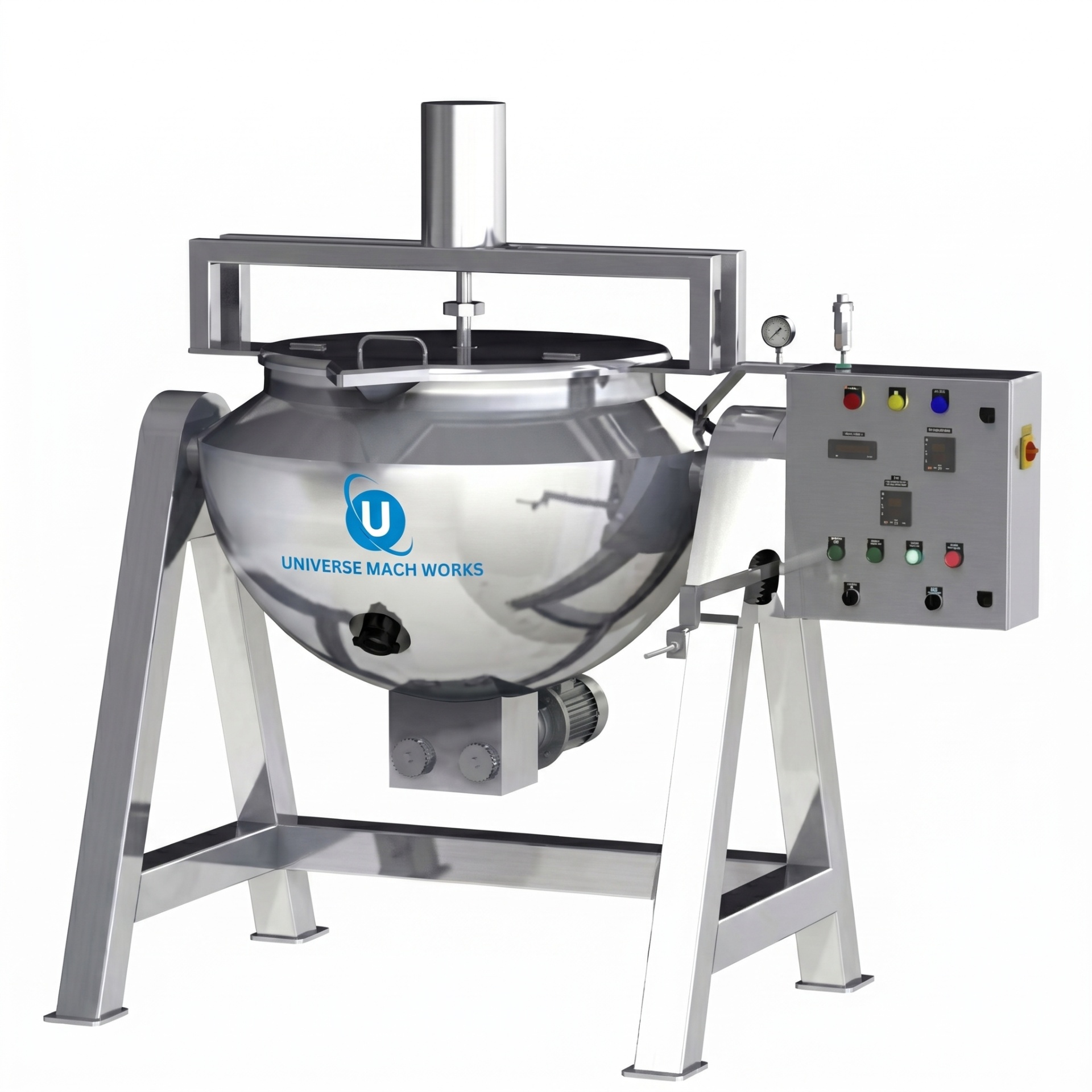
A Paste Kettle is suitable for processing certain viscous products and food pastes.
Depending on the configuration, it can be used for applications involving:
- Sauces
- Pastes
- Chutneys
- Food spreads
- Thick formulations
- Confectionery-related products
- Herbal and nutritional preparations
Heating, agitation, and vessel design should be selected according to the actual product.
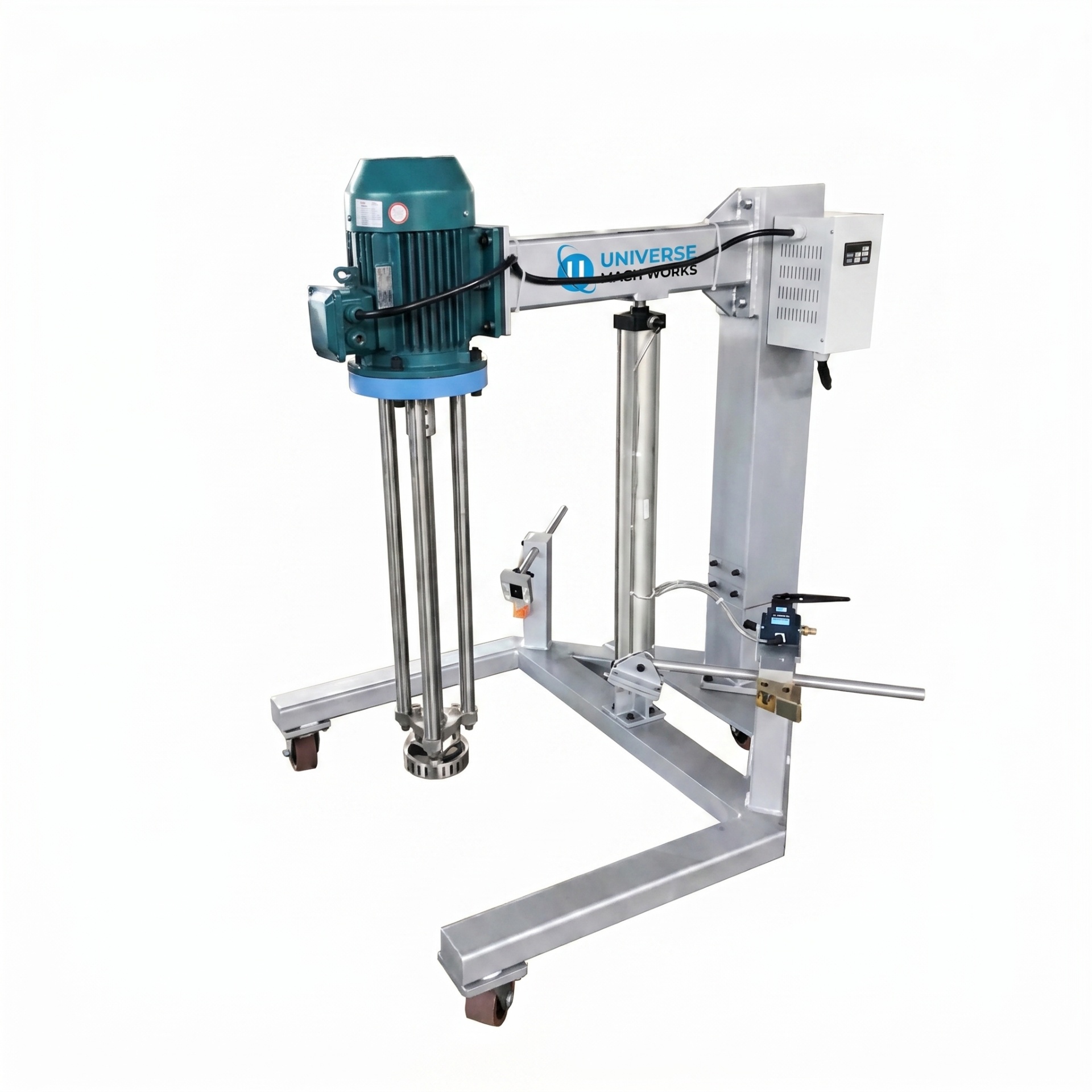
12. Homogenizer for Food Processing
A Homogenizer is used when a food product requires improved dispersion, emulsion formation, or particle-size reduction.
Potential applications include:
- Sauces
- Dairy products
- Dressings
- Cream-like food products
- Nutritional formulations
- Emulsified products
The appropriate homogenizer depends heavily on viscosity, formulation, required shear, throughput, and desired product characteristics.
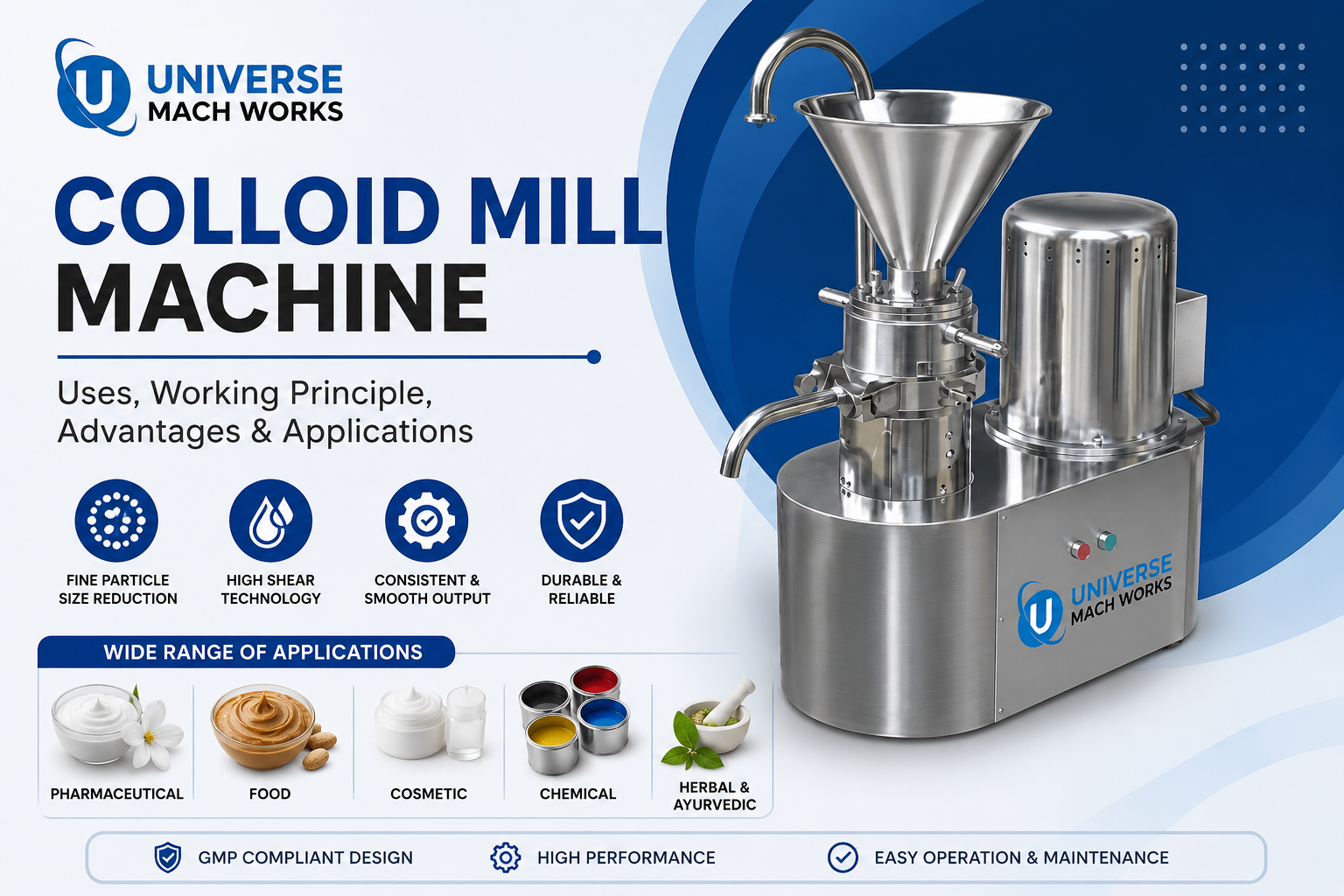
13. Colloid Mill
A Colloid Mill can be used for wet milling, dispersion, and processing of suitable liquid or semi-liquid products.
Potential food applications include:
- Sauces
- Pastes
- Emulsions
- Food spreads
- Liquid or semi-liquid formulations
The machine's suitability depends on product viscosity, particle characteristics, required texture, and processing objectives.

14. Liquid Filling Machines
Once a food product has been processed, it may need to be accurately filled into its final container.
Liquid filling equipment can be used for suitable products such as:
- Sauces
- Syrups
- Liquid nutritional products
- Edible oils
- Beverages
- Food-grade liquid formulations
The filling system should be selected according to viscosity, container type, fill volume, production speed, and product characteristics.

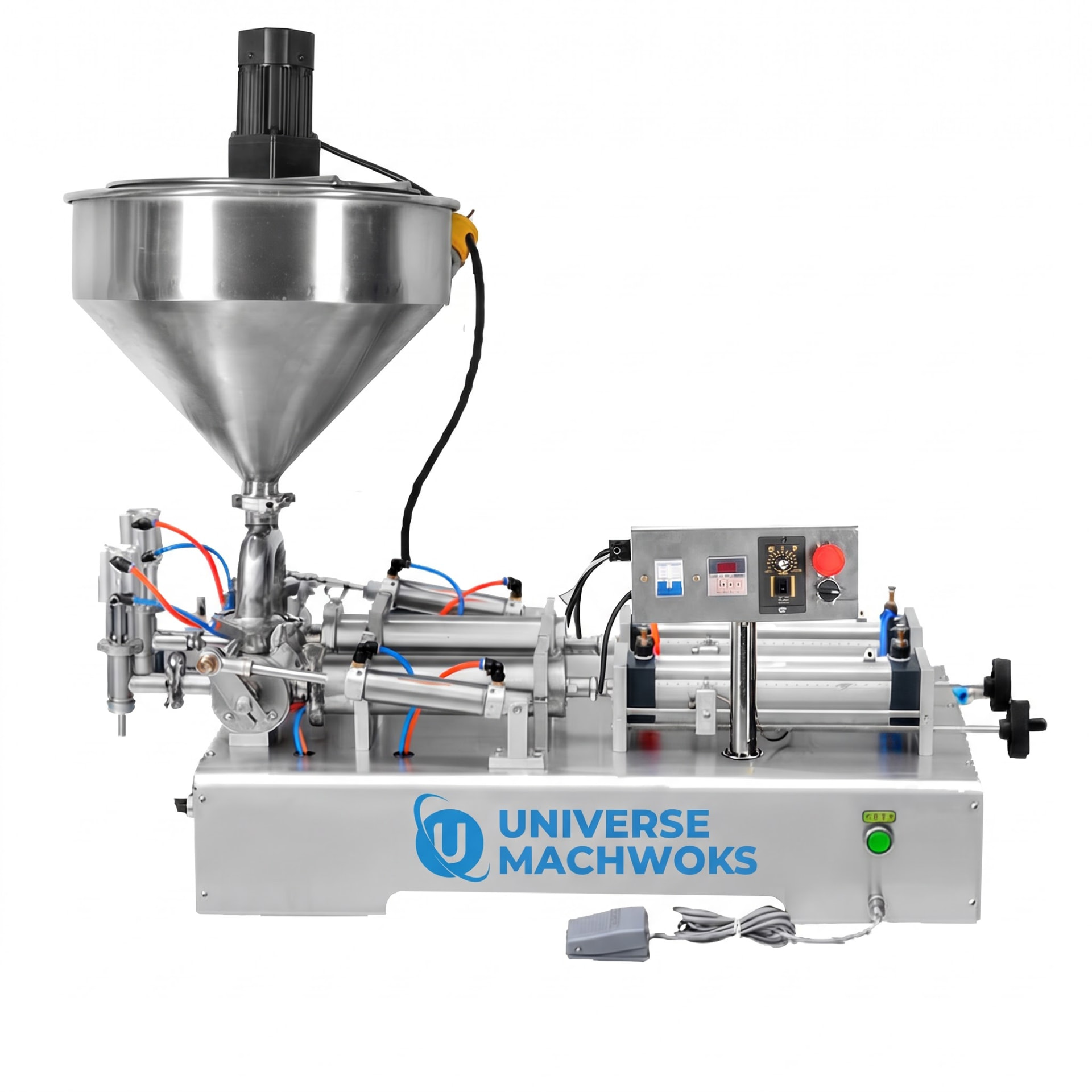
15. Pneumatic Paste Filler
For suitable viscous food products, a Pneumatic Paste Filler can provide controlled filling into containers.
Potential applications include:
- Food pastes
- Sauces
- Creams
- Spreads
- Thick nutritional products
- Herbal products
The filling mechanism should be matched to the product's viscosity and required filling accuracy.
Food Processing Applications of Pharma Machinery
The equipment discussed above can support numerous food-processing operations.
Powder Processing
Powder-based food products often require:
Sifting → Milling → Blending → Storage → Filling
Examples include:
- Spice powders
- Nutritional powders
- Premixes
- Flour-based formulations
- Food additives
Dry Mixing and Blending
Mixing equipment can be used to combine multiple ingredients into a consistent formulation.
Applications include:
- Spice blends
- Seasoning mixes
- Nutritional powders
- Baking premixes
- Instant beverage powders
- Dry food formulations
Wet Processing
Liquid and semi-liquid products may require:
Charging → Mixing → Heating → Homogenization → Cooling → Filling
Equipment selection depends on the formulation.
Size Reduction
Milling equipment can help process suitable materials where particle-size reduction or de-lumping is required.
This may be useful for:
- Dried ingredients
- Herbs
- Spices
- Granules
- Food powders
Drying
Drying equipment can be used to reduce moisture in suitable materials.
This can help achieve the required processing characteristics and storage properties, depending on the product.
Material of Construction for Food Processing Equipment
Material selection is one of the most important considerations when purchasing process machinery.
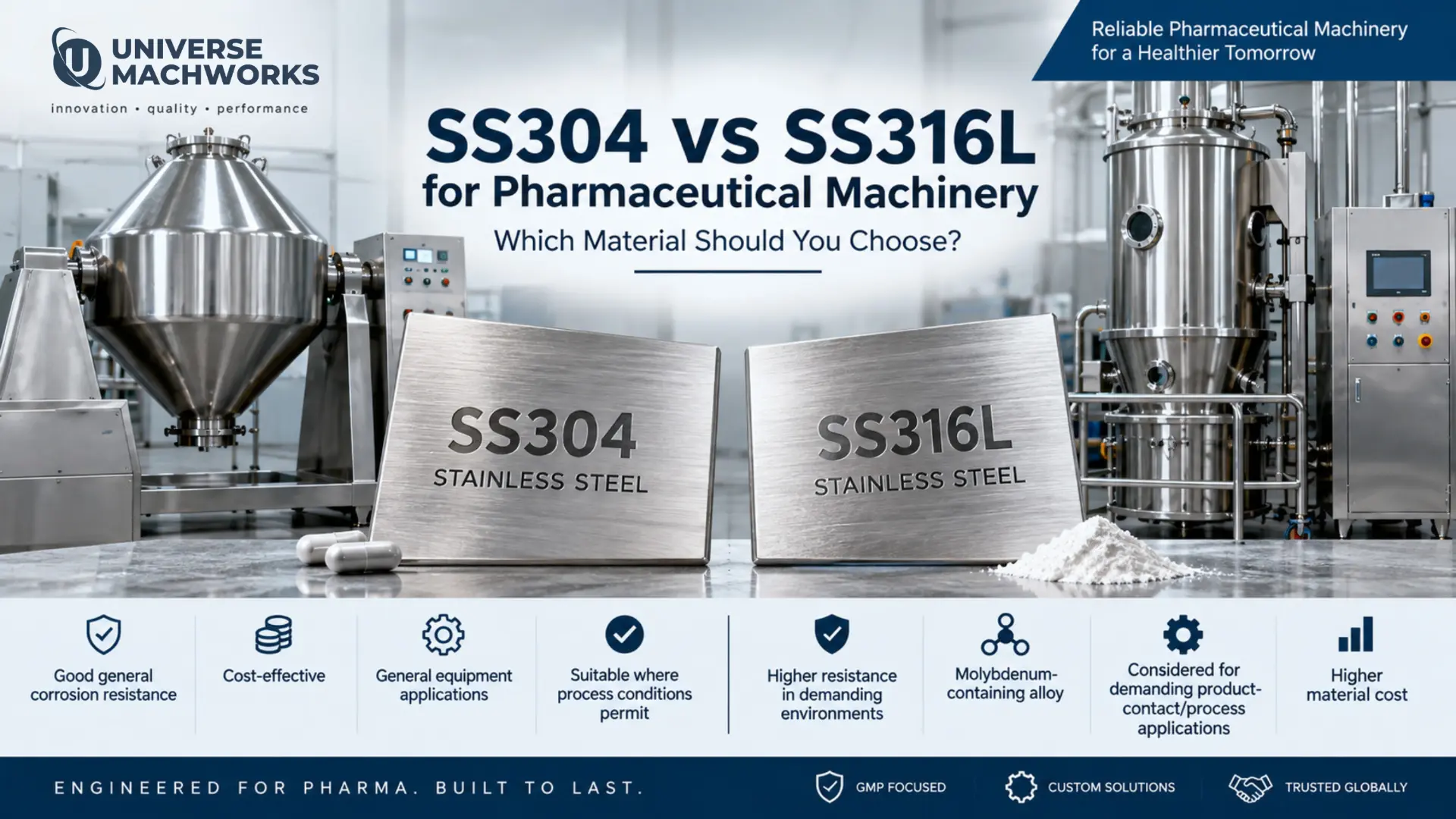
Stainless steel is commonly selected for food-processing equipment because of its corrosion resistance, durability, cleanability, and suitability for hygienic equipment designs when appropriately specified and finished.
However, the appropriate material grade should be selected according to:
- Product chemistry
- Cleaning agents
- Temperature
- Corrosion risk
- Product-contact requirements
- Regulatory requirements
- Required surface finish
SS304
SS304 is widely used for many general processing applications where the product and cleaning environment are compatible with the material.
SS316 / SS316L
SS316/316L may be considered where greater corrosion resistance is required, particularly for more demanding product or cleaning environments.
The appropriate grade should always be determined based on the actual process rather than simply selecting a material because it is marketed as a higher grade.
Hygiene and Cleanability
Food-processing machinery must be designed with the product and cleaning process in mind.
Important considerations include:
- Accessible product-contact surfaces
- Suitable surface finish
- Proper drainage
- Minimization of product-retention areas
- Appropriate seals and gaskets
- Easy access for cleaning
- Suitable cleaning procedures
- Prevention of cross-contamination
The exact hygiene requirements depend on the product, manufacturing process, facility, and applicable food regulations.
How to Choose the Right Food Processing Equipment
Choosing the correct equipment begins with understanding the product.
1. Understand the Product
Determine:
- Powder, granule, liquid, paste, or semi-solid
- Bulk density
- Particle size
- Moisture content
- Viscosity
- Temperature sensitivity
- Flow characteristics
- Corrosiveness
2. Define Batch Size
Know both:
Minimum working batch size
and
Maximum working batch size.
A machine that is too large for a small batch may not provide efficient mixing or processing.
3. Determine Required Capacity
Production capacity should be calculated according to the actual process rather than simply relying on the machine's nominal vessel volume.
For example, a 1,000-liter vessel does not necessarily mean that the practical working capacity is 1,000 liters.
Working volume depends on:
- Product characteristics
- Agitator design
- Required headspace
- Process conditions
- Filling level
4. Evaluate Automation Requirements
Depending on the plant, equipment may be configured with:
- Basic control panels
- Digital temperature indication
- Variable speed drives
- Timers
- Sensors
- PLC-based controls
- HMI systems
- Automated process sequences
The required automation level should be based on production requirements and budget.
New vs Refurbished Food Processing Machinery
Food-processing companies do not always need to purchase completely new equipment.
Both new and refurbished machinery can be considered depending on the project.
| Factor | New Machinery | Refurbished Machinery |
|---|---|---|
| Initial investment | Generally higher | May be lower |
| Equipment history | New | Previously operated |
| Customization | Generally easier | Depends on equipment |
| Availability | Manufacturing lead time may apply | Depends on availability |
| Condition | New | Must be inspected |
| Maintenance history | Not previously operated | Should be reviewed |
| Best suited for | New projects and specific requirements | Budget-conscious or replacement projects |
When Considering Refurbished Equipment
Ask for information about:
- Previous application
- Equipment history
- Current condition
- Inspection performed
- Components replaced
- Refurbishment scope
- Testing performed
- Available documentation
- Spare parts availability
A refurbished machine should be evaluated based on its actual condition and suitability, not simply its age.
Common Mistakes When Buying Food Processing Machinery
Choosing Capacity Based Only on Vessel Size
A larger vessel does not automatically mean better production.
Ignoring Product Characteristics
The same machine may behave differently with different powders, liquids, or pastes.
Selecting Equipment Only on Price
The cheapest machine may not provide the required process performance or long-term value.
Not Checking Cleaning Requirements
Cleaning and product changeover should be considered before purchase.
Ignoring Spare Parts
Check the availability of important wear parts and critical components.
Not Discussing the Complete Process
The machinery supplier should understand what happens before and after the machine.
Buying Without Testing
Where practical, product trials can help establish whether the proposed equipment is appropriate.
Questions to Ask a Pharma Machinery Manufacturer
Before purchasing food-processing equipment from a pharmaceutical machinery manufacturer or process equipment supplier, ask:
- Is the machine suitable for my specific product?
- What is the practical working capacity?
- What material of construction is recommended?
- What product-contact surfaces are provided?
- What type of agitator or processing system is required?
- What production capacity can reasonably be expected?
- Can the machine be customized?
- What cleaning method is recommended?
- What spare parts are available?
- What documentation is supplied?
- Is installation support available?
- Is technical support available after installation?
- Can a product trial be conducted if necessary?
- What is included in the quoted price?
- What are the exclusions and customer responsibilities?
These questions can help prevent misunderstandings between the buyer and equipment manufacturer.
Why Choose Universe Mach Works for Food Processing Equipment?
Universe Mach Works provides pharmaceutical and process machinery solutions that can be considered for suitable food-processing applications.
Our equipment portfolio includes machinery for:
- Mixing
- Blending
- Milling
- Sifting
- Drying
- Heating
- Homogenization
- Paste processing
- Liquid processing
- Filling
- Customized process applications
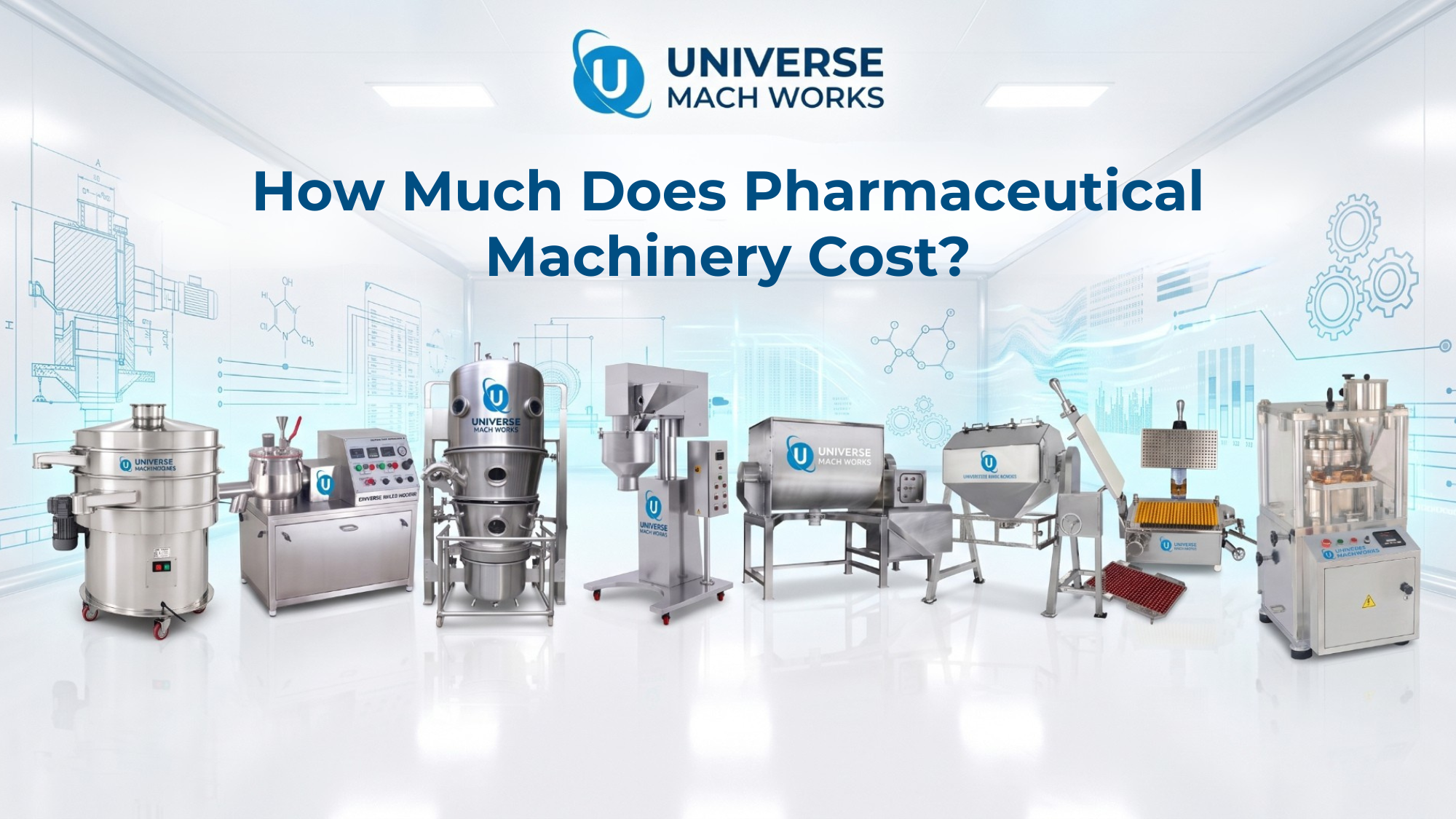
Machinery Solutions Include:
- Mass Mixer
- Ribbon Blender
- Octagonal Blender
- Double Cone Blender
- Vibro Sifter
- Multi Mill
- Fluid Bed Dryer
- Tray Dryer
- Mixing Tank
- Heating Tank with Stirrer
- Paste Kettle
- Homogenizer
- Colloid Mill
- Filling Machines
- Customized Process Equipment
We can work with customers to understand their product, batch size, process requirements, material of construction, operating conditions, and desired equipment configuration before recommending a suitable solution.
Universe Mach Works also provides new, used, and refurbished machinery solutions, depending on equipment availability and customer requirements.
Explore food-processing equipment
Food Processing Equipment Buying Checklist
Before finalizing your purchase, review the following checklist:
Product
- ☐ Product type identified
- ☐ Powder/liquid/paste characteristics evaluated
- ☐ Viscosity and bulk density established
- ☐ Temperature requirements defined
Capacity
- ☐ Batch size defined
- ☐ Required production capacity calculated
- ☐ Working volume confirmed
Machine
- ☐ Machine type selected
- ☐ Agitator/processing mechanism confirmed
- ☐ Material of construction confirmed
- ☐ Product-contact parts specified
- ☐ Surface finish discussed
Operation
- ☐ Control system selected
- ☐ Automation requirements defined
- ☐ Cleaning procedure discussed
- ☐ Maintenance requirements understood
Commercial
- ☐ Machine price confirmed
- ☐ Delivery schedule confirmed
- ☐ Installation requirements understood
- ☐ Spare parts availability checked
- ☐ Warranty terms reviewed
- ☐ Documentation confirmed
Explore the Product
Food Processing Equipment by Universe Mach Works
View technical specifications, applications and request a customized quote.
View Food Processing EquipmentFrequently Asked Questions
Can pharmaceutical machinery be used in the food processing industry?+
Some pharmaceutical processing equipment technologies can be suitable for food-processing applications when the machine is appropriately designed, constructed, configured, cleaned, and specified for the intended food product and applicable requirements.
Which pharma machines are commonly useful for food processing?+
Depending on the product, equipment such as Mass Mixers, Ribbon Blenders, Vibro Sifters, Multi Mills, Mixing Tanks, Heating Tanks, Paste Kettles, Homogenizers, Colloid Mills, and suitable filling machines can be considered.
What is the best mixer for food processing?+
There is no single best mixer for every food product. Ribbon Blenders may suit dry powders, while Mass Mixers or other agitator designs may be more appropriate for wet or cohesive materials. Selection should be based on the product and process.
Is stainless steel suitable for food processing equipment?+
Stainless steel is commonly used for food-processing machinery because of its durability, corrosion resistance, and cleanability. The appropriate grade and surface finish depend on the product and processing environment.
What should I consider when buying food processing machinery?+
Consider the product characteristics, batch size, production capacity, machine design, material of construction, cleaning requirements, automation, maintenance, spare parts, installation, and technical support.
Can food processing equipment be customized?+
Yes. Process equipment can often be configured or customized according to product characteristics, capacity, agitation requirements, heating/cooling requirements, controls, material of construction, and other process requirements.
Is refurbished food processing machinery a good option?+
Refurbished machinery can be a practical option when its condition, history, refurbishment scope, components, and suitability for the intended process have been properly evaluated.
How do I choose a food processing equipment manufacturer?+
Look at manufacturing capability, process understanding, machine construction, customization, documentation, testing, installation support, spare parts, and after-sales technical assistance.
Conclusion
The food processing industry requires reliable equipment for mixing, blending, milling, sifting, drying, heating, homogenization, filling, and other processing operations. Many machine technologies used in pharmaceutical manufacturing can also support suitable food-processing applications when they are properly designed and specified for the intended process.
The most important step is not simply choosing a machine based on capacity or price. Instead, manufacturers should evaluate the product characteristics, batch size, processing conditions, hygiene requirements, material of construction, cleaning method, automation requirements, maintenance, and long-term support.
An experienced pharma machinery manufacturer with knowledge of process equipment can help food manufacturers evaluate these factors and develop equipment configurations suited to their requirements.
Universe Mach Works provides pharmaceutical and process machinery solutions for pharmaceutical, food, nutraceutical, chemical, cosmetic, herbal, and other processing industries.
Looking for food processing equipment?
📞 Call / WhatsApp: 9888885581
🌐 Website: universemachworks.com
Discuss your product and processing requirements with Universe Mach Works to identify a suitable equipment configuration.