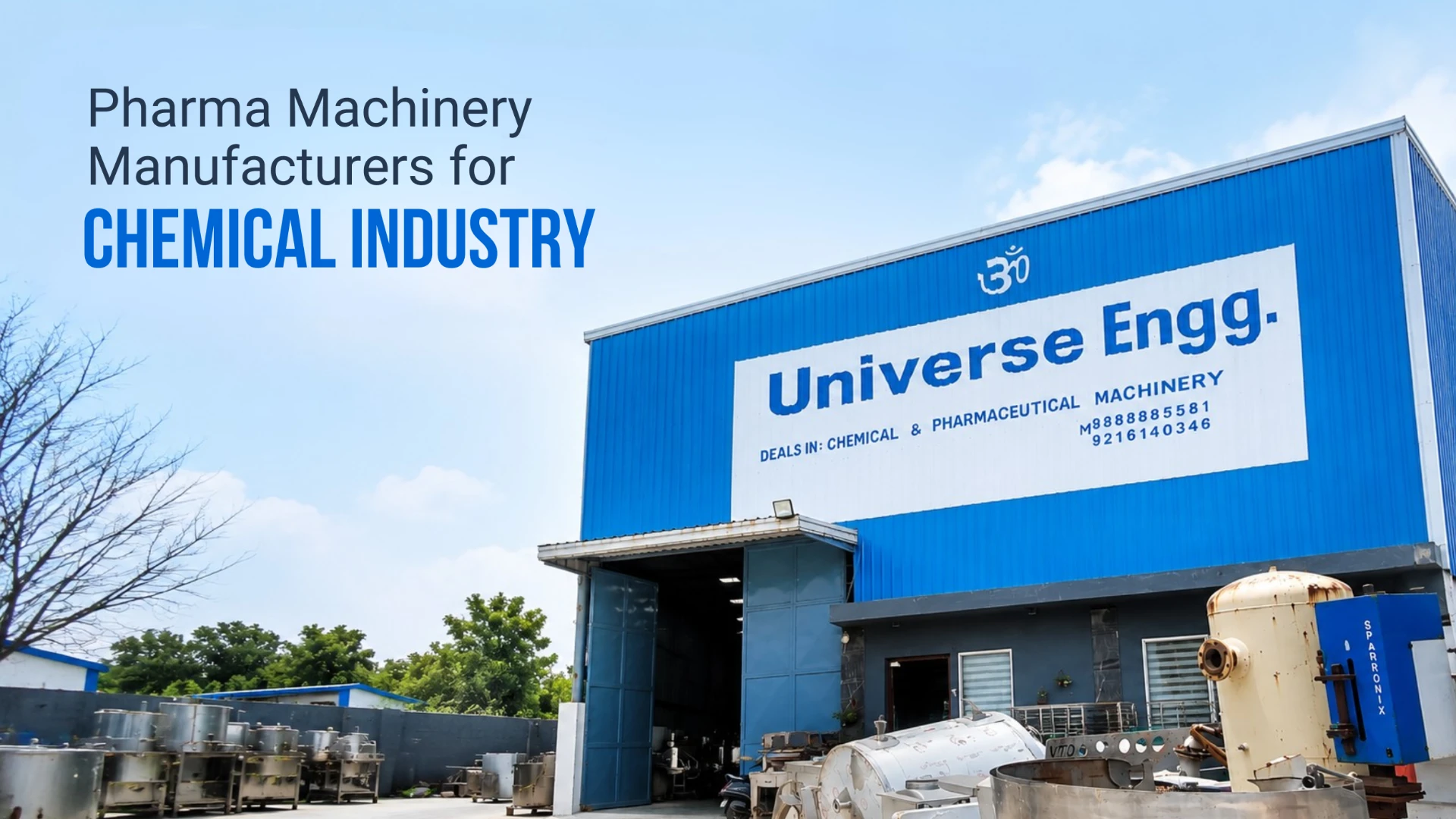
The chemical industry relies on reliable processing equipment for operations such as mixing, blending, size reduction, drying, filtration, heating, cooling, and material handling.
While pharmaceutical machinery is designed around the demanding requirements of pharmaceutical manufacturing, many of the same engineering principles and equipment configurations can also be applied to suitable chemical processing applications.
This is why experienced pharma machinery manufacturers can provide valuable equipment solutions for chemical manufacturers, particularly where processes require stainless-steel construction, controlled processing, hygienic design, batch consistency, and application-specific engineering.
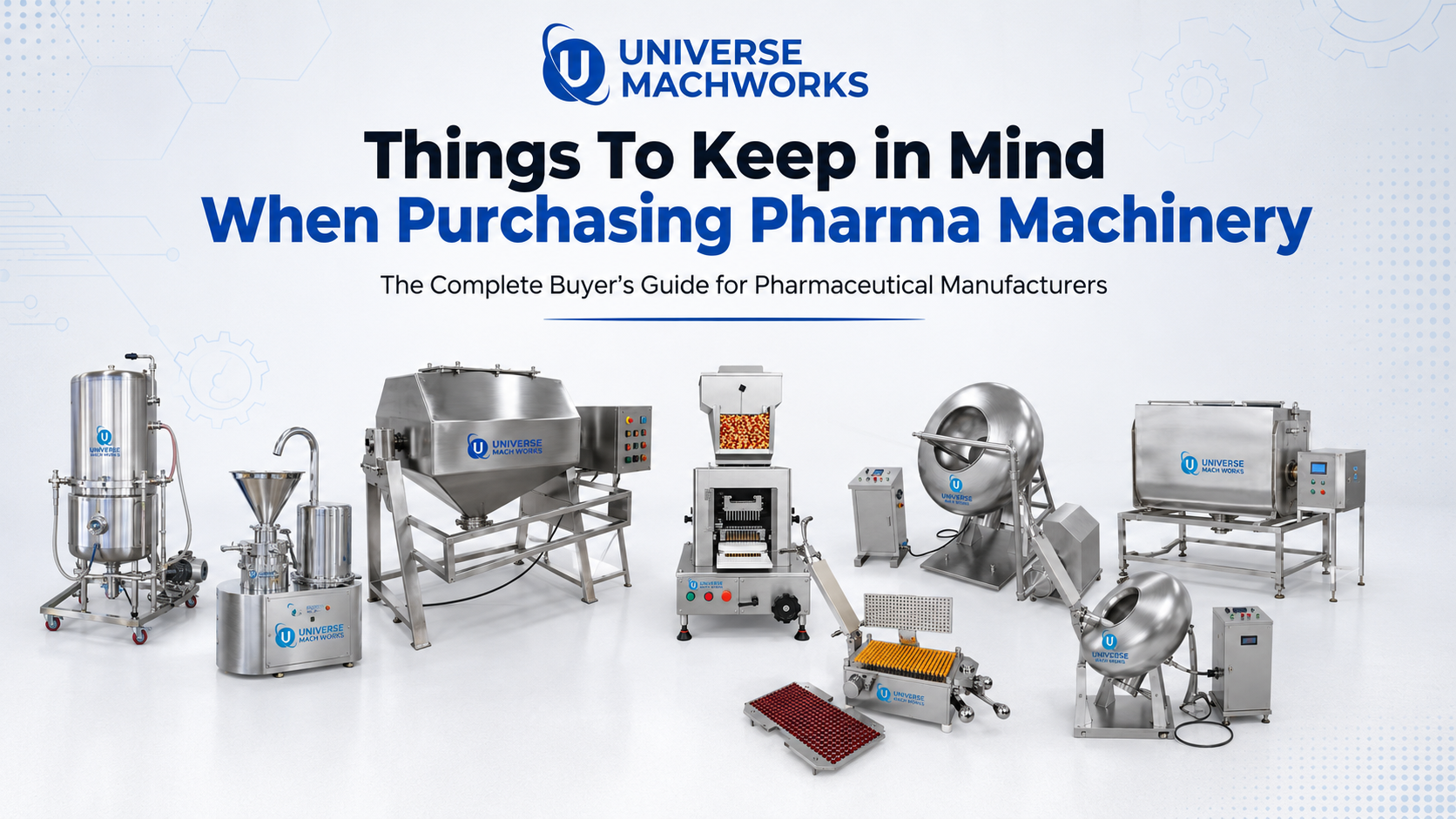
From Mass Mixers and Ribbon Blenders to Multi Mills, Vibro Sifters, Filter Press Machines, Mixing Tanks, Heating Tanks, and process vessels, equipment selection should always be based on the characteristics of the chemical product and the intended manufacturing process.
In this guide, we explore the major types of chemical processing equipment, their applications, important selection factors, material-of-construction considerations, maintenance requirements, and how to choose the right pharmaceutical machinery manufacturer for chemical industry applications.
Why Are Pharma Machinery Manufacturers Relevant to the Chemical Industry?
Pharmaceutical and chemical manufacturing have different regulatory and process requirements, but there is considerable overlap in the types of processing operations involved.
Both industries may require equipment for:
- Powder mixing
- Granule processing
- Size reduction
- Sieving
- Drying
- Liquid mixing
- Heating
- Filtration
- Material transfer
- Batch processing
- Process containment
A pharmaceutical machinery manufacturer with suitable engineering capabilities can therefore manufacture or configure equipment for compatible chemical applications.
However, the equipment should never be selected simply because it is marketed as "pharma machinery."
The correct approach is to start with:
Chemical product → Process requirement → Material characteristics → Equipment design → Material of construction → Cleaning & maintenance → Safety requirements
The chemical compatibility of product-contact materials, operating temperature, pressure, corrosion potential, and other process conditions should be evaluated before final equipment selection.
Types of Chemical Processing Equipment
Different chemical manufacturing processes require different types of machinery.
Below are some commonly relevant equipment categories.
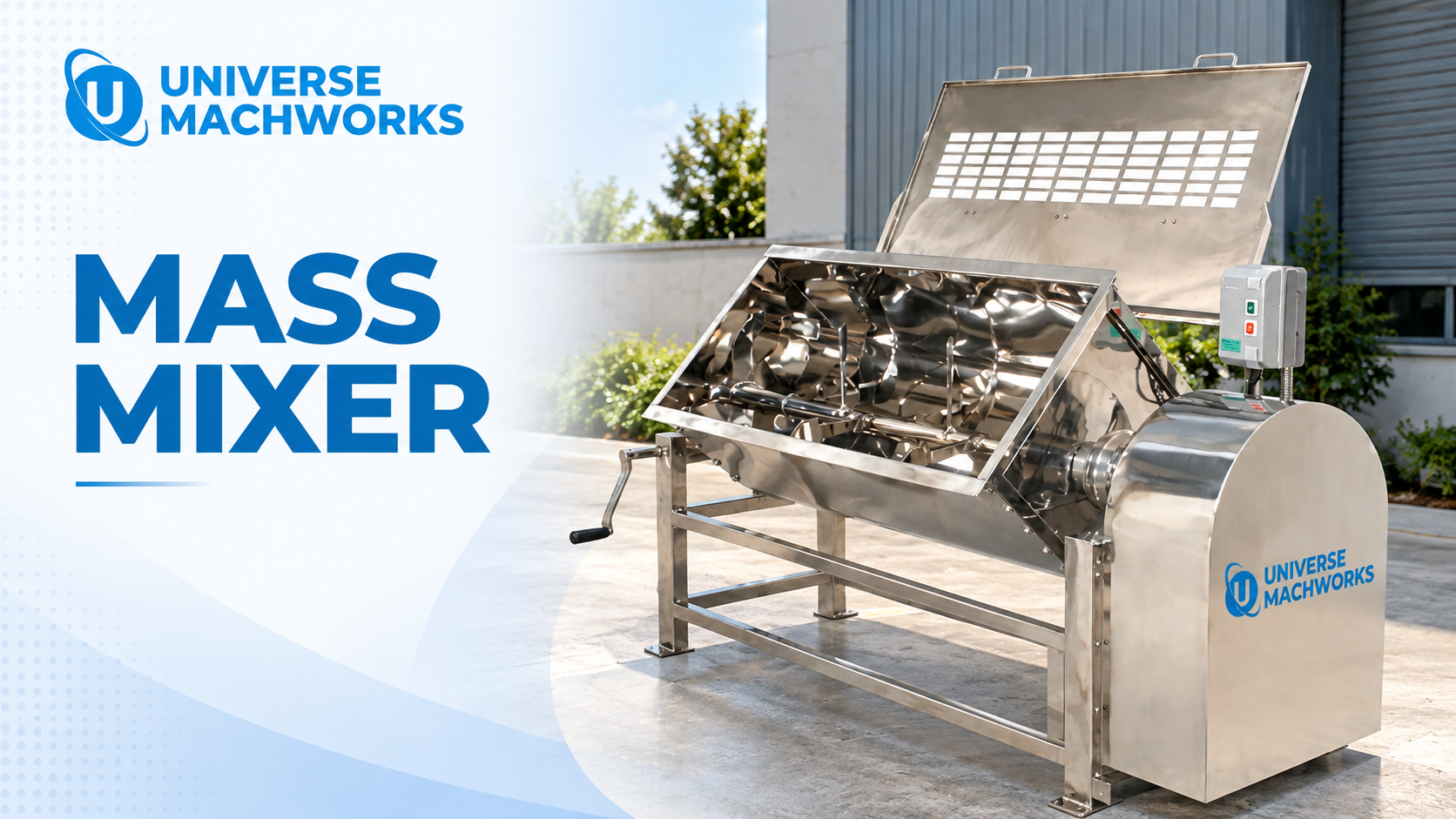
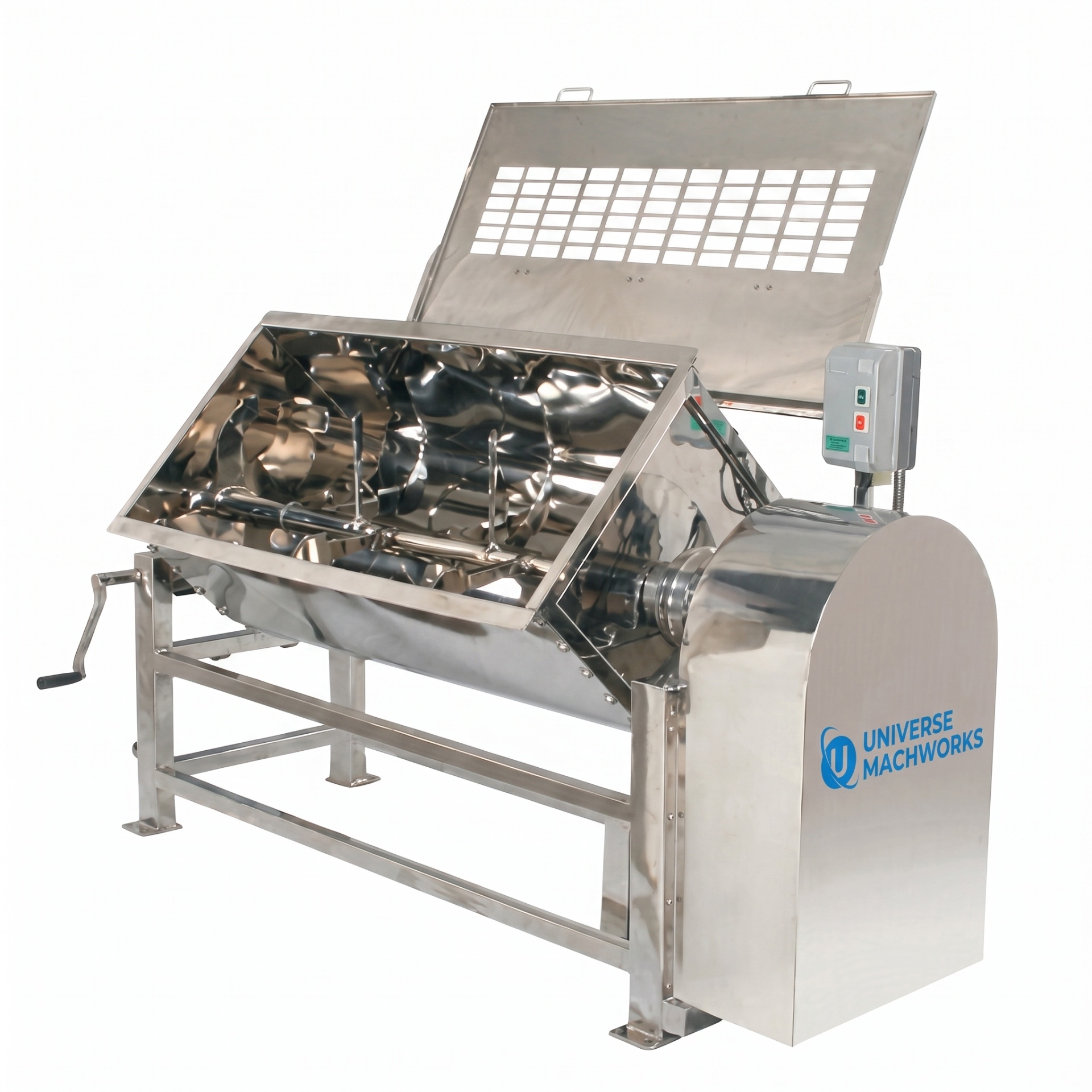
1. Mass Mixer
A Mass Mixer Machine is designed for mixing and kneading compatible powders, granules, wet masses, pastes, and other materials.
In chemical applications, a Mass Mixer can be considered where the formulation requires controlled material movement and mixing.
- Potential applications
- Chemical formulations
- Powder mixtures
- Wet masses
- Specialty compounds
- Industrial formulations
The correct blade configuration should be selected according to the material properties.
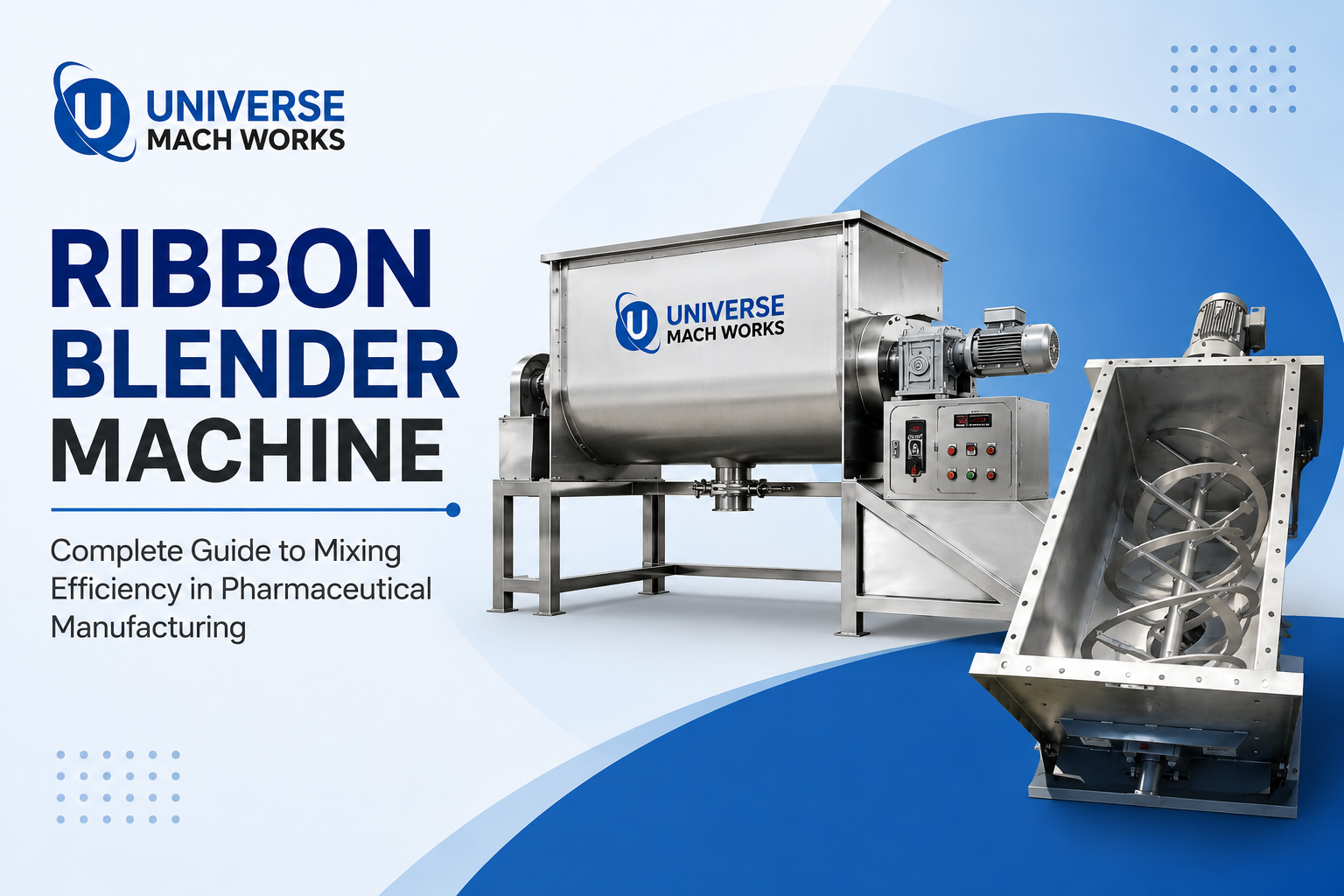
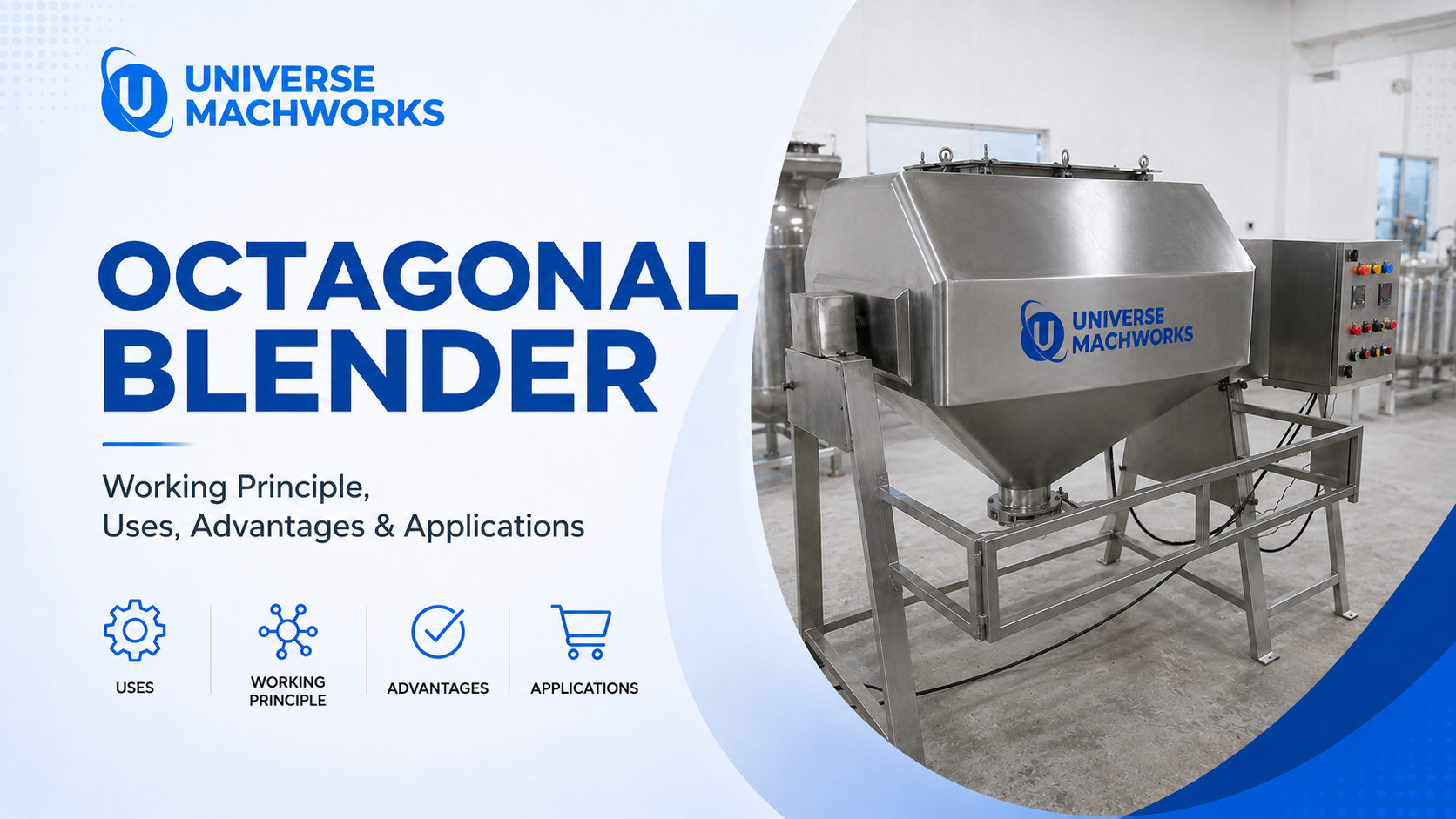
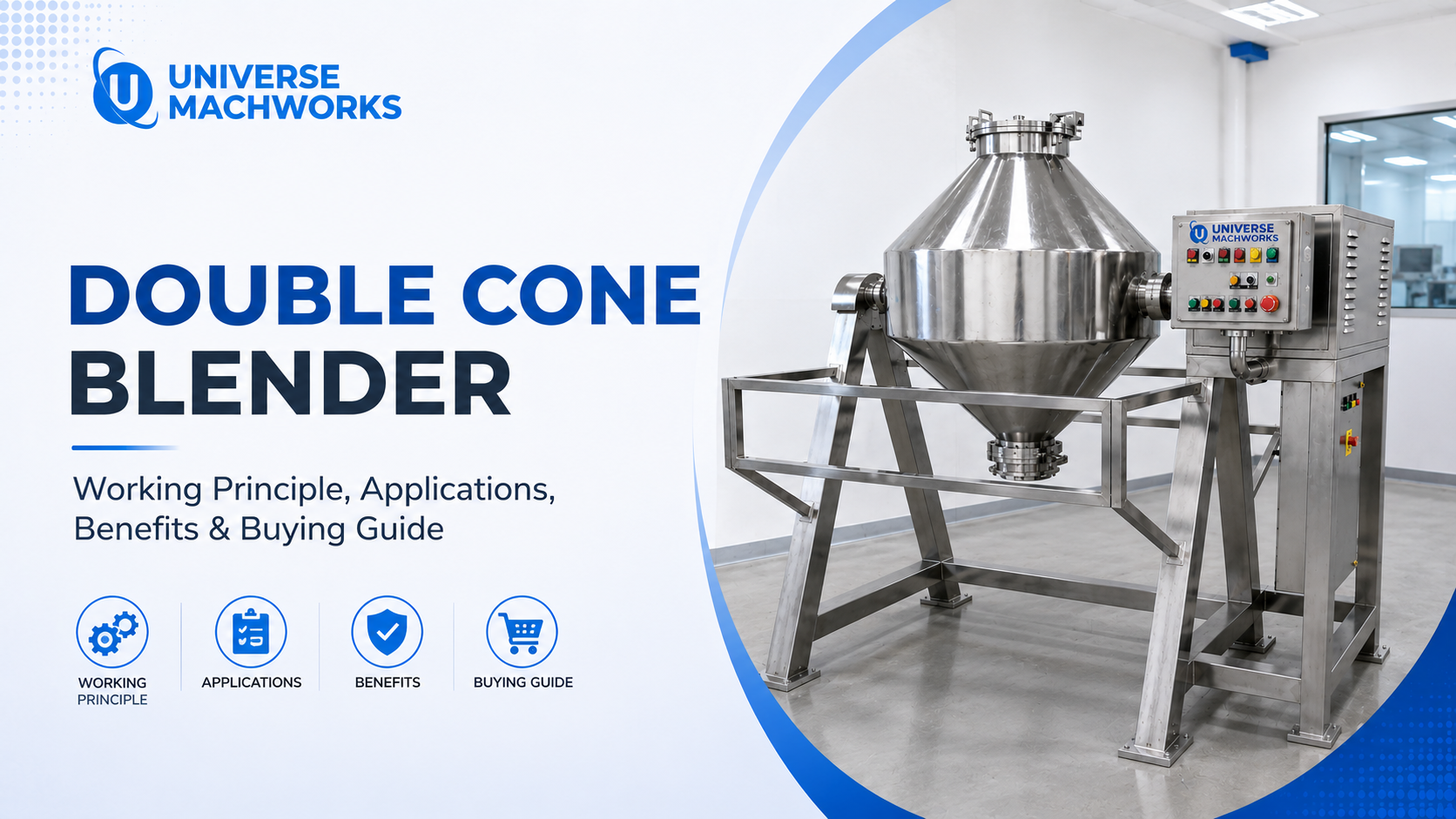
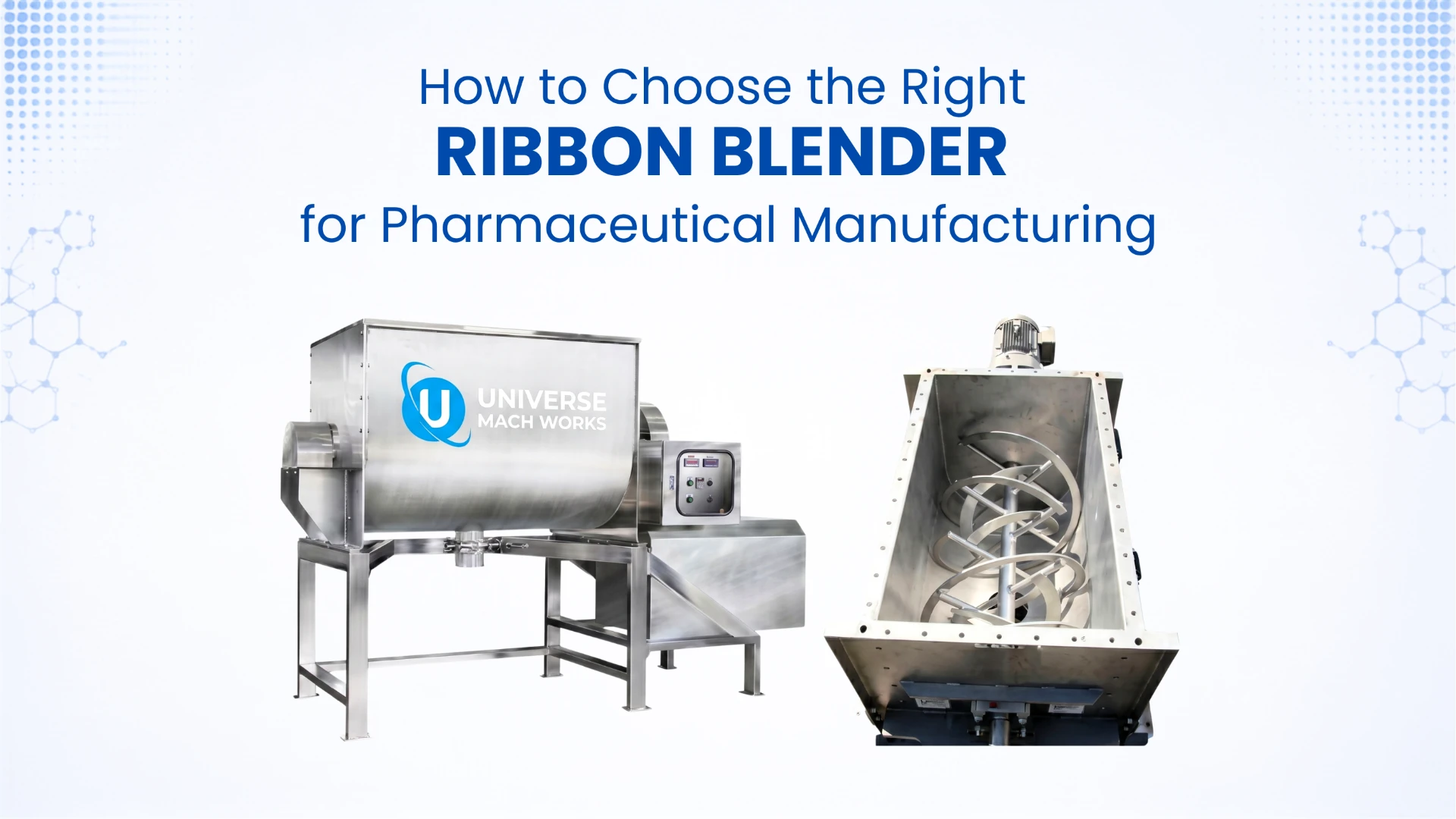
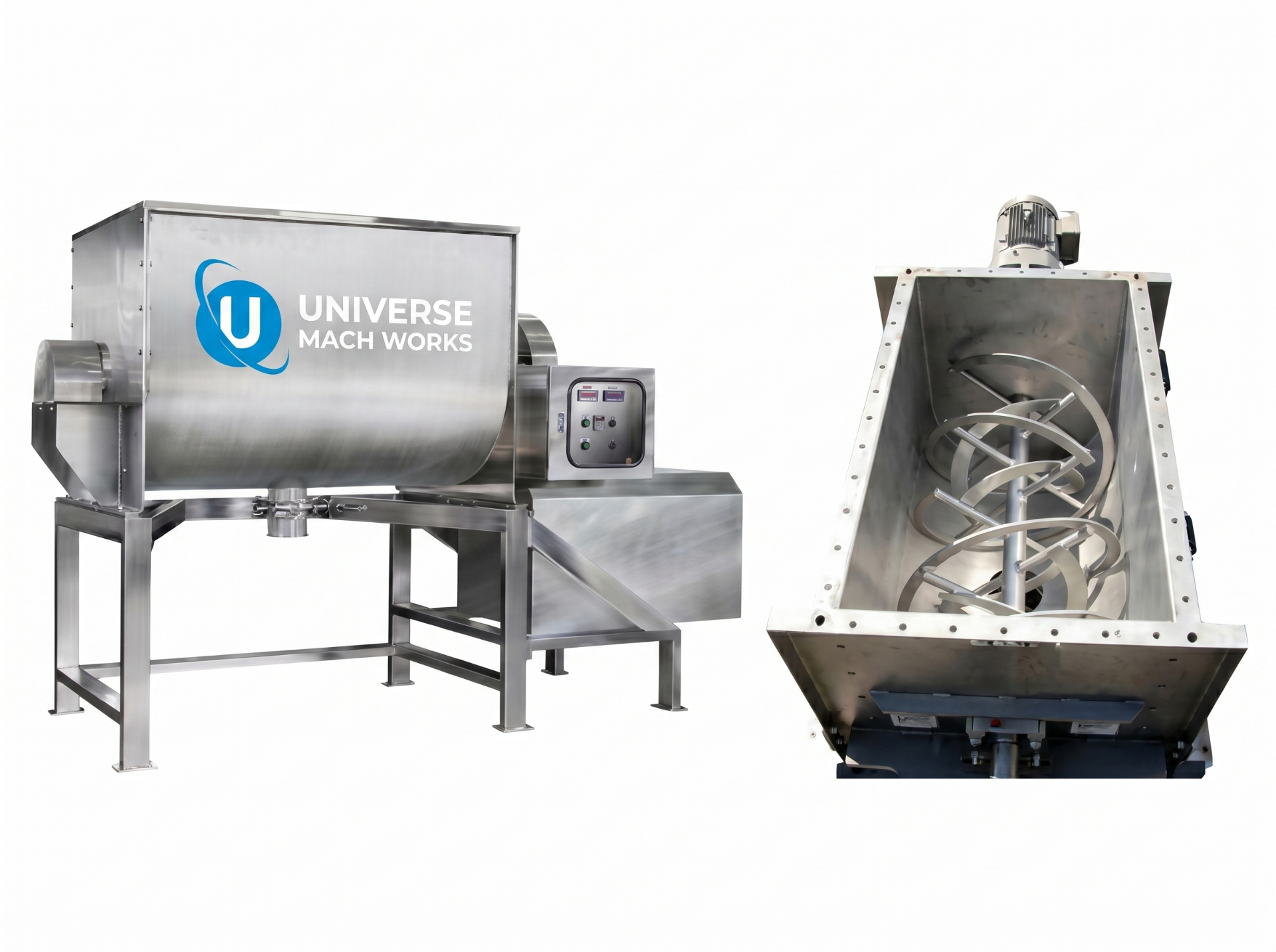
2. Ribbon Blender
A Ribbon Blender is commonly used for blending powders and dry solid materials.
The machine uses a ribbon-type agitator to move material through the mixing chamber.
- Chemical industry applications may include:
- Powder chemicals
- Dry additives
- Fertilizer-related formulations
- Industrial powders
- Chemical premixes
The suitability of the equipment depends on factors such as powder flowability, bulk density, particle size, cohesiveness, and required blend uniformity.
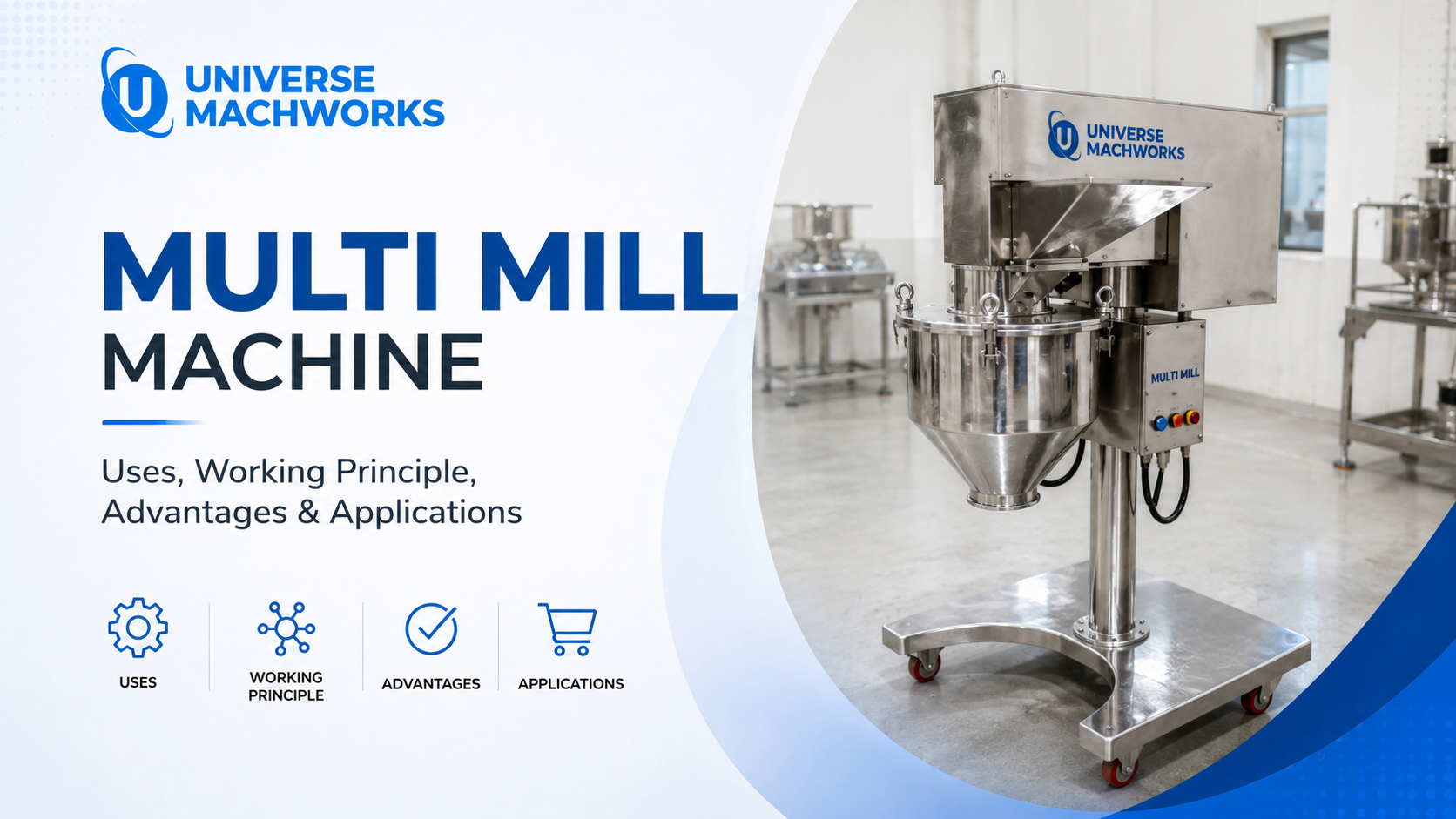
3. Multi Mill
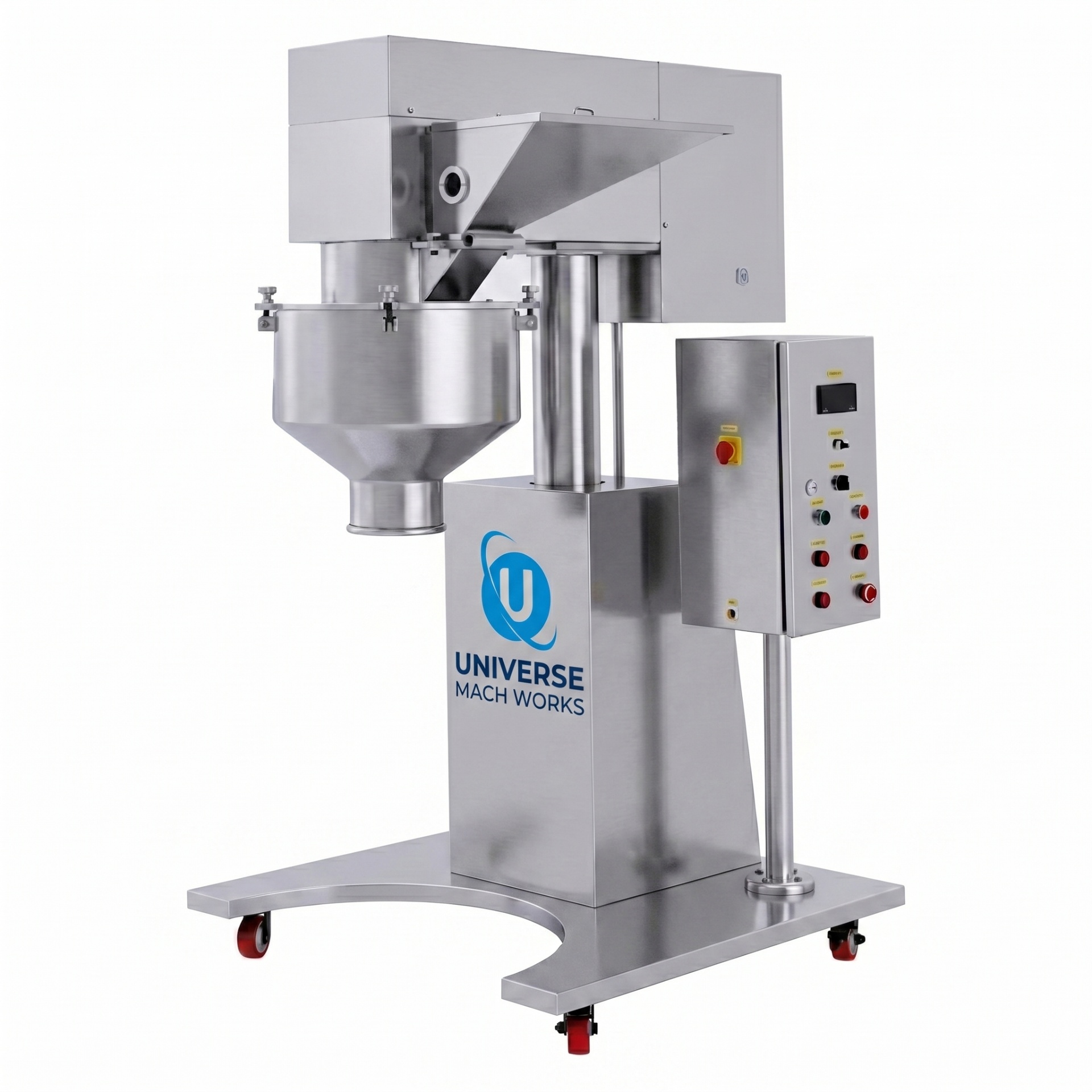
A Multi Mill is used for size reduction, de-lumping, granule sizing, and controlled particle processing.
Chemical manufacturers may require milling equipment when the process involves reducing or controlling particle size.
- Applications can include:
- De-lumping
- Granule sizing
- Powder processing
- Particle-size adjustment
- Reprocessing of agglomerated materials
Screen selection, rotor configuration, speed, and product characteristics should be considered when specifying a Multi Mill.
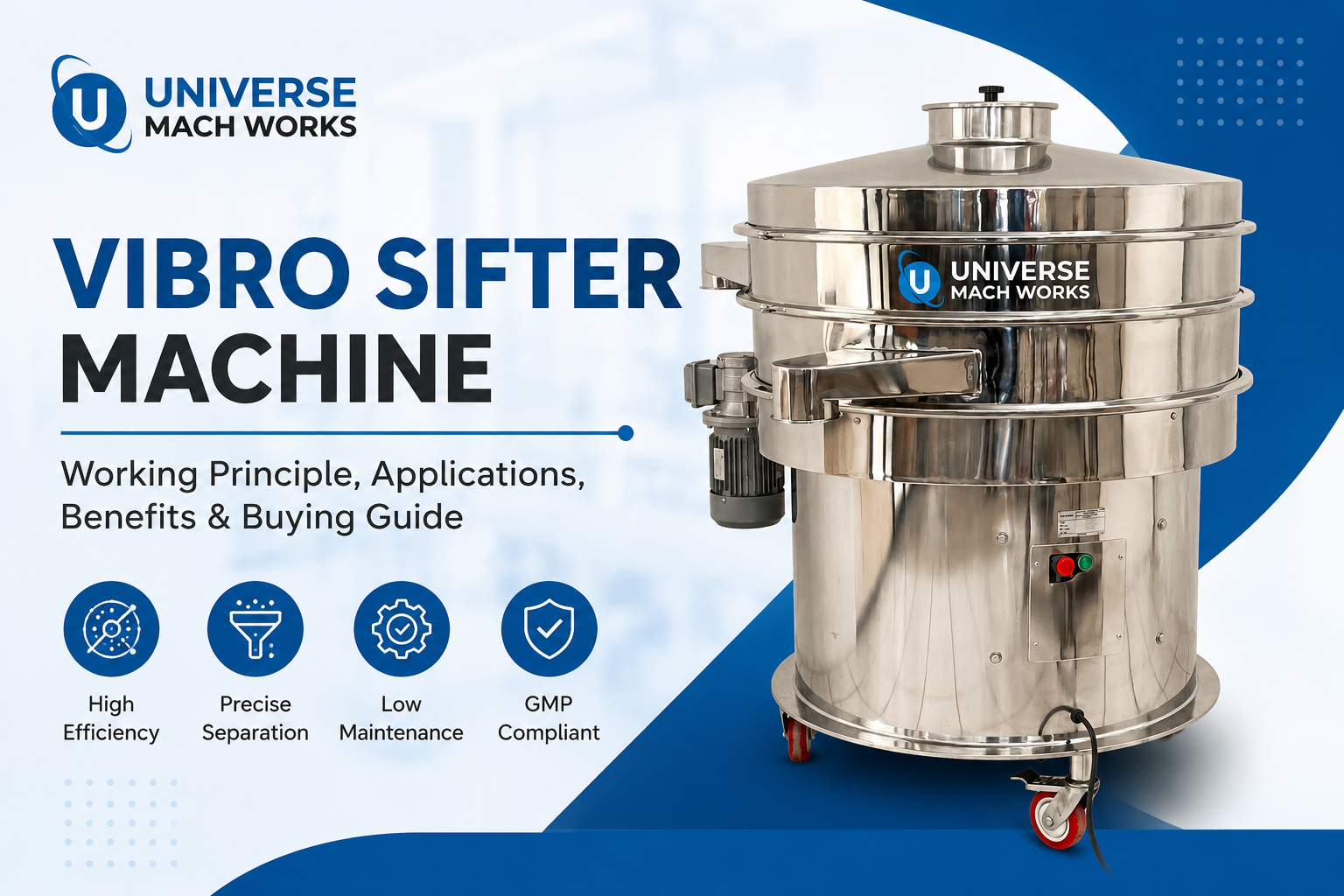
4. Vibro Sifter
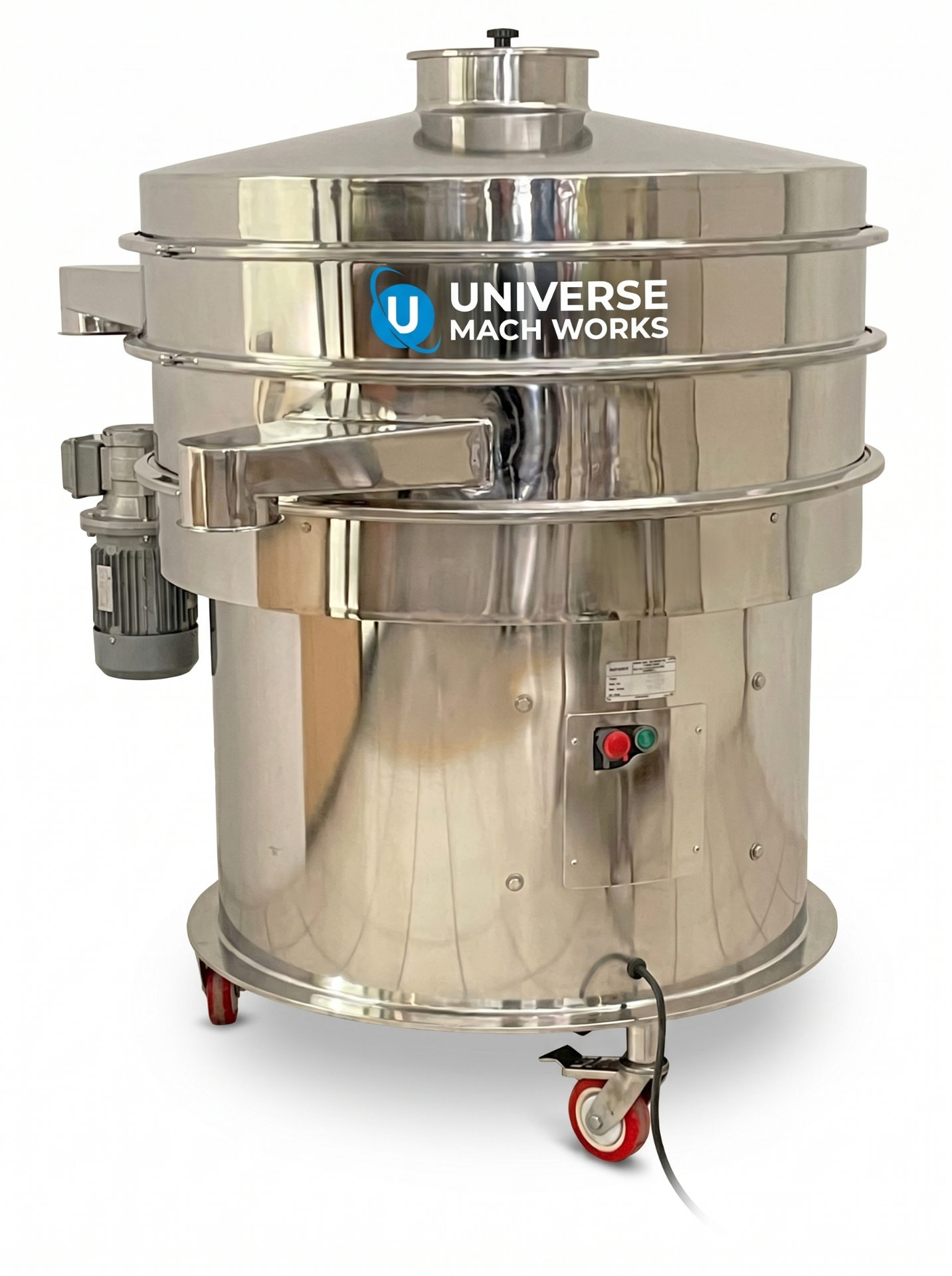
A Vibro Sifter Machine separates particles according to size using controlled vibration and a screening system.
It can be used in chemical processing for:
- Particle classification
- Screening powders
- Removing oversized particles
- Separating agglomerates
- Improving consistency of processed material
The screen material and construction should be compatible with the chemical product.
5. Mixing Tank
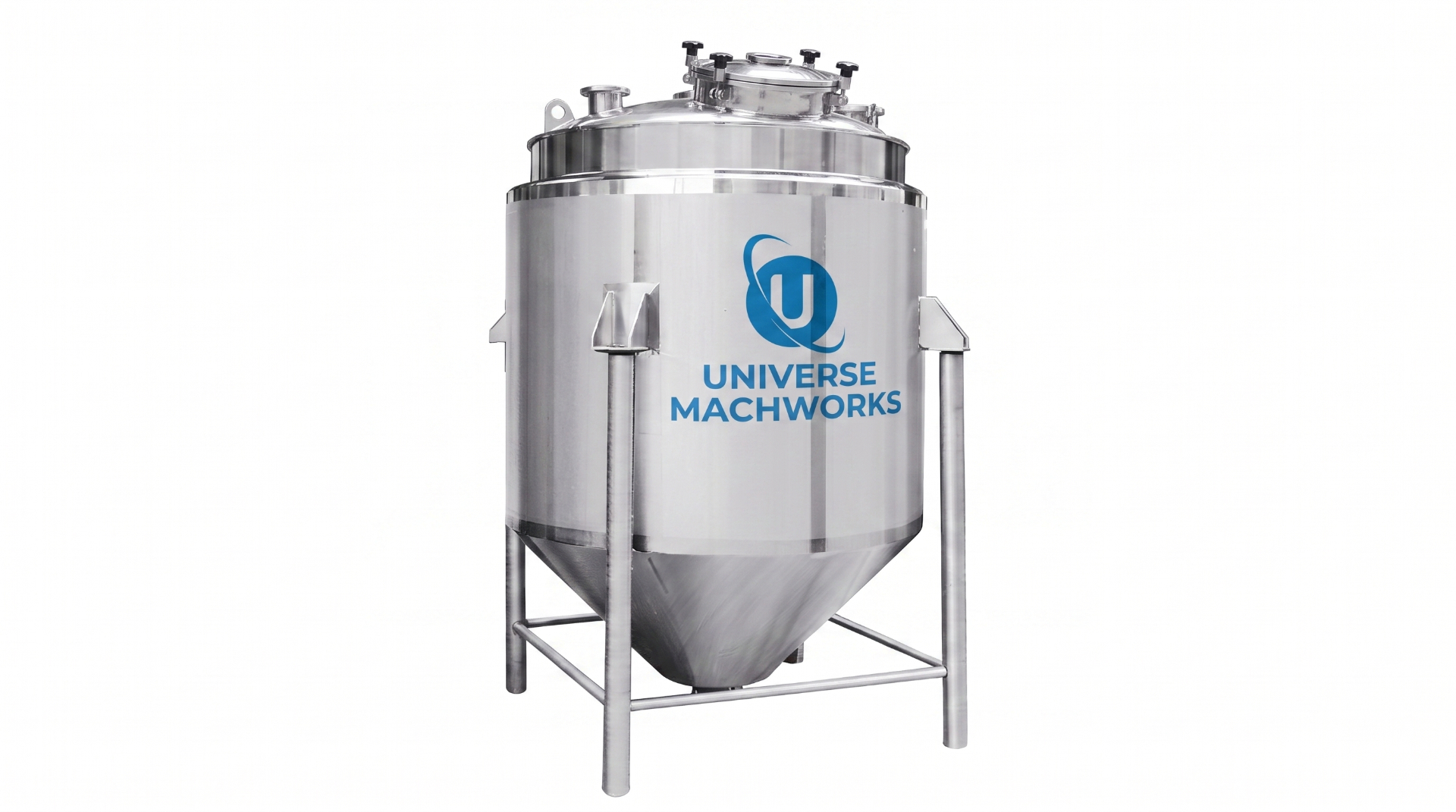
A Stainless Steel Mixing Tank can be used for liquid and semi-liquid processing applications.
Depending on the design, the tank may incorporate:
- Agitator
- Motor and gearbox
- Heating arrangement
- Cooling arrangement
- Temperature monitoring
- Inlet and outlet connections
- Sampling arrangement
Chemical manufacturers may use mixing tanks for preparing solutions, suspensions, blends, and other compatible liquid formulations.
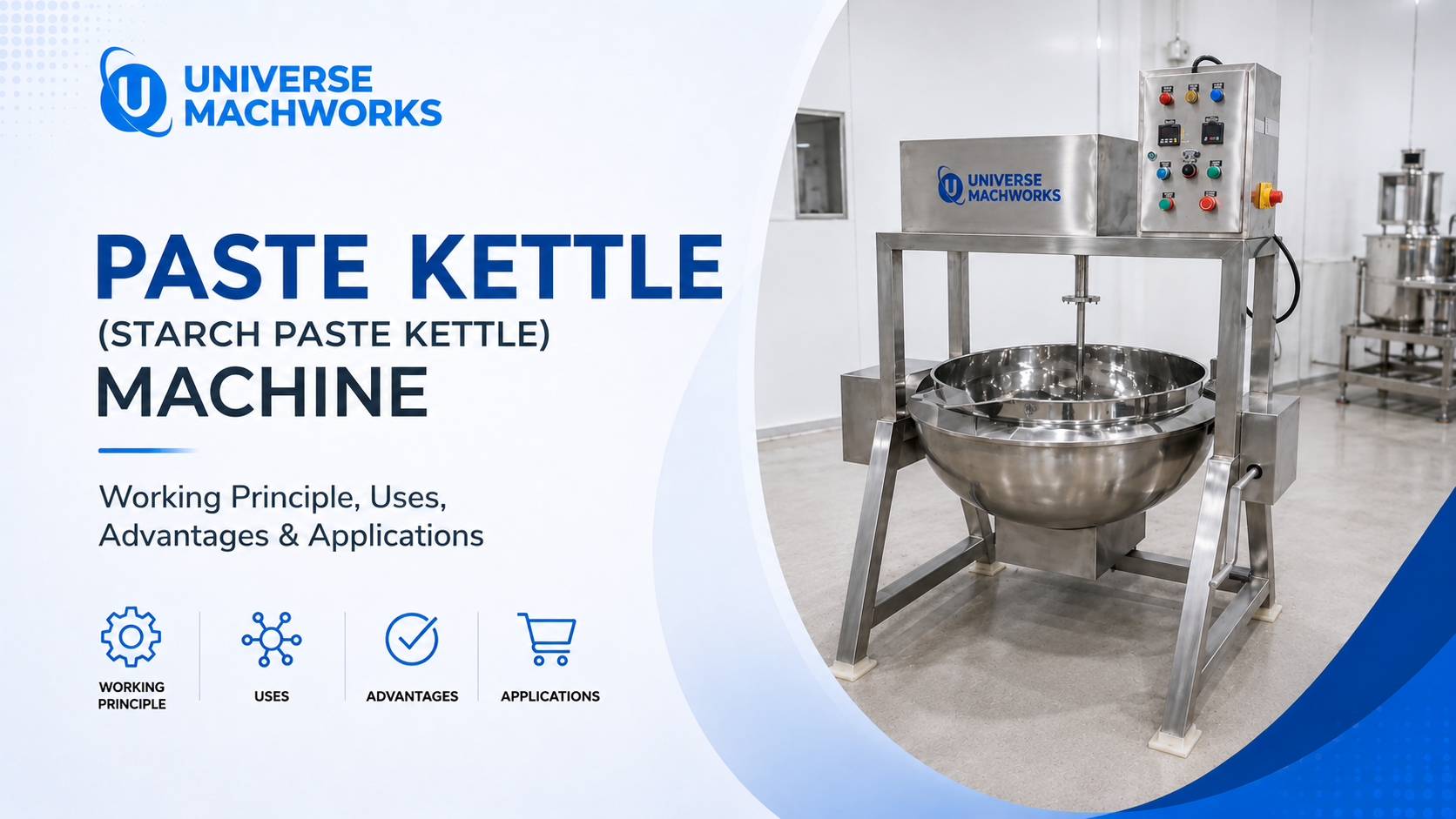
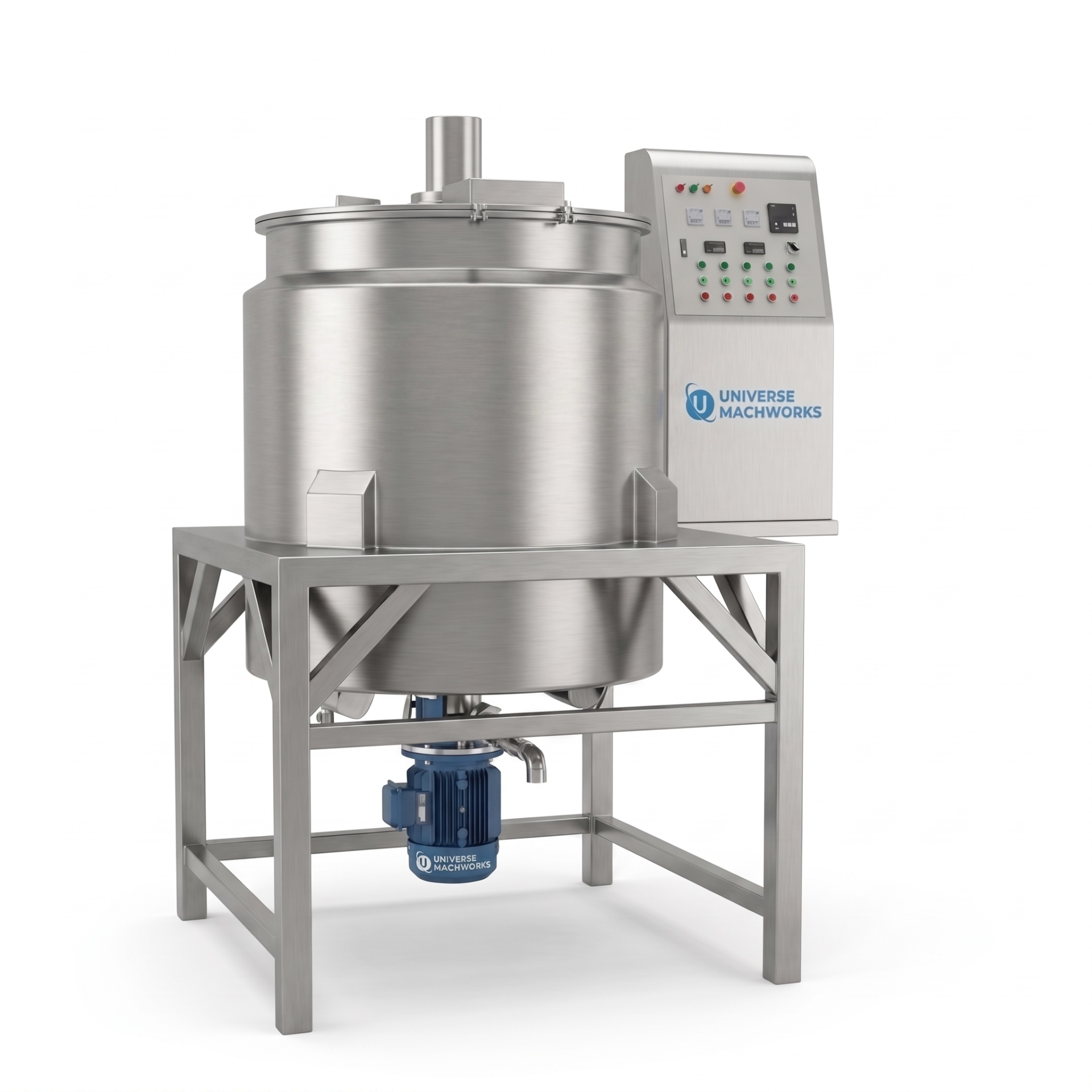
6. Heating Tank
A Heating Tank with Stirrer can combine controlled heating and agitation.
It may be suitable for processes where the chemical product requires:
- Heating
- Dissolution
- Controlled mixing
- Temperature maintenance
- Homogeneous processing
The heating method should be selected according to the required process temperature and product characteristics.
7. Filter Press Machine
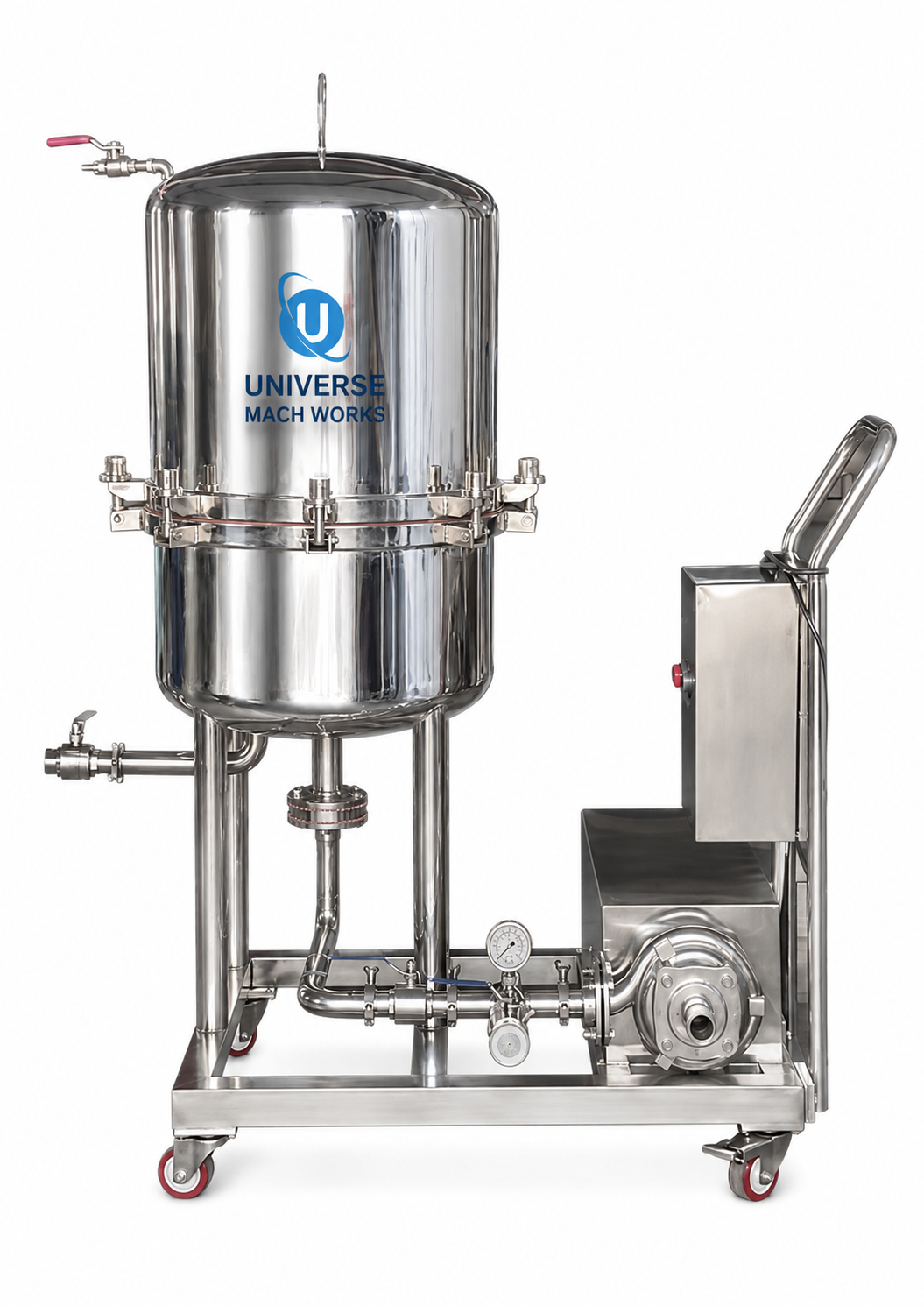
A Filter Press Machine is used for solid-liquid separation.
In chemical processing, filtration can be an important operation for separating suspended solids from process liquids.
Potential applications include:
- Chemical slurry filtration
- Precipitate separation
- Process-liquid clarification
- Solid-liquid separation
The filter cloth, plate material, gasket material, and other wetted components should be selected according to chemical compatibility.
8. Pressure Nutsche Filter
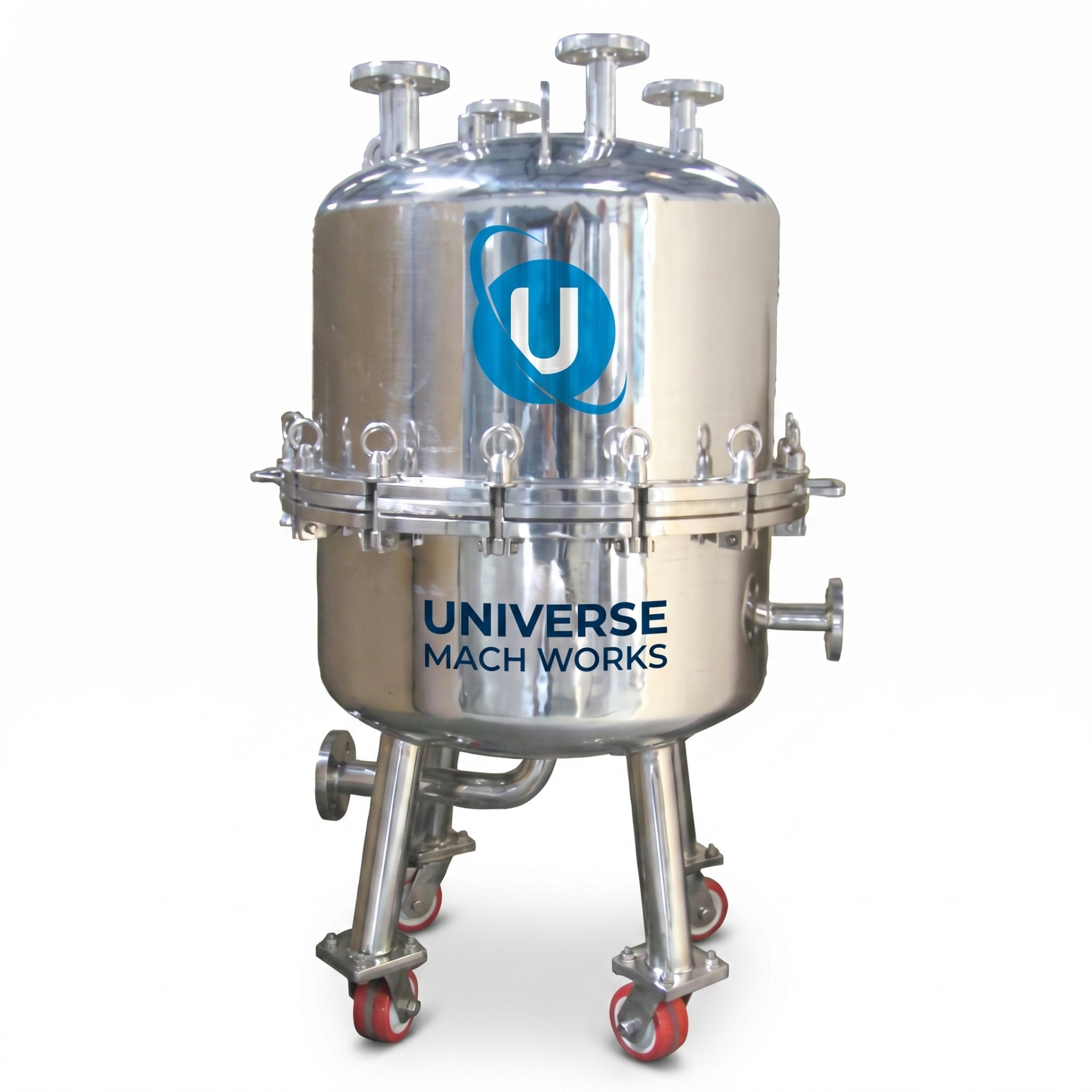
A Pressure Nutsche Filter combines filtration and cake handling in a closed vessel configuration.
Depending on the process design, it may be considered for chemical applications involving:
- Solid-liquid separation
- Product filtration
- Cake washing
- Cake handling
Pressure, temperature, vacuum, chemical compatibility, and containment requirements should be evaluated before selecting this type of equipment.
9. Fluid Bed Dryer
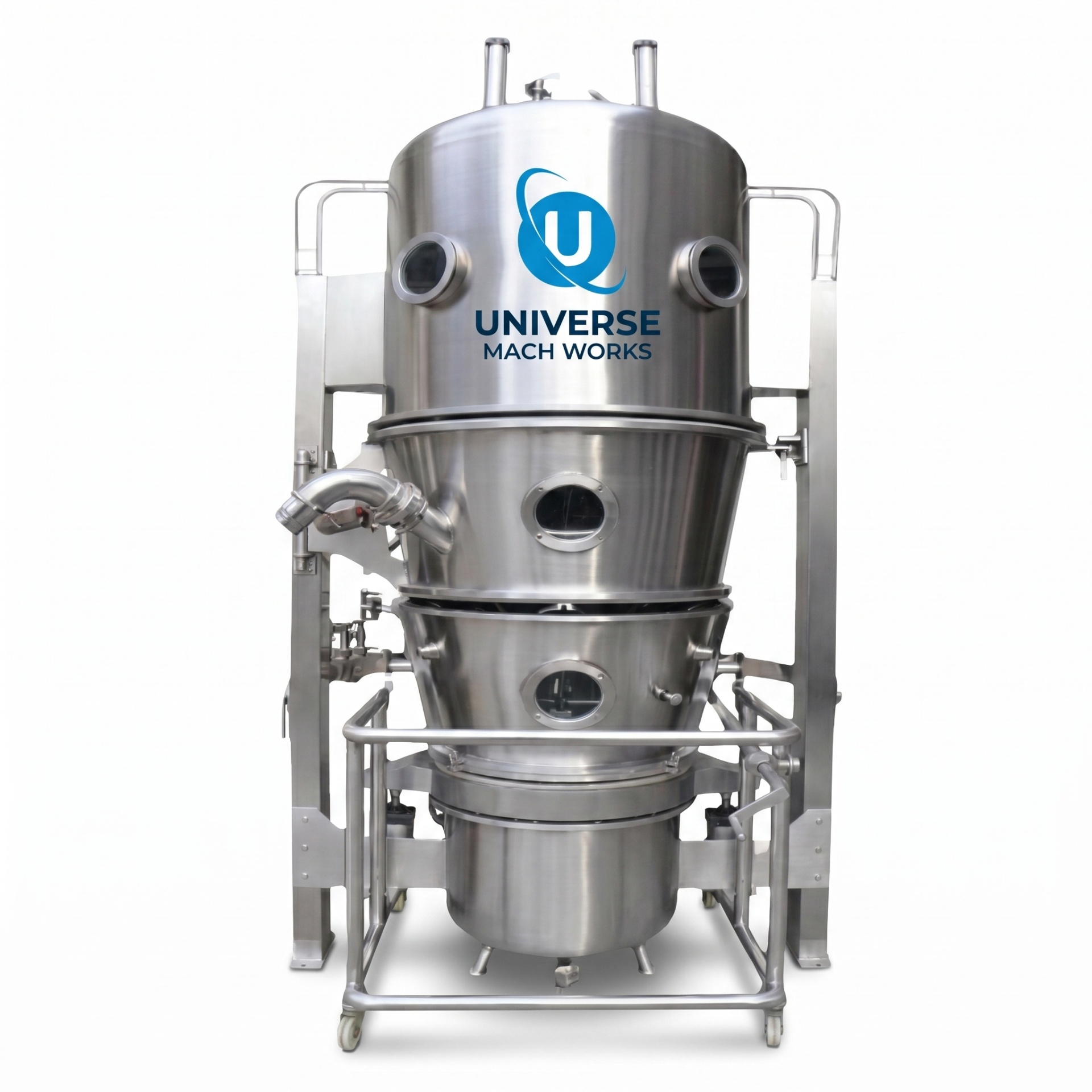
A Fluid Bed Dryer (FBD) uses controlled airflow to suspend and dry particles.
In suitable chemical applications, an FBD can be used for drying:
- Granules
- Powders
- Crystalline materials
- Other compatible particulate products
The drying process depends on factors including:
- Product moisture
- Particle size
- Air temperature
- Airflow
- Material properties
- Required final moisture
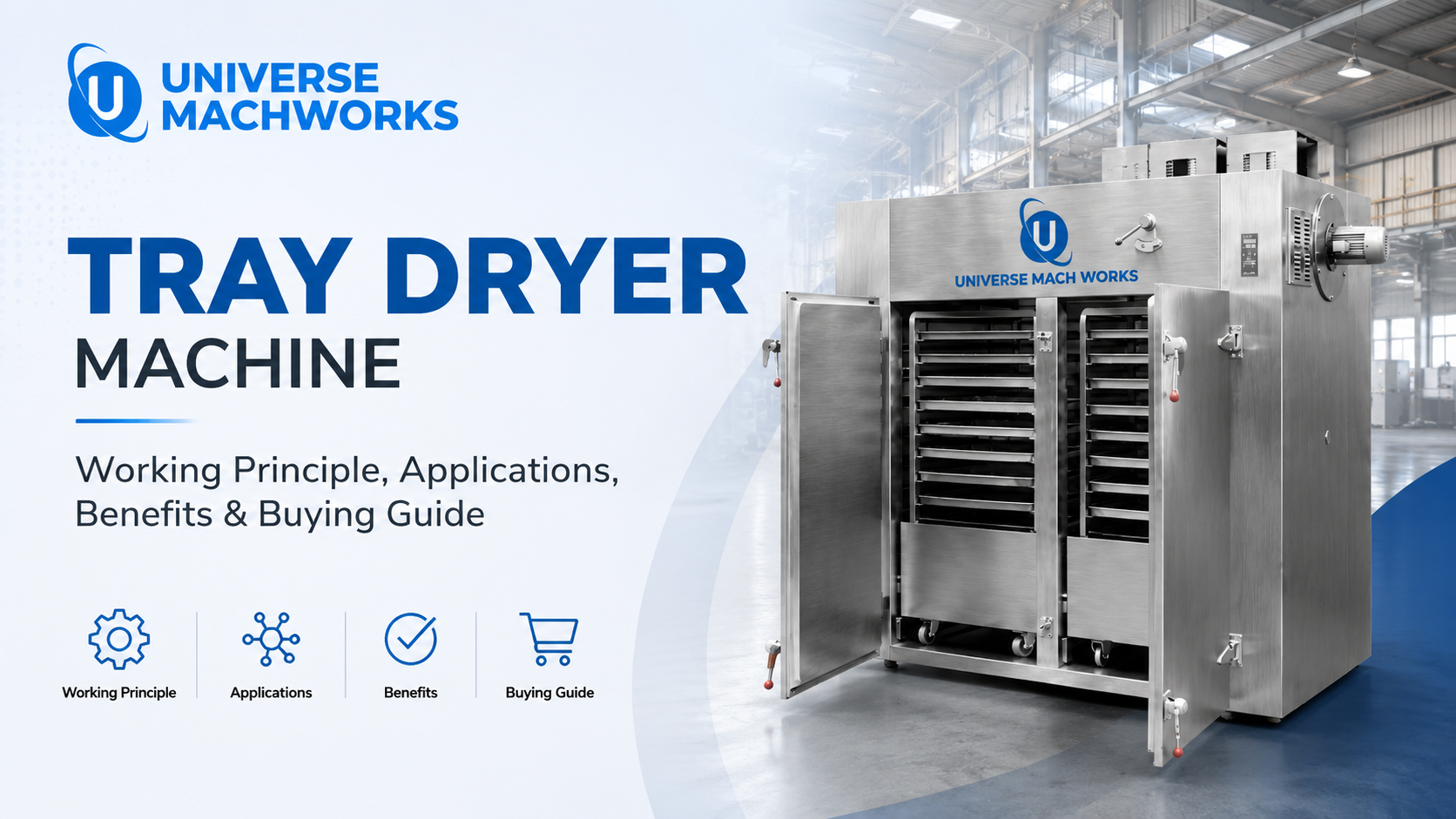
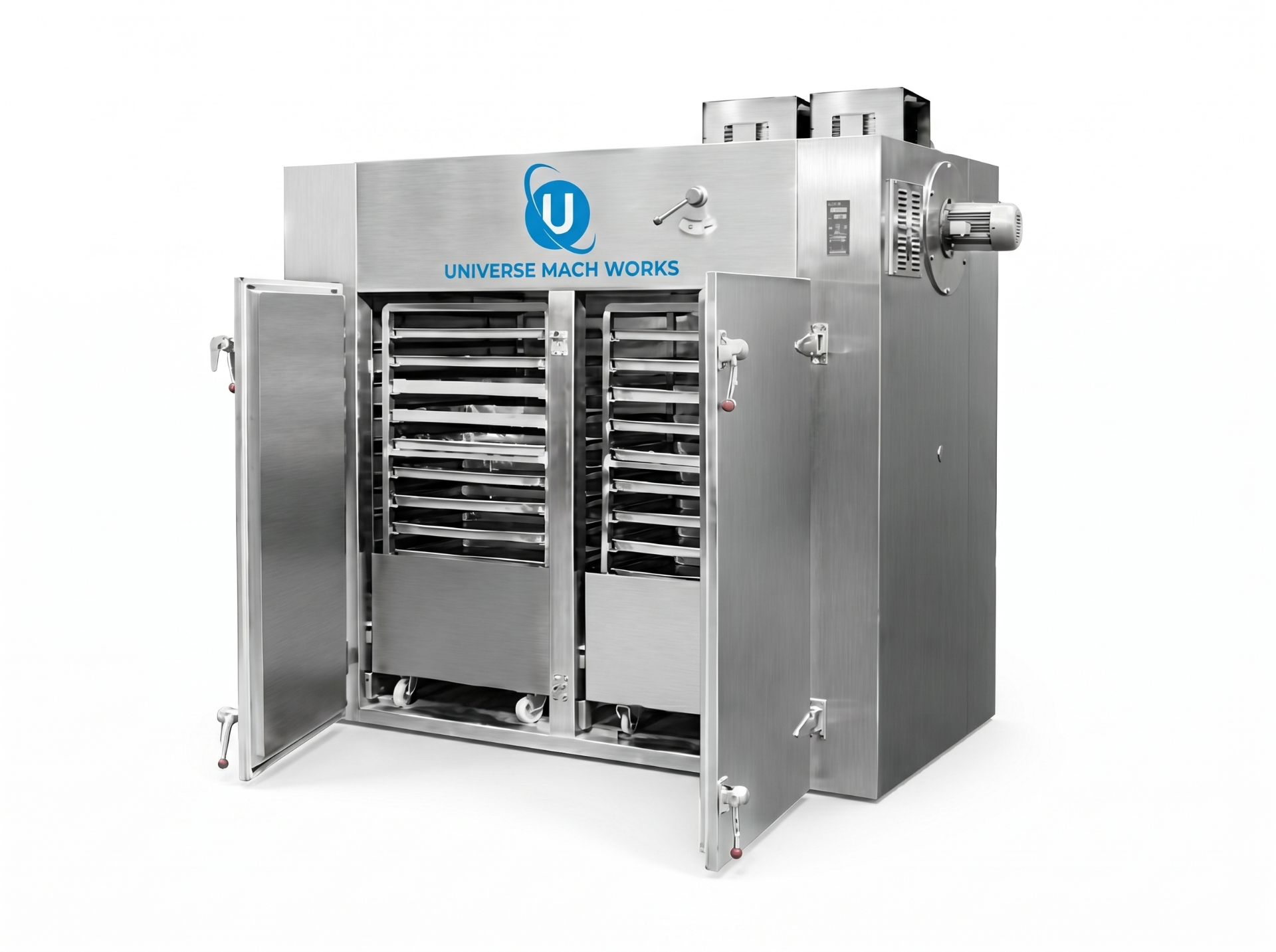
10. Tray Dryer
A Tray Dryer is a batch drying machine where material is distributed across trays and dried using controlled heated air.
It can be considered for chemical materials that require batch drying and are suitable for tray-based processing.
- Potential applications include:
- Chemical powders
- Crystals
- Granules
- Wet solids
- Specialty materials
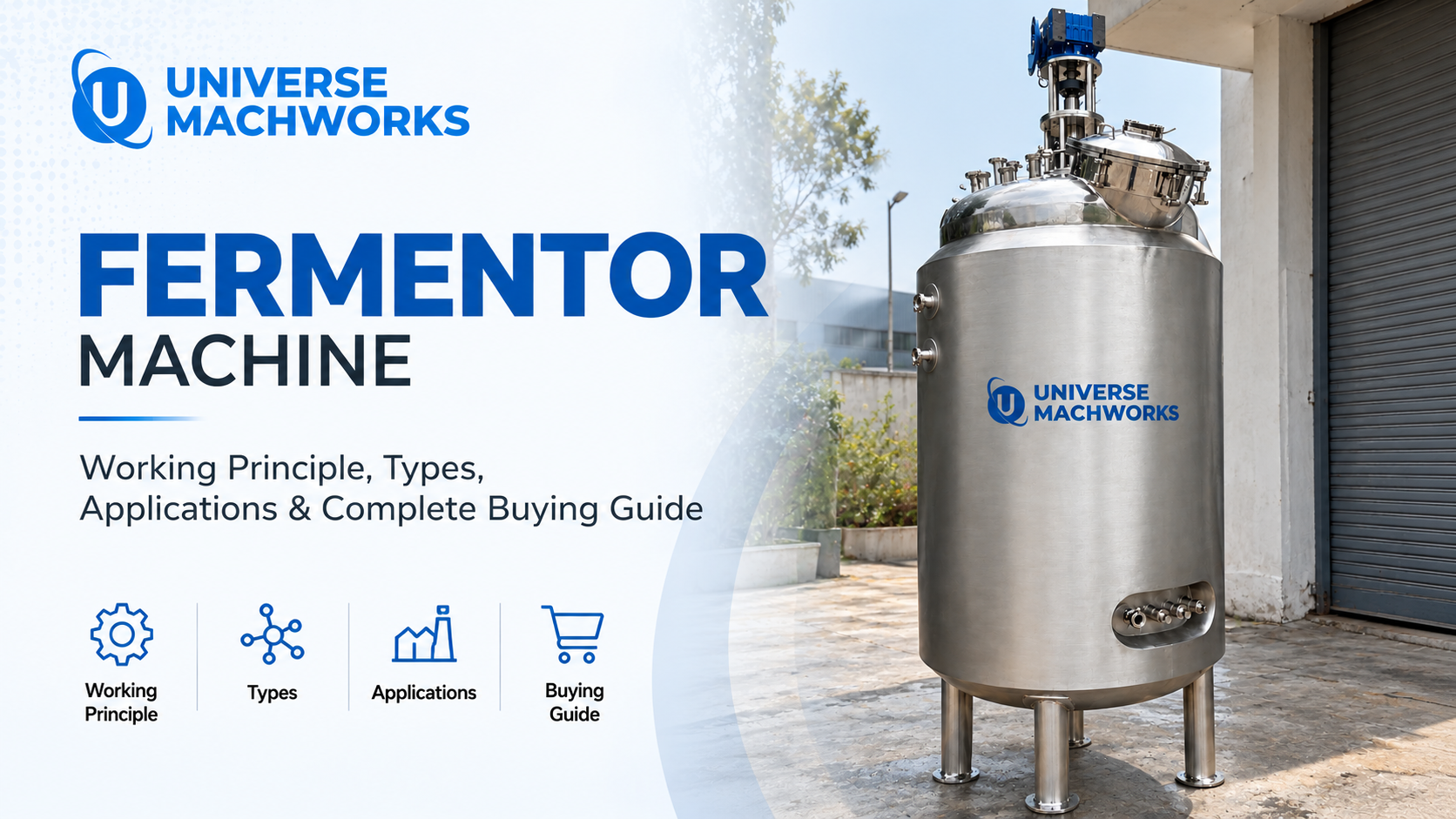
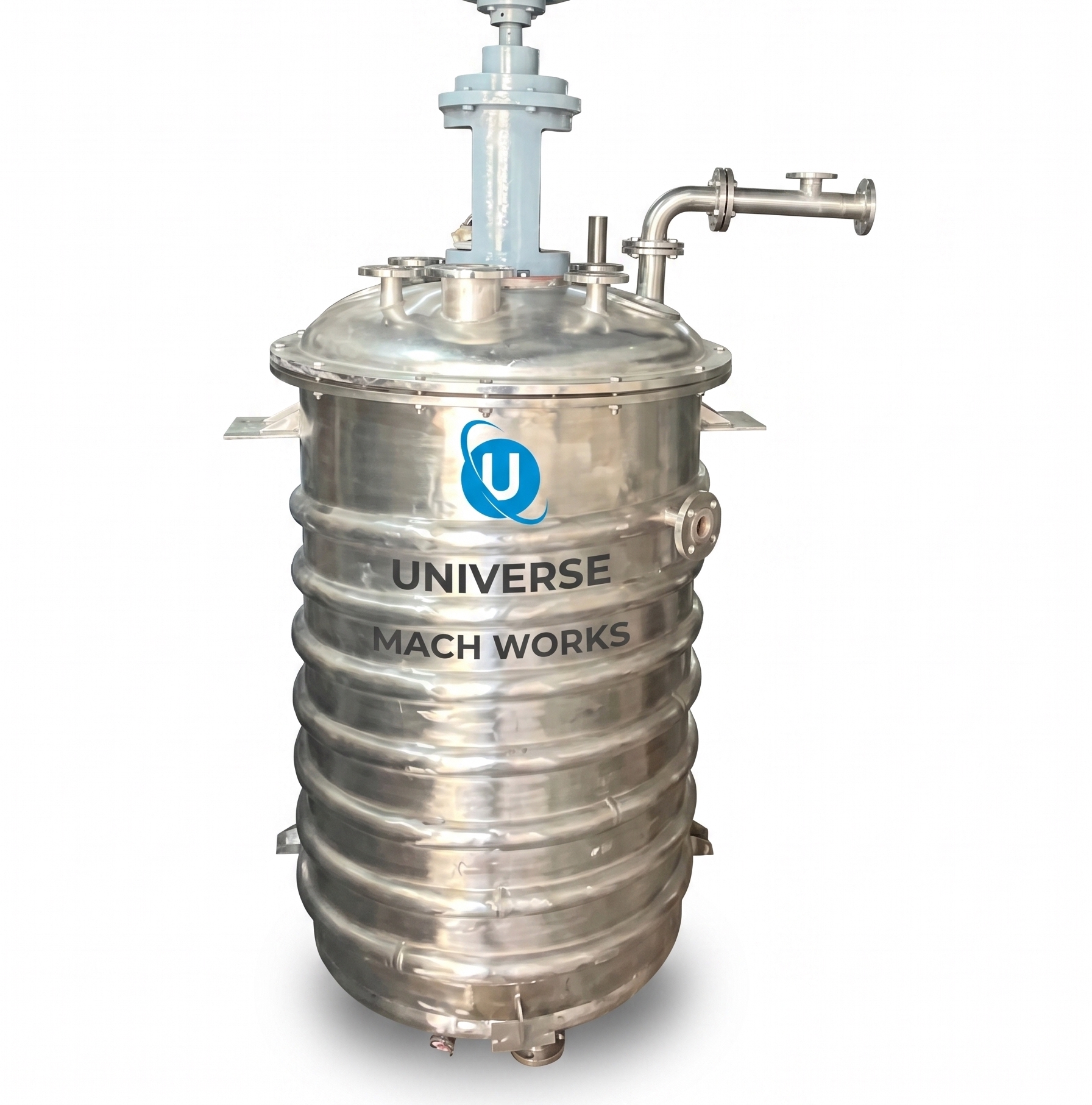
11. Fermentor / Process Vessel
Some chemical and biotechnology-related processes may require specialized vessels for controlled processing.
However, a vessel should only be called a fermentor when its design and intended process support fermentation.
Depending on the application, manufacturers may instead require:
- Mixing vessels
- Process tanks
- Reaction vessels
- Storage tanks
- Heating/cooling vessels
Equipment terminology should accurately reflect the actual process and machine design.
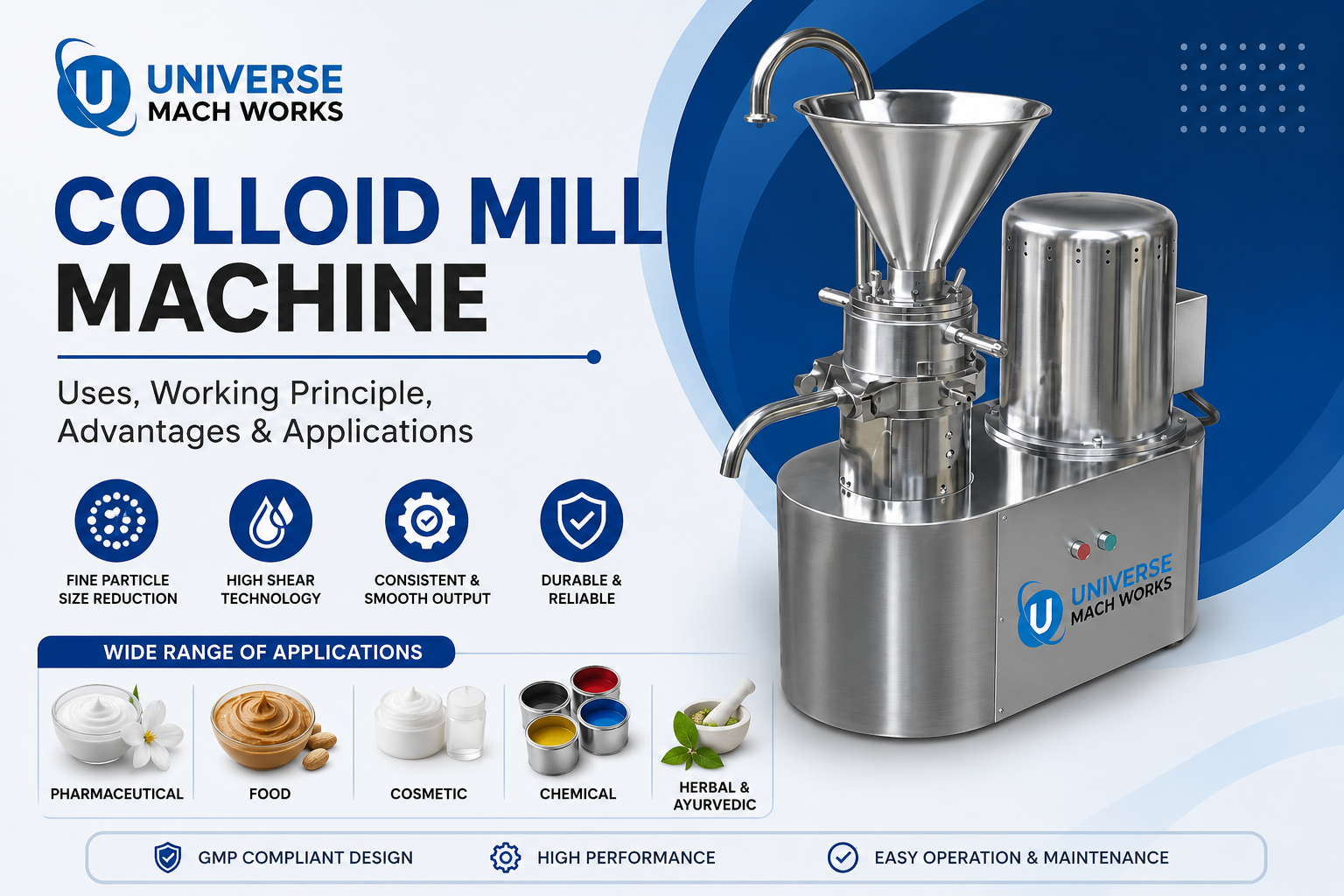
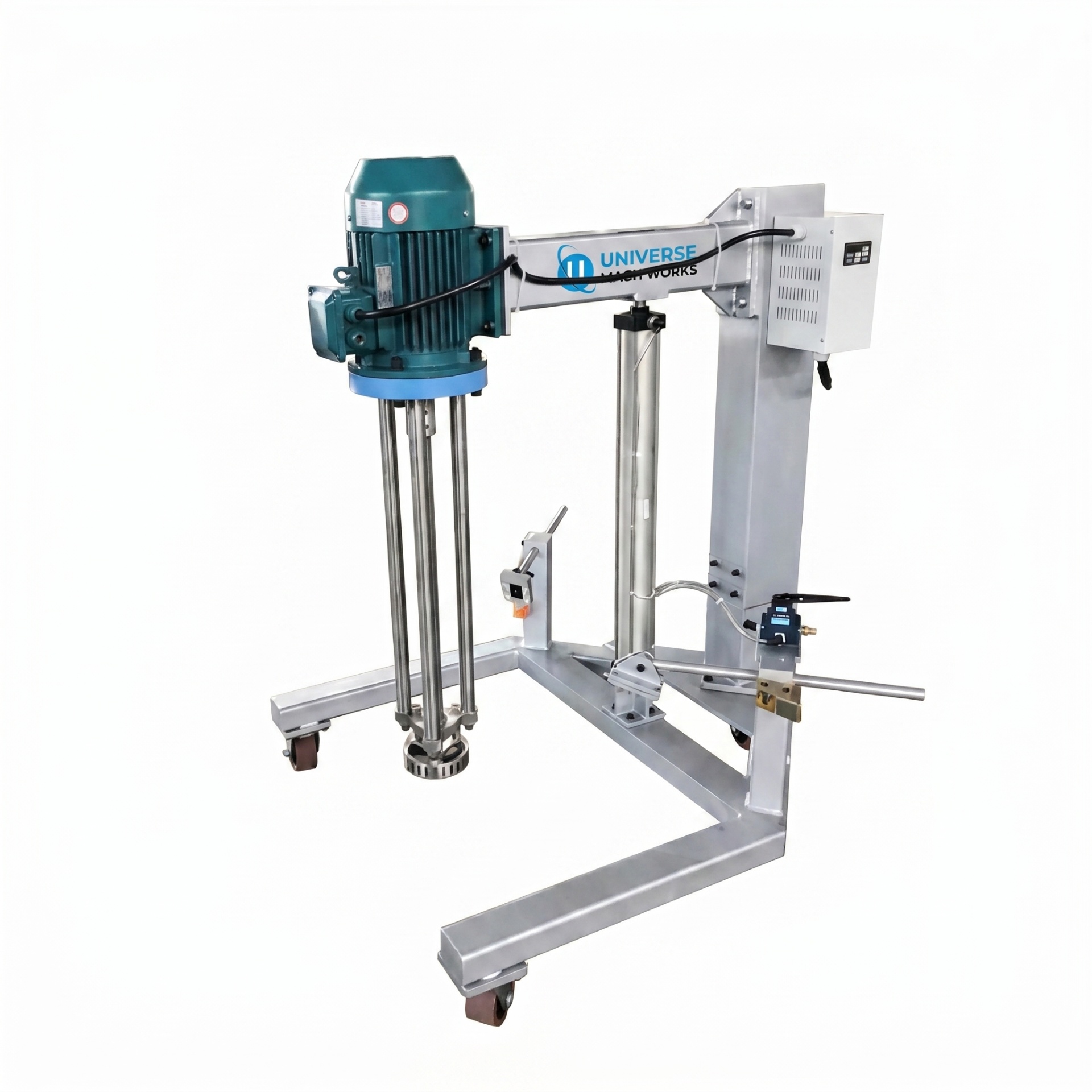
12. Homogenizer
A Homogenizer is used where intensive mixing, dispersion, emulsification, or particle-size reduction is required.
Potential applications in compatible chemical processes include:
- Emulsions
- Dispersions
- Suspensions
- Specialty formulations
The appropriate homogenizing mechanism depends heavily on the product.
Chemical Industry Applications of Pharma Machinery
Pharma machinery manufacturers can potentially serve various chemical processing operations.
Chemical Powder Processing
Equipment such as:
- Ribbon Blender
- Mass Mixer
- Multi Mill
- Vibro Sifter
can be considered for suitable powder-processing applications.
Chemical Blending
Blending equipment may be used to combine multiple compatible chemical ingredients into a uniform mixture.
Equipment selection depends on:
- Powder properties
- Bulk density
- Particle size
- Cohesiveness
- Required mixing time
- Batch size
Chemical Drying
Drying equipment can be selected based on the material's moisture characteristics and desired final condition.
Possible equipment includes:
- Fluid Bed Dryer
- Tray Dryer
- Vacuum drying systems
- Other application-specific dryers
Liquid Chemical Processing
Liquid processing may require:
- Mixing Tanks
- Storage Tanks
- Heating Tanks
- Agitated Process Vessels
- Homogenizers
The correct equipment depends on viscosity, temperature, chemical compatibility, and mixing requirements.
Solid-Liquid Separation
Filtration equipment can be used when a process requires separation of solids from liquids.
Possible equipment includes:
- Filter Press
- Pressure Nutsche Filter
- Other application-specific filtration systems
Material of Construction for Chemical Processing Equipment
One of the most important considerations when purchasing chemical processing machinery is the Material of Construction (MOC).
The correct MOC depends on the chemical being processed and the complete operating environment.
Factors to consider include:
- Chemical concentration
- Corrosiveness
- Operating temperature
- Pressure
- Cleaning chemicals
- Exposure time
- Abrasiveness
- Product-contact requirements
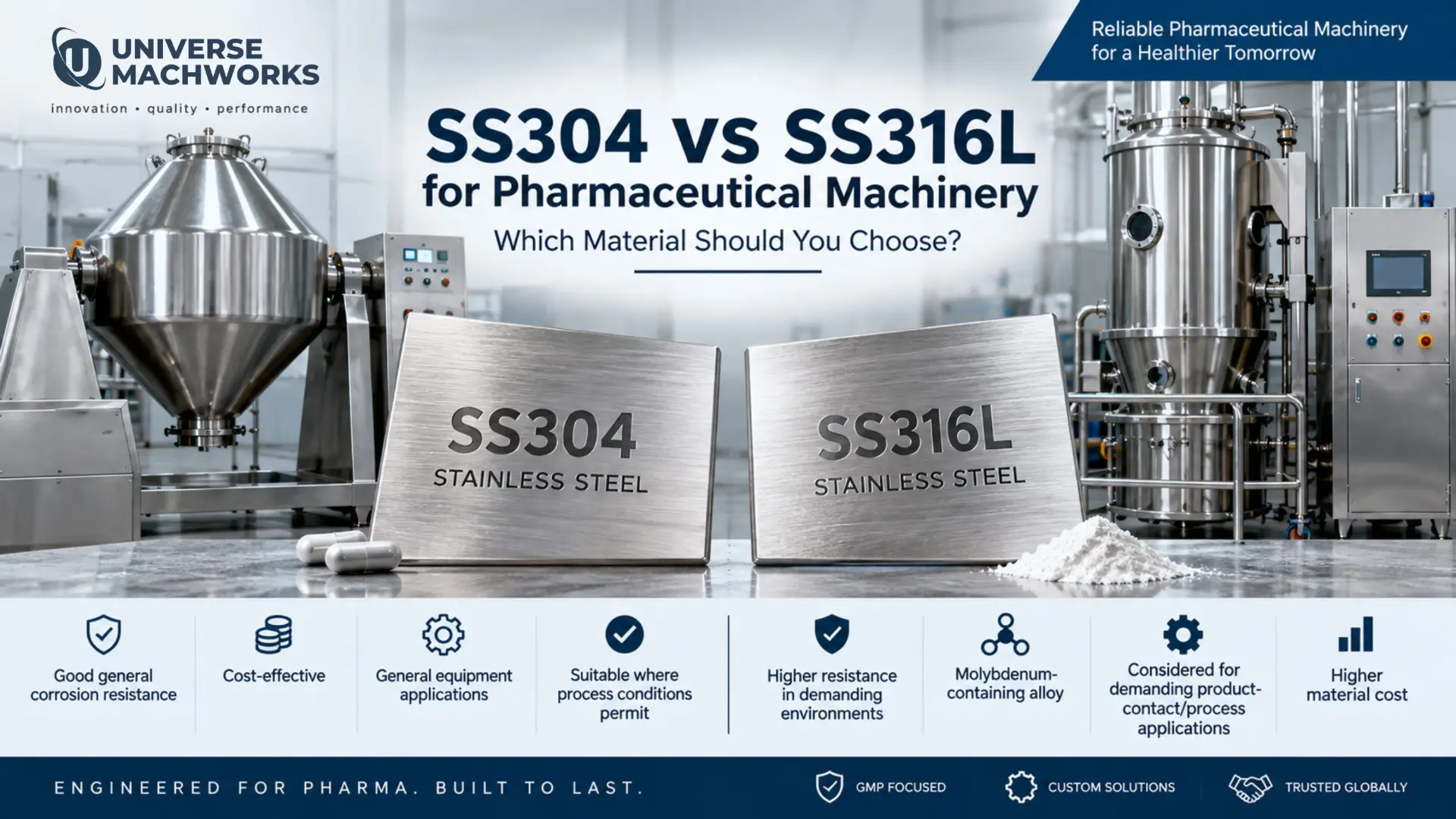
SS304 vs SS316L for Chemical Machinery
Stainless steel is widely used in process equipment, but the correct grade should be selected based on the actual application.
| Feature | SS304 | SS316L |
|---|---|---|
| General corrosion resistance | Good for many applications | Higher corrosion resistance in many environments |
| Chloride resistance | Lower | Better |
| Chemical applications | Suitable for compatible applications | Often preferred for more demanding applications |
| Cost | Generally lower | Generally higher |
| Selection | Application dependent | Application dependent |
Neither grade should be considered universally suitable for every chemical.
For aggressive or highly corrosive chemicals, other materials or specialized alloys may be required.
Always verify chemical compatibility before finalizing the equipment MOC.
How to Choose Pharma Machinery for Chemical Industry
Choosing equipment from pharma machinery manufacturers should begin with a detailed understanding of the process.
1. Identify the Chemical Product
Provide the manufacturer with information such as:
- Product name
- Chemical composition
- Concentration
- Physical state
- Corrosiveness
- Toxicity considerations
- Temperature
- Pressure
- Moisture content
This helps determine appropriate equipment construction.
2. Define the Process
Determine what the equipment needs to do.
Is the requirement:
- Mixing?
- Blending?
- Milling?
- Drying?
- Sieving?
- Heating?
- Cooling?
- Filtration?
- Storage?
- Homogenization?
The machine should be selected based on the actual process objective.
3. Determine Batch Size
Capacity selection should consider both minimum and maximum batch requirements.
Don't select equipment solely based on the largest possible capacity.
Consider:
- Working volume
- Bulk density
- Fill level
- Batch frequency
- Production target
4. Consider Operating Temperature
Chemical processes may operate at ambient, elevated, or controlled temperatures.
If heating or cooling is required, the equipment may need:
- Jacket
- Heating system
- Cooling system
- Temperature sensor
- Insulation
5. Evaluate Pressure and Vacuum
If the process involves pressure or vacuum, the equipment must be appropriately designed and rated for those conditions.
This is especially important for specialized process vessels and filtration equipment.
Customization of Chemical Processing Machinery
Chemical processes often vary considerably from one manufacturer to another.
For this reason, standard equipment may need to be customized.
Possible customization areas include:
Capacity
Equipment can be designed according to the required batch size and production scale.
Blade Configuration
Mixing blade geometry can be selected according to material characteristics.
Heating / Cooling
Tanks and vessels can be configured with appropriate heating or cooling arrangements.
Discharge
Different discharge arrangements can be considered according to downstream processing.
Material of Construction
The wetted parts can be specified according to product compatibility.
Controls
Equipment may be supplied with appropriate manual, semi-automatic, or automated controls.
Surface Finish
Surface finish requirements can be specified according to the product and cleaning process.
GMP vs Chemical Industry Requirements
A common misconception is that all chemical processing equipment must have exactly the same design requirements as pharmaceutical machinery.
This is not necessarily the case.
The correct equipment design depends on:
- Product
- Process
- Industry requirements
- Safety requirements
- Quality system
- Cleaning requirements
- Regulatory obligations
Pharmaceutical manufacturing often has particularly stringent GMP expectations, while chemical manufacturing can involve very different process hazards and equipment requirements.
Therefore, chemical equipment should be engineered for the actual chemical process rather than simply copying pharmaceutical equipment specifications.
Safety Considerations for Chemical Processing Machinery
Safety is particularly important when handling chemicals.
Before purchasing equipment, evaluate:
- Chemical compatibility
- Operating temperature
- Operating pressure
- Vacuum conditions
- Flammability
- Explosion hazards
- Dust generation
- Chemical exposure
- Ventilation
- Containment
- Electrical classification where applicable
For potentially hazardous or flammable chemicals, the equipment design should be reviewed against the applicable safety standards and site requirements.
The machinery manufacturer should be provided with accurate process information before equipment design is finalized.
New vs Refurbished Chemical Processing Machinery
Chemical manufacturers may consider either new or refurbished equipment depending on their requirements and budget.
New Machinery
New machinery can be designed around:
- Current process requirements
- Required capacity
- Product characteristics
- Material of construction
- Automation requirements
- Site layout
Refurbished Machinery
Refurbished equipment can be considered when the machine's condition and refurbishment scope are clearly established.
Before purchasing, inspect:
- Mixing chamber
- Blades
- Shaft
- Bearings
- Gearbox
- Motor
- Seals
- Surface condition
- Electrical system
- Product-contact areas
The supplier should clearly communicate what has been inspected, serviced, replaced, or upgraded.
Why Choose Universe Mach Works for Chemical Industry Equipment?
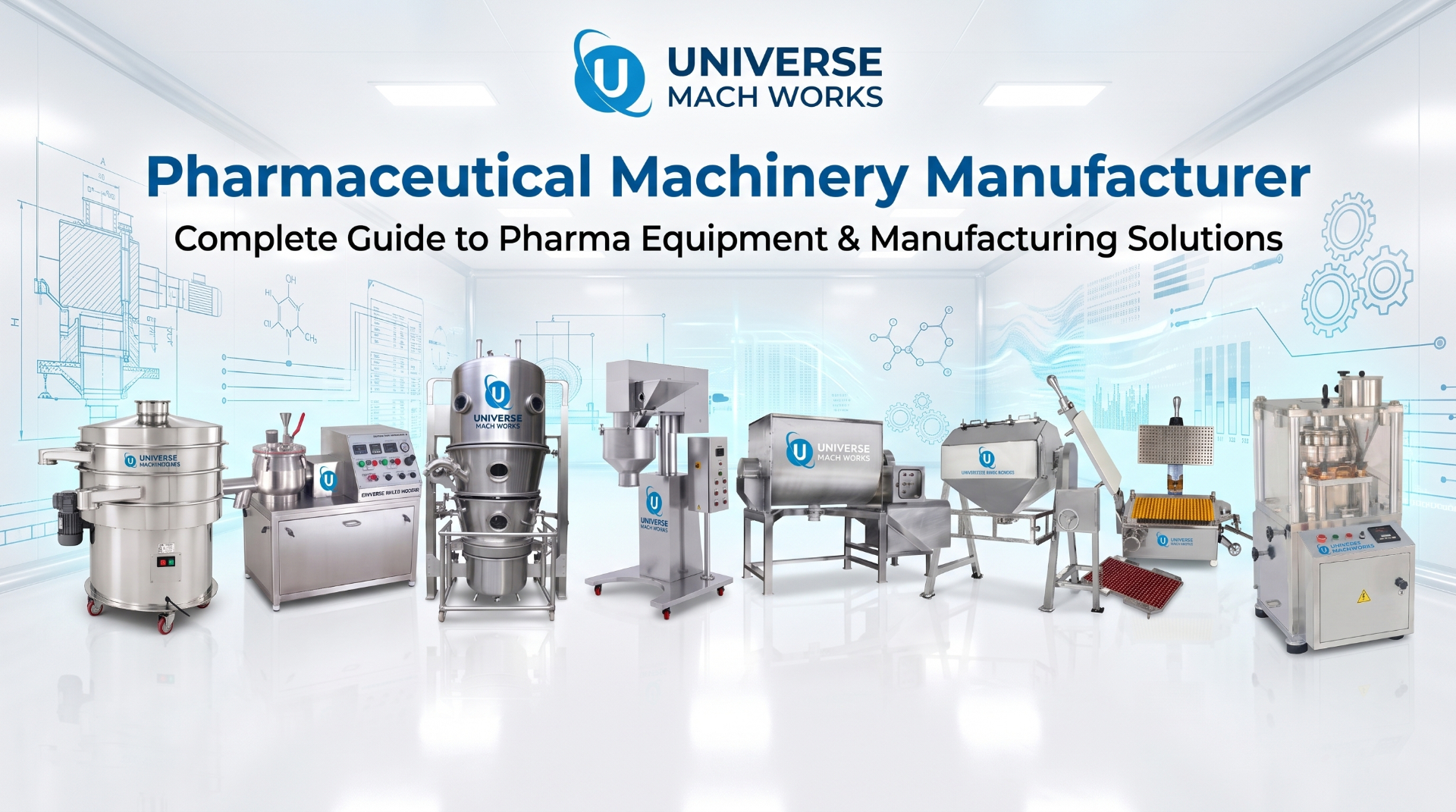
Universe Mach Works is a pharmaceutical and process machinery manufacturer and supplier providing equipment solutions for multiple processing industries.
Our machinery portfolio can support suitable applications in:
- Pharmaceutical
- Chemical
- Nutraceutical
- Food
- Cosmetic
- Herbal
- Other process industries
Depending on the application, equipment solutions can include:
- Mass Mixers
- Ribbon Blenders
- Multi Mills
- Vibro Sifters
- Fluid Bed Dryers
- Tray Dryers
- Mixing Tanks
- Heating Tanks
- Filter Press Machines
- Pressure Nutsche Filters
- Homogenizers
- Process Vessels
- Storage Tanks
We also support requirements involving:
- New Pharmaceutical Machinery
- Refurbished Machinery
- Custom Manufacturing Solutions
- Technical Support & Installation
The equipment configuration should always be finalized after understanding the customer's product, process, capacity, material compatibility, operating conditions, and site requirements.
Questions to Ask a Pharma Machinery Manufacturer
Before purchasing chemical processing equipment, ask the manufacturer:
About the Product
- What chemical will be processed?
- What is its concentration?
- Is it corrosive?
- Is it abrasive?
- Is it flammable?
- What is its operating temperature?
About the Process
- What is the required batch size?
- What mixing or processing time is required?
- Is heating required?
- Is cooling required?
- Is pressure or vacuum involved?
- What is the desired output?
About Construction
- What is the product-contact MOC?
- What seals and gaskets are used?
- What surface finish is provided?
- Is the material chemically compatible?
About Safety
- Does the application require special electrical classification?
- Are dust or vapour hazards present?
- What containment is required?
- What safety devices are included?
About the Supplier
- Is customization available?
- Can the equipment be inspected before dispatch?
- What documentation is provided?
- Is installation support available?
- Are spare parts available?
- What after-sales service is offered?
Benefits of Working With an Experienced Pharma Machinery Manufacturer
Choosing an experienced machinery manufacturer can provide advantages when the supplier has the engineering capability to understand the actual process rather than simply supplying a standard machine.
Potential benefits include:
Application-Based Equipment Selection
The machine can be selected based on product and process requirements.
Custom Engineering
Equipment can be configured for specific capacity, MOC, discharge, mixing mechanism, heating, cooling, and controls.
Integrated Equipment Solutions
A manufacturer with a broad portfolio can help connect different stages of the process.
For example:
Mixing → Milling → Sieving → Drying → Filtration → Storage
Technical Support
Installation, commissioning, maintenance guidance, and spare-part support can be valuable throughout the equipment lifecycle.
Chemical Industry Equipment Selection Checklist
Before requesting a quotation, prepare the following information:
| Requirement | Information to Provide |
|---|---|
| Product | Chemical/product name |
| Physical state | Powder / liquid / paste / granule |
| Batch size | Required batch |
| Capacity | Working & gross requirement |
| Density | Bulk/product density |
| Temperature | Operating temperature |
| Pressure | Operating pressure |
| Vacuum | If applicable |
| Corrosiveness | Chemical compatibility |
| Mixing | Required mixing action |
| Heating | Required / Not required |
| Cooling | Required / Not required |
| Filtration | Required / Not required |
| MOC | Required grade/material |
| Surface finish | Process dependent |
| Automation | Manual / Semi-Automatic / Automatic |
| Installation | Required / Not required |
Providing this information can help the manufacturer recommend a more suitable machine configuration.
Discuss your chemical processing requirements
Explore the Product
Chemical Processing Equipment by Universe Mach Works
View technical specifications, applications and request a customized quote.
View Chemical Processing EquipmentFrequently Asked Questions
Can pharma machinery manufacturers supply equipment for chemical industries?+
Yes. Pharma machinery manufacturers with suitable engineering and fabrication capabilities can supply equipment for compatible chemical processing applications, including mixing, blending, milling, drying, filtration, and liquid processing.
What pharma machines are used in the chemical industry?+
Depending on the process, chemical manufacturers may use Mass Mixers, Ribbon Blenders, Multi Mills, Vibro Sifters, Fluid Bed Dryers, Tray Dryers, Mixing Tanks, Heating Tanks, Filter Presses, Pressure Nutsche Filters, and other process equipment.
Is pharmaceutical machinery suitable for chemical processing?+
Some equipment configurations can be suitable for both industries, but suitability must be evaluated based on the chemical product, process conditions, material compatibility, pressure, temperature, and safety requirements.
Which stainless steel is best for chemical processing equipment?+
There is no single stainless-steel grade that is best for every chemical. SS304 and SS316L may be suitable for different applications, while highly corrosive processes may require other materials or specialized alloys.
Can chemical processing machinery be customized?+
Yes. Depending on the process, equipment can be customized for capacity, MOC, blade design, heating, cooling, discharge, controls, surface finish, and other requirements.
What should I tell a machinery manufacturer before requesting a quotation?+
Provide the product characteristics, batch size, process objective, temperature, pressure/vacuum, chemical compatibility requirements, desired capacity, MOC, automation requirements, and available installation space.
Can I buy refurbished chemical processing equipment?+
Yes, refurbished equipment can be considered when its condition, inspection results, refurbishment scope, critical component condition, and testing are clearly documented.
How do I choose a pharmaceutical machinery manufacturer for chemical equipment?+
Evaluate the manufacturer's experience, engineering capabilities, machine range, customization capability, material selection, fabrication quality, documentation, installation support, spare-parts availability, and after-sales service.
Conclusion
The chemical industry requires processing equipment that is carefully matched to the product, process, capacity, operating conditions, and safety requirements.
Experienced pharma machinery manufacturers can provide suitable equipment for many chemical processing operations, particularly where similar mixing, blending, milling, drying, filtration, and liquid-processing technologies are required.
However, equipment should not be selected solely based on the machine category or industry label. Chemical compatibility, temperature, pressure, corrosion, material of construction, cleaning, containment, and safety requirements should all be evaluated before finalizing the design.
For chemical manufacturers looking for Mass Mixers, Ribbon Blenders, Multi Mills, Vibro Sifters, Dryers, Mixing Tanks, Filter Presses, Process Vessels, and other processing equipment, Universe Mach Works can provide application-focused machinery solutions.
Contact Universe Mach Works to discuss your chemical processing requirement, equipment capacity, material of construction, customization, and technical specifications.
📞 Phone / WhatsApp: 9888885581
🌐 Website: universemachworks.com